
10 Oldest Hotels In Europe Worth Visiting
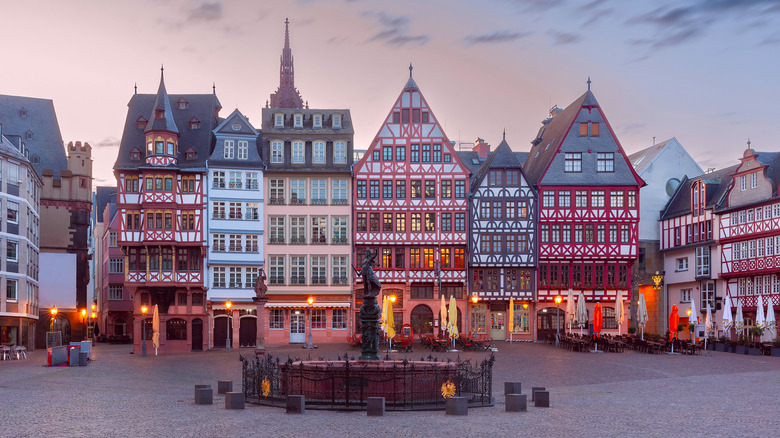
The earliest known mention of the hotel industry appears in a Babylonian text written over 5,500 years ago. Known as the Code of Hammurabi, the document set down, among many other things, the rules of commerce, while also suggesting that innkeepers who watered down their beer should be put to death. Such actions remain a crime, although thankfully no longer a capital one.
The oldest hotel in the world still in operation is actually a spa in Japan known as the Nishiyama Onsen Keiunkan in Yamanashi, which opened its doors way, way back in 705 CE. Meanwhile, over in Europe, commerce was thriving: the Silk Road had been in continuous use for hundreds of years, and the spread of Christianity brought with it the need to service pilgrims as they crossed the continent in search of saints and relics. Europe soon took on a format that would not look wholly unfamiliar to modern eyes. By the 10th century, the continent had achieved a level of stability not seen since the fall of the Roman Empire. And with that came the chance for institutions to survive the ages.
It is from this period that some of the most beautiful universities in Europe sprang up. Castles proliferated, cathedrals imposed themselves upon the landscape, and while many fell into ruins over the following centuries, some survived. Taverns, inns, and hotels fared less well, of course, but there is a small number that somehow managed to cling on through all the wars, fires, and famines that time threw at them.
Hostal Real de Santiago de Compostela, Spain
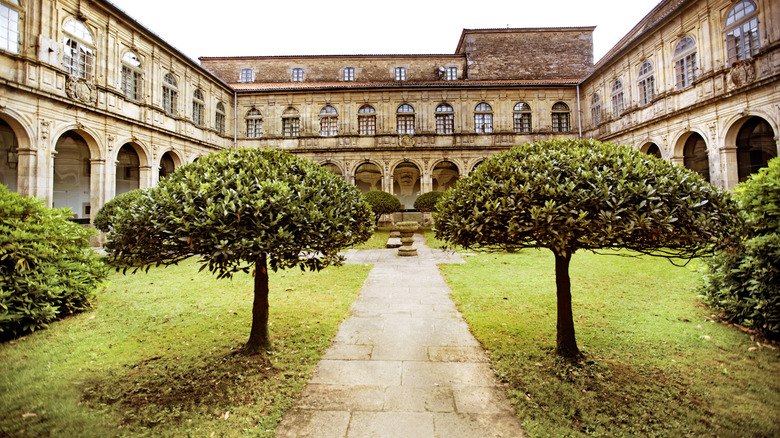
Hostal Real de Santiago de Compostela dates to the turn of the 16th century, and, as its name suggests, sits within a stone's throw of one of the most iconic ecclesiastical buildings in the world, the Cathedral of Santiago de Compostela.
For centuries, the hotel served as a hospital for weary pilgrims who had made the trek to the Cathedral, said to house the remains of Saint James. In 1954, the building was converted into a hotel by the state-owned Parador chain and has remained open to the public ever since.
Just one night is a bucket-list-worthy experience. The courtyard blends medieval aesthetic with Renaissance elegance, and the rooms are lavishly furnished with four-poster beds. Meanwhile, an evening meal at the in-house Restaurante dos Reis is a step back in time to a simpler age, laced with ultra-modern flavors and jazz-age ambience. Which is not to say that modern conveniences have been left to one side: the building is fully air-conditioned, you can charge your electric car during your stay, and the Wi-Fi works just fine for a 15th century building. The surrounding Old Town is a UNESCO World Heritage Site, and provides an abundance of things to see and do while also serving as a jumping-off point for an exploration of the rest of Spain's scenic Atlantic coast.
La Couronne Hotel Restaurant, Switzerland
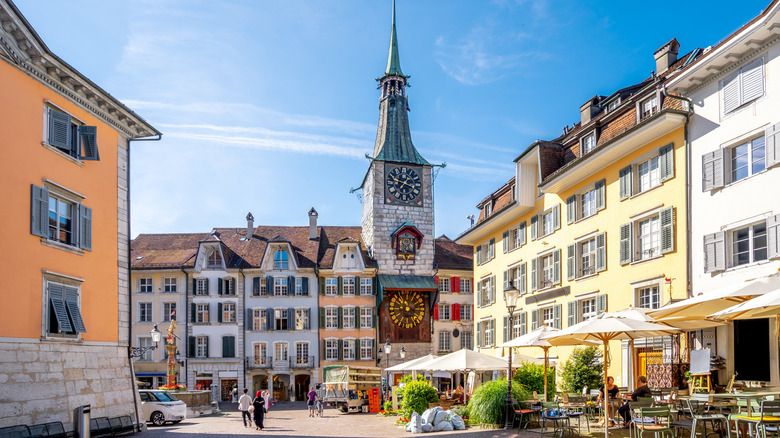
Few historic buildings of considerable age remain unchanged over time. Take the La Couronne Hotel in Solothurn, for example. An inn has stood on the site since at least 1418, but the current décor is more reminiscent of the city of Solothurn's Baroque ensemble. There is a deliberate symmetry to the building that combines with its immaculate rendering, gilded lettering, and hipped roof, to create a building of exquisite beauty.
Its position opposite the Cathedral of Saint Ursus most certainly helps with the views, and over the years, the inn has opened its doors to the likes of Casanova, Napoleon Bonaparte, and Hollywood stars alike. The rooms deliver as much impact as you would expect from the simplicity of Baroque design; each has a character of its own, and each offers a memorable experience.
The restaurant is Michelin-Star rated and provides both stunning views and some of the best Swiss cuisine around. And yes, it's expensive. Since even the smallest rooms cost over $280 a night, a break taken here is a luxury, no question. But you get to experience the very best that Solothurn has to offer. The city is a virtual time capsule and free from the crowds you'll find elsewhere in Switzerland.
The Old Bell Hotel, UK
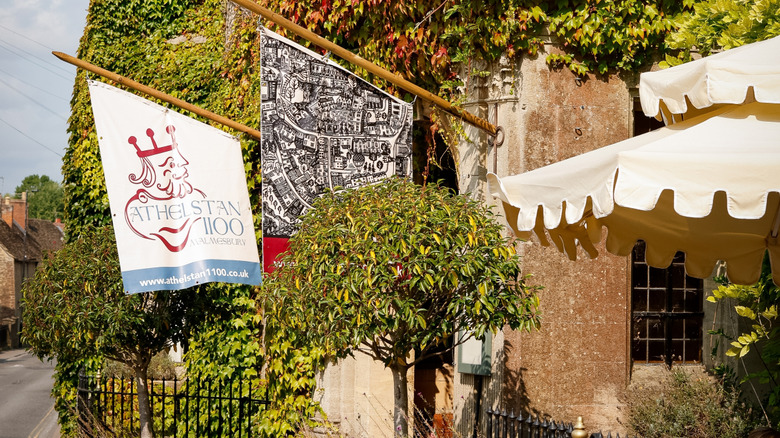
The Old Bell opened its doors in 1220, just a few years after the death of Bad King John. This is no repurposed building. It was built with overnight stays in mind. Despite its impressive vintage, the inn is remarkably well-preserved.
The core is 13th century, but it has been extensively modernized over the centuries, and today it is a paragon of design and comfort. Oak paneling, period features, and stained-glass windows are on display across all floors, while rooms and suites are as cozy as they are welcoming. The restaurant serves meals throughout the day, and it's an excellent place to meet for a Sunday roast or a cheeky mid-week Afternoon Tea.
And then there is the village itself. Less than one hour's drive from one of the best-preserved Roman Spas in all of Europe, Malmesbury is a picturesque market town sporting a Norman-era Abbey, Shakespeare-worthy river walks, and a lively, quintessentially English festival scene.
Restaurant Goldener Adler Innsbruck, Austria
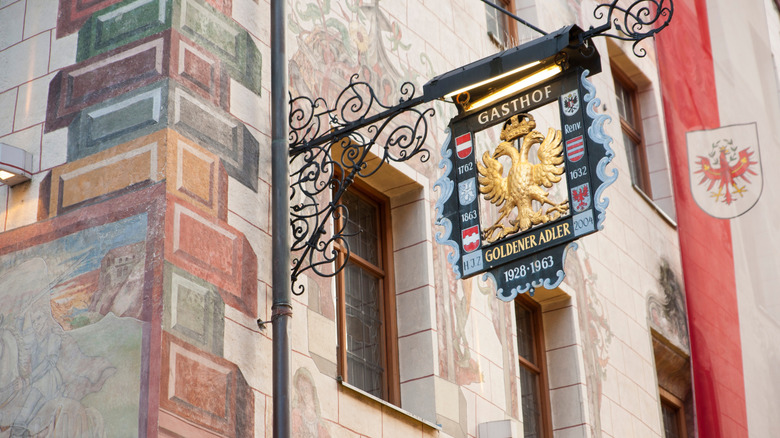
During the late 14th century, Austria was undergoing a series of intense political crises. The country had been split between two brothers; the eastern part of the country was controlled by Albert III, who reigned from the capital, Vienna, a city already famous for hosting one of the best Christmas Markets in Europe. The town of Innsbruck, 300 miles to the west, fell within the auspices of Leopold III and was something of a new frontier following a loss of territory to the Swiss in 1389, just one year before the Adler opened its doors to customers for the first time.
Today, Adler stresses its importance as a restaurant, but one that rents rooms for the night. The distinction is an ancient one; taverns serve food and drink exclusively, whereas inns also offer accommodation.
From the outside, the building is a handsome four-story building blessed with simple lines, curved arches, and a symmetry of form and style that delights the eye. Inside, you'll find a mix of modern and traditional rooms and suites with immaculate interior décor. The wine bar is a thing of curved ceilings and stone, while the restaurant is self-consciously modern and spills out into an alfresco area that allows you to bask in Innsbruck's medieval majesty. Prices for rooms vary with the seasons but are not at all unreasonable, with single rooms starting at around $175, although twins can hit $300 a night during the high season.
Hotel Interlaken, Switzerland
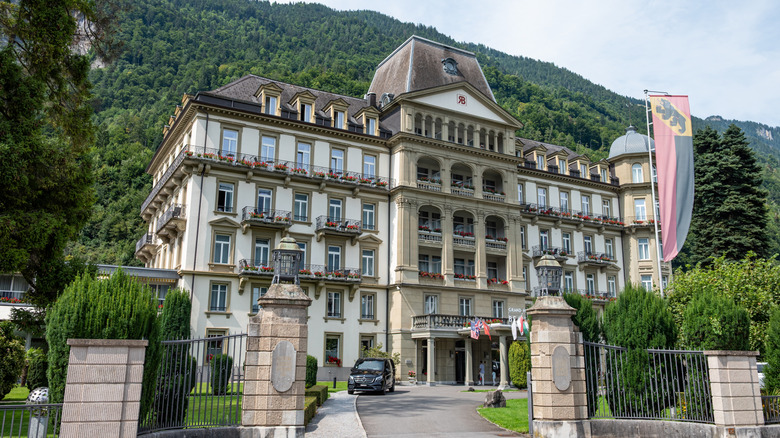
The town of Interlaken lies between two of Switzerland's most beautiful lakes, with Lake Thun to its west and Lake Brienz to its east. It is a place of stunning vistas, train rides through mountainous terrain, boat trips, picnic sites, and days spent simply messing about on the water. The Hotel itself is an intimidating presence; a six-story edifice with hints of Rococo added to its more ancient design. During the 12th century, it served as an Augustinian monastery before finding a new lease of life as a Hotel in 1491.
Today, the lobby is a modern, fresh space where only the exposed beams and solid rock foundations hint at the building's extensive vintage. Rooms are surprisingly spacious with real wood flooring, astounding views, and balconies well-suited to alfresco dining. The restaurant is unashamedly Swiss, and yes, that means that fondue is very much on the menu.
All that style, however, comes at a price. Off-season rooms without a balcony will set you back around $230, while larger rooms with one can easily run towards the $400 mark. Still, discount codes are available to encourage visitors to book directly, and Switzerland rarely offers itself up as a cheap option for a vacation. Regardless, the hotel's location within an ethereal region packed with iconic sights makes the premium tag a palatable one.
Hotel Zum Riesen, Germany
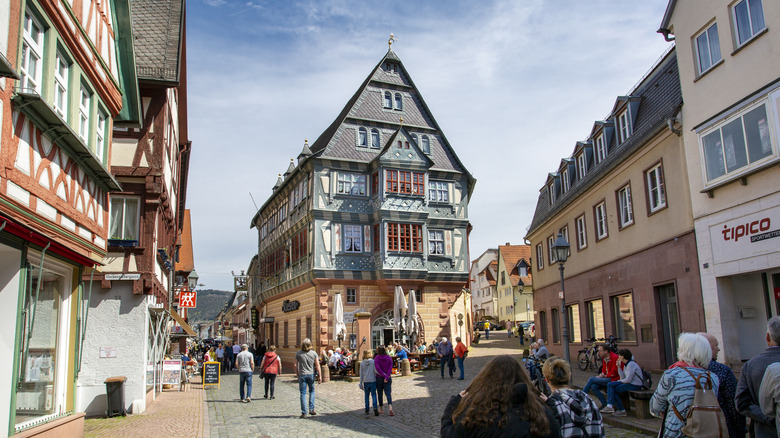
The Hotel Zum Riesen is a half-timbered medieval building in the heart of Miltenberg. Loosely translated as "the giant," its proportions were oversized for a building of non-military or ecclesiastical design.
The date of construction of this five-story inn is lost, but we know that the Giant was in situ by 1411, housing weary travellers as they passed through Miltenberg, about 50 miles southeast of Frankfurt am Main. Martin Luther was said to have stayed here as he made his way to the Diet of Worms.
Today, the hotel retains the mystique of its colored past. Its striking facade is the very essence of Bavarian charm and hospitality, and rooms are reasonably priced: the Imperial Suite can be reserved for $150 a night for two people, while a single room costs a shade over $100. Hungry souls can also add breakfast to their tariff for less than $20 per head.
Angel and Royal, United Kingdom
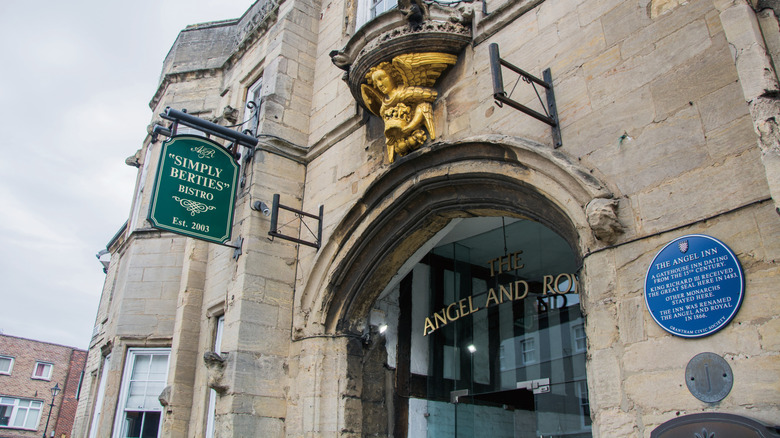
Visitors to the United Kingdom often prioritize London and Edinburgh, but they miss the hidden charm of York, the vibrant nightlife of Manchester, and the cultural, scenic coastline of Northumberland. And then there is Lincoln. About an hour's drive northeast of Nottingham, the city might seem unassuming were it not for its magnificent cathedral, which is still taller than the Great Pyramid, and the medieval charm of what is, perhaps, the oldest hotel in England.
The building may have opened its doors as far back as 1203, and legend has it that King John stayed here shortly before signing the most famous document in English history, the Magna Carta. That event in 1215 had repercussions that carried all the way to the American Revolutionary War. Richard III — Shakespeare's villain extraordinaire — also spent the night in one of its guest suites.
Today, the inn retains its medieval appeal, offering quiet rooms of contemporary design peppered with features that cast an eye back over the centuries. Tariffs begin at around $120 a night for two guests, and larger rentals are also competitively priced. Meanwhile, the food served is as unpretentious as it is palatable. Pro tip: Afternoon Tea here is an S-grade affair.
The Hotel Grauer Bär, Italy
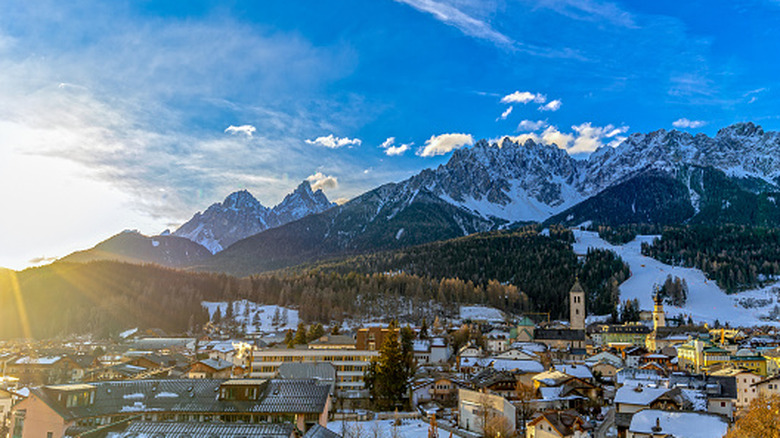
The village of Innichen, in which the Hotel Grauer is situated, does not immediately spring to mind when thinking of Italian vacations. It lies close to a three-hour drive north of Venice, close to the Austrian border, and yet, despite its relative anonymity, the region is packed with things to see and do. The mountains of the Hohe Tauern National Park are just across the border, while the popular ski resort town of Monte Cristallo lies just 20 miles to its south. Indeed, the whole region is awash with fairytale valleys blessed with meadows and majestic views.
The hotel itself has been in family hands since the mid-18th century, but its pedigree goes much further back than that. The town was granted market rights way back in 1303, and by 1462, hard evidence of an inn found on the site of the current hotel cemented its reputation as one of the oldest houses of rest in Europe. Today, it provides the kind of hospitality that you can only get from ten generations of love and care.
It is, of course, a beautiful building. Rooms featuring real wood floors and solid oak furniture are found throughout, and you'll find an indoor pool, rooftop spa, and seasonal treats aplenty. Prices range from $230 to $300, depending upon the season, with summer and winter ski seasons commanding the highest tariffs.
Palazzo Dalla Rosa Prati, Italy
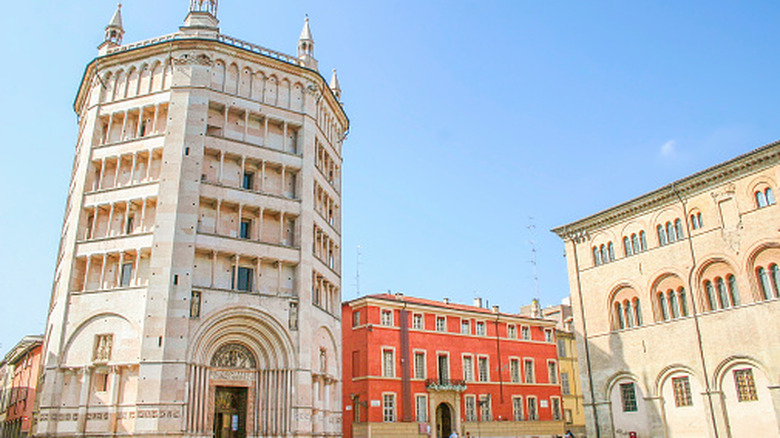
Palazzo Dalla Rosa Prati is a 15th century square in the heart of Parma, an underrated and crowd-free foodie city in northern Italy. The old town within which the Palazzo Dalla Rosa Prati rests is a thing of wonder. The 12th century San Giovanni Battista Baptistry is next door to the hotel, opposite the stunning Piazza Duomo Parma, one of the best-preserved medieval squares in all of Europe. Next to that is the even more ancient Cathedral, which dates to 1074.
Against such a backdrop, the hotel feels like something of a wallflower; of Romanesque design, sure, but one that struggles to keep up with the majesty of its surroundings. A single step inside, however, is enough to undo such impressions. The building oozes history, yet the rooms maintain a timeless elegance that emphasizes modern standards of comfort.
Considering the location, prices during high season are far from excessive: three-bedroom apartments start at around $250, but single rooms come in at only $150 a night. And for that, you get to explore the city from the center out. There are talking statues to discover, an incredible opera theatre, and, yes, the opportunity to become intimately familiar with one of the world's best hams via a dedicated museum.
Gasthaus Zum Roten Bären, Germany
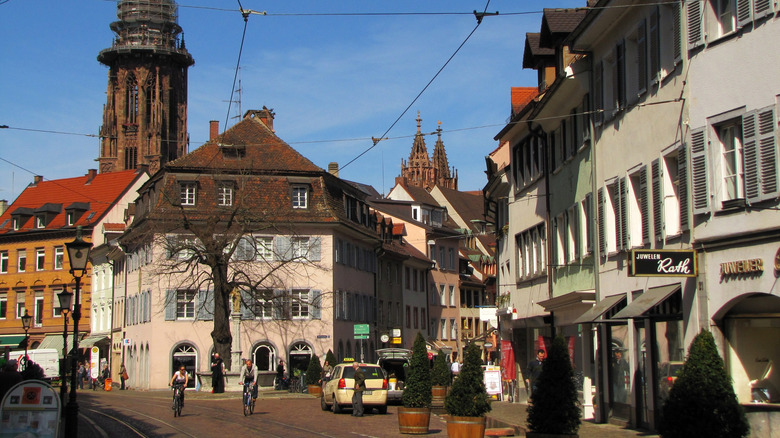
Germany's oldest inn rests in the center of Freiburg, around 40 miles north of the Swiss town of Basel. The guesthouse has operated since 1120, back when Freiburg was a newly created small market town nestled within the hinterlands of the Duchy of Swabia. Today, the town holds on to the mystique and rustic charm of its past, and nowhere is that better illustrated than at the Zum Roten Bären.
The name translates simply as the Red Bear, and it is said that over 50 innkeepers have managed the business over its long and storied history. By design, the guest-centric philosophy has continued into the modern period. The tight lines and muted colors of the exterior façade conceal rooms with a decidedly modern flavor.
Standard doubles cost over $200 a night, but suites are not that much more expensive, and deals can be found for those who are flexible on dates. The restaurant is a chic affair that serves both lunch and dinner with a summer overflow area, offering some of the best alfresco dining for miles around.
Methodology
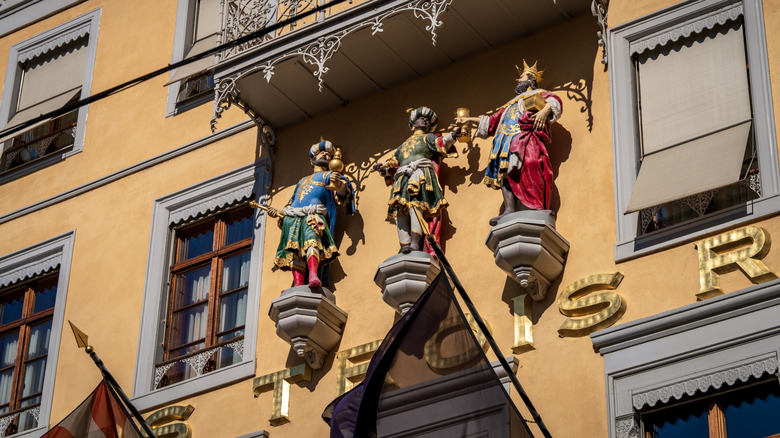
These hotels were chosen with several criteria. First and foremost, the hotel had to be old. Secondly, it had to be located somewhere we had visited at least once, or else based on actual overnight stays. Also, special attention was paid to curious histories, surrounding areas, and online reviews for hotels we hadn't stayed in.