
9 Of The World's Oldest Zoos You Can Still Visit
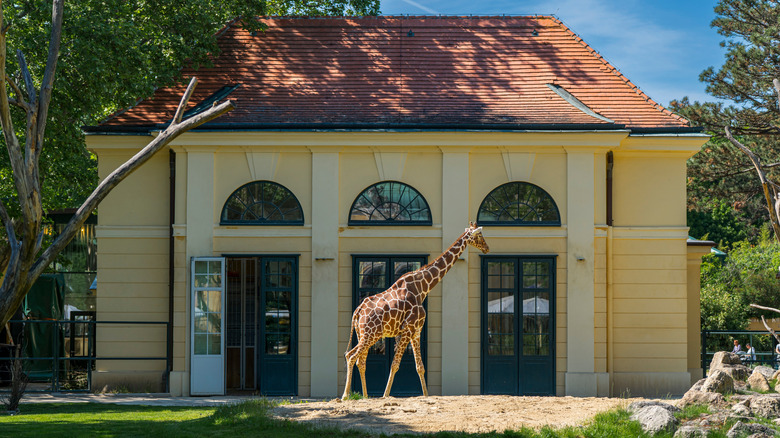
Since the dawn of humanity, people have been fascinated by animals. From cave drawings that depict unicorns and early warthogs to the history of Pekingese dogs as Chinese nobility to Hannibal's elephants leading his troops across the Alps, animals and people have been connected for thousands of years. Long before modern aquariums held rare creatures and spectacular displays or themed lands at Disney's Animal Kingdom existed, wealthy individuals developed menageries or private zoos.
Some of these exotic animal collections evolved into public zoos, marking the origin of facilities that have now been entertaining, educating, and inspiring visitors for centuries. Today, a number of the world's oldest zoos are still open, functioning as major tourist attractions. While zoos as a whole have modernized, focusing more on conservation and preservation, over the years, they still offer the same sense of wonder they always have. In this guide, we'll journey to nine of the world's oldest zoos you can still visit.
To put together this guide, we used official zoo websites, Smithsonian Magazine, the official website for the Paris Office of Tourism, and various news sources and magazines, including the BBC, Condé Nast Traveler, the US News travel section, Blooloop, and the Which Museum website.
Tiergarten Schönbrunn (Vienna, Austria, 1752)
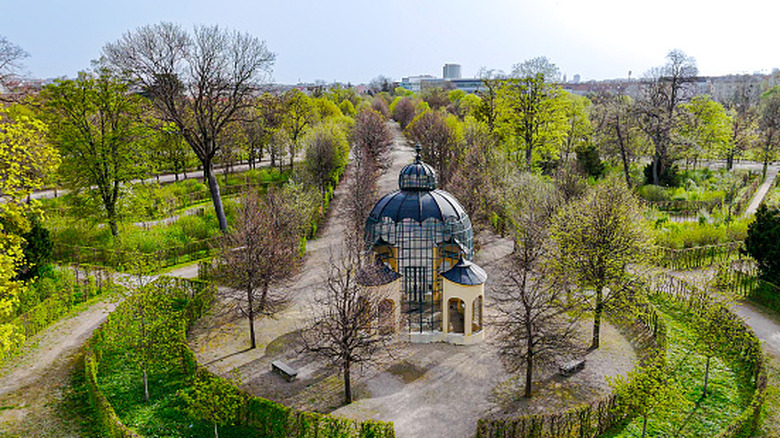
No zoo on Earth can claim a longer continuous operating history than Tiergarten Schönbrunn in Vienna. This institution stems from Habsburg Emperor Franz I Stephan's royal menagerie, which opened on the palace grounds in 1752. Over 270 years later, it holds the title of the world's oldest operating zoo and is one of Austria's most popular tourist destinations.
"Most of [the menageries] were closed after the death of the emperor who founded them," zoo historian Gerhard Heindl told Smithsonian Magazine. But not Tiergarten Schönbrunn. When Franz I Stephan passed away, his son and future generations expanded the zoo rather than shutting it down. The result is a stunning facility that sits directly on the summer palace grounds. Today's visitors can easily spend a full day exploring the zoo and touring magnificent Schönbrunn Palace. The zoo itself houses around 500 species, including giant pandas and an impressive polar bear enclosure that allows guests to view the bears underwater!
Despite its age, Tiergarten Schönbrunn is far from outdated. The zoo has evolved to become a world leader in conservation work, public education programs, and thoughtfully designed animal habitats. The historic Emperor's Pavilion, constructed in 1759, is one of the zoo's most famous features, serving as a gorgeous Baroque restaurant today. Guests can also opt to dine at other on-site restaurants, including the Café Restaurant ORANG.erie, which offers views of orangutans at play, or the Schnitzel Garden by the penguin enclosure.
Ménagerie du Jardin des Plantes (Paris, France, 1794)
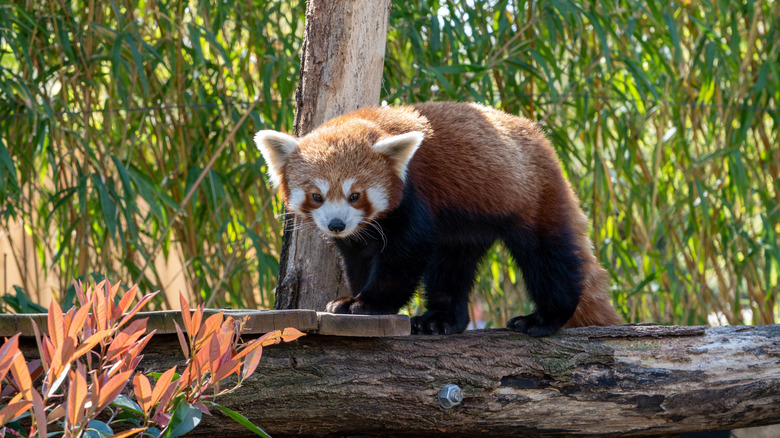
Few zoos have a history as fascinating as the Ménagerie du Jardin des Plantes in Paris. Officially opened during the French Revolution in 1794, this institution originally had 58 animals, many transported from Versailles and the Duke of Orléans' estate, as well as other private menageries over time. It's easy to understand why this zoo remains so popular and fascinating today. Few other facilities have such unusual origins. The elegant Ménagerie du Jardin des Plantes is quite literally the product of one of the most violent political revolutions in world history.
In an age when access to exotic animals was almost exclusively reserved for royals and aristocrats, the ménagerie was ahead of its time with its public education. Today, the zoo remains committed to careful animal care and biodiversity, housing 3,000 animals! One of the highlights for visitors is viewing Europe's biggest herd of giraffes. Between exploring the sights here, guests can enjoy a meal at the zoo's signature Restaurant Les Belles Plantes, which offers a Mediterranean-inspired menu.
Something else that makes the Ménagerie du Jardin des Plantes unique is that it doesn't only focus on animals. Visitors can experience several other on-site museums — housed in ornate historic buildings — dedicated to all of the galaxy's wonders. In the Galerie de Géologie et de Minéralogie, for example, there are massive, glittering geodes, as well as meteorites from Mars. Meanwhile, in the Galerie de Paléontologie et d'Anatomie, visitors can marvel at massive dinosaur and mammoth fossils.
London Zoo (London, England, 1828)
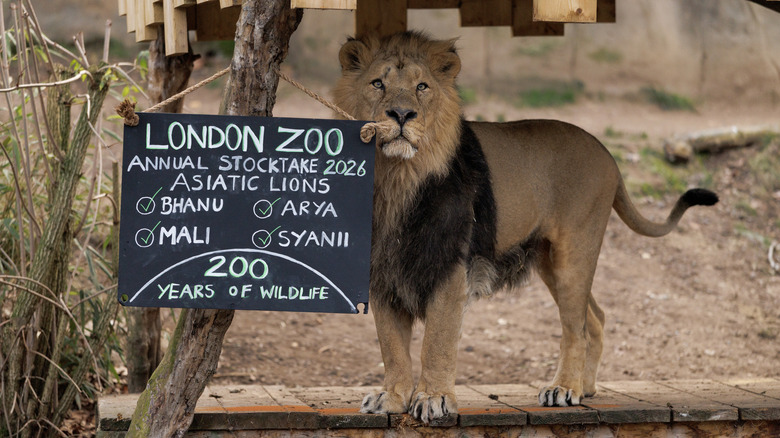
The London Zoo was opened by the Zoological Society of London (ZSL) in 1828, and holds the distinction of being the world's oldest scientific zoo. Unlike royal menageries and other early private zoos that were primarily intended for entertainment, the London Zoo was founded specifically for research and zoological study. After all these generations, it is still among the world's most respected institutions for wildlife education and conservation.
Initially, access to the zoo was restricted to scientists and researchers with ZSL membership. The public was first admitted in 1847, and London Zoo has been delighting families from around the world ever since. Over the decades, this zoo has been the location of many firsts: it housed England's first giraffe herd in 1836; the first public aquarium in the world opened here in 1853; and the nation's first walk-through bird aviary debuted in 1965.
Several legendary animals have also made their mark at London Zoo. Guy the gorilla (1947-1978) was a fan-favorite who is now immortalized as a statue, while Jumbo the elephant was moved from the Ménagerie du Jardin des Plantes in 1865 and thrived at the zoo until his untimely death in a train wreck in 1885. Perhaps the most iconic resident, though, was the real-life inspiration for Winnie the Pooh! This black bear captured creator A.A. Milne's heart during World War I. Today's guests can enjoy a total of 18,000 animal residents, making London Zoo a great addition to any trip to Europe's best city destination for family travel in 2026!
Dublin Zoo (Dublin, Ireland, 1831)
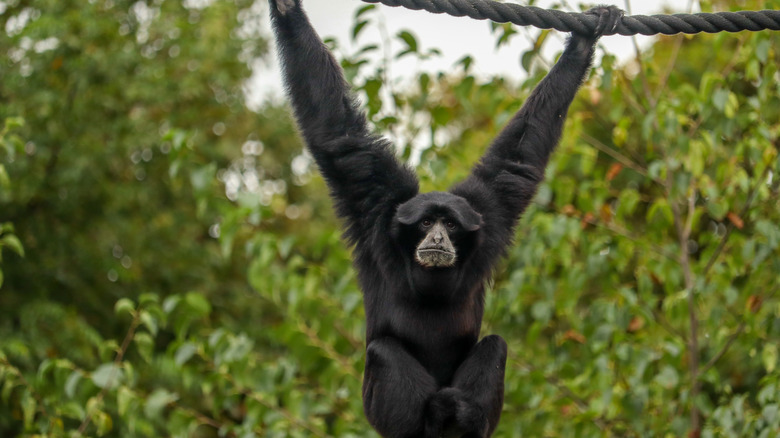
Established in 1831, Dublin Zoo sits firmly among the oldest zoos in the world and is one of Ireland's most beloved destinations. With over one million visitors a year, it may not be one of Dublin's best attractions to beat tourist crowds, but it is absolutely worth a visit. Like London Zoo, Dublin Zoo has always been a scientific zoo; 19th-century London Zoo officials supported this facility by donating 118 animals to celebrate its opening. Over the years, Dublin Zoo has earned an exceptional reputation for conservation and ethical endangered animal breeding programs.
Modern visitors will find an impressive array of international animals. Notable exhibits include Asian elephants, southern white rhinos, western lowland gorillas, California sea lions, and even an area called Zoorassic World, where guests can learn about contemporary reptiles as well as dinosaurs. There are also a variety of daily programs, such as zookeeper talks about Asian lions, orangutans, chimpanzees, and more.
In addition to Dublin Zoo's everyday educational programs for visitors from around the globe, the facility provides support for local teachers and pupils of all ages. Instructors can register for various teacher courses to help them bring animal education into the classroom, while Irish students can attend summer camps and other age-appropriate classes throughout the year.
ARTIS Amsterdam Zoo (Amsterdam, Netherlands, 1838)
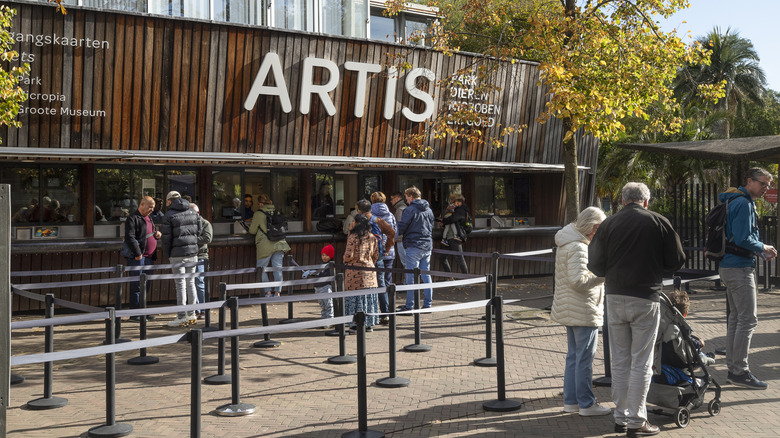
ARTIS Amsterdam Royal Zoo opened its gates in 1838, and has long been one of the Netherlands' cornerstone attractions, both for local families and for travelers. Located in central Amsterdam, the zoo was originally only open to members of the ARTIS society, and it ultimately became a bastion of upper-class social and cultural events. In 1851, however, the zoo was proclaimed to be "for all residents of Amsterdam," and it has been open to the general public ever since. Even from its earliest days, ARTIS has always been more than a zoo. Over the years, it has been home to museums, art exhibitions, and concert series that continue to this day.
The ARTIS-Groote Museum is a highlight for many visitors. This facility has a collection of over 1,000 objects that immerse museum goers in the natural world, from the tiniest microscopic organisms to the largest animals on land. The zoo's research department is also quite well-respected, regularly partnering with universities and scientific foundations. One notable partnership was a collaboration with Utrecht University to advance programming at the ARTIS-Planetarium.
In the zoo portion of the ARTIS grounds, visitors can enjoy an astounding 1,350 species housed in numerous environments, such as a renovated aquarium and a butterfly pavilion. Less-common zoo animals highlighted by ARTIS include the ring-tailed lemur, the bat-eared fox, the turquoise dwarf gecko, and the false gharial, as well as mainstays like reticulated giraffes, Asian elephants, and red pandas.
Antwerp Zoo (Antwerp, Belgium, 1843)
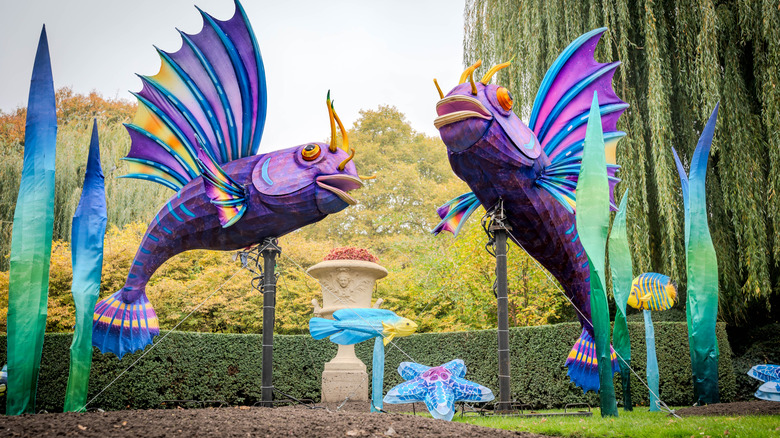
As the most fashionable city for European fall travel, tourists should seriously consider planning a trip to Antwerp, Belgium. One of this chic city's go-to destinations is the Antwerp Zoo. Operating since 1843, this gorgeous zoo can be found just about 10 minutes from Antwerp Central Station, frequently cited as one of the world's prettiest railway stops. The zoo itself is known for its diverse collection of fish and animals, comprising over 1,100 species.
One of the highlights here is the extinct-in-the-wild Père David's deer, an animal with a fascinating past. Only one known herd has existed in history: in a 19th-century Chinese royal menagerie. The institution is also well-known for its reptile exhibit, which, in lieu of conventional glass or bars, uses a "cold barrier" to keep creatures from wandering out of their enclosures. This affords an incredibly immersive reptile house experience, since visitors feel as though they're walking through a real jungle! The Antwerp Zoo features multiple architectural styles, including buildings meant to resemble Greek ruins and an Arabic temple.
Visitors who opt to turn the zoo into a full-day experience will find that there are several on-site restaurants to choose from. The Grand Café Flamingo is perhaps the prettiest spot on site, where visitors can enjoy a drink with a view of the flamingo enclosure amid an elegant pink and green interior. Meanwhile, Savanne Restaurant is an African-inspired spot where guests can watch savanna animals roam during their meals.
Berlin Zoo (Berlin, Germany, 1844)
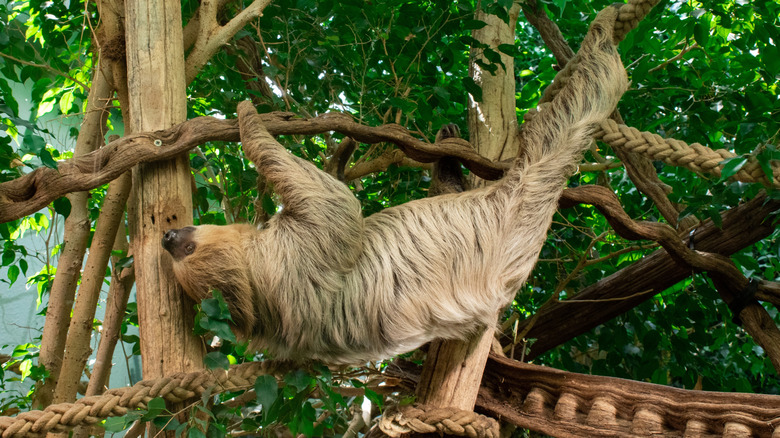
Since it welcomed its first visitors in 1844, the Berlin Zoological Garden, or Berlin Zoo for short, has been a popular destination for families. In fact, it is the most visited zoo in Europe, famed for diversity and fun. Berlin Zoo has always had a major focus on constructing exceptional animal habitats. Its aquarium has existed since 1913 and currently holds over 9,000 examples of marine life, making it an incredible place to learn about the world's seas and oceans. Overall, the Berlin Zoo is home to the largest collection of animal species anywhere on Earth.
There are over 1,000 species represented here, and approximately 19,500 animals in total. Visitors can expect to encounter a wide range of global wildlife, from giant pandas and Sumatran tigers to unique endangered species like okapi to rare birds, rhinos, giraffes, and much more. The sheer amount of biodiversity at Berlin Zoo is one of the reasons that this facility is often ranked among the world's top zoos.
Over the decades, as one might expect for a German facility, Berlin Zoo has survived political upheaval and extensive destruction during World War II. Nonetheless, officials here remained committed to their mission of caring for animals and conserving wildlife, rebuilding even better than before. The oldest building that still exists on the property is the 1872 Antelope House, where visitors can view giraffes, gerenuks, and sitatungas, among other species. Today, Berlin Zoo continues to heavily invest in new exhibits and habitats.
The Zoological Park (Thiruvananthapuram, India, 1857)
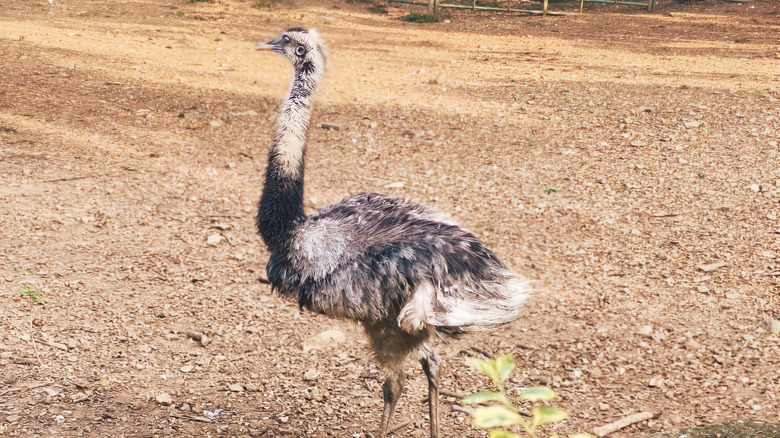
The Zoological Park in Thiruvananthapuram, India, was established in 1857. Thiruvananthapuram Zoo, located just over an hour from one of India's most soulful secret beach towns, is a popular destination, known for its botanical gardens as well as its animals. The construction of this zoo was ordered by Swathi Thirunal Rama Varma, the maharaja of Travancore, who assumed rule at just 16 years old.
Originally, Varma's menagerie included Bengal tigers, wild boars, and various deer species. Today, visitors can enjoy 98 different species, as well as various birds and insects that are native to the region and live in the park organically. Among this facility's highlights is its reptile building, which houses numerous snakes, turtles, and other creatures. The anacondas are its most well-known residents.
As part of its conservation efforts, Thiruvananthapuram Zoo participates in a lion-tailed macaque breeding program. These monkeys, a native species in India, are endangered, making breeding programs like this quite important. The grounds here are one of the best parts of visiting. Although this zoo doesn't have as many animals as some of the others in this guide, it offers a lush setting complete with water features and wooded areas.
Philadelphia Zoo (Pennsylvania, U.S., 1859 charter)
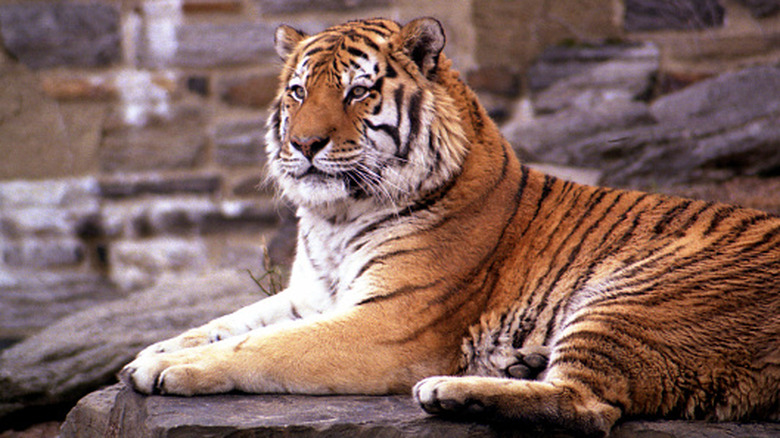
Rounding out this list of some of the world's oldest zoos is the Philadelphia Zoo, which is the oldest zoo in the United States of America. Chartered in 1859, the Civil War delayed construction, preventing the facility from opening to the public until 1874. From day one, the Philadelphia Zoo was designed to be more than merely a place to look at animals. Its founders strongly believed in conservation, particularly of North American species.
Now, more than 150 years later, the Philadelphia Zoo's mission carries on. Today, the zoo is home to over 1,300 animal species that hail from around the globe. From gorillas to endangered big cats to black bears to bald eagles and more, there is no shortage of exhibits here. Over the decades, the Philadelphia Zoo has also been the site of many important firsts in the zoological community, including the first successful births of orangutans and chimpanzees in the nation and the first animal care hospital on zoo grounds.
One of the most innovative modern developments is Zoo360. This "highway" of elevated animal paths gives species like tigers and chimpanzees the ability to move around the grounds overhead, thrilling guests. This Pennsylvania gem is also home to a Victorian garden where guests can relax amid animal viewing.