
The Best Florida Shores To Spot Manatees From Land (No Boat Needed)
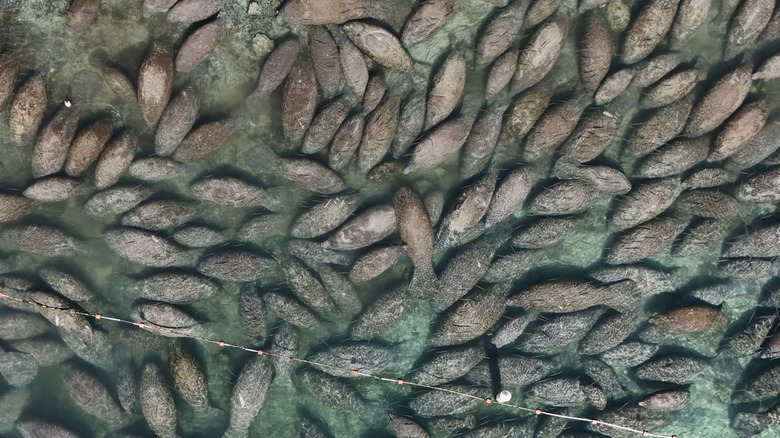
The Florida manatee is a subspecies of the West Indian manatee and the official marine mammal of Florida. They are gentle, slow-moving animals, disarmingly curious, and utterly fascinating. Once endangered, they have made a significant recovery after decades of conservation work and were reclassified as threatened under the federal Endangered Species Act in May 2017. Now, there are almost 8,500 of them in Florida's waters, and as a keystone species, their health affects that of Florida's waterways. When the manatees thrive, the ecosystem they inhabit thrives.
Most people associate manatee watching with kayak or boat tours. While there is no shortage of them in the state, manatees are shallow-water animals, rarely venturing into depths greater than 6 feet. This makes them vulnerable to boat strikes. In fact, this is one of their biggest threats. Watching from land isn't just a practical alternative — it's probably the most responsible way to observe these animals. On top of that, some people simply don't want to, or maybe even can't, get on a boat.
The best places to spot manatees from land are warm water refuges, particularly in winter. This is because water temperatures below 68 degrees Fahrenheit can be dangerous for manatees over extended periods. With barely an inch of body fat and a metabolism that generates little heat, cold stress syndrome, a condition that mirrors the effects of hypothermia in humans, is a real risk. That's why you'll see them hanging out in natural springs, power plant discharge canals, and protected lagoons each winter.
To put this list together, we've consulted government and conservation websites, as well as official tourism and local Florida travel publications. We also consulted real-world opinions on forums and social media groups. So here are the 10 best places to spot manatees from land in Florida.
TECO Manatee Viewing Center, Apollo Beach
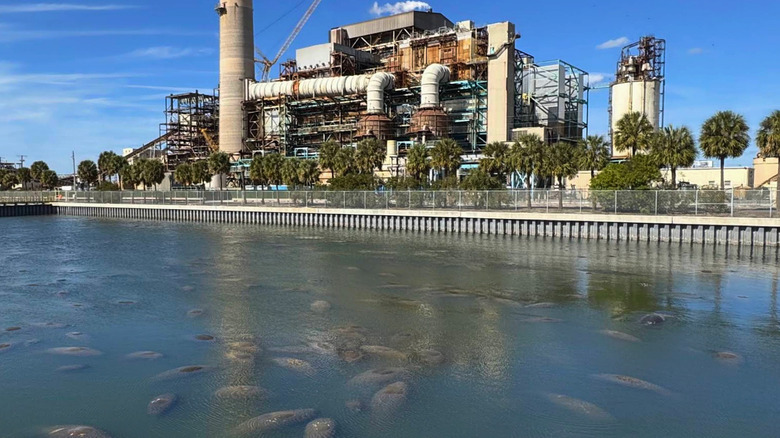
On December 29, 2023, Tampa Electric announced an unprecedented congregation of manatees at its Manatee Viewing Center in Apollo Beach. FOX 13 Tampa Bay reported 1,100 of them, which easily broke the previous record of 850. Remarkably, you can see spectacular sights like this for free at the center. It has been featured in USA Today's Best 10 Readers' Choice Awards in the best free attraction category no less than three times. The manatees return in numbers every winter to the warm-water outflow beside the power station — a behavior rooted in the plant's cooling process. It pulls in water from the bay and returns it warm and clean. This process has been in place since the early '70s. As a cold-weather refuge, the warm-water channel now carries formal recognition as both a state and federal sanctuary.
The season runs from November through April, with December onward considered the best window. This is when Tampa Bay's water drops low enough to prompt the biggest numbers of manatees to seek warmer water. Elevated platforms position visitors above, and the 900-foot Tidal Walk extends out over the bay. You'll also find a 50-foot observation tower where you'll get stunning views across Tampa Bay on a clear day. It's halfway along an inland nature trail that winds its way through three distinct Florida coastal environments. The entire site is wheelchair and stroller accessible, and the education center covers both manatee biology and habitat. It's simply a fascinating day out for the whole family and easily one of the best destinations to view manatees.
Blue Spring State Park, Orange City
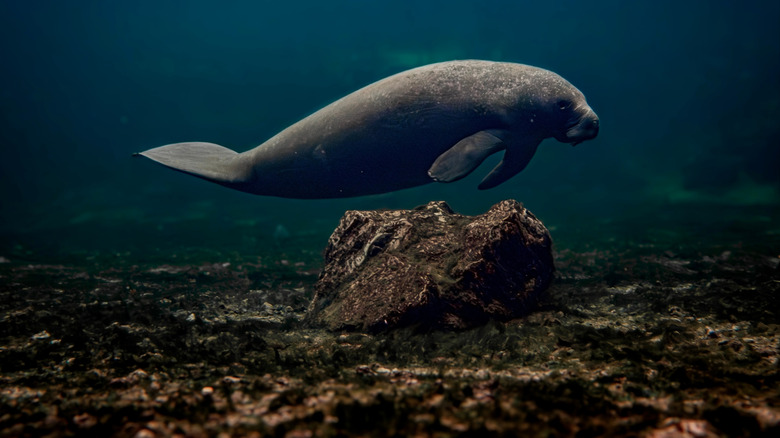
When researchers started tracking manatee numbers at Blue Spring State Park in the '70s, there were only 36 animals. Today, hundreds of them gather every winter. The spring simply stands out as one of Florida's most important winter manatee refuges, and Orange City, where it is located, is just a short drive from both Orlando and Daytona Beach. It's such a popular spot for manatees because it offers year-round thermal stability at 72 degrees Fahrenheit. The waters of the St. Johns River, where they usually feed, get colder throughout winter, and the manatees head for the spring around the start of November. At this time, people can no longer swim in the spring, as it is reserved exclusively for those gentle sea cows.
The spring run is a ribbon of crystal-clear water that threads its way from the river to the headspring. Here, you'll see manatees drifting through like slow-moving shadows while you walk along the boardwalk. It runs alongside for about a third of a mile and is accessible to all. Peering down, you can watch mothers nursing their calves in the transparent water for an intimate glimpse into manatee family life. Farther along, an overlook platform at the spring boil puts visitors front and center above one of the most concentrated manatee gathering points in the state. Cold mornings offer the best viewing; this is when the animals are at their most active. Reservations are required, and same-day slots fill up fast, especially when daily counts are running high.
Three Sisters Springs, Crystal River
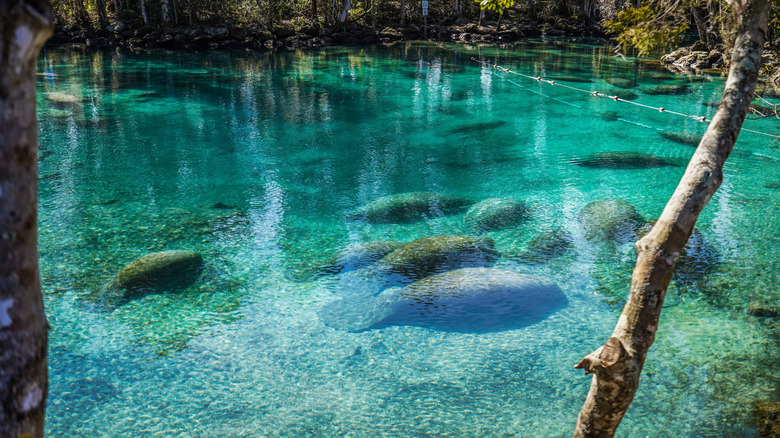
The Crystal River National Wildlife Refuge holds the distinction of being the only refuge in the United States created specifically to protect manatee habitat. Three Sisters Springs in the refuge is one of the best places to view manatees from land. These springs, located in the Gulf Coast city of Crystal River, maintain a consistent flow of warm water year-round and are a natural lifeline for manatees every winter. When the cold takes hold in Kings Bay, hundreds pour in for one of the most concentrated winter gatherings in Florida. Authorities forbid water activities in the springs during this time. Therefore, between November 15 and March 31, the only way you can see the manatees here is from the boardwalk at the Three Sisters Springs Center. Access is by trolley, or you can walk or ride a bicycle from 601 Three Sisters Springs Trail. There is no parking at the refuge, only a handful of accessible spaces, and last entry is at 3:30 p.m.
The U.S. Fish and Wildlife Service offers daily ranger-led programs during the winter season, and volunteer guides offer walking tours year-round. The boardwalk wraps around the springs, and viewing platforms give visitors excellent vantage points into the water below. These waters are a display of striking Caribbean colors that are so transparent that you can vividly see the manatees moving beneath the surface and resting on the spring bed. There are also nature trails winding throughout, where you can get nice views of places like Magnolia Springs, Lake Crystal, and the surrounding wetlands, where you'll see other animals the refuge draws in, including over 100 species of native and migratory birds.
Ellie Schiller Homosassa Springs Wildlife State Park, Homosassa
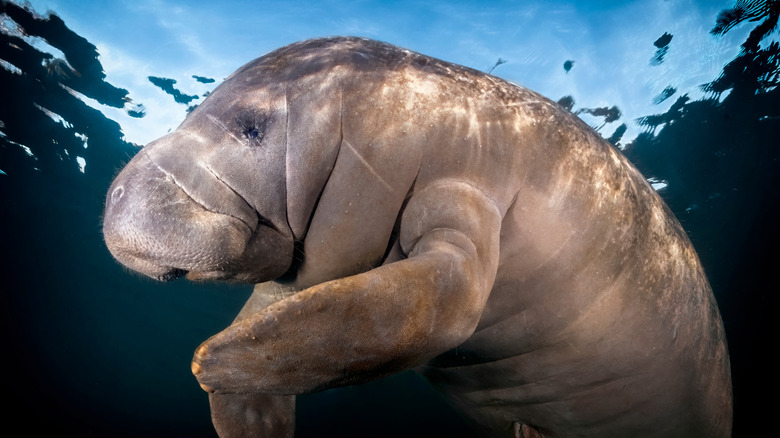
Two injured manatees named Ariel and Betsy live permanently at Ellie Schiller Homosassa Springs Wildlife State Park. This is because the park doubles as an active rehabilitation facility. They were both injured and unable to return to the wild, and you can visit them year-round in Homosassa, just 10 miles south of Crystal River. But if you wait until November 15, you'll see a whole lot more. This is when the gate between the river and the springs opens — and this is when manatee counts can reach as many as 200 in a day. Peak numbers arrive in January, and the gate stays open until April 1.
There are three excellent vantage points where you can see them. The first is the Underwater Observatory, an enclosed building where you come face to face with manatees through a viewing glass looking right into the spring. It's the best place to see manatee cows mothering their calves up close and a unique experience in Florida. The Long River Bridge is where you'll see the manatees in motion. They pass underneath and push into the park, and they pass in such numbers that it's hard to decide if it is better viewing than the Underwater Observatory. They're heading for the Garden of the Springs, where you can watch them from an observation deck. This is where the animals gather in their highest numbers, and they share the brackish spring bowl with a mix of fresh and saltwater fish such as large jacks, snapper, and mullet.
Lee County Manatee Park, Fort Myers
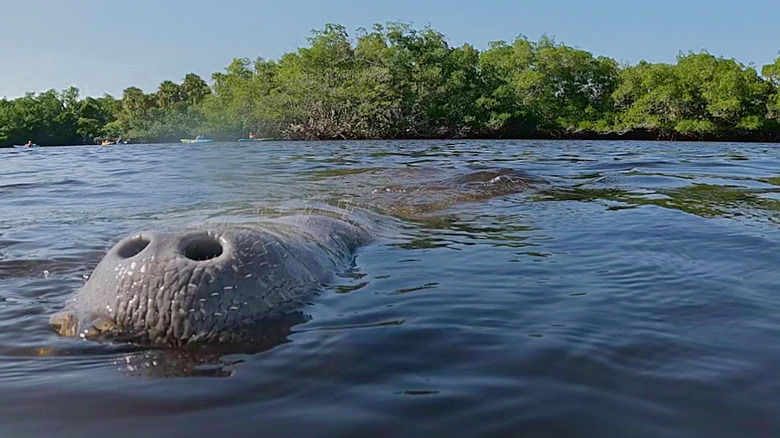
Fort Myers might be renowned for its beaches and charming islands, but another attraction is Lee County Manatee Park. It's free to enter, and just like the TECO Manatee Viewing Center, the nearby power plant that accidentally created the winter refuge. The warm-water outflow from the Florida Power & Light (FPL) plant attracts manatees in from the Gulf, and the optimal viewing window here runs from December through February. On the coldest days, the canal fills with dozens of them. However, it's advisable to arrive early when that cold snap hits, because the manatees will move on to feed as the day warms.
Paths and viewing platforms run the length of the canal, and boats are excluded from the area. All viewing is from the banks, and if you stand close enough to the warm-water outflow, you'll see the manatees reveal themselves in flashes. You can't quite see the full picture because the water is somewhat murky. They'll break the surface with a whiskered nose here and a paddle-shaped tail there, but they surface every few minutes.
Farther along where the water calms and shallows, you'll get views of the animals in their full glory. Along the way, there are two exhibits worth checking out. One is an underwater audio feed where you can hear the manatees communicating with each other underwater. The other is a polarized glass panel at the water's edge for a clearer look into the canal. The park also runs educational exhibits and seasonal talks by manatee experts throughout the winter months.
Manatee Lagoon, West Palm Beach
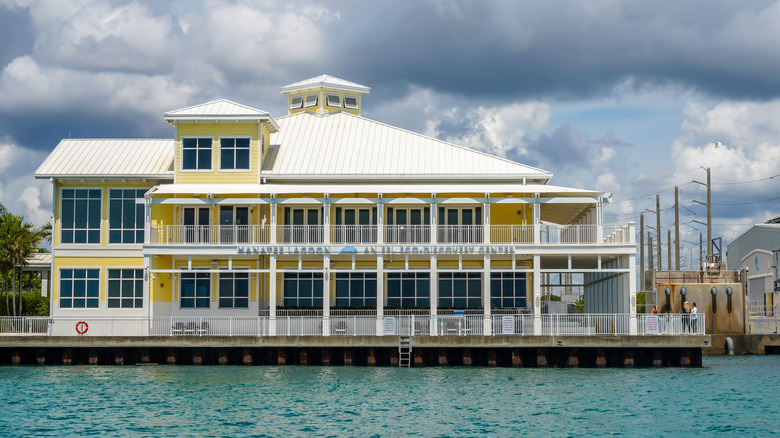
For decades, manatee mothers have been navigating to the warm water outflow of the FPL plant on the shores of Lake Worth Lagoon. During a particularly cold spell in February 2026, The Palm Beach Post reported a count of more than 240 of them at Manatee Lagoon — An FPL Eco-Discovery Center in West Palm Beach. This is the manatee center FPL built shortly after modernizing its plant, and 240 is the highest count recorded there in a long time. The best viewing window runs from mid-November to the end of March. Parking and admission are free, and doors are open from 9 a.m. to 4 p.m. Tuesday through Sunday.
Viewing is split between two distinct levels. The upper observation deck offers fine views across the broad, calm expanse of the lagoon, while the ground-level platform is positioned right at the warm-water outflow. You get to see the manatees up close there, and their curiosity for humans is very apparent. They often roll onto their backs and look up at the visitors above with whiskered, inquisitive faces, while mullet dart through the water and brown pelicans dive nearby.
The center's trained education ambassadors, the Manatee Masters, lead daily tours at 2 p.m., while interactive exhibits are available year-round. In addition to manatee viewing, this scenic West Palm Beach lagoon is also a good spot for fishing.
Merritt Island National Wildlife Refuge, Titusville
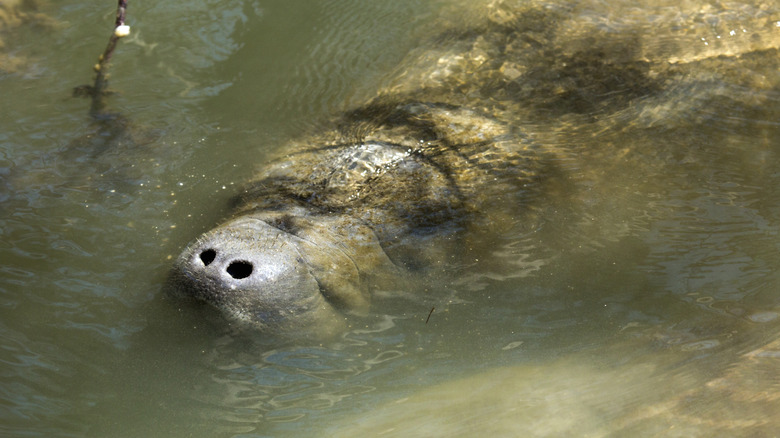
Merritt Island National Wildlife Refuge is one of the few manatee sites in Florida that doesn't have an offseason. Here, the Indian River Lagoon averages just 4 feet deep, which is shallow enough to ensure the sun's rays keep things warm year-round. The manatees tend to linger here, and you can spot them at any time from a kayak. There is an observation deck for viewing from land, but the water can be cool enough around it in winter that many manatees move on. But don't fret; you can still see plenty of them from land from spring through fall.
Around a third of the entire national manatee population lives in or passes through these waters. The viewing deck is on the east side of the Haulover Canal Bridge. It connects the Indian River Lagoon with Mosquito Lagoon, and the pleasure of viewing from the deck comes at no cost. It's also open around the clock, but the water can be a little murky. Polarized sunglasses will help you pick out the animals grazing in the shallows. There's also a polarized viewer on-site alongside interpretive signs, while free guided and self-guided tours are available.
Beyond the canal, the refuge covers 140,000 acres of brackish estuaries and marshes, and the barrier island is a birdwatching haven with no less than 357 species logged. On top of them and the manatees, you might also spot some of the hundreds of dolphins that frequent the area, while the Kennedy Space Center nearby completes a fantastic family day out.
Manatee Springs State Park, Chiefland
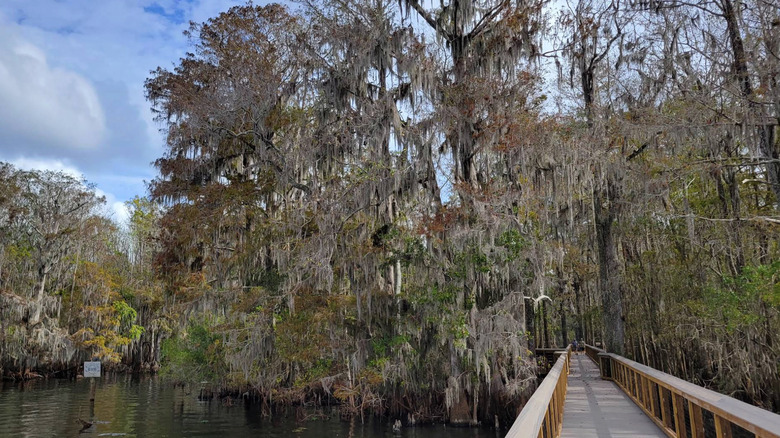
At Manatee Springs State Park, an 800-foot boardwalk takes visitors through towering cypress trees before delivering them to the spring's edge. It's a journey that's almost as good as the destination. What awaits is a first-magnitude spring, the largest single source of freshwater to enter the Suwannee River. It pushes between 50 and 150 million gallons of water every day at a steady temperature of 72 degrees Fahrenheit. This warmth draws manatees inland and up the river from the Gulf every winter — a seasonal migration that runs from November right through to April.
The park covers 2,443 acres of Suwannee River landscape and was designated as a national natural landmark in 1972. It sits just 6 miles west of Chiefland and is open from early morning until sunset every day of the year. When the spring run is clear, it is transparent to the bottom. The slow-moving gray shapes of the manatees move silently below — if you're quiet, you might even hear them before you see them. They give themselves away with a ripple among the fish or the sudden sound of a breath breaking the surface.
The spring holds up to 20 of them at a time, and park staff and volunteers keep daily records of every sighting. However, keep an eye on conditions before visiting because when the Suwannee floods, tannic river water can back up into the spring run. When that happens, visibility is gone, and the boardwalk itself might even disappear beneath the surface.
Manatee Observation & Education Center, Fort Pierce
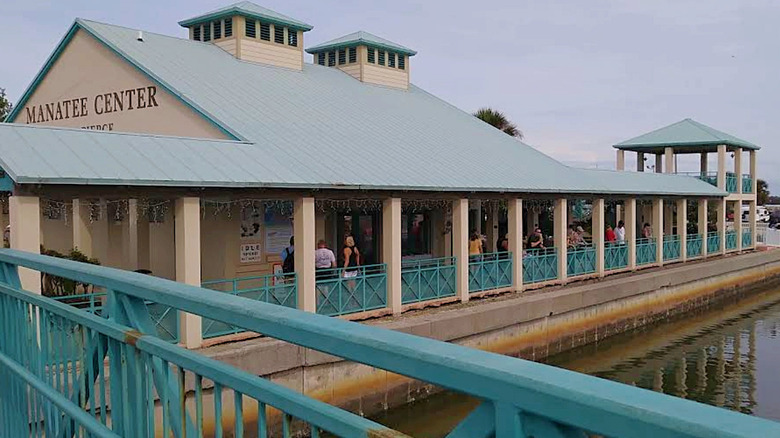
The warm-water outflow from the Henry D. King Power Plant once drew sanctuary-seeking manatees from the Indian River Lagoon. But one day, the plant closed. You'd expect the manatees would stop coming after that. But they didn't. As a passive thermal basin, Moore's Creek still holds warmth. But that's not everything that ensures the sea cows have continued to come back. It's also a source of freshwater, which manatees need to survive. In addition, manatee mothers use the creek as a nursery for their calves. They leave the calves in its calm water while they feed upstream. For the visitor, sightings are never guaranteed; these are wild animals moving on their own schedule. But they are present year-round.
The Manatee Observation and Education Center attracts around 55,000 people annually and occupies a waterfront site on Moore's Creek in downtown Fort Pierce. It provides a covered walkway at water level and a second-story observation tower above. It's not free, but the $3 admission fee won't break the bank, and it is open Tuesday through Saturday from 10 a.m. to 3 p.m. Inside, volunteer docents walk visitors through hands-on exhibits covering manatee biology, coastal habitats, and lagoon ecology.
The center is also a release point for rehabilitated manatees thanks to the creek's calm freshwater. The Indian River Lagoon that the creek feeds into is a saltwater estuary of national importance. It supports 4,400 species of flora and fauna, and the waters are rarely still. You might catch sight of bottlenose dolphins surfacing and rolling, brown pelicans diving, terns working the shallows, and mullet scattering in silver arcs.
Flamingo Marina, Everglades National Park
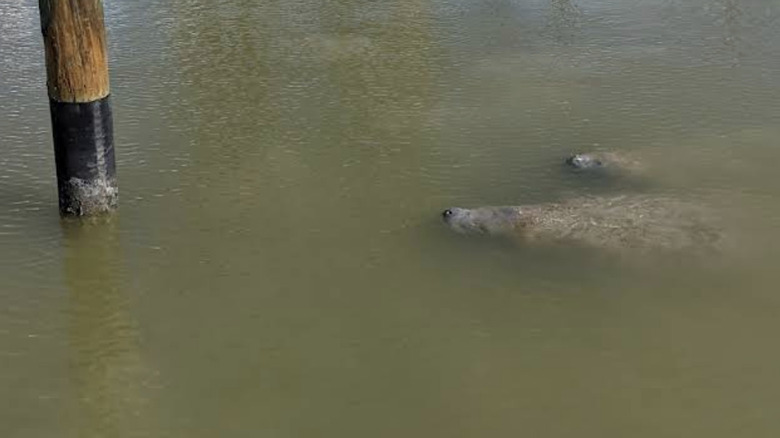
Flamingo Marina in Everglades National Park is an exciting place for wildlife. As the sun drops over Florida Bay, manatees begin to surface in the warm waters of Buttonwood Canal. You might catch sight of up to a dozen of them from the shore. Amazingly, the population has a single origin. One single mama manatee. Her descendants have made Flamingo their permanent home, and that lineage is told like park legend to tour passengers.
But manatees aren't all you'll see. American crocodiles have long claimed the marina as their own. You'll see them occupying the boat ramp regularly, stretched out with waiting jaws open, entirely unbothered by the goings-on around them. There's also a famous osprey couple that returns every winter to nest in the same spot, while the bay stretches beyond the marina in every direction. It's wide enough to lose yourself in, and its mangrove islands hold sharks and dolphins, while vast wheeling flocks of birds spread out to the horizon.
The Flamingo Lodge is unique. It's a hotel where dolphins and manatees swim just outside your door and is the only accommodation inside the park. A short walk away, the Guy Bradley Visitor Center features exhibits on Everglades wildlife and ecology, and a park ranger is on hand every day between 10:30 a.m. and noon to talk you through the wildlife you'll likely encounter.