
Unspoken Rules You Should Know Before Visiting The Sierra Nevada Region
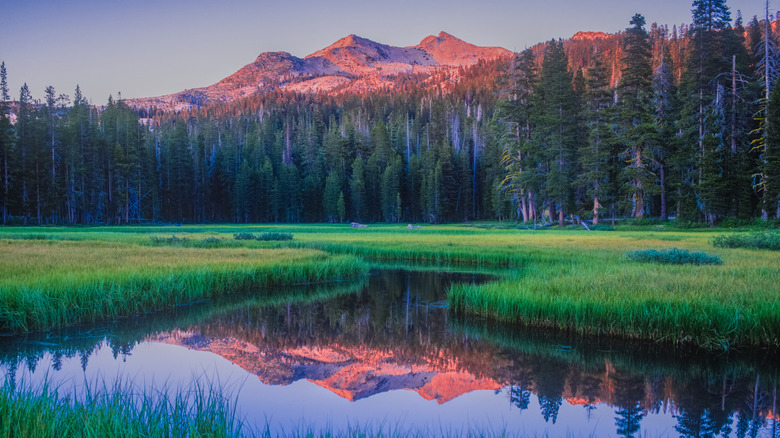
Brimming with gorgeous, high-elevation lakes, three major national parks, a national monument that's basically a mini Yosemite without the crowds, and cinematic scenery, the Sierra Nevada is like nowhere else on Earth. The region is vast, encompassing everything from Lake Tahoe and Mammoth Lakes to the Alabama Hills and Sequoia National Forest — and that's just the Eastern Sierra. There are more than 2,500 named peaks in the vast geological system that spans an area about 400 miles long and 60 to 80 miles wide, and both the Pacific Crest Trail (PCT) and the John Muir Trail (JMT) traverse some of the nation's most remarkable landscapes.
There certainly aren't just one or two ways to visit the Sierra Nevada. You might go camping, paddling, or fishing in one of dozens of state parks and recreation areas, or you may head to Bishop for rock climbing. Stick to the Eastern Sierra on a road trip along U.S. 395, or meander around the western slope to gaze up at some of the biggest trees in the world at Yosemite, Sequoia, and Kings Canyon National Parks. Wherever you decide to go, you'll encounter charming towns, mining history, good hiking, and more.
We've compiled this list with the help of articles, regional tourism sites, blog posts, Reddit discussions, and other social media threads, in addition to the author's own knowledge of the region. There's no official rulebook for a visit to this vast and rarefied area, so below, we've covered some essential things to keep in mind, from safety to seasonality, including things you won't want to miss. Read on to discover 11 tips and tricks to get the most out of your visit to this memorable part of California.
Don't get overwhelmed by everything there is to see
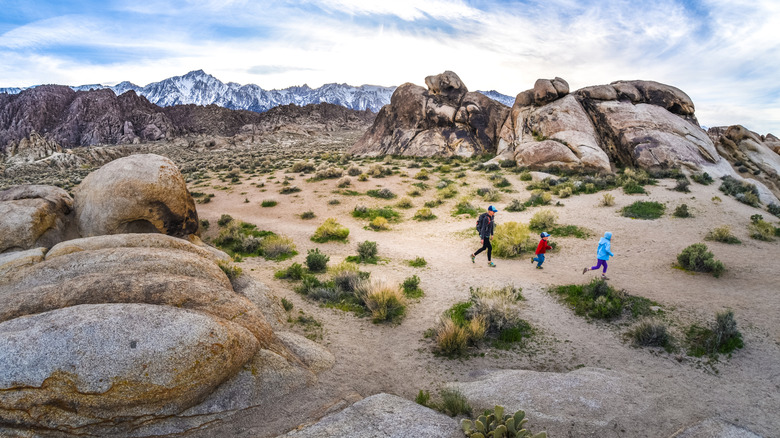
One surefire way to feel more stressed than satisfied about a visit to the Sierra is to worry about seeing everything in a short time. That's probably not going to happen in this vast area with more than 5,300 square miles of wilderness and numerous towns, historic sites, and parks. One Redditor shares that they've "explored the Sierras for over 25 years and theres still more to see." On a first visit, it might even be hard to choose where to start. East or west? South or north? Busy but renowned places like Lake Tahoe or smaller trails and parks that slide under the radar for most? Another Redditor adds, "All you can do is start."
One rule of thumb to consider is how long it takes to visit one main attraction, like Yosemite. One tip from a former park ranger suggests spending at least three to five days in that park alone, but you should also consider travel time there and back, plus anything else you might want to stop and see along the way. Do you want to take in as much as possible in a short amount of time? If so, you'll do a lot of driving and miss much of the immersive mountain experience that makes the Sierra so distinctive. Do you want to relax a bit, take some hikes, soak in a hot spring, and maybe float on a lake? Make a gorgeous mountain gem with refreshing water your base camp and experience what you can within a radius of a few miles. Don't worry about not seeing "enough." By virtue of the area's size, you'll see plenty, and there's magic in knowing that a return visit could be a completely different experience.
Be prepared to feel especially 'out there' in the backcountry
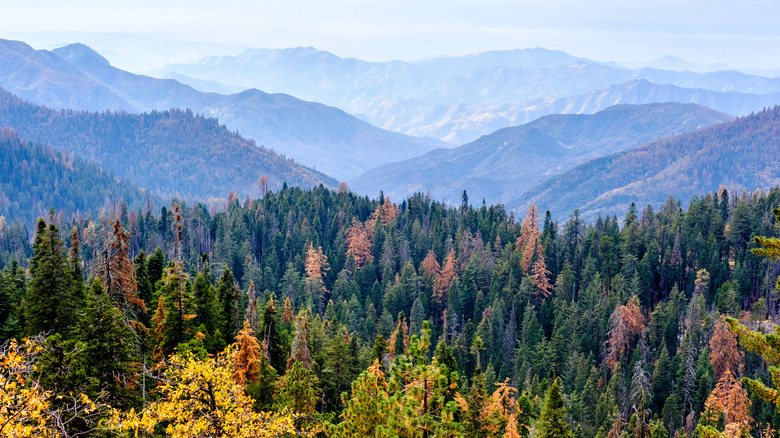
Even if we're just talking about Yosemite National Park, which encompasses only a fraction of the Sierra Nevada region, a whopping 1,100 square miles are congressionally designated wilderness. That's only the tip of the iceberg when it comes to the isolation one can find in these mountains. Additionally, Sierra National Forest encompasses 1.3 million acres across three counties, and if you include other federal and state-managed properties, there's a lot of room to explore. "If you are a through hiker on the PCT / John Muir Trail, you need to know that when you are out there, YOU ARE OUT THERE," says a writer for Matador Network. They also strongly suggest packing extra food because the closest services of any kind may be a whole day's hike away.
Another thing to keep in mind is what's required to stay overnight in the backcountry. A permit is essential when staying for longer periods in Sierra National Forest's wilderness areas and when camping in the backcountry of any of the national parks. Also, it might go without saying, but cell phone service in the wilderness, let alone at high elevations, is unlikely. Don't rely solely on GPS or any electronic equipment that needs to be charged every couple of days. In the wilderness, you may be without your phone for some stretches, so always have a map (and know how to read it) and a traditional compass. This will keep you on track and also help if you get lost.
Remember those who traversed this area before you
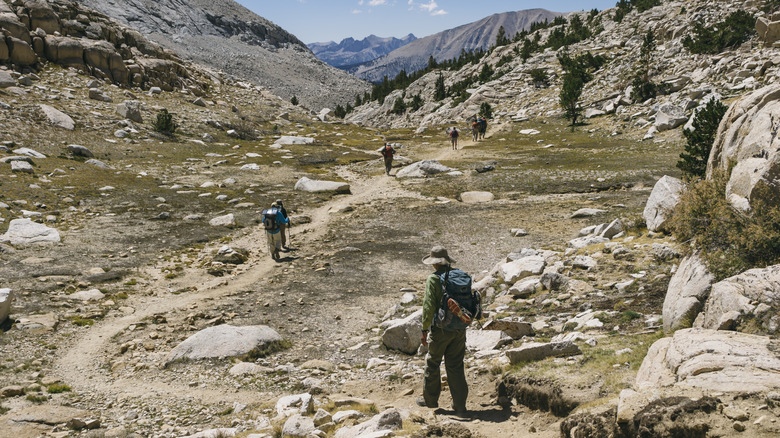
One of the most wonderful — and frankly addicting — elements of hiking and travel into wilderness areas is the feeling of discovery. But that's a bit of a tricky word, because even in the Sierra, where it feels as though few have ever traveled, many certainly have. Another nugget of wisdom from an article in Matador Network is that, well, "People have been here for a while." Many of the routes we continue to hike today are mule routes that were established by homesteaders and miners during the 19th century. (Pack mules are still a common sight in the Sierra, and some organized hikes include mule support for resupply.) Before they were used to haul families' essentials or supplies and ore from local mines overland, the routes were seasonal travel and trading routes for Native Americans.
The Sierra was — and continue to be — home to cultures like the Washoe, Shasta, Miwok, Paiute, Chukchansi, and many others. The JMT, for example, is known to the Paiute as Nüümü Poyo. "Long before it was named the John Muir Trail, before Yosemite, Sequoia and Kings Canyon National Parks were named, many of these trails were first walked by our people for hunting and trade with surrounding tribal nations throughout the Sierras," says a writer in an article for Project 562. Considering how much history unfolded before your visit offers a way to connect more deeply with the storied land you're visiting.
Stick to the west side for a rolling slope and the east side for jagged peaks
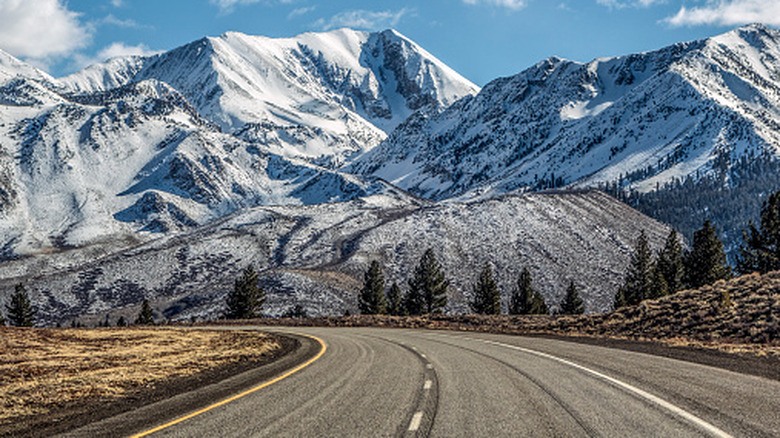
The Eastern Sierra can be experienced on a drive along U.S. Highway 395 and boasts some of California's most iconic mountain scenery, dotted with hot springs. On this side, rugged granite peaks are visible, shaped by the region's major fault system, which causes the mountains to rise more sharply. It's much drier on the east side, where you'll find the distinctive Alabama Hills near California's old-school American West haven of Lone Pine and the recreation area's more than 50 miles of off-road trails. About 100 miles north of there is Mammoth Lakes, which is surrounded by hot springs, epic hikes, and sought-after skiing in the winter.
Because of the Sierra Nevada's uplift and tectonic shifts, the western slope facing California's Central Valley has a more gradual rise and receives much more rain and snow. That's also where you'll find the national parks and lots of beautiful forest land, but you have to be prepared to meander your way in for several miles to places like Yosemite National Park's Wawona district and watery oases like Shaver and Huntington lakes. The closest throughway is State Route 99, but you won't see much of the mountains from there because it runs through the valley past the foothills. "The western slope is much more gradual so hwy 99 is much farther from the crest than hwy 395 is," shares a Redditor.
Pack the right layers and lather on the sunscreen
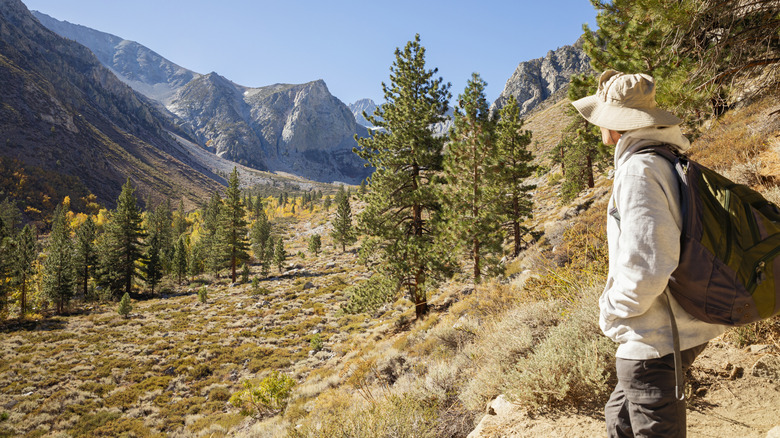
At high elevations, where it's often dry and cool, we sometimes don't feel as susceptible to sunburn as when it's hot, but temperature has little to do with it. Sunburn can happen quickly high in the mountains because the altitude means there's less atmosphere to block the sun's UV rays. Sunburn and heatstroke are also real risks with prolonged sun and heat exposure, especially when your face and neck are exposed for long periods. What can be alarming is that your symptoms may not appear for several hours afterward, so take precautions if you plan to be outside for long periods.
In the Sierra, where the highest peaks exceed 14,000 feet, weather can change quickly. Elevation also contributes to colder temperatures and stronger winds. Conditions may also be dry, so have enough layers to deal with cold nights and sunnier, warmer days. Depending on your activity, you may unexpectedly encounter wildlife, sustain an injury, or find that you miscalculated and the excursion is taking longer than expected. Remember to adapt to changing conditions and always be prepared to spend an extra night or two by bringing an extra layer, food, and water, just in case.
Be wary of spring water
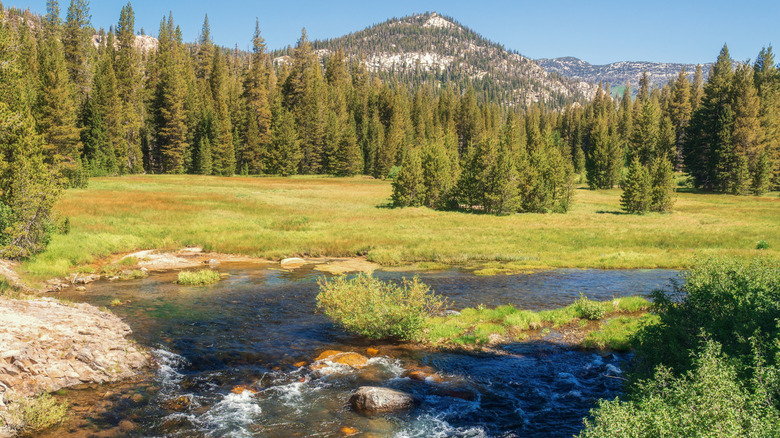
We all love the idea of being able to walk through the woods, stop at a stream or river, simply sip from handfuls of water or fill up a bottle and be on our way. That's not always the case in the Sierra, even though the clarity of its water is well known: Lake Tahoe is famous for its clean, clear depths. But heavy tourism, especially in areas like Yosemite and along the PCT and JMT, may affect the cleanliness of natural water sources. "The pure sierra water sources may not be as clean as you think, especially later in the summer season," Matador Network reports. Unfortunately, not everyone disposes of their waste (of all kinds) appropriately, and that can contaminate water sources.
To be on the safe side, plan to filter your water using hydration must-haves for the trail, such as the LifeStraw Peak Series Gravity Filter System or a water bottle with a built-in filter system like the Katadyn BeFree series. "I almost always filter," shares a hiker on Facebook. "If I am extremely high up, like 11k plus, and it's a clean running water source sometimes I chance it. I always have my filter with me though."
Be careful where you bring bear spray (if you bring it at all)
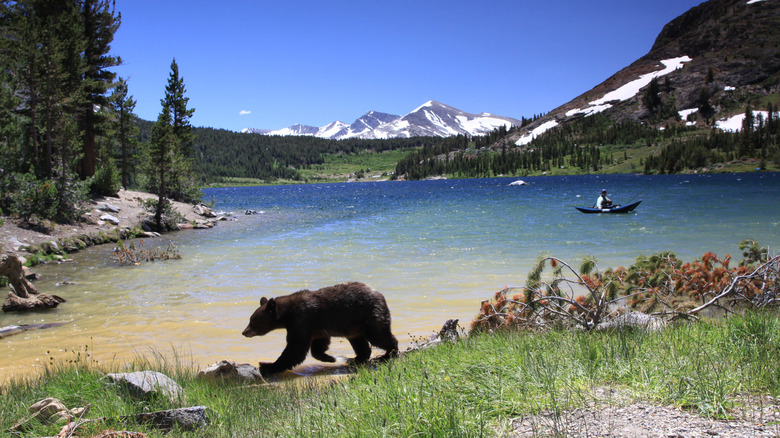
Despite California's iconic state flag bearing the likeness of a grizzly bear, these majestic creatures haven't been documented in the Golden State for more than a century, although some conservationists would like to see them returned. The bears you may see, however, are the slightly smaller black bears that thrive in this ecosystem. The name can be slightly deceiving, because they're often brown. But unlike grizzlies, they're also a little more skittish, so there's less likelihood of real danger. So, do you need to bring bear spray? "I would advise against bear spray in the Sierras," shares a Redditor. "Bear attacks are exceedingly rare and using bear spray on black bears is borderline animal abuse. There are many other effective methods an educated person can use to avoid a black bear attack."
With black bears specifically, it's often possible to scare them off by making a lot of noise and making yourself appear as big as possible, and it's recommended to fight back if they attack. These are tactics suggested by the National Park Service, and bear spray is prohibited in Yosemite, Sequoia, and Kings Canyon national parks. Possessing or using it could violate park regulations. But if you're visiting outside the national parks and are in the wilderness, bear spray may be legal. You just don't want to rely on it unless necessary, and the chances of needing it are slim.
Consider carefully if you need to bring your dog
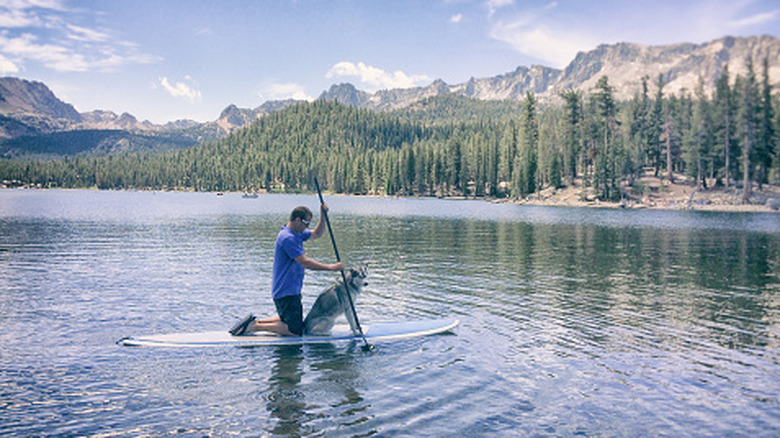
For many dog owners, having Rover along on a road trip or camping trip is a big part of the fun of dog ownership, and many pups also love the adventure. The Sierra Nevada region is a great place to bring dogs if you have some flexibility, such as finding pet-friendly lodging or staying in campgrounds where they're welcome. The mountains are also wild, and conditions can be extreme, so think through how and where you can take your pup with you, and whether, depending on the type of visit you're making, they should stay home.
Pets are allowed in Sierra National Forest and its wilderness areas, but owners need to clean up after them and monitor them at all times, so they can't be left in a car or tied up somewhere. If you're hiking the PCT, for example, and the trail heads through a national park, you cannot bring your dog there at all. Alternatively, a day hike or segment hike on another part of the trail outside NPS boundaries could be a fantastic trip with your companion along.
National and state parks have specific limitations on where dogs can go, which usually means restricting them to roads and campgrounds. In Yosemite, dogs are limited to these places, plus paved sidewalks and bike trails. They're similarly limited to developed areas such as parking lots, campgrounds, and picnic areas, with no access to trails or wilderness areas, in Sequoia and Kings Canyon national parks and California state parks.
Make sure roads are open
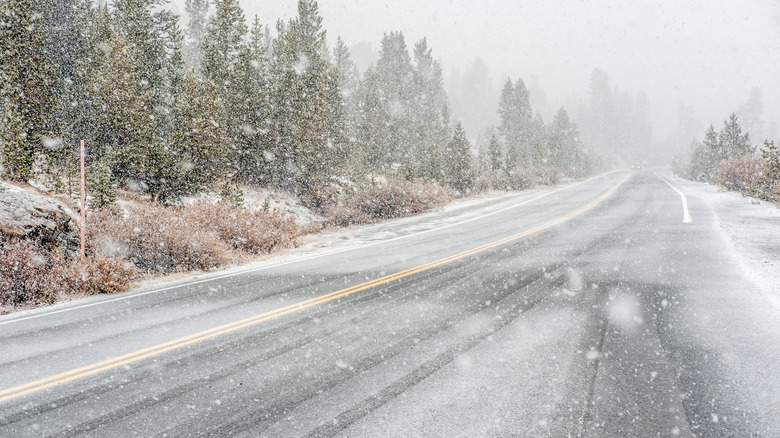
They don't call them the High Sierra for nothing. The mountains in this vast region get snow typically starting in November and continuing into late spring — which is why it's such a great place to hit the slopes at California's top ski destination. That also means that roads passable in the summer may no longer be accessible in the winter. One prime example is the postcard-worthy Tioga Pass, which connects U.S. Highway 395 to Yosemite National Park via Tioga Road (State Route 120). It's a monumental effort to clear the snow from the road in the spring, and depending on snowfall and spring weather, it may open anywhere from early May through the end of June.
Tioga Pass is just one of 22 mountain passes in the Sierra Nevada. In addition to Tioga, six others close entirely during the winter: Monitor Pass on State Route 89, Donner Pass on Donner Pass Road, Ebbetts Pass on State Route 4, Sonora Pass on State Route 108, Sherman Pass on Sherman Pass Road, and Minaret Summit on State Route 203. Other passes and high-elevation roads may face temporary closures during storms, and highways can be dangerous during heavy snow, so check the weather forecast before traveling.
Stay up-to-date on fire regulations
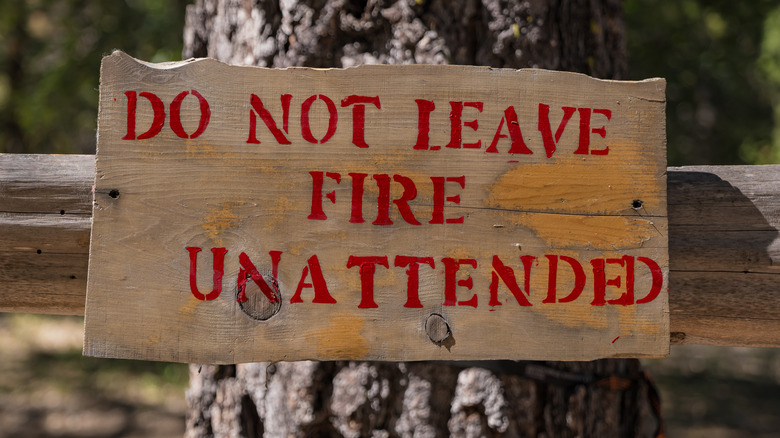
According to NASA, extreme wildfire events have more than doubled globally, and the effects have been seen right here in the western U.S., with giant fires destroying hundreds of thousands of acres and devastating communities and historic sites. Wildfires are a natural occurrence, but the longer fire seasons and megafires we're seeing more frequently are linked to the effects of climate change, including drought, and that trend is expected to continue. Therefore, California and other forested regions in the West take recreational fires and other flame-related activities, like cooking, very seriously.
Across its state park system, for example, California has placed restrictions on wood and charcoal fires, including a blanket ban in some circumstances. The U.S. Forest Service has specific regulations for fires and cooking in Sierra National Forest wilderness areas, and California requires a campfire permit if you plan to ignite a fire outside a developed or designated recreational area. Yosemite's fire restrictions are rolled out based
Yosemite's fire restrictions are rolled out based on current conditions, applying to areas below either 6,000 or 8,000 feet, or depending on the severity of the risk. And if you're visiting a private lodge or property, check its guidance about fires and, in any case, err on the side of caution.
Don't go without seeing the biggest trees in the world
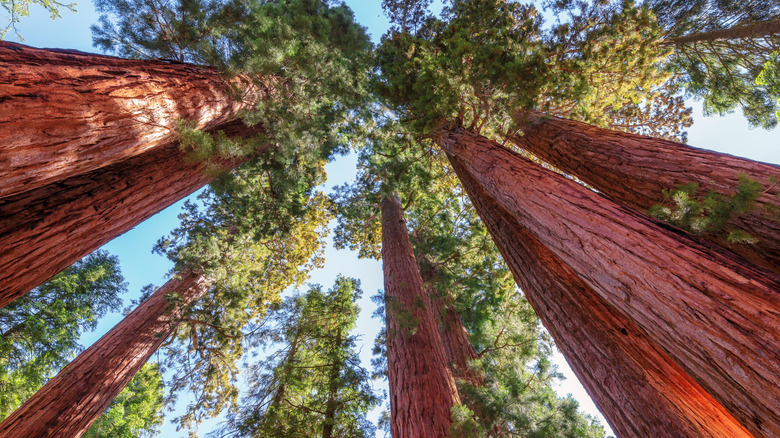
Giant sequoias are like no other kind of tree in the world, and guess where the only place is that you can see the largest of them all? Yosemite, Sequoia, and Kings Canyon national parks are not to be missed for their groves of these ancient organisms. Sequoia National Park is where you'll find North America's largest tree, known as General Sherman, which is estimated to comprise more than 52,000 cubic feet of wood. At their oldest, these trees can live to be more than 3,000 years old. (General Sherman is thought to be around 2,200 to 2,700 years old.)
There's much more to see than just the "biggest and best," though, because when a habitat of these trees is preserved together, it's an otherworldly experience. Mariposa Grove in southern Yosemite National Park is home to more than 500 mature sequoias. In Sequoia and Kings Canyon national parks, there are about 40 distinct groves in total, some with thousands of specimens. If it's your first visit to the Sierra, don't miss the opportunity to see these majestic, towering beings — they're native exclusively to the western slope.