
10 Biggest Things That Surprise Tourists Visiting China
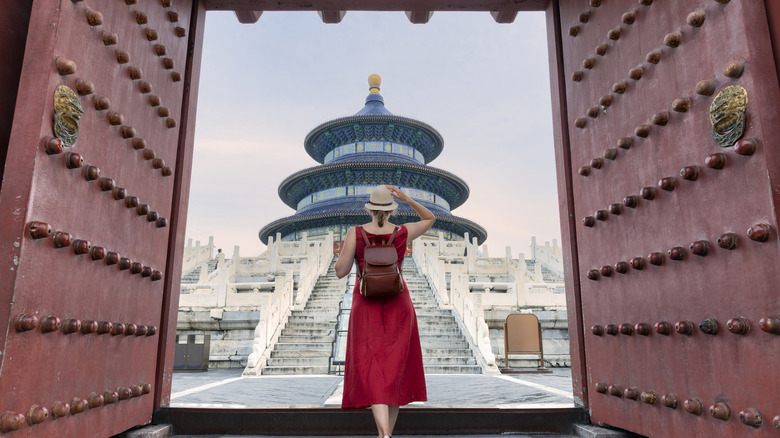
China is shaped by thousands of years of history, and as a result, it's a place of staggering contrasts. There are ancient temples sitting atop misty mountain slopes, yet some buildings look like they belong on an alien planet. There are remote mountain villages that have barely seen a foreigner, yet high-speed trains run on a network longer than the rest of the world's combined. It's a culture so layered, it takes more than one visit to even begin to understand it, while what we see in Western media barely scratches the surface. For many people, China is a news headline, a geopolitical rival, or a place they've only heard about through secondhand accounts.
The gap between perception and reality is huge. First-time travelers might be bracing themselves for something austere, gray, or unwelcoming. But what they get is quite the contrary. It's a country awash with color, culture, nature, and food so good you might never return to your local takeaway. It's a country that changes so fast, guidebooks can go out of date before they even go to print. And it's a country that simply deserves way more travel recognition than what it gets.
China rewards the open-minded traveler possibly more than anywhere else. We've drawn on the author's personal experience from living and traveling in the country for many years, as well as seeking authoritative sources for more recent information to keep pace with that rapid change. Here are 10 things we think most visitors won't see coming on a visit to China.
There are countless things to see beyond the major attractions

Many who visit China do so with the country's main attractions in mind. Sites like the Great Wall, the Terracotta Warriors, and the extravagant skyscrapers of the Shanghai skyline are absolute must-sees. But this country is huge, ancient, and fascinating, and there is so much on offer that, if it's your first visit, you'll simply need to come back. Seasoned travelers to China are increasingly seeking a slower, calmer visit, especially when the megacities feel like too much.
Places like Gansu, where the Rainbow Mountains ripple in bands of scarlet, orange, mustard yellow, pistachio green, and pale blue, are slowly being added to foreign bucket lists. As are other stunning natural attractions, like Zhangjiajie. This breathtaking national park helped inspire "Avatar," with its stone pillars seemingly floating on rivers of mist. Then there's a boat trip along the Li River. It'll take you past classic Chinese scenery of sugarloaf peaks, hidden grottoes, and tumbling waterfalls. You'll feel as if you've been transported into a traditional Chinese ink-wash painting — scenes you might have thought only existed in imaginations.
Historic towns like Pingyao offer travelers the chance to step back in time. Its maze of courtyard homes and lantern-strung lanes wind beneath a rippling sea of ancient rooftops. Then there is Suzhou, China's "Venice of the East." In the south, nature and history collide in places like Shangri-La. Its golden-roofed monasteries sit beneath snow-capped peaks, while in Lijiang, flower-lined canals wind through ancient streets toward distant mountains. It's simply a surreal country to visit. Memories will linger long, and the urge to return will start growing the moment you get home.
How efficient the transportation networks are

Getting to all those fascinating attractions is easier than ever now. With China's rural revitalization drive, upgraded high-speed rails and new roads now put once-remote villages within a few hours of major cities. Nearly one-third of the country's railway network of 100,000 miles is high-speed line. The quickest trains can get you from Beijing to Shanghai in around four hours. But those looking for a more traditional experience can still use older trains, which let you take in the scenery at a slower pace.
China is huge, though, so longer routes are still served by domestic flights. There are more than 30 budget airlines, with carriers like Spring Airlines offering the most destinations. For getting around cities, there isn't a country that has been laying down metro tracks quite as quickly as China. As recently as 2009, only 10 cities in the country had a metro system. As of 2026, there are 55 — and using them is a piece of cake. They don't cost much more to ride than a piece of cake, either.
But if you prefer to stay above ground, visitors can hop on a dockless bike with a QR code through Meituan Bike (which you can use from inside the Alipay app). Rideshares are also possible, with the DiDi app assisting helpless travelers who can't communicate with their driver thanks to an English interface.
How dependent your trip is on using Chinese apps

Many apps you might be familiar with in the West are blocked in China, including all things Google and Meta. So no Google Maps, no Gmail, no Facebook, no Instagram, and no WhatsApp. There are ways around it, like installing an eSIM routed to another country or using a VPN, which can be a hit-or-miss experience. The two super apps you absolutely need are WeChat and Alipay. They're necessary for ordering a coffee, paying for your taxi, and pretty much everything else.
Beyond those two, there are other apps you need to make your trip a smooth one. Amap is good for navigation, and it's the one locals use. It might not have the detail Google Maps does in other countries, particularly if that's an app you look to for reviews. But it does help you navigate the streets beautifully. It'll even point you down shaded routes lined with trees and buildings, which is a definite bonus during the heat of summer and something Google should really consider.
For all things travel, it has to be Trip.com. It has the most hotels with the highest volume of guest reviews, and you can also use it to book flights, trains, and airport transfers. You can even use it to book tickets for attractions and shows. Meituan, which you can find in your Alipay app, handles food delivery. You can even have KFC delivered to your seat on a high-speed train. For that "finger-licking" luxury, you'll need China Railway's 12306 app, plus a local phone number.
The food is radically different from what you might expect
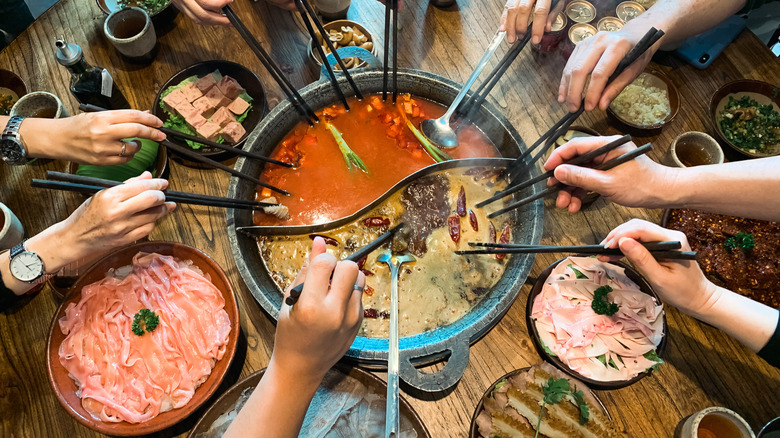
Ordering that first meal in China may well shock you — and that is meant in the best possible way. Chinese food in China is infinitely different from Chinese food in the West. Flavors range from savory noodles to fiery hotpot with ingredients you've probably never even heard of. That's not to say Chinese food in the West is bad; it's just ... different. About 200 years ago, Chinese immigrants began selling hybrid versions of their home cooking to suit the American preference for sweet flavors. This gave rise to creations like chop suey and orange chicken — dishes you'll be hard-pressed to find in the Middle Kingdom.
Things like General Tso's chicken simply have no presence in China, while Gōng bǎo jī dīng (that's kung pao chicken to you and me) has more heat and features tingly peppercorns from Sichuan. In fact, the country's cuisine is split into vastly different regional styles, and Sichuan is one of the best destinations across Asia for foodies. It's notable for its fiery chilis and the numbing sensation of those peppercorn seeds. Dishes like mapo tofu and the mala (numb and spicy) broth of Sichuan hotpot are nationwide favorites. The Hunan province also has a taste for chilies, but dishes are often laced with pickled peppers, while the meat is smoky and delicious. These are just small samples of food diversity in this vast land; every province, city, and town has its own distinct dishes.
The people are much more open than you might expect

If you've never been to China, you might be wondering what the people are like. Clichés will tell you they are hardworking, reserved, smart, and so on. While everyone is different, there is definitely a case to describe Chinese nationals like this in general terms — apart from being reserved. One surprising aspect about the Chinese is how open they are. In a story for The Guardian newspaper in the U.K., traveler Chris Radke described how one day he was struck by severe food poisoning on a trip with his elderly father. The hotel housekeeper took it upon herself to take the father sightseeing so Radke could rest. She covered all expenses for the trip and refused any reimbursement or tip — qualities that are unsurprising to anyone who has actually been to China.
Go online and read accounts from Westerners who have lived or visited there, and the feeling is overwhelmingly positive. In a Reddit thread, visitors continuously describe locals as warm and eager to help. One seasoned traveler who has clocked 40 countries simply said, "China is the friendliest country I've been to by far." Another summed them up as "really friendly. Generous. Warm & welcoming," while also noting that "people keep giving you things or writing off entire bills."
Many said they show goodwill through actions rather than words, with strangers walking lost travelers to their destinations, stepping in to translate at shop counters, or just simply sharing food. Not every experience was good, though. Particularly, you need to keep an eye out for people running scams at tourist sites.
How safe it is
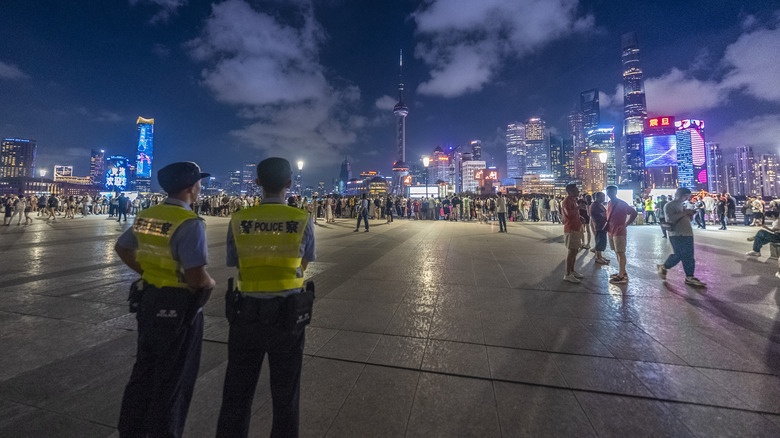
China's crime figures tell a vastly different story from what you might expect. The U.S. Department of State says violent crime is rare. In fact, Chinese state media reported a 12.8% drop in crime rates in 2025, which it claims is the country's lowest level since 2000. There is some substance to this, with visitors and expats on Reddit discussing the country's safety favorably. "China is one of the safest countries you can visit. Period," wrote one contributor, while a solo female traveler said, "I'm from Belgium and have never felt safer as when I was in China." Others report personal belongings left on café tables being untouched and the streets feeling comfortable and safe at any hour of the day. However, you need to be aware of petty crimes like the teahouse scam, where common sense is still required.
But according to American analytics, polling, and advisory company Gallup, 94% of people feel safe walking alone at night in China. This is compared to 71% in the U.S., 75% in Canada, and 76% in the U.K. Even political risk is low, although this depends on where you go and what you do. Showing up with placards or dishing out political materials in places like Tibet or Xinjiang will likely get you in serious hot water. But if you're just in the country for regular tourism, the risk is almost zero. However, if you do travel to those western areas, you will notice a heavier police presence. Visiting Tibet even requires a special travel permit. It's also one of the "three Ts" tourists need to avoid talking about with locals.
How much of life happens in public spaces
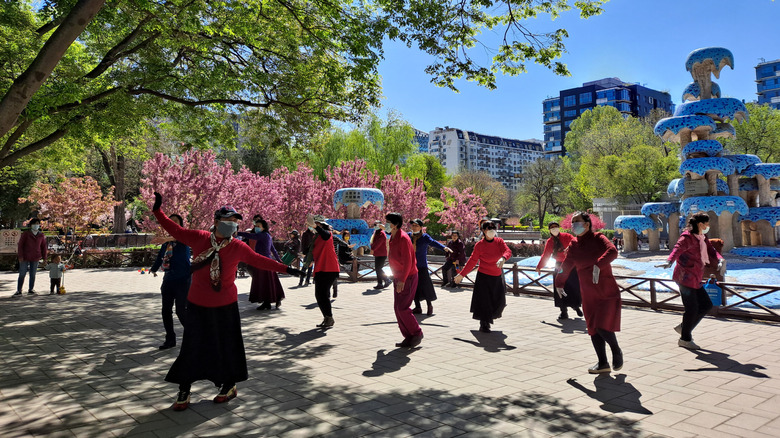
Some of China's best entertainment is completely free, and it starts just as soon as the dinner dishes are cleared. As the sun drops, neighborhood plazas become open-air dance floors for what is known as guǎngchǎng wǔ, or square dancing. Leading the show are the guǎngchǎng wǔ dà mā, otherwise known as the "square dancing grannies." Most are retirees, and they have moves so nifty they might even be the envy of many young Westerners. In fact, it's a sight that leaves many a foreign visitor wide-eyed.
The craze began in the 1990s, as rapid urban development left parents lonely when their grown children moved to other cities. They started dancing together in public squares to make new friends, but today, the action isn't limited to just the squares. It isn't limited to the evening, either. Afternoons in public parks are ideal for these community gatherings, as are riversides, streets, or anywhere where the dancing grannies can get their boomboxes cranked up.
These places hum with life from sunrise until well after dark. Routines are simple, and anyone can join in — even foreign visitors might be pulled in for a try. It's also common to see young people taking part after a hard day's work. The music ranges from loud Chinese EDM to traditional folk, but it's not just dancing that's on the menu. People are often seen just strolling around or practicing tai chi, while shuttlecocks are batted over imaginary nets. Fan dancing and photoshoots in traditional Hanfu robes are also popular, and the general atmosphere is one of joy and togetherness.
How cheap it is
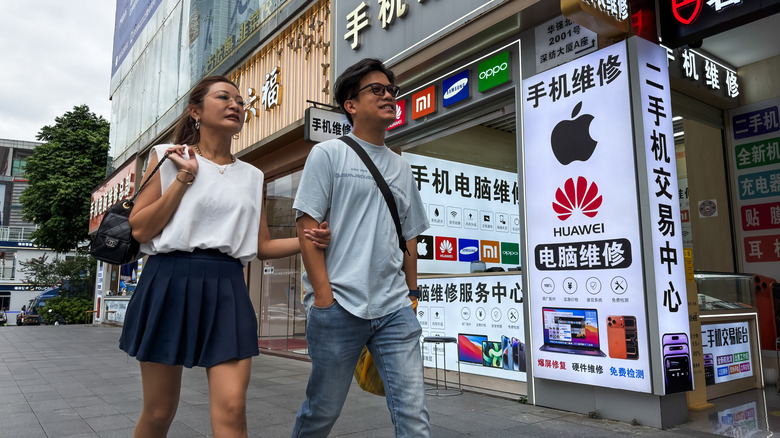
Despite the economic boom across China, the country remains an affordable visit for Western tourists. Budget Your Trip mentions it is comparable in price to Thailand and says thrifty travelers can easily get by on $40 to $50 per day. Dorm beds in major centers like Beijing or Shanghai go for around $15, while a casual lunch for two can be had for about five bucks. You can even splurge on a feast of Peking duck, and it won't cost much more than $20 for a couple. Wash that down with a cold Tsingtao beer, and you're looking at around a dollar more — and they're not small beers!
China Trip Compass says mid-range travelers will also find their money going a long way. Rooms in comfortable hotel chains in the biggest cities can go for $30 to $70 a night. Once you're in secondary cities like Chengdu or small towns like Lijiang, prices drop dramatically. Entry tickets are also surprisingly cheap, with the Badaling Great Wall section near Beijing costing just $6. All told, mid-range travelers are looking at around $100 per day.
Even at the high end, you can't complain about costs. Around $200 per day offers genuine comfort, although you can expect to spend more in Beijing or Shanghai. Busy holiday periods also drive prices up across the country. A luxury room in those two cities at those times will likely cost up to $400 per night. But one thing to note on any trip to China, especially for Americans, is that you are not expected to tip. Even if you leave some loose change on the table, you can expect your waiter to come chasing after you to return it. It's just not expected anywhere.
The disparity between urban and rural China can shock

Given China's economic miracle, you might feel a little shocked once you venture beyond the glittering cities. The country has one of the widest income gaps between urban and rural centers anywhere in the world. Around half a billion people in China are still considered rural. In 2025, residents in the countryside had take-home income equivalent to roughly $290 per month. City dwellers earn more than double that on average, and many villagers rely on money sent back by relatives working in urban centers.
But those migrating from rural China to the cities face challenges. This is because China's household registration system, or "hukou," ties access to schools and healthcare to one's own hometown. In some places, children might even find themselves barred from taking college entrance exams. This has often resulted in parents being forced to leave their children behind with relatives. However, things are starting to relax, with rural migrants starting to enjoy greater access to public services.
Authorities have also resorted to other surprising measures to try and bridge the gap. In a remote corner of the Guizhou province, for example, property giant Wanda Group built an entire village from scratch designed purely to bring in tourist revenue. That village in Danzhai County was designed to look centuries old. It's not the first time China has built tourist cities from scratch, but the plan worked. The county was removed from the country's official impoverished county list, and by 2022 it had drawn in more than 32 million visitors and is a recognized poverty reduction case.
Some local habits take some getting used to ... But so do yours
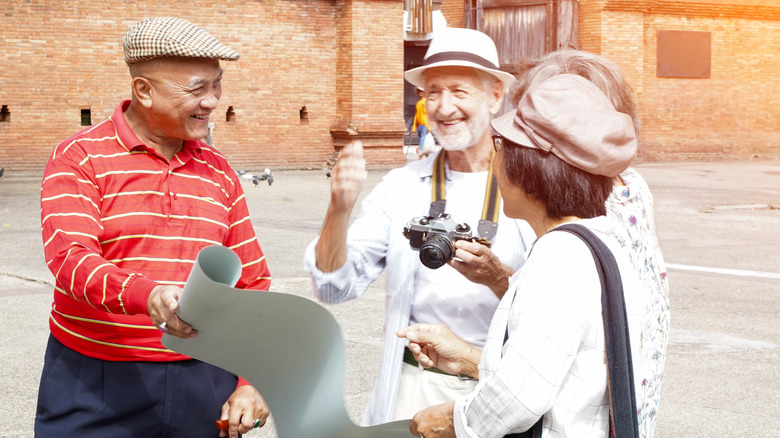
There are some local habits that can catch foreign tourists off guard. Spitting remains common, while the sound of clearing throats is the soundtrack to most mornings. You might hear locals shout "wàiguó rén" or "lǎowài" — the Chinese words for "foreigner," but no hostility is meant. Women traveling with a male friend may also find locals directing the conversation toward the man. Again, no offense is meant; it is just a cultural norm. Queueing is another area that can puzzle foreigners, while personal questions about marriage status, wealth, and age are just normal conversation starters in Chinese culture.
But of course, it always pays to make sure you don't catch your hosts off-guard with your own little quirks. Losing your temper in public is a definite no-no. This embarrasses everyone and causes a huge loss of face. Stay calm, no matter the situation — especially if you're hoping to have an issue resolved. Never leave your chopsticks standing upright in a bowl. This resembles the incense sticks offered to the dead.
Other tips to show courtesy include receiving any gifts or business cards with both hands, and don't get flustered if a store assistant follows you around — it's actually a sign of good service. If you're lucky enough to be invited to a restaurant with some locals, don't try to split the bill. This will cause embarrassment. The most senior person at the table pays, and that's just how it is.