
12 Tips From Park Rangers For Having The Best Grand Teton National Park Experience
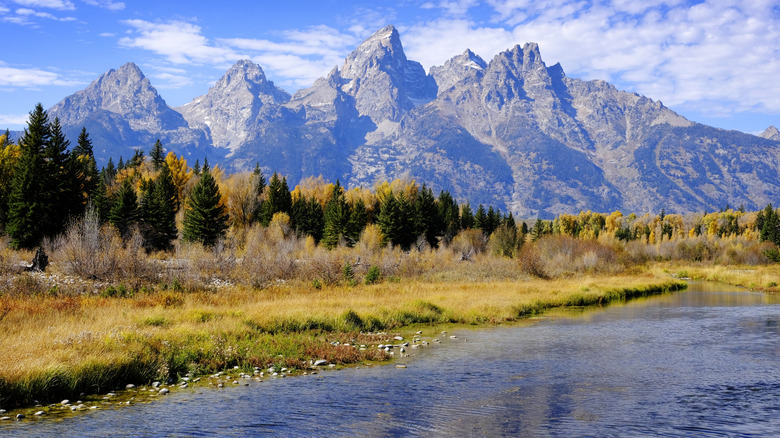
With well over three million visitors annually, Grand Teton National Park is one of the most-visited national parks in the country. Its namesake mountain is the tallest peak in the Teton Range, which crests above the gorgeous, year-round tourist destination of Jackson Hole. Its rarefied air, remarkable wildlife, stunning views, and historic places make it a bucket list national park destination. But if you're visiting for the first time — especially if you've never been to this part of the world — there are some things rangers would love for you to know about making the most of your visit.
Below, discover 12 tips shared by rangers based at Grand Teton National Park. These folks are experts when it comes to enjoying your trip and doing it safely — not just for you and other visitors but for the wild denizens that call the Greater Yellowstone Ecosystem home. You'll learn a thing or two about how to prepare, plus how to avoid disappointment and frustration if you visit during a busy time. From places to get the best views to pointers about where to go to have the best chances of seeing elk and moose, rangers share some great tips that even seasoned visitors may find useful.
To compile this list, we've focused on numerous sources featuring expert advice, including Grand Teton National Park social media channels, National Geographic, and more. We've referenced NPS.gov for practical information, plus associated foundations and government resources for official data.
Go in September for rut season and fall colors
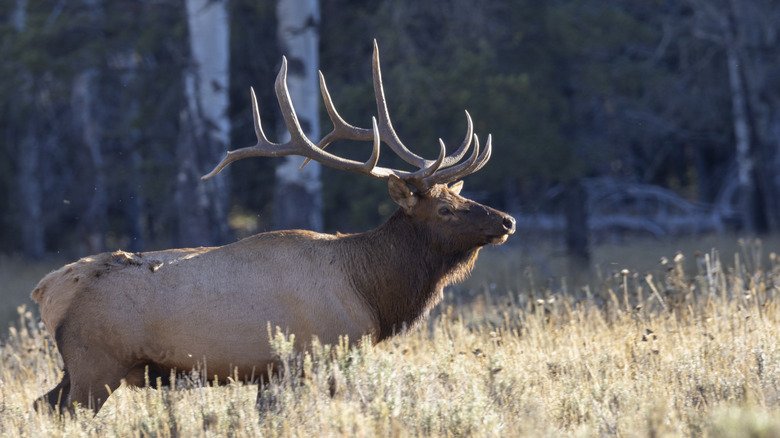
In the mountains of northwestern Wyoming, the seasons change dramatically. Summer brings average high temperatures in the low 80s Fahrenheit, and evenings dip into the high 30s and low 40s. In September, the average high is 71 degrees, while nighttime is a not-too-cold 32 degrees. That's what makes it park spokesperson Jackie Skaggs' favorite month to visit. She shared in a 2014 National Geographic article that the combination of fall colors, a dusting of snow on the mountains, and the distinctive bugling of bull elk during the fall rut season are just a few reasons why it's a great choice. "The month also offers mild, sometimes brisk, temperatures — the perfect conditions for hiking into the canyons and beyond," she said. Also, because kids are back to school by around Labor Day, you'll contend with fewer people, and there are also fewer mosquitoes and horseflies thanks to the dipping temperatures.
Snow often begins to fall in Jackson Hole in October and continues well into May, with mid-winter seeing weekly snowfall averages of up to 17 inches. The fresh powder and challenging slopes make Jackson Hole a perennial favorite for skiers. And although most of the national park's buildings and programs are closed during this time, it's still an excellent time to enjoy cross-country skiing, join a Snowshoeing with a Ranger program, see wildlife, or relax outside the park at a mountain base camp resort like Trailborn Jackson Hole.
Slow down and practice a 'strategically paced' visit
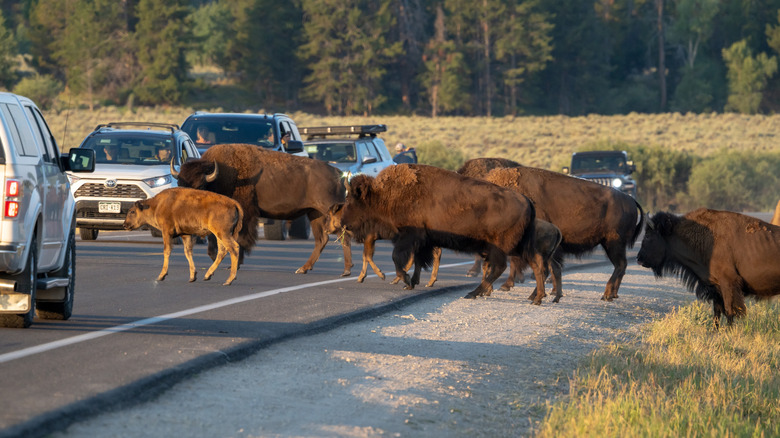
There are a lot of things that move slowly in Grand Teton National Park: traffic, wildlife, geology... and ideally, you! That's because, as interpretation ranger Dennis suggested in a video on Facebook, one of the best ways to approach a visit is to "slow down the pace, slow down your expectations." The park gets very crowded in the summer with people going camping, looking for the best hikes, trying to spot wildlife, and snapping photos of some of the country's most astonishing landscapes. It's best to take a "strategically paced" approach; Ranger Dennis suggested planning extra time, perhaps starting extra early or staying a little later in the day. He said, "Temper the expectation that you're going to do a quick, quick trip in four hours and see everything you want to see."
Grand Teton National Park isn't enormous, at least by nearby Yellowstone standards, but at about 310,000 acres, it still stewards a sizeable swath of ground! (Yellowstone, which is reachable from the north of the park via the John D. Rockefeller, Jr. Memorial Parkway with its hidden hikes and secluded stays, boasts a whopping 2.2 million acres.) There's a lot to see and do at Grand Teton, from its numerous lakes and riverine expanses to scenic drives and canyon hikes, so make sure to give yourself enough time and avoid rushing. And definitely don't rush other people. Safety on narrow roads is paramount for all visitors — not to mention the wildlife — and the bottom line is that taking your time and practicing patience will mean a much more enjoyable experience for everyone.
Head to Swim Beach in Colter Bay for water recreation
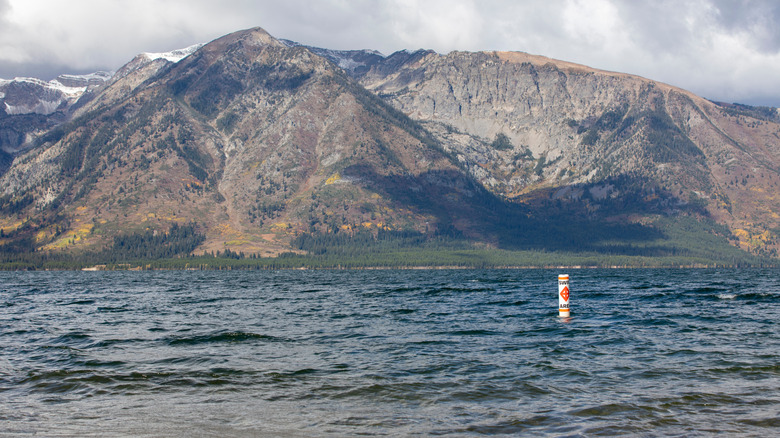
The mountain beauty of Jackson Lake, the largest in Grand Teton National Park, can be enjoyed from numerous vantage points, predominantly along the southern and eastern edges where Teton Park Road and Routes 89/191/297 skirt the shore. It's shaped a little bit like an old-fashioned tobacco pipe with a narrow northern end fed by the Snake River and a wider "bowl" at the bottom. Colter Bay sits roughly halfway along its east side, just north of where the lake starts to widen, making it one of the most accessible and popular spots to take in this beautiful body of water, have a picnic, and even take a dip at Swim Beach.
Ranger Hammond, who works as an interpretive ranger in the Colter Bay district of Grand Teton National Park, reminded visitors in a Facebook video that one of the most important things about recreating in the park is making sure you have the right equipment. That definitely goes for water activities. The water is cold, fed by alpine springs and snowmelt, so wetsuits are highly recommended if you really want to spend time in the water.
Boating, paddling, and SUP boarding are also a popular pastime on the lake, and the Colter Bay Marina & Boat Launch is the go-to spot for getting out onto the open water in the summer. Just make sure you have the permit you need for your type of vessel, including paddleboards. "[Visitors] should know to check the weather, always bring a lifejacket, and to tell somebody where you're going and when you intend on being back," Hammond said.
Don't leave your boots outside overnight
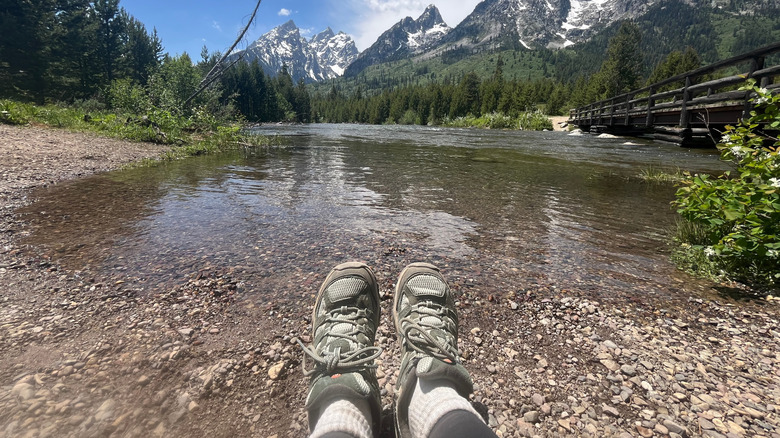
In the Rocky Mountains, there are some fundamental things to know about wildlife. For example, both grizzly and black bears call the ranges home, so you should be prepared with bear spray on hikes in case you encounter an aggressive animal. And during the fall rut, or mating season, elk and moose can get territorial and have even been known to ram into cars. Sometimes, though, parks experience the unexpected when it comes to their wild denizens, and at Grand Teton, it's the clever foxes who get a little extra attention.
"WANTED for grand theft footwear" read signs in the park in summer 2025 after rangers documented nearly 20 shoes going missing outside of campers' tents — and they continued to disappear. The purpose behind the vulpine purloining is a bit of a mystery. "Whatever the reason, one thing is clear: the more time this fox spends around humans, the more dangerous things get for the fox," rangers said in a Facebook post about the phenomenon. "Even unintentional behavior like leaving shoes out 'just in case he visits' teaches wildlife that people = opportunity. And that can lead to relocation... or worse."
Remember to keep any smelly items out of reach of animals, including footwear. Not only will you be able to keep your shoes, but you'll help keep the wildlife wild.
Acclimate to the altitude by drinking lots of water
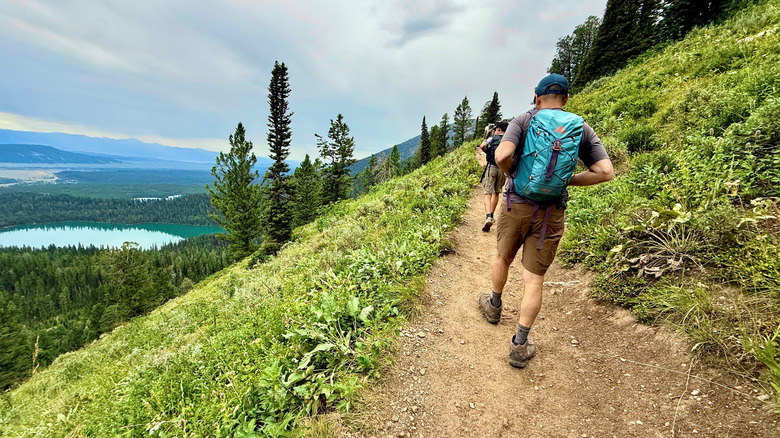
Jackson Hole, the valley at the northern end of which Grand Teton National Park sits, boasts an elevation of more than 6,200 feet. The elevation change will likely affect you a bit — especially if you flew in from sea level — and perhaps much more if you head up to a higher altitude during a hike. "If I could offer one practical tip for optimizing your visit, it would be to acclimate yourself to the altitude and stay hydrated on any trek into the Teton Range," said Jackie Skaggs in her article for National Geographic.
First-time high-elevation hikers might be taken aback by how quickly you can run out of breath, so rest often, give yourself a little extra time, drink plenty of water, and eat high-energy snacks. Another tip is to avoid alcohol, especially when you're acclimating. If you imbibe above 6,000 feet, the effects of alcohol can feel more pronounced because the available oxygen is lower and you dehydrate more quickly, not to mention that in addition to experiencing symptoms of altitude sickness, such as nausea, headache, and fatigue, intoxication on top of that could be miserable.
Spend at least one or two nights in the park
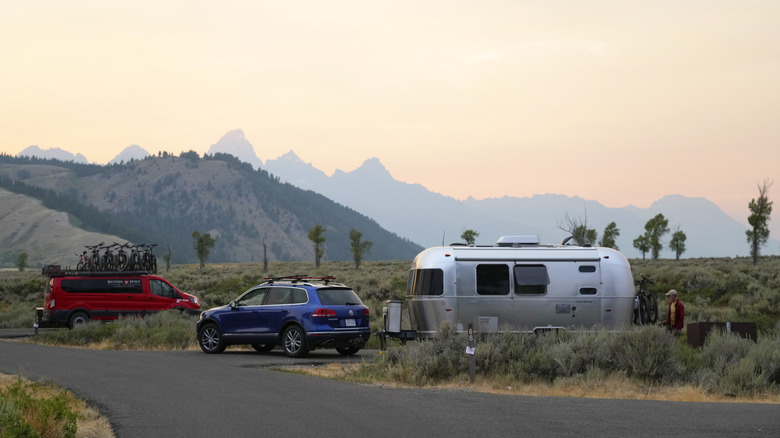
Grand Teton isn't a huge national park at about 310,000 acres, but there's certainly a lot to see. In an official Facebook video, Ranger Dennis suggested spending at least one night to really get a sense of the park. If you can, spend at least two. Giving yourself a bit of extra time will allow you to see the park at other times of day and to take it easy and explore more places. Immersing yourself in the rhythms of nature, especially when camping, offers a completely different experience than just hitting the highlights on your way through to Yellowstone, for instance.
Always plan well in advance and make reservations for camping and lodging in the park. It's busy, and sites are often full. A total of eight campgrounds dot the length of the park, including an RV park and tent cabins at Colter Bay. There are also numerous options for accommodations with (at least a few) more amenities, such as the rustic Colter Bay Cabins or memorable hotels like Jackson Lake Lodge, Jenny Lake Lodge, and more.
Head up Signal Mountain for the best views
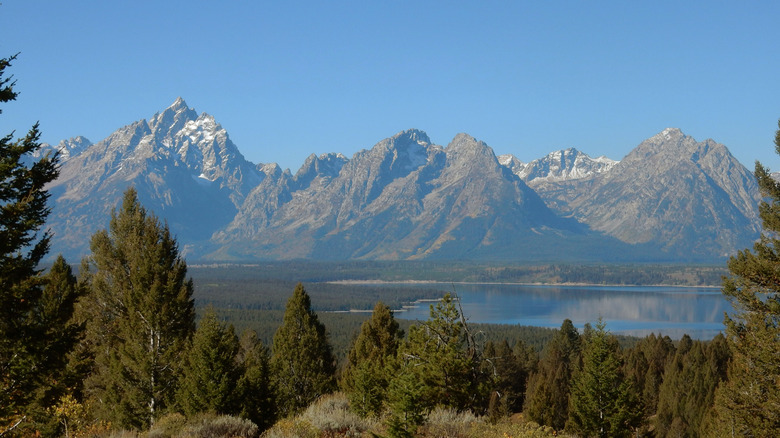
Signal Mountain sits just east of the southern portion of Jackson Lake, and a spin up to the top means some of the most gorgeous views over the Teton Range, Jackson Hole, and its lakes. Jackie Skaggs noted in National Geographic that it's one of her favorite points of view. "From this vantage point, you'll easily grasp why early fur trappers called these high-elevation valleys surrounded by mountains 'holes," she says. The summit is most easily reached via the winding, hairpin turn-packed Signal Mountain Road, which is typically open between June and October. It's a narrow road for about five miles, conveying visitors 800 feet off the valley floor to take in the expansive panoramas at two different overlooks.
Intrepid adventurers who prefer to take on the mountain on foot can head out on the Signal Mountain Trail, a moderately rated hike that starts at Signal Mountain Lodge and winds its way up to the top for just shy of eight miles. The middle of the trail has two branches that meet up again further along, so you can alternate in order to get a different view on the way back down.
Join a stargazing program
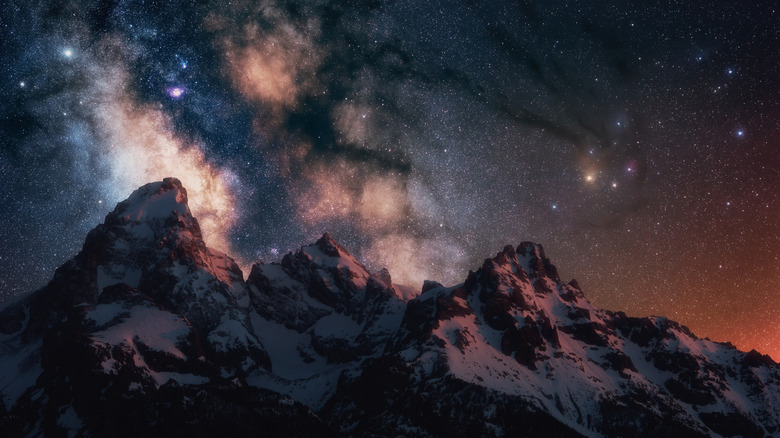
Staying overnight in the park will also give you time for a beautiful view that Jackie Skaggs mentioned in her article for National Geographic. "My favorite 'park secret' is the splendor of the Milky Way and its millions of stars on display in the night sky," she said.
The whole of Teton County, which is where you'll find Jackson Hole, is recognized as an International Dark Sky Place. "When people have the opportunity to look up at the night sky, it adds a whole new dimension to their park experience," said ranger Kari Cieszkiewicz in an official park video. "It's just one more way that people can be inspired by the natural world."
A group called Wyoming Stargazing provides public programs and tours throughout Jackson Hole, and during the summer, visitors can keep an eye out for ranger-led astronomy programming. You don't need to join an organized group outing to enjoy the night skies, though. On a clear evening, give your eyes time to adjust if you've been inside or using white light, as it can take up to 30 minutes for our eyes to fully get used to the darkness. Watch for meteorites and fuzzy, distant galaxies in addition to our own Milky Way.
Drive to the Laurence S. Rockefeller Preserve for a slice of tranquility
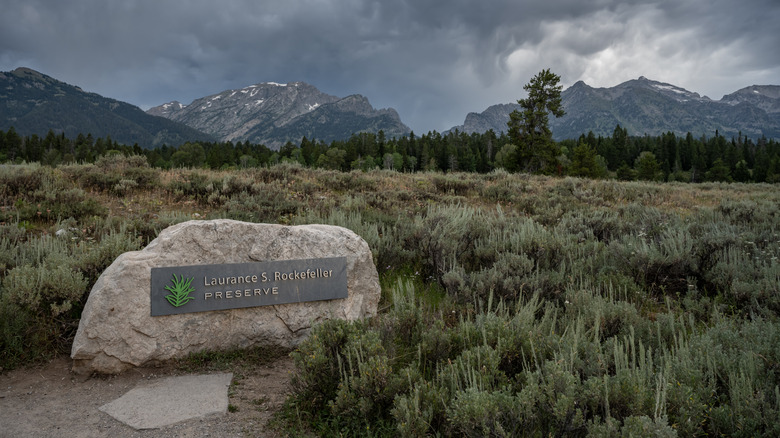
The serene Laurence S. Rockefeller Preserve spans 1,106 acres in the southwest portion of Grand Teton National Park. Rockefeller donated this beautiful area to the public, and it became a part of the park in 2007. "Laurence had this idea or this feeling that nature truly had this power to restore and sustain the human spirit," said Clay Hanna, interpretive supervisor for the preserve, in an official video. "So his hope, his vision, was that when folks came to visit the preserve, and experiencing that spiritual and emotional renewal, they would in turn realize the importance of nature in their lives."
Even the parking lot reflects its ethos, intentionally designed to be small with only 50 spaces. That means that only so many people can be on the trails and in the visitor center at one time, leading to a more tranquil and thoughtful experience. It's a place where nature is at the forefront, and the beautiful, rustic-meets-contemporary architecture of the visitor center also complements the landscape. Explore exhibits inside, or hike one of the easy or moderate trails that leave from the preserve.
Head to the Moose-Wilson Corridor to view wildlife during the golden hour
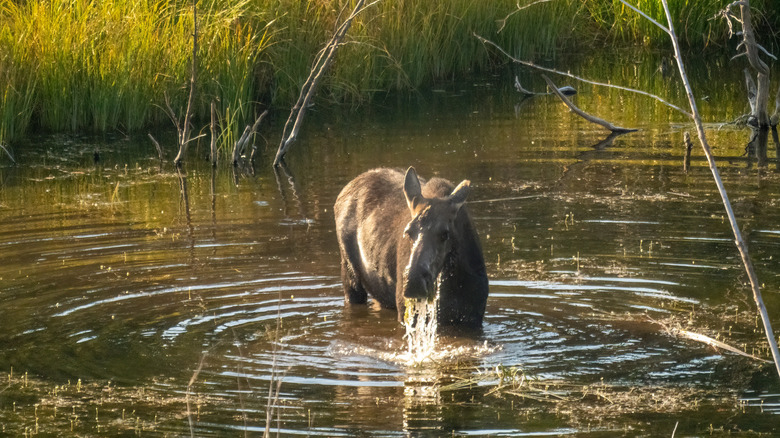
The Moose-Wilson Corridor, also known as Moose-Wilson Road, is a 15-mile scenic route in the southwest region of Grand Teton National Park that connects the towns of Moose and Wilson and provides access to the Laurence S. Rockefeller Preserve. It's also one of several wonderful go-to places to see wildlife. "When you come to this area, you're treated to a slow, rustic, semi-primitive experience," said Victoria Mates, chief of interpretation and partnerships, in an official park video. "Part of the road is not paved, so as you travel that section, you may get a glimpse into the past of what it must have been like to travel in this area maybe a century ago."
"[The Moose-Wilson Corridor] really takes you away from some of the developed areas in the park and really kind of places you in an area that has a much more rustic setting," said Clay Hanna in a video. The road made the news in 2026 due to the proposal of a new pathway along the length of the road, which some say will increase access for pedestrians and bicyclists as part of the broader system of paved Jackson Hole Pathways, while critics cite the potential for habitat disruption and increased safety risks for wildlife and people. In the meantime, enjoy its more intimate feel.
Be prepared for winter conditions into late spring
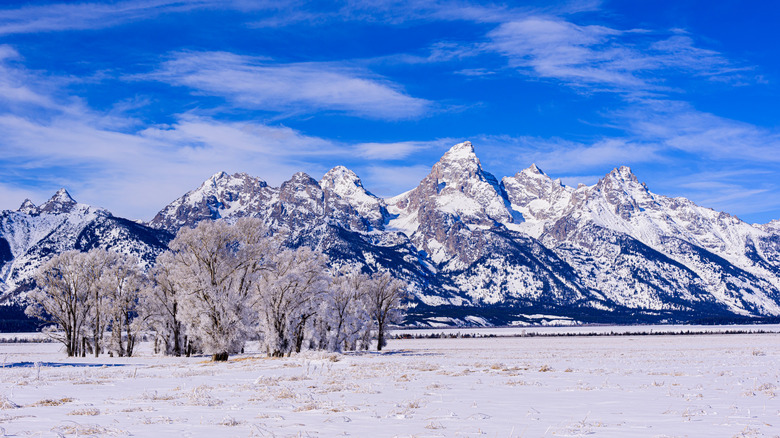
As the seasons change at the beginning of the year, "Is it spring? Or is it winter? Or is it 'sprinter?'" said a ranger in a video from Grand Teton National Park about how to make the most of a visit in April — a rewarding time of year to visit but not one without its challenges. In Jackson Hole, April still feels firmly in the grip of winter, except you may notice some snow is beginning to melt; it can be muddy, and the days are getting longer. Being prepared for a springtime visit to Grand Teton means being prepared for snowy and icy conditions well into May. "If you're here to enjoy the backcountry, or the trails leaving the roads and parking areas — and you're not prepared for winter conditions, including with the right gear like skis, an ice axe, snowshoes — don't go," said another ranger in the same presentation.
Most buildings and programs remain closed in the park until at least mid-May, so manage your expectations about what there is to see and do. On that note, though, wildlife-viewing in the winter and spring is exciting. Outfits like Jackson Hole Wildlife Safaris offer winter itineraries that make the most of wilderness hot spots in the park, and springtime is ideal for seeing baby animals in Wyoming.
Explore more of Jackson Hole
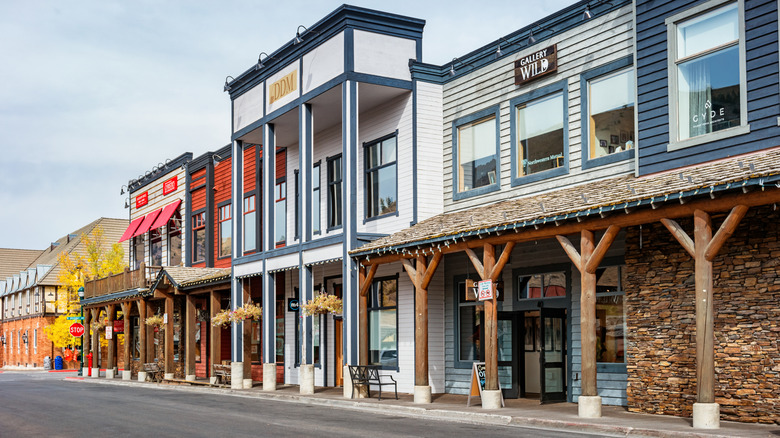
Grand Teton National Park is just one slice of this Western "hole," and if you have the time, it's well worth checking out some of the other attractions the area has to offer. One of the easiest ways to do this is to stay outside the boundaries of the park and visit during the day — or approach it the other way around. "Jackson Hole and Wyoming are full of places to explore," shared an article on NPS.gov compiled by rangers.
Join the energy of the Jackson Hole Rodeo, which runs from Memorial Day to Labor Day, or visit the National Museum of Wildlife Art, where you can also enjoy views of the National Elk Refuge. If outdoor recreation is your jam, take to the slopes at any of the three ski resorts in the area during powder season. In the summer, take a swing at Jackson Hole Golf & Tennis Club or Teton Pines Resort for utterly beautiful scenery from the green or head out for a hike in Bridger-Teton National Forest.
The town of Jackson — which is not the same as Jackson Hole (the difference is one of the unwritten rules you should know before visiting) is among the top destinations in its eponymous valley. Jackson is where you'll find one of America's most vibrant art scenes, plus iconic restaurants and bars like the Million Dollar Cowboy Steakhouse and Bar, Gun Barrel Steak and Game House, and the Snake River Grill, Wyoming's "most beautiful restaurant."