
The 5 Best American Destinations To See Orcas In The Wild, According To Research
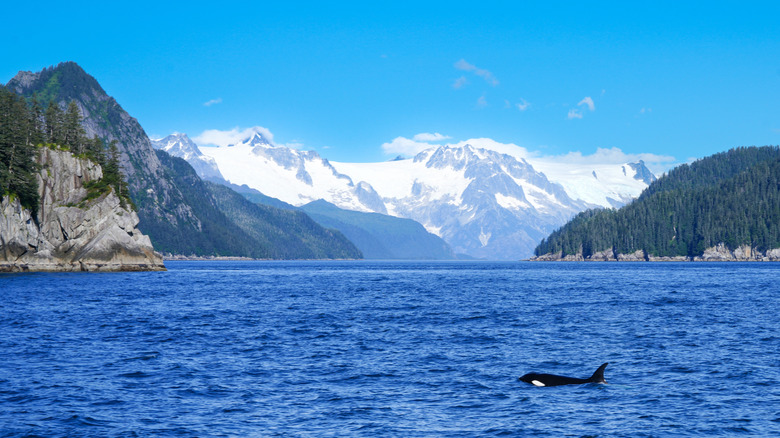
Orcas, sometimes known by the intimidating nickname of "killer whales," are incredible marine mammals, beloved for their sleek bodies and striking white markings that look almost like goggles. Despite their nickname, they are actually more closely related to dolphins than whales, which explains their pointy dorsal fins sticking up out of the waves. Orcas live almost everywhere on Earth, but if you want to see one off the coast of the United States, your best bet is going to be to head to the West Coast.
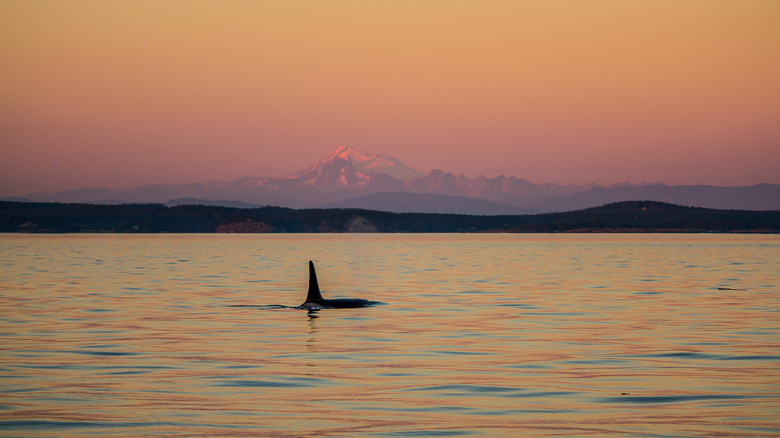
Despite their size — they grow up to 27 feet long and can weigh more than 13,000 pounds — spotting orcas in the wild can be tricky, but it's worth it. While it might seem easier to visit an amusement park where captive orcas live, these social animals struggle to survive in captivity, living short, stressed, and sad lives. To spot orcas, keep your eyes open for jets of mist or seawater coming out of the surface of the water that could be whale blows. You might also spot their dorsal fins or tails above the surface. And when you find one, you'll probably find many. They are almost always traveling together in big groups, called pods.
To build this list, we scoured the internet for records of individuals who have actually seen these animals in the wild. While testimonials from those on nonprofit forums and Reddit communities played a role, we also cross-referenced our list with research and conservation groups and whale-watching tour companies to ensure we got things right. We then doubled back to guarantee our list was as up-to-date as possible, so you have the best chance at sighting these magnificent creatures where they belong — in the wild.
Washington's San Juan Islands
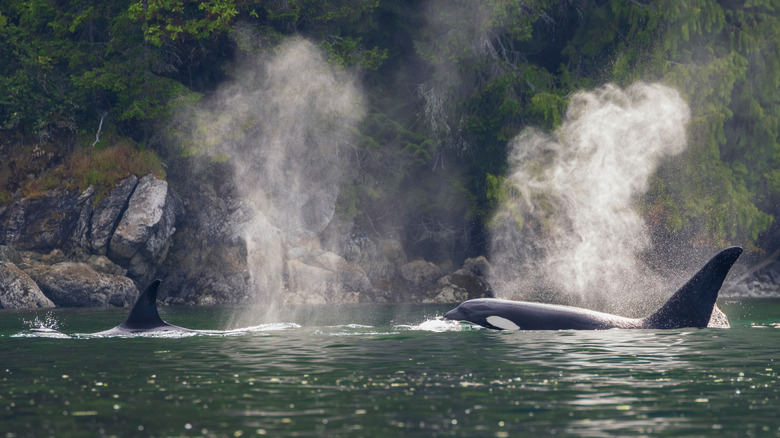
After arriving at Washington state's biggest airport, Seattle-Tacoma International Airport (SeaTac), leave Seattle's hilly streets and cozy coffee shops behind and make your way to Anacortes. This place makes the perfect getaway for those in Seattle, featuring eclectic shops and charming festivals. But Anacortes has another claim to fame: It's the place to catch a ferry to visit the San Juan Islands. The San Juan Islands (all 176 of them) are perfect for admiring the steely waves of the Salish Sea breaking against the rocky coast. Through the fog, you might just see a black tail rise up out of the water as an orca dives into the depths.
The San Juan Islands have a reputation for being a fantastic place to see wild orcas (one is even called Orcas Island). Another, Sucia, the most secluded of the San Juan Islands, is part of a state marine park, making it a perfect whale-watching destination. You can see orcas off the coast of these islands at any time, but you have the absolute best shot if you come between May and September, when the whales are hunting for salmon. San Juan County is working hard to give a boost to the orcas by helping the salmon population of Puget Sound thrive, an effort you can help with by only choosing whale watching tours that aid in salmon recovery and following the Be Whale Wise guidelines.
If you'd rather stay on land, consider Lime Kiln Point State Park, nicknamed "Whale Watch Park," on the western side of San Juan Island. Walk by the little white lighthouse and look out at the waves. You could spot seabirds swooping in the sea breeze up above, seals, otters, and sea lions playing in the water below, and farther out to sea, pods of orcas.
California's Monterey Bay

When you think of seeing underwater animals in Monterey Bay, you might picture the exhibits at Monterey Bay Aquarium. But beyond the glass-fronted enclosures, getting out to the bright blue waters of California's Monterey Bay means you can have an entirely different kind of experience seeing marine life. Travelers can spot not just orcas, but humpback whales, gray whales, and even titanic blue whales. Different whales move through the bay at different times, meaning that there are a lot of options when it comes to booking a whale-watching trip to Monterey Bay, but if you want to spot orcas, you're going to want to come in late April, early May, late August, or any time in September or October.
If you want to try to see whales from land, your best bet is to head to spots where there is good visibility far across the bay. For example, visitors on social media have reported seeing whales, including orcas, at Point Lobos State Natural Reserve, known as the crown jewel of the California state park system. You may have a better chance of seeing them on a whale watching tour, however.
Although there's never any guarantee of seeing wild animals when you go looking for them, ethical and knowledgeable tour guides, like the marine biologists at the Monterey Bay Whale Watch, will have a good idea of where to search for orcas. The Monterey Bay Killer Whale Search Trip, which runs in April and May and costs $170 per person at the time of writing, takes travelers out on the water for 8 hours in the company of marine biologists and researchers who have been studying orcas for decades. Not only do they know a lot about orcas in general, they may even recognize individual whales when you spot them.
Seward, Alaska
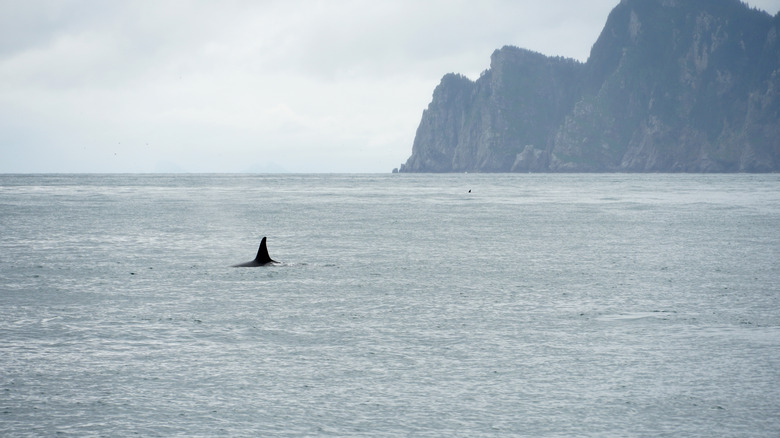
Stand on the deck of a ship in the shadow of snow-covered, jagged, towering peaks. Around you in the chilly, teal water, there are floating chunks of ice. In the distance, amidst the choppy waves, you might see something bigger. This is Seward, Alaska, a community on the coast of Resurrection Bay. Orcas spend time in the waters of Seward year-round, but for the best chance of seeing them, consider visiting in May or June. As an added bonus, the days in Alaska are very long in the summertime, so you'll have plenty of hours to watch the water for signs of them. And despite Alaska's frigid reputation, you might get to enjoy temperatures in the 60s during the afternoons.
To see orcas in Resurrection Bay, you may want to explore Kenai Fjords National Park, an Alaskan haven home to one of America's largest icefields. You can start at the park's visitor center, located in Seward, and then head to the coast on your own.
However, if you're really serious about finding orcas, there are locally owned tour operators, like Major Marine Tours, with the experience to give you the best shot at seeing them. If you're lucky, you might spot an entire pod of orcas swimming near the surface of the bay.
Washington's Whidbey Island
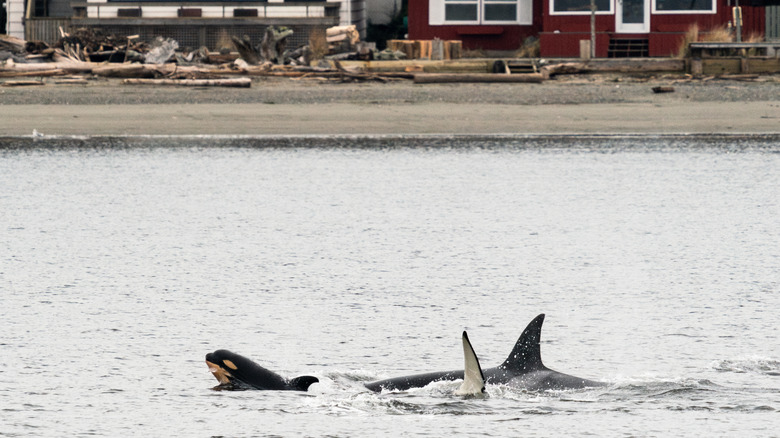
About an hour north of Seattle, Washington, you can catch a ferry from Mukilteo to Whidbey Island. Amidst the pine forests and rocky cliff shores of this underrated Washington island, you'll find parks, seafood, and pebble beaches. The view of the green Deception Pass Bridge stretching across the blue-green water below and gulls swooping overhead is a beautiful view — but not quite as beautiful as the sight of a pod of orcas splashing around Puget Sound. On Whidbey Island, you can see both.
Deception Pass, which the bridge stretches across, is among the best places to look for orcas on the island. The island's beaches are ideal for waiting to see whales from the land, and the hikes to reach the shore, from the easy Sand Dunes Interpretive Trail to the woodsy North Beach Trail, are excellent. You should also explore the Admiralty Inlet Natural Area Preserve. This unique landscape features prairies and evergreen forests, but if you're whale-watching, you'll need to head to the coast. You should also visit the place where Glendale Creek flows out into Possession Sound, where salmon, a favorite food of orcas, enter the sound.
Your best chance of seeing orcas on Whidbey Island is in the autumn, but if you decide to go in April instead, head to Langley for the Orca Network's Welcome the Whales Festival & Parade, where people clean up local beaches, take gray-whale watching tours, and make costumes to march in a big parade celebrating whales. If you decide you would rather go in the fall for a better shot at seeing orcas, you can still get some of the experience by visiting the Langley Whale Center to learn more about the animals and hear about the latest sightings before setting out to find them yourself.
California's Channel Islands
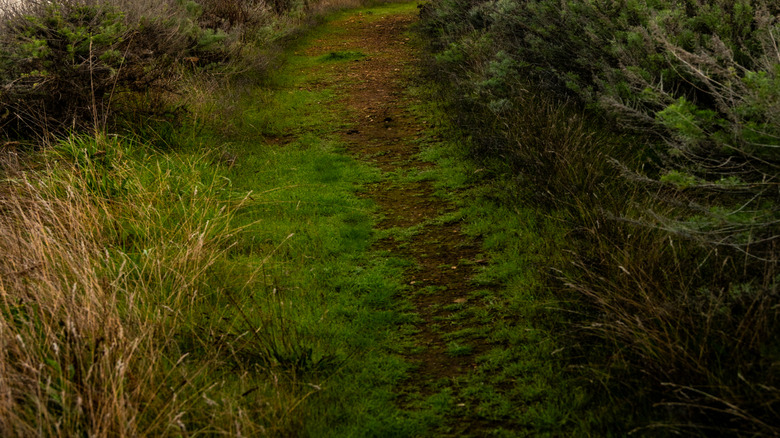
Explore an island brimming with white sand beaches, ancient trees, and towering cliffs rising up out of the Pacific. Walk along a coastal trail considered best in the world for outdoor adventure in the wild California landscape, and hike along sun-soaked cliffs to see unparalleled views of the ocean below and catch glimpses of wild whales in the waves. This is California's Channel Islands National Park, a protected chain of five islands that allow visitors to catch a glimpse of the California wilderness just off the coast of Santa Barbara, and maybe orcas, too.
In the ocean around the Channel Islands, it's not uncommon to see dolphins, gray whales, humpback whales, blue whales, and orcas. There are many great vantage points available from the cliffs on the islands, and there's even a telescope tower at the park's visitor center to help visitors get a better look at things in the distant waves.
But you might have your closest look at the orcas on the very journey to the islands. While it's illegal and dangerous for boats to approach whales, there's no law that can tell orcas not to approach boats, and they have been known to get shockingly close to vessels in the waters around the Channel Islands. Consider a spring trip to give yourself the best shot of seeing them.
Methodology
To find the absolute best places in the United States to spot orca whales in the wild, we turned to accounts from travelers who have actually seen them. For this, we used a combination of sources, from individual recommendations from Reddit's r/whales and r/orcas subreddits to The Whale Trail, a nonprofit dedicated to encouraging whale sightings for the benefit of scientists working to protect whales.
We often cross-referenced our list with the Orca Network Community Group, the California Killer Whale Project, Monterey Bay Whale Watch, and reviews on sites like TripAdvisor and Google Reviews to ensure that our information was up to date and that people had recently seen orcas in these places.
While you could easily spot whales at multiple locations along neighboring beaches in Washington state, considering orca pods are known to swim nearly 100 miles in a single day, we tried to highlight spots that were farther away from each other or provided different kinds of viewing experiences. This variety of experiences is meant to cater to an equally wide variety of travelers, while also creating a diverse and exciting itinerary for those who want to plan a trip to each of these destinations.