
5 Amazing National Parks You Can Visit Without A Car
National parks, by their very nature, tend to be a bit out of the way of civilization and certainly not within "walking distance" of anything. This isn't always the case, though. Walkable national parks include places such as Missouri's Gateway Arch National Park and its famous man-made landmark, which is within short walking distance of downtown St. Louis, and Alaska's remote Gates of the Arctic, America's least crowded national park so far away from civilization that it's inaccessible via any public road. Most of these protected areas, however, are primarily accessible by car. As such, they generally have to strike a balance between preserving their indispensable natural resources and providing a comprehensive network of roads for vehicles to get around. Some of the country's most famous national parks even maintain fairly well-integrated public transportation infrastructure to go along with their drivable roads.
Of course, a scenic drive through a magnificent landscape is an unforgettable experience few would turn down. Unfortunately, when it comes to more popular national parks, all those drivers lead to roads that are often choked with traffic. Such crowds also fuel parking frustrations, as available lots fill up quickly.
Obviously, road rage and parking hassles are not exactly what you want when you're trying to find peace and tranquility in a gorgeous national park. For this reason, public transportation options, when available, may be the best navigation option. Several among the long list of every national park in America have a convenient combination of shuttle bus services, transportation concessioners, and proximity to major railroad lines. These five national parks in particular can be experienced in full without a car, thanks to a helpful network of public transportation options that complement, rather than detract from, their natural splendor.
Glacier National Park, Montana

While Glacier National Park doesn't have the highest peaks in America's Rocky Mountains, it may very well have the most beautiful. Located in northern Montana, just south of the Canadian border, this destination protects a stunning landscape of glacier-carved mountains, lakes, and forests in a setting that looks like something out of a fantasy novel. The region's mountains, in particular, are sculpted geological marvels straddling North America's Continental Divide. Eons of evolution have also formed dramatic valleys and eye-catching groves dotted across the area. Though the Ice Age has long since passed, many glaciers still preside over the park's mountains, adding a distinctive white accent to the rich colors of the surrounding rocks and trees. Glacier's complex terrain also includes picturesque lakes, rivers, forests, and several distinctive ecosystems.
Beautiful as this place is, it doesn't sound like somewhere you'd expect to find comprehensive public transportation. However, Glacier National Park does have quite a few convenient transportation options that don't involve a car. Remarkably, the pristine mountains here are accessible via Amtrak's epic Empire Builder route. Even without a stop at Glacier, the Empire Builder is an incredibly scenic ride from the Pacific Northwest to Chicago. Yet the route does include a stop at West Glacier, a key gateway to Glacier National Park itself. Amtrak even offers travel packages for anyone visiting the park by train. Between July 1 and Labor Day, you can also head over to the Apgar Visitor Center and hop on Glacier's free shuttle bus service along the park's iconic Going-to-the-Sun Road.
Zion National Park, Utah
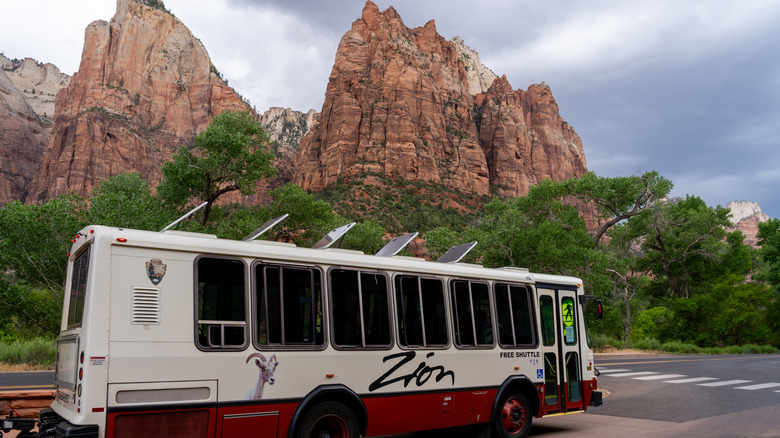
Zion is simultaneously one of America's most-visited national parks (second only to the Great Smoky Mountains) and a magnificent display of Utah's unadulterated geological wonders. Maintaining this delicate balance requires some effort, and Zion's administrators and employees have more than met the challenge. While the area has an intricate network of roads allowing drivers to get from point to point, even adequate maintenance can't completely control crowds. Fortunately, when heavy traffic and limited parking spaces make traveling by car too much of a headache, visitors can get around via the convenient Zion Canyon Shuttle System.
The shuttles aren't just convenient, either. Depending on when you visit, they may also be your only transportation option. To prevent traffic and stay on schedule, Zion Canyon Scenic Drive is closed to private vehicles during times when the park's shuttles are operating. This means the shuttles are your main way to take in the amazing sights along the park's picturesque roadway. It also means the shuttle will have the road all to itself, letting visitors avoid the unpleasant traffic jams that may otherwise sully their trip.
Currently, Zion National Park operates two separate shuttle lines: the Zion Canyon Line (between the Zion Canyon Visitor Center and the Temple of Sinawava) and the Springdale Line (between the Hotel de Novo and Zion Canyon Village). Both routes are completely free and tend to run every five to 10 minutes between March and November (though exact schedules are subject to change). Outside the park, the local SunTran transportation service offers a $5 bus route between Zion and nearby Utah communities like St. George, Hurricane, and Springdale (at the time of writing).
Grand Canyon National Park, Arizona
The Grand Canyon, being a "grand canyon," seems like the last place on Earth that would be amenable to public transportation. And, indeed, the descent to the actual canyon floor is a challenging and dangerous trek, often involving technical hiking or lengthy mule trips. For all the famed canyon's notorious depths, though, the national park's more visitor-friendly observation areas are quite accessible via a helpful combination of shuttles, buses, and trains.
Around the heavily trafficked South Rim, a network of free shuttle bus services operates throughout the year. The Village (Blue) Route Shuttle stops at sites such as the Grand Canyon Visitor Center, Market Plaza, Bright Angel Lodge, and Mather Campground, among others. The Kaibab Rim (Orange) Route follows a short loop past many of the South Rim's best spots, particularly Mather Point, Yaki Point, and the South Kaibab Trailhead. Between Grand Canyon Village and the park's Hermits Rest Area, the Hermit Road (Red) Shuttle stops at several scenic areas like Mohave Point and Hopi Point. In the summer, you can hop on the Tusayan (Purple) Route between the South Rim Visitor Center and the beautiful gateway town of Tusayan. For additional hiking access, the Hikers' Express Shuttle takes riders to the South Kaibab Trailhead and makes hourly stops at Bright Angel Lodge, the Backcountry Information Center, and the Visitor Center Shuttle Bus Terminal.
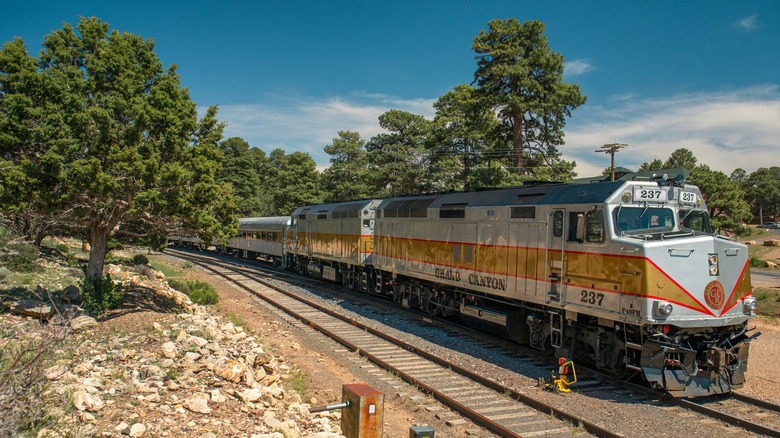
The National Park Service (NPS) also partners with several commercial operators that provide transportation throughout the park. Options range from bus and hummer to bicycle and motorcycle tours. Finally, if you're traveling between the park and the nearby community of Williams, there's also a wildly affordable train trip available (and it might just be the best way to see the Grand Canyon).
Yosemite National Park, California
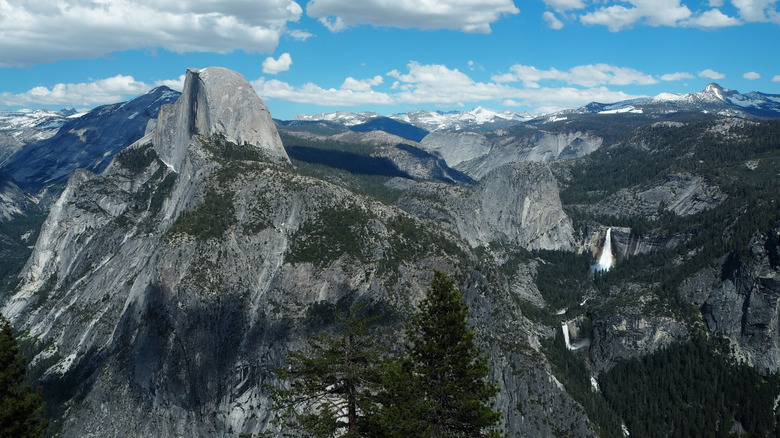
Like Grand Canyon National Park, Yosemite — with its precipitous cliffs, vibrant valleys, and towering monoliths — ranks among the last places you'd expect find a comprehensive public transportation system. However, the NPS manages to offer such an option while preserving the region's otherworldly natural splendor. Visitors can ditch their cars (and annoying park traffic) in favor of a free shuttle bus service to many of Yosemite Valley's top attractions. The full Valleywide Shuttle route travels from Yosemite Village and the Yosemite Welcome Center to scenic spots such as Yosemite Falls, El Capitan, and Cathedral Beach. The shorter East Valley Shuttle route covers a smaller loop from the visitor center to destinations like Curry Village, the Upper Pines Campground, and Mirror Lake.
Outside of Yosemite Valley, the park's Tuolumne Meadows Shuttle navigates through an underrated but magnificent area of the same name. Starting at Tuolumne Meadows Lodge and ending at spectacular Olmstead Point, the shuttle stops at gorgeous landmarks like Lembert Dome, Cathedral Lake, Cathedral Dome, and Dog Lake, plus overnight areas such as the Tuolumne Meadows Campground. The schedule varies from year to year, but generally, the shuttle operates between June and September.
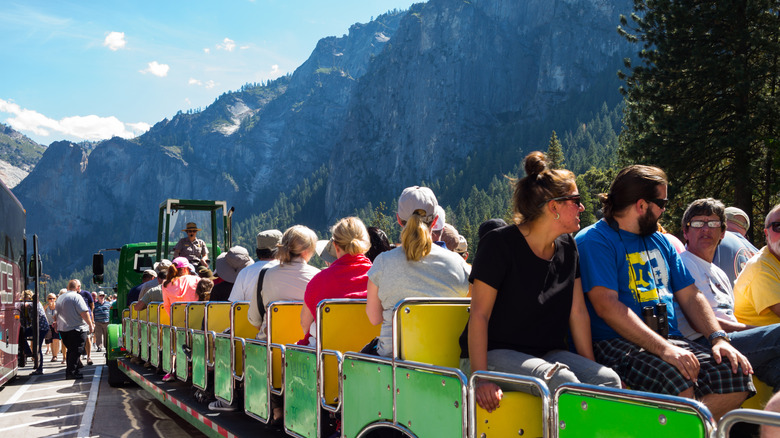
While Yosemite National Park's free shuttles are certainly convenient in their designated areas, they're not the only car-free transportation options for visitors. The Yosemite Area Regional Transportation System (YARTS) offers comprehensive bus services between the park and many surrounding communities, including Fresno, Merced, Mammoth Lakes, and Sonora. Sightseers can also take advantage of the park's many guided tours, which feature open-air trams during warmer months and heated motor coaches during colder months.
Denali National Park & Preserve, Alaska
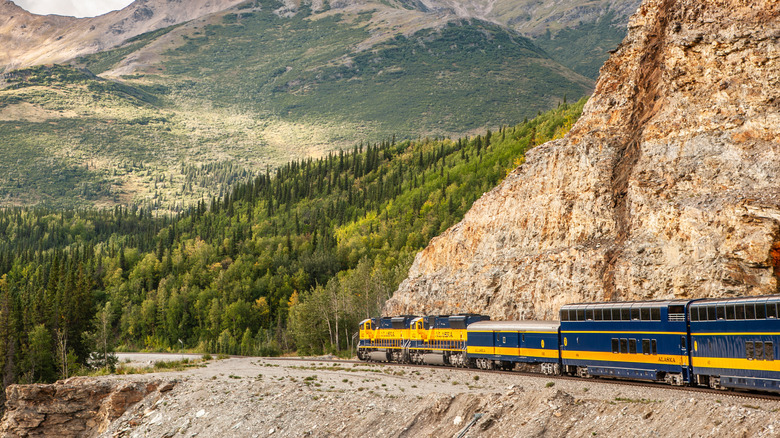
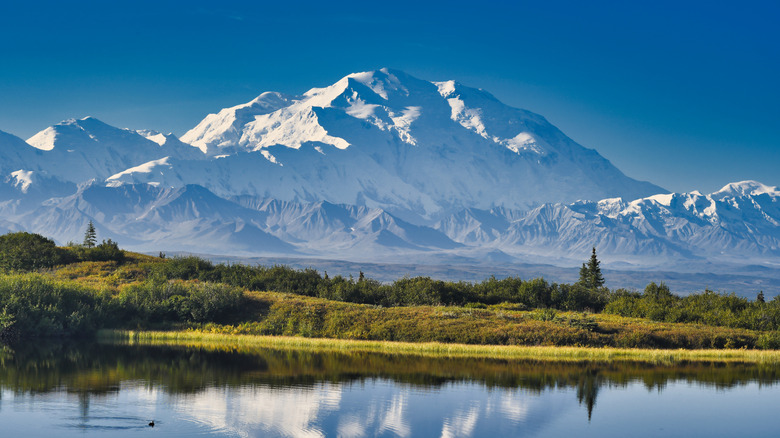
Denali National Park contains the highest peak in North America, a 20,310-foot behemoth towering above the surrounding summits of the Alaska Range, themselves no slouches when it comes to elevation. In fact, with a base-to-summit measurement of around 18,000 feet, Denali (formerly known as Mount McKinley) is about 5,000 feet taller than Mount Everest. At first glance, the wild and vast Alaskan landscapes here seem like ones you can only experience by car (or, perhaps, a multi-day overland hike). However, the crown jewel of this state can indeed be visited without a vehicle, thanks to a helpful blend of scenic train routes, shuttles, and bus tours.
Unfortunately, Denali's summit is inaccessible by public transportation (for now). The good news, though, is that the park is the center point of the aptly-named and charming Denali Star train ride. Part of the Alaska Railroad's larger network of transportation and sightseeing routes, this train route travels around 350 miles total between the cities of Anchorage and Fairbanks. Though it offers many worthwhile stops, the Denali Star route gets its name from its stop at the national park's Denali Depot.
Many of Denali National Park's lodging options, like the Denali Park Village and Grand Denali Lodge, offer shuttle services from the railroad depot to accommodations within the park. Once there, you can take advantage of Denali's three free shuttle bus routes: the shorter Savage River Shuttle to the oft-crowded Savage River and Mountain Vista, the longer Riley Creek Loop Shuttle to the Riley Creek Campground and Horseshoe Lake, and the Sled Dog Demonstration Shuttle to the park's popular sled dog demonstrations. You can also book guided bus tours or private transit buses from park concessioner partners.
Methodology
Many American national parks, particularly larger and more popular ones, offer some kind of shuttle bus service or partnership with private transportation companies. In some cases, these sites are within walking distance of major urban areas, as is the case with St. Louis' Gateway Arch National Park. In compiling this list, we looked at a combination of factors that determined how accessible a national park is without a car. These factors included both transportation options within the national park itself and transportation to the park from nearby cities or towns.
Destinations like Glacier and Denali have the advantage of sitting along passenger train routes from major cities. A traveler can visit Glacier National Park from Chicago or Seattle on Amtrak's Empire Builder train. Likewise, Denali is accessible from both Anchorage and Fairbanks on the Denali Star train. Other national parks can be accessed from nearby towns via local bus services, as with Yosemite's convenient YARTS buses.
Finally, we looked at how much travelers can see in each park using only car-free transportation options. For example, Gateway Arch National Park is an excellent car-free destination given its small size and walkability from downtown St. Louis. However, it's because of this size that a car-free walking tour here doesn't provide the same quantity of impressive sites as a shuttle bus tour in the other national parks under consideration. Given this, Gateway Arch was left off our list. In contrast, the free shuttle buses in parks like the Grand Canyon and Zion make stops at key landmarks (like Mather Point and the Temple of Sinawava, respectively), while also connecting to park lodges and camping areas where many visitors stay.