
5 Abandoned Airports In America That Were Once-Thriving Travel Hubs
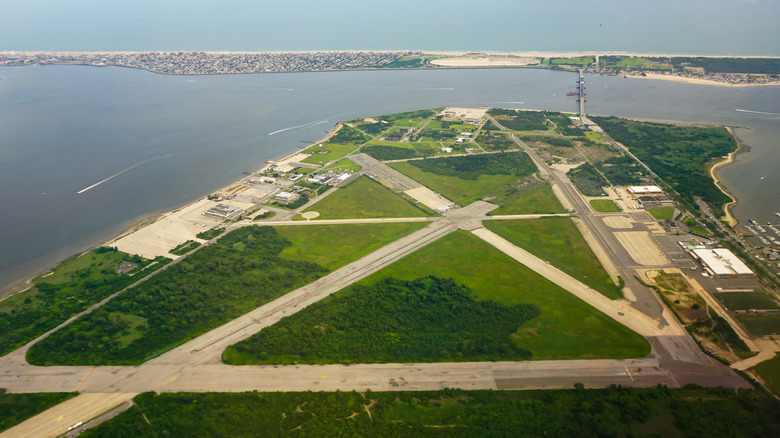
Fundamentally, airports are places of movement. Words like "bustling," "thriving," or "chaotic" often come to mind when thinking about these sites of departures and arrivals. That's why the idea of an abandoned airport — empty, static — can feel so unsettling. Some travelers experienced this firsthand during the COVID-19 pandemic, when major hubs in the United States and elsewhere became ghost towns, resembling scenes from a zombie movie. While many of those airports came back to life, abandoned airports still exist across the country. Once-thriving travel hubs were left behind for reasons ranging from the expected to the downright bizarre.
Some airports have been fully abandoned, with empty buildings and deteriorating infrastructure, while others have been demolished to make way for something new. Still, others sit in limbo, partially abandoned or repurposed from commercial passenger use into something else altogether. Although airports today may feel unavoidable — and to many travelers, the experience has gotten worse over time – they were not always busy passenger hubs. The earliest airports were little more than strips of grass used as makeshift airfields, since pilots at the time needed only a place to land and carried no passengers.
World War I helped accelerate the development of airports, which were modeled after train stations — hence why we call them airport "terminals" – and designed to serve the growing number of pilots trained during the war. World War II brought another major change, as advances in aviation technology made mass passenger travel possible. Airports then became more than points of transit, incorporating retail, dining, and other amenities. And so we have modern-day airports as places of motion — of bodies, cargo, and money on very disappointing $10 coffees — and commerce. For some airports, however, progress stalled — and eventually stopped altogether.
Before there was Denver International Airport, there was Stapleton
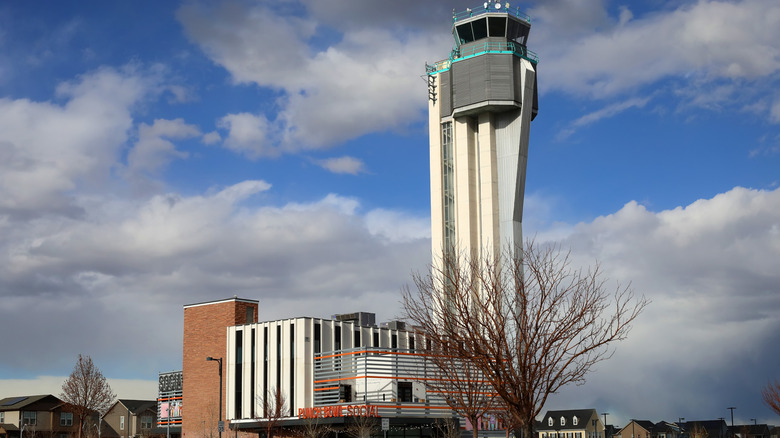
One of the most notable abandoned airports in the United States is Stapleton International Airport, whose old 164-foot air traffic control tower still stands in Denver's Central Park neighborhood. The history of this storied local icon dates back to 1929, when it opened as the Denver Municipal Airport. It was later renamed to honor Benjamin Stapleton, a former Denver mayor who first envisioned building an airport in the city.
For nearly seven decades, Stapleton served as Denver's main airport, with major airlines like United and Continental operating from the site. At one point, it ranked among the world's busiest airports. Over time, however, Stapleton's future became uncertain. It wasn't well-suited to either its location or demand, as nearby residents complained about the planes' noise, while its closely spaced runways caused major delays during bad weather (although, to be fair, it was never the airport with the worst delays in America).
With Stapleton no longer able to meet Denver's aviation demands, the city moved ahead with plans for a bigger, more modern airport. When Denver International, America's largest airport by land area, opened in 1995, Stapleton officially shut its doors. And before the city could decide what to do with this now-defunct hub, a major hail storm in 1997 damaged many of its buildings, accelerating their demolition. But the control tower was preserved, and after sitting vacant for years, it was redeveloped and reopened as FlyteCo Tower, a brewery, bar, restaurant, and entertainment venue spread across multiple floors. Those interested in history can book a one-hour tour of the top of the tower, which includes a free beer or soft drink.
New York City's first municipal airport had more legends than passengers
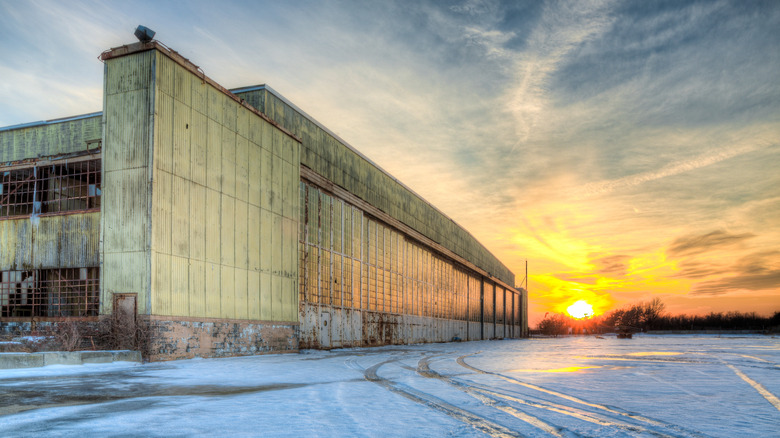
When it comes to New York City airports, the conversation always centers on JFK and LaGuardia. But there's actually an abandoned airport in Brooklyn that was once the site of many historic flights. The building of Floyd Bennett Field, New York's first municipal airport, emerged from a mix of pride and rivalry. When Charles Lindbergh completed the first transatlantic flight from New York to Paris in 1927, he departed from Roosevelt Field, Long Island. Embarrassed to not have been the origin point of this historic flight, New York City decided to build its own airport on Barren Island, off the southern shore of Brooklyn.
The construction of the airport posed a unique problem: Barren Island was a marshland made up of 33 small islands, so the city brought in 6 million cubic yards of sand to create a solid landmass. The airport opened in 1931 and became a favored destination for pilots — including Amelia Earhart and Howard Hughes — looking to break records or complete long-haul flights, thanks in part to its position on the Atlantic.
Unfortunately, its hard-to-reach location made it inconvenient for passengers, and it never took off as a commercial hub. That's not to say it wasn't active, particularly after the U.S. Navy took over the airport following the country's entry into World War II in 1941. The Navy used the airport for training and operations during the Cold War era before closing it in 1971. The site was later integrated into the Gateway National Recreation Area and is now open daily from 6 a.m. to 9 p.m. The Ryan Visitor Center is housed in the former air traffic control tower, while many of the airport's remaining buildings stand in ruins nearby.
A downtown Chicago airport was destroyed overnight
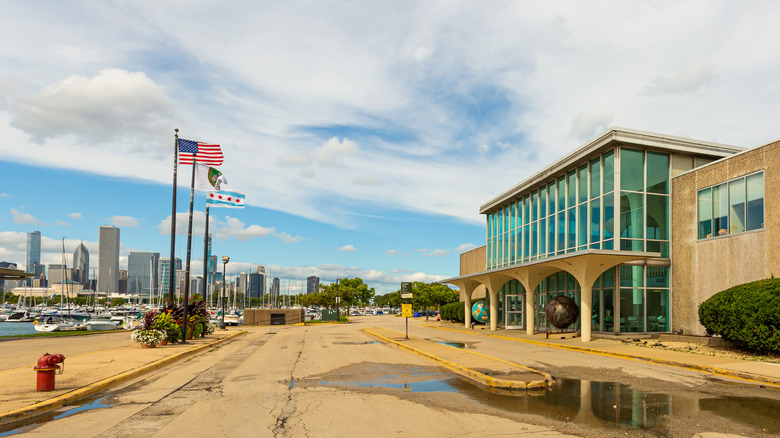
Meigs Field in downtown Chicago was once the busiest single-runway airport in the United States, but it no longer exists today. The history of Meigs dates back to 1925, when the peninsula of Northerly Island was built. Constructed in 1948, the airport was used by commuters and businesses, but ultimately met its demise under former Mayor Richard M. Daley. Chicago's longest-serving mayor first expressed his desire to turn Meigs Field into a park in 1994 and attempted to close the airport in 1996 by padlocking its gates and painting Xs on the runway. However, the airport had received grants from the Federal Aviation Administration in 1976 that required it to remain open for several more decades, forcing the city to keep operating it until 2001.
In the middle of the night on March 31, 2003, Daley ordered bulldozers to carve X's into the runway, effectively shutting the airport down without warning. The move caught nearly everyone off guard, including the FAA, as well as pilots and passengers whose planes were stranded at the now-unusable airfield. While the post-9/11 era ushered in a new era of a restrictive security process filled with endless dos and don'ts, those concerns were cited as justification for the airport's destruction. The Department of Homeland Security later stated that no specific threats had been made against Chicago, and Daley eventually acknowledged that he acted when he saw a chance to create the park he had long wanted.
While the air traffic control tower and terminal still stand, the rest of the peninsula has been turned into Northerly Island Park, which opened in 2015 without Daley in attendance.
Pittsburgh had to scale down in size
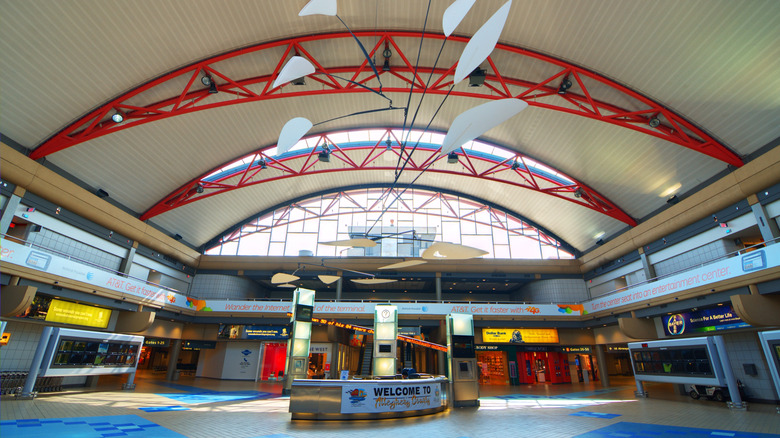
While some airports are demolished, reduced to little more than traces of what once was, others are repurposed or even rebuilt alongside the ghostly remnants of their former selves. That's what happened at Pittsburgh International Airport (PIT), whose new terminal opened in 2025. When the PIT opened in 1992, it was among the largest airports in the United States. The project cost about $780 million to build, and its terminal was roughly twice the size of downtown Pittsburgh. In fact, the airport was designed for traffic levels the region never reached.
The state-of-the-art airport offered features like trams to help passengers navigate its extensive size, perhaps as part of an effort to position it as one of America's most traveler-friendly and efficient airports. Its innovative X-shaped terminal conveniently connected gates, making life much easier for those with short layovers. It also housed more than 100 shops and restaurants, offering travelers nearly every convenience. Plus, the airport served as a major hub for USAir and, at its peak, saw more than 20 million passengers annually. Unfortunately, after USAir's bankruptcy and subsequent restructuring, PIT lost a ton of flights and passengers and stood for years as an oversized promise of broken dreams — anything but the world's busiest airport.
Rather than tear down the old terminal, officials opted to build a new one nearby. The $1.7 billion terminal was constructed over roughly four years and designed to better match the traffic the area gets. While the smaller, modern facility now handles passenger operations, the original terminal still stands, awaiting possible reuse.
Panama City hit a wall
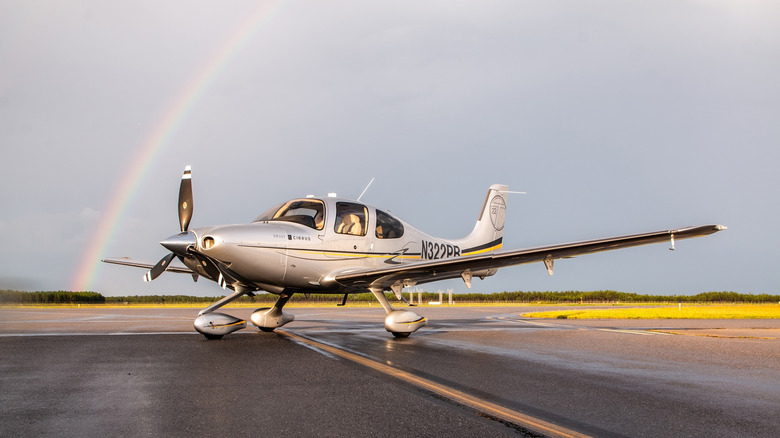
The history of Panama City-Bay County International Airport begins in 1932, when a local citizen donated land to the state for an airfield. Known then as Atkinson Field, the airport was initially used for military purposes as World War II ramped up. It was soon modernized and expanded onto land adjacent to its original location. The name changed again to Fannin Field when it opened in 1945, before eventually settling on Panama City-Bay County International Airport. It makes you wonder, what's in a name? That which we call an airport by any other name would still be as busy, it seems.
And so it was with Panama City, whose convenient location made it appealing to passengers, perhaps due to its proximity to the "Seafood Capital of the South." The airport was designated an international airport in 1992 and underwent a major renovation in 1995 that included the demolition of the old terminal. Eventually, however, it became clear there was a limit to how much the airport could expand. The 5,700-foot runway was too short for newer aircraft, raising concerns among airlines and the FAA, and further expansion would have required pushing into the bay.
The airport closed in 2010, when the bigger and more modern Northwest Florida Beaches International Airport opened nearby. That airport handled nearly 2 million passengers in 2025, compared with about 300,000 at Panama City, underscoring the need for much more capacity. Folks won't find much left from the old airport, which was taken down and turned into Panama City's first master-planned community, a development called Sweetbay.