
The 5 American State Parks That People Are Googling The Most In 2025
The unspoiled natural landscapes protected in America's parklands are a popular draw for visitors from around the world looking to escape urban life. The 63 national parks spread across U.S. states and territories recorded a combined 331.9 million visits in 2024, with well-known destinations like the Great Smoky Mountains, Zion National Park, and the Grand Canyon leading the pack. But national parks are far from the only natural areas worth exploring. There are 9,817 state parks across America, protecting over 20 million acres of land. Together, they attract more than twice as many visitors each year as the National Park System — 867 million visits a year, to be exact.
State parks let visitors immerse themselves in nature in more locations — often with fewer crowds – making them a more convenient choice for many travelers. As California State Park Foundation executive director Rachel Norton shared with Outside, "State parks get less attention. What you don't realize is that there are all of these wonderful state parks around the country protecting similar landscapes, and you might not even be aware of them."
Although, based on recent Google search data, that may be starting to shift. Google's Year in Search 2025 includes a list of the most-searched state parks on Google Maps, which shows that travelers are beginning to take notice. The top five span from coast to coast, ranging from epic waterfalls to dramatic desert landscapes and a green oasis tucked along the Hudson River.
Watkins Glen State Park (New York)
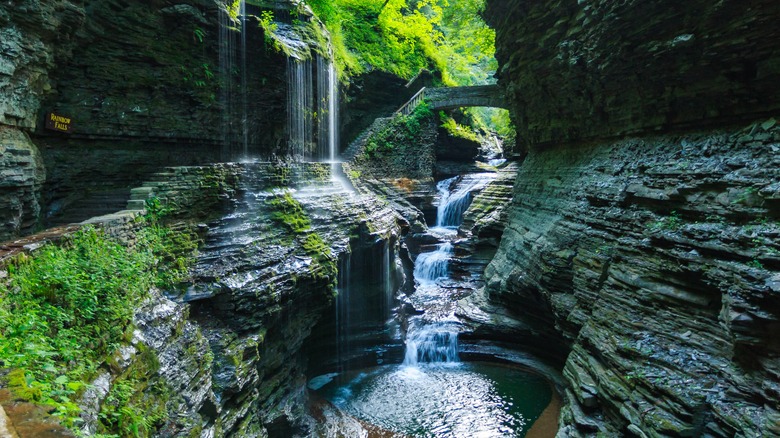
Watkins Glen State Park is arguably the most famous of the more than 20 state parks in New York's Finger Lakes region, so it makes sense that it topped Google's trending list. It's also the largest in Schuyler County, with about 5 miles of trails winding through its over 700 acres. The park sits about 90 miles southwest of Syracuse and roughly 2.5 hours southeast of Buffalo, adjacent to the charming lakeside wine country village of Watkins Glen. This puts the park close enough to population centers that it's easy to get to, without losing its idyllic, secluded feel.
The ethereal waterfalls of Watkins Glen State Park are its main draw for visitors. The park's Gorge Trail is also a rising topic in searches, and is the best way to take in the falls. It runs alongside 200-foot cliffs, where 19 separate waterfalls cascade over the rocks within a 2-mile stretch. The trail is moderately strenuous, featuring over 800 stone steps for visitors to climb as they pass through the spray of picturesque waterfalls like Jacob's Ladder and Rainbow Falls. Paths branching off from the main Gorge Trail lead to the campground, swimming pool, and designated area for bow-hunting during deer season.
Watkins Glen State Park is open from dawn to dusk year-round, but the Gorge Trail typically closes during the winter due to rockfall risks. It usually reopens from mid-May through late October, aligning with the open season for park amenities like the campground and gift shop. Meanwhile, the swimming pool is usually open from late June through early September, making it the best time to visit if you want to enjoy everything Watkins Glen State Park has to offer.
Valley of Fire State Park (Nevada)
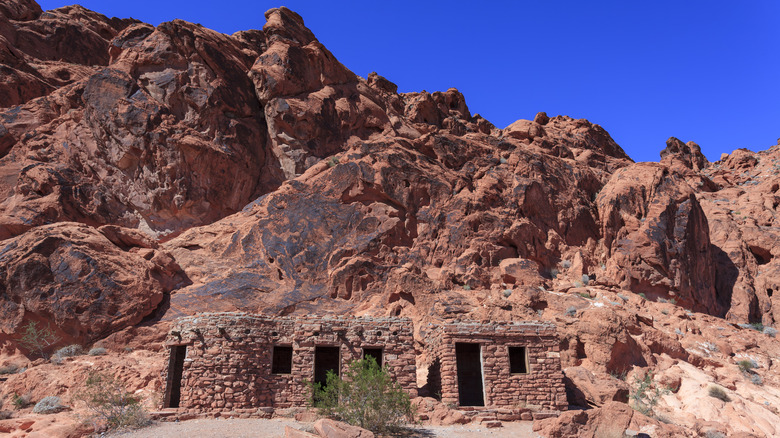
Second on the trending state parks list is Valley of Fire State Park, located in Moapa Valley, about 50 miles northeast of Las Vegas. It takes its name from the vibrant red of the landscape at sunset, best seen by driving down the scenic White Domes Road. While this panorama is part of what draws people to the park, it's best known for its well-preserved prehistoric remnants.
The bright red Aztec sandstone outcroppings strewn across the park's 40,000 acres date back to the Jurassic period. Early humans settled in the area roughly 11,000 years ago, and petroglyphs were carved around 2,500 years ago. These can be seen at sites like Mouse's Tank, Atlatl Rock, and Lone Rock, where you can also catch a glimpse of petrified logs dating back to when the area was a forest. All are fairly easy, short hikes from the Visitors Center, where exhibits on the park's prehistory and geology are available. Other distinctive landmarks include the aptly named Elephant Rock and Arch Rock. The iconic Seven Wonders Loop trail is a crowd-favorite path to see features like Pastel Canyon, Crazy Hill, and the red-and-white striped stones of Fire Wave. Hikers often combine it with the White Domes Loop to take in even more desert vistas.
Entrance to Valley of Fire State Park is $15 per vehicle ($10, if you have Nevada plates), or $2 if you bike in. While the park is open all year from sunrise to sunset, some trails close from May 15 through September 30 due to high heat. This includes the Fire Wave-Seven Wonders Loop as well as the White Domes Loop. If those are on your itinerary, you'll want to visit between October and April.
Liberty State Park (New Jersey)
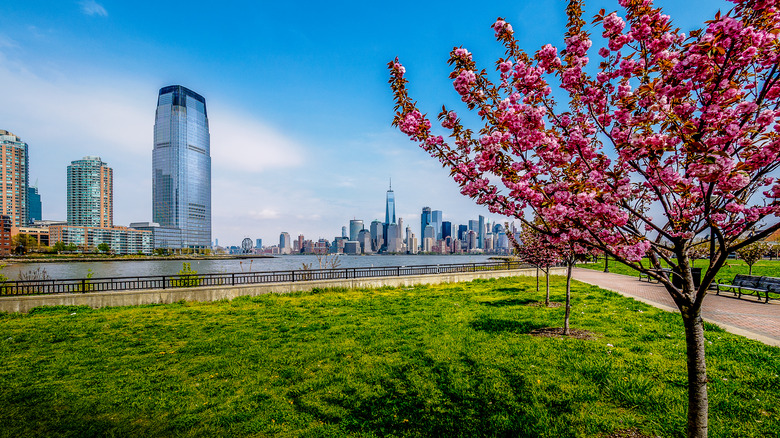
Not all of America's state parks are in remote places. In fact, the third-most-searched park, New Jersey's Liberty State Park, is in an area that's about as urban as it gets. Located along the Hudson River in Jersey City, the 1,200-acre green space offers views of Ellis Island and the Statue of Liberty and attracts roughly 4 million visitors annually.
One of the highlights of Liberty Park is the Central Railroad of New Jersey terminal, which once provided passage into the United States for new arrivals at Ellis Island, serving as many as 50,000 people a day. It was added to the National Register of Historic Places in 1975 and today features interpretive exhibits on the building's history. On the northern end of the park is the Empty Sky Memorial, which pays tribute to New Jersey residents who lost their lives on 9/11. You'll also find the Liberty Landing Marina, where you can catch a ferry to New York Harbor's pretty islands that give a unique glimpse into American history.
There is still nature in Liberty State Park, too. The Richard J. Sullivan Natural Area protects one of the last tidal salt marshes of the Hudson River Estuary, as well as forested areas with berry-bearing shrubs that attract a variety of bird species. You can explore the area by taking the 1.5-mile loop trail, or learn more about the plants and animals there at the adjacent Nature Center. The Marina and Waterfront Walkway also offers visitors opportunities for crabbing and fishing, with species like shad and striped bass common in this stretch of the river.
Starved Rock State Park (Illinois)
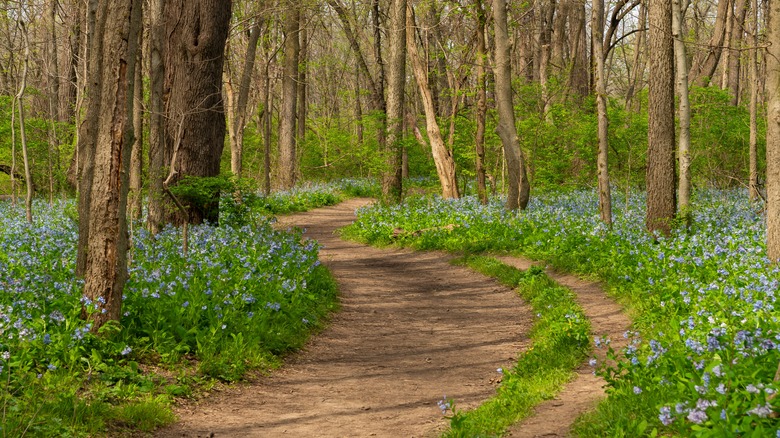
Illinois' Starved Rock State Park ranks fourth. It's located about 90 miles west of Chicago, near Oglesby, the rustic gem of a small city that serves as the gateway to the park. Starved Rock is consistently the most visited state park in Illinois, drawing over 2 million visitors a year, many of whom come to take in the wildflower wonderland that blooms here every summer.
Part of Starved Rock's popularity stems from the variety of activities here. Hikers have access to 13 miles of trails winding through the rugged landscape. For panoramic views, the River Trail is a 2-mile hike that passes overlooks such as Lover's Leap, Eagle Cliff, and Beehive. Further inland are 18 canyons, many of which flow with stunning waterfalls in the spring. Aurora Canyon, French Canyon, and Wildcat Canyon are the closest to the Visitors Center, while St. Louis Canyon and La Salle Canyon are popular longer hikes. The boat launch at the park's west end adds kayaking, canoeing, and fishing on the Illinois River to the park's activities.
Most people will want more than a single day in the park, so it makes sense that searches for cabins and other lodging are also on the rise. The historic Starved Rock Lodge combines rustic charm with modern comfort, including on-site dining, an indoor pool, and live music on summer weekends. You can book one of the 1930s-era log cabins for a more secluded stay, or reserve a space in the park's campground to sleep close to nature (though you'll want to do that early if you plan to visit on a summer weekend since campground spots can fill up quickly).
Silver Falls State Park (Oregon)
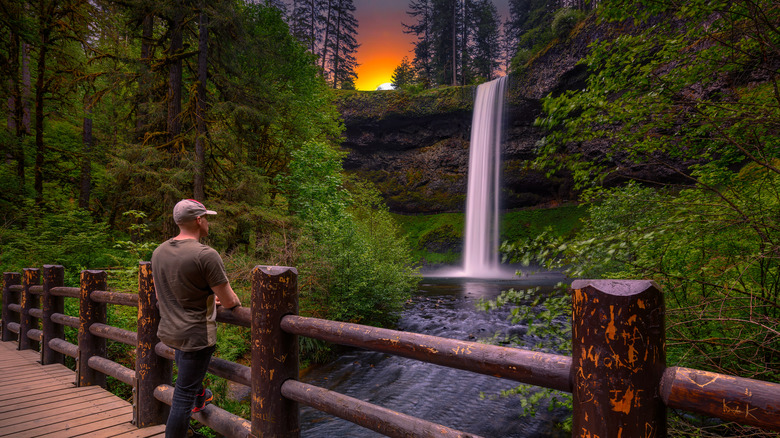
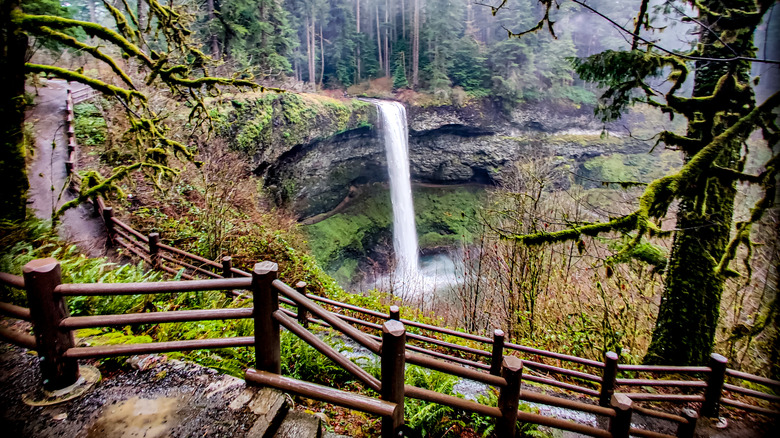
Rounding out the five most searched-for parks is Silver Falls, the largest state park in Oregon and home to the state's most majestic waterfalls. The South Falls, in particular, has seen a recent uptick in searches. This 177-foot waterfall is the most photographed in the park, especially when its flow peaks between January and April. You can see it and the park's nine other major waterfalls by hiking the Trail of Ten Falls, a 7.2-mile loop and the most extensive trail in the area. There are also shorter out-and-back trails to the North Falls and South Falls for folks who prefer a less strenuous hike.
In the southern area of Silver Falls State Park is the cozy forested retreat of Smith Creek Village. Here, you can stay in one of the 1930s-era cabins or have a meal at Bigleaf Market & Grill. Near the South Falls Trailhead is the South Falls Lodge, where you can eat at the café or restock your gear at the Ten Falls Supply Co. There's also a tent camping area, including a few spots with horse stalls in the Howard Creek Horse Camp.
Silver Falls State Park is open all year, and the best time to visit depends on what you want to see and do. The waterfalls peak in the spring, which is also a good time to visit for slightly lower crowds. It's busiest on weekends from June to September, while October is a favorite month to check out the fall foliage. The closest major city is Salem, about 25 miles to the west. The park charges a $5 entrance fee if you're just visiting for the day, but it is included if you're staying overnight at the campsite or one of the cabins.