
5 Unsettling Maine Destinations That Inspired Stephen King
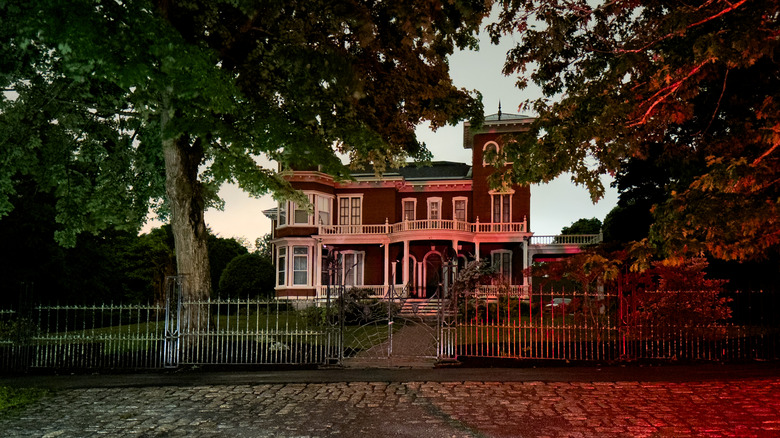
One of Stephen King's trademarks is his regular use of settings in Maine, like the towns of Haven, Derry, and Castle Rock. While it's unfortunately not possible to visit these fictional locations (or maybe that's a good thing, considering all of the horrifying things that happen in King's stories), the real places that inspired these invented locales can be explored.
The most famous real-world inspiration for a Stephen King work is the iconic Stanley Hotel in Estes Park, Colorado, which has been known as one of the world's most haunted destinations since guests started reporting paranormal activity in room 217 in the late 1950s, well before King's 1974 stay that inspired "The Shining." Intriguingly, the Stanley Hotel does have a Maine connection; inventor F.O. Stanley, who built the hotel, was born in Kingfield, Maine in 1849 and lived in the state until the 1890s.
Like Stanley, King was born in Maine. He spent his first few years in Portland, moved to Durham as a pre-teen, went to college in Orono, taught high school in Hampden, and, since the 1980s, has split his time between Center Lovell and Bangor. With so much of his life spent in Maine, it's no surprise that it's become integral to his identity as a writer. Many of King's stories have a direct Maine inspiration, often something that can be linked to a real place he visited over his decades in the state. Here are five places Stephen King fans can visit to feel like they're immersed in the renowned horror writer's world.
Bangor: Derry's real-world analog
Several towns have stood in for Derry on-screen, the most recognizable being the lovely town of Port Hope, Ontario, featured in the 2017 and 2019 film adaptations of "It." If you're looking for the town that inspired Pennywise's home turf, however, then you want to head to Bangor, which is a must-visit on any King-inspired Maine itinerary.
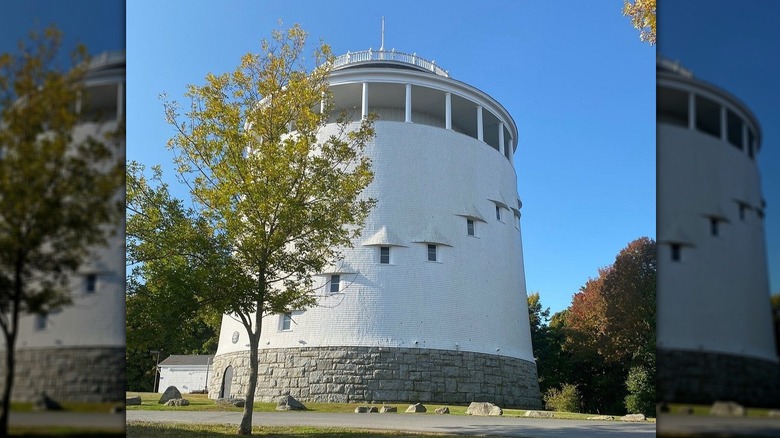
There's a slew of unsettling King-related settings around Bangor. As the folks at SK Tours will tell you if you take their Derry, Maine tour, the layout of Derry mirrors that of Bangor, and the two towns share many landmarks. The most visible is the Thomas Hill Standpipe, where young Stan first encounters Pennywise in one of the most terrifying scenes from the novel "It," though it's unfortunately omitted from the adaptations. The standpipe is close to the house where King lived at the time, and he wrote much of the book on a bench in the adjoining park. Around the block from King's old house, at the corner of Jackson Street and Union Street, is the sewer grate that inspired "It's" opening scene; feel free to check for paper boats or red balloons. East of King's old house, the Main Street bridge was the site of the 1984 murder of Charlie Howard, a hate crime that directly inspired the murder of Adrian Mellon in the novel, making it unsettling for both fictional and historical reasons.
Plenty of other Derry landmarks have real-world Bangor equivalents, from the Paul Bunyan statue that attacks Richie to the canal flowing through downtown and the Barrens around the Kenduskeag Stream, where the young Losers Club enter the sewers. In short, if you want to feel like you've stepped into a Stephen King novel, Bangor is the place to go.
Runaround Pond in Durham: The lake from The Body/Stand by Me
A small town roughly 25 miles north of the lively waterfront hub of Portland, Durham, as was mentioned in the intro, is where Stephen King lived from age 11 until he graduated high school. It's no surprise, then, that the town inspired parts of his novels.
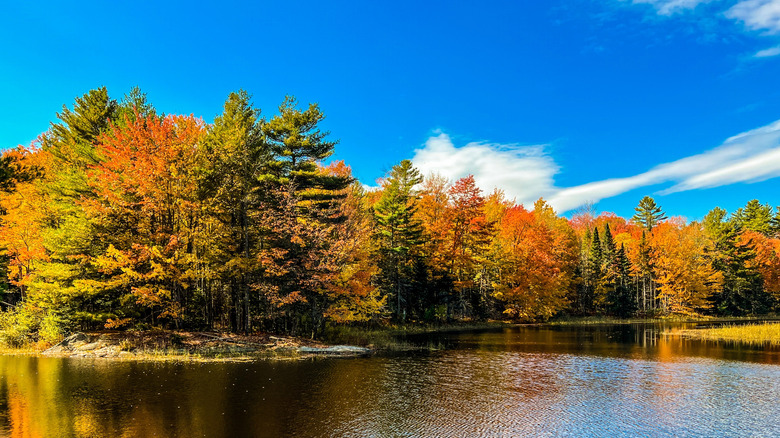
The main spot for King fans to visit in Durham is Runaround Pond. Residents know this recreation area as a peaceful place to hike and fish in the summer or ice skate in the winter, but in Stephen King's hands, it has a different vibe. In the novella "The Body" from the collection "Different Seasons" (adapted into the movie "Stand By Me"), it's where Gordie LaChance and his friends swim in a leech-filled pond. That scene is based on a real experience King had at Runaround Pond, including the detail about a leech stuck to his privates. Runaround Pond also features in the novel "The Dead Zone" as the place where six-year-old Johnny Smith has the ice skating accident that precedes his first psychic vision.
There are other glimpses of Stephen King inspiration around Durham. Up the road from Runaround Pond is Harmony Grove Cemetery, which inspired Harmony Hill Cemetery in "Salem's Lot." Speaking of "Salem's Lot," it's also been speculated that the Marsten House was inspired by a location in Durham, although researchers don't agree which one. "Stephen King Country" author George Beahm thinks it developed from a haunted house on Deep Cut Road, while King's childhood friend Chris Chesley suggests Shiloh Chapel as the idea's source. Durham has a creepy claim to fame beyond its King connection, too, being known as a bigfoot area after 1973 sightings of an ape-like creature known as the Durham Gorilla.
Bridgton: Get lost in The Mist
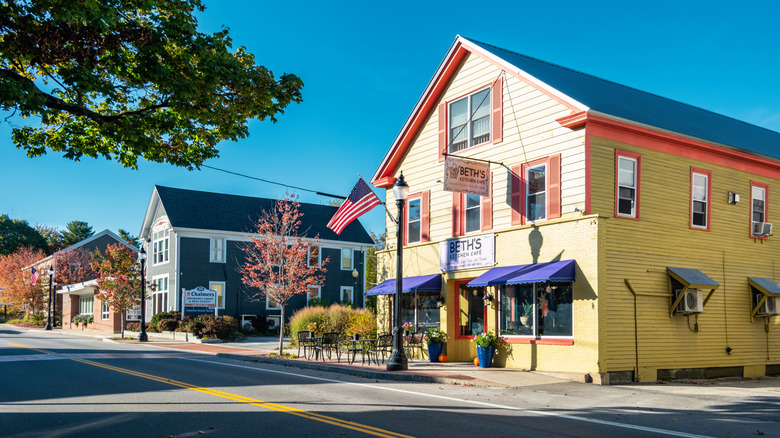
Most would call Bridgton, Maine, more relaxing than unsettling. This picture-perfect town nestled in Maine's Lakes Region is home to a quaint Main Street and the historic Pleasant Mountain ski area, neither of which seem like viable sources for scares. But leave it to horror master Stephen King to find the terror in something as mundane as a small-town grocery store. Bridgton was where he wrote "The Stand" and "The Dead Zone" during the late 1970s, and he often shopped at the Food City supermarket when he lived in town. A few years later, he morphed it into Federal Foods, the supermarket that serves as the primary setting for "The Mist."
Food City is still open on Main Street in Bridgton, although, even knowing its King connection, there's nothing particularly unnerving about it. What earns Bridgton a spot on this list of spine-tingling destinations is the town's weather, which likely inspired the story's titular mist. The area's lakes often produce heavy ground fogs, especially in the morning and evening during the fall and winter. And when it rolls in, this charming town feels a lot more haunted.
"The Mist" isn't King's only story set in a slant version of Bridgton; the town of Chester's Mill from the novel "Under the Dome" is also modeled after it. Along with the setting, King got the name for villainous used car dealer Big Jim Rennie from Renys, a department store on Main Street. If you're in Bridgton on a King-themed tour, make sure to head across the street from Renys to Bridgton Books, where rumor has it the author will sometimes stop in to sign copies of his books and then return them to the shelves for lucky customers to stumble across.
Mount Desert Island: The IRL Little Tall Island
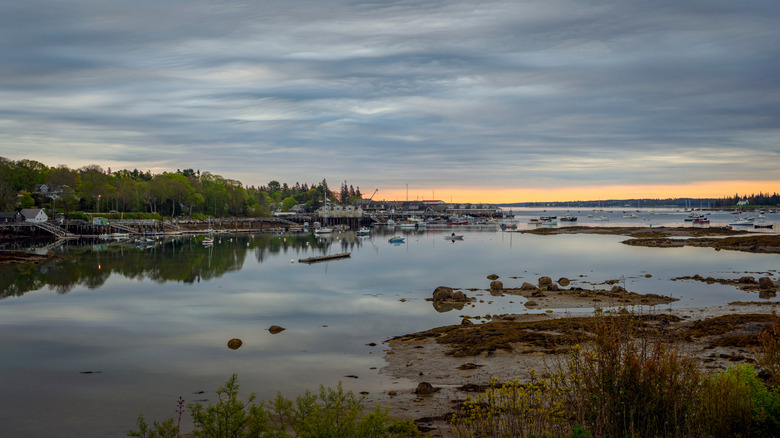
The breathtaking views from Mount Desert Island are often compared to the scenery of Cyprus, but Stephen King fans will likely have a different point of reference. In the real world, Mount Desert Island is off of Maine's northern coast and is home to the postcard-worthy Acadia National Park and the affordable coastal escape of Bar Harbor. In Stephen King's stories, it shows up as Little Tall Island.
King's first work to use Little Tall Island as a setting is the zombie apocalypse short story "Home Delivery," which first appeared in the 1989 anthology "The Book of the Dead" and was later included in the collection "Nightmares and Dreamscapes." It's also the primary setting of the novel "Dolores Claiborne" and the miniseries "Storm of the Century," parts of which were filmed in Southwest Harbor. Acadia National Park also gets a shout-out in "The Tommyknockers," though the majority of that novel takes place in Haven, which, in the King universe, is located between Bangor and Derry, along the Penobscot River.
As far as the spooky factor goes, Acadia National Park is said to be haunted. The Compass Harbor Trail just outside of Bar Harbor goes through the former estate of George Dorr, called the Father of Acadia. Dorr died on the trail, and his spirit is said to still linger there. Local legend also says that the sea cave called Devil's Oven contains a portal to the underworld. The cave, a natural stone arch that was once a popular tourist attraction, is on the property of the Inn at Bay Ledge, just past Cathedral Rock. Mount Desert Island's towns have resident spirits, too, and American Ghost Walks leads a daily Bar Harbor Ghost Walk Tour where you can learn some of their stories.
Orrington: The birthplace of Pet Sematary
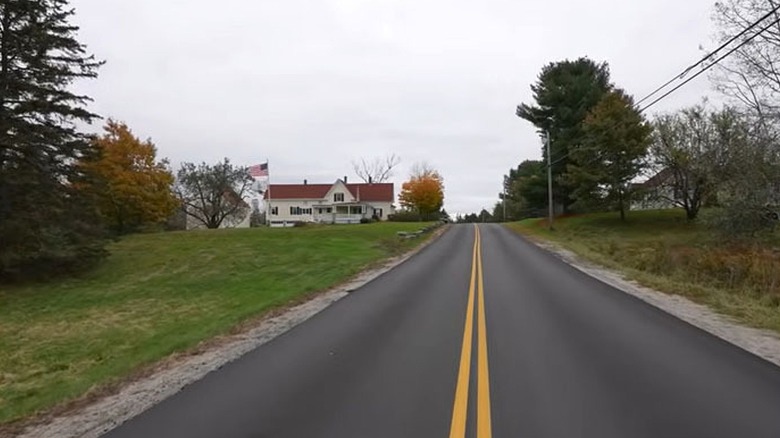
Stephen King was living in Orrington when he started writing "Pet Sematary" in 1979. The house he was renting on River Road had woods behind it where local kids had made a pet cemetery — or, rather, a pet "sematary," according to the sign they wrote. King made use of that unusual amenity after his daughter's cat was killed by a truck on the nearby busy Route 15. Using that experience as inspiration, King kept the misspelled name, changed Orrington to Ludlow, and wrote the novel fans know and love today.
The house the Kings rented in Orrington is still there, and, theoretically, so is the pet cemetery behind it, although researcher George Beahm says it's been "picked clean" by fans over the years. Even if there's not much left to see, traipsing through the woods in search of a pet cemetery seems like a suitably unsettling way to spend an afternoon.
Fans of the movie can find several filming locations not far away. From Orrington, you can head about 10 miles north to Bangor to see Mount Hope Cemetery, which was used for all of the human cemetery scenes in the movie. Other filming locations are found about an hour south in Hancock and Ellsworth. The Creeds' home is on Point Road in Hancock and looks the same as it did in the film. The hospital scenes were filmed at City Hall in the picturesque town of Ellsworth, which is also home to the site used for the pet cemetery, in the woods behind Brown Appliance and Mattress (use 313 High Street as the address if you're looking it up on Google Maps). Finally, Mount Desert Island was also used to film the quarry scenes in the abandoned Allen Quarry.