
We Ranked All 9 Of Colorado's National Monuments By How Much They Are Worth Visiting
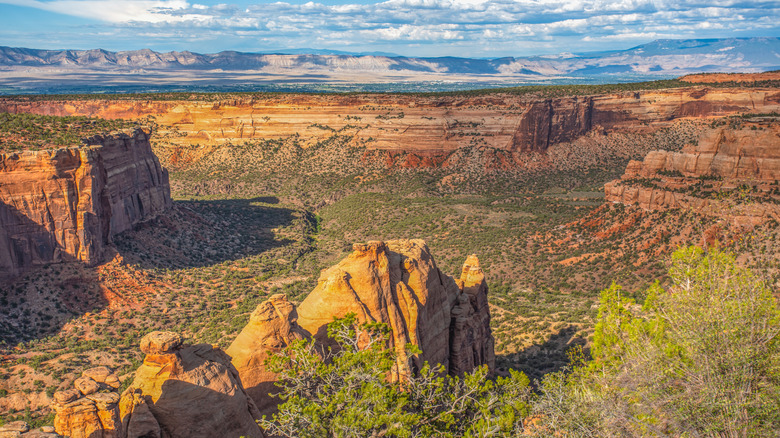
From dinosaur fossils and petrified trees to canyon vistas and the sites of ancient Indigenous communities, Colorado's national monuments boast some of the country's most dramatic landscapes and fascinating histories. Wander around 1,000-year-old Ancestral Puebloan cliff dwellings, raft along beautiful rivers, or explore the historic training grounds of an elite Army division that fought in World War II. Perhaps you're looking for some of the most scenic national forests and monuments in Colorado you can visit for free, in which case, you're also in luck. Nestled amid the Rocky Mountains and wide open desert alike, you'll find numerous impressive places to explore.
Whether you're headed to Colorado for the first time or you've lived there for a while, chances are, you'll discover something totally new at the state's nine properties. They range in size from a few dozen acres, such as Yucca House National Monument, to tens of thousands, like the vast expanse of Dinosaur National Monument. These national monuments count among Colorado's best-kept secret destinations, and they're sprinkled all around the western two-thirds of the state.
Below, we've rounded up all nine of Colorado's national monuments and ranked them from least to most worthwhile. Of course, this is subjective and has a lot to do with what you want to get out of a visit. Want to see impressive ancient pueblos in the mountains? Chimney Rock is your jam. Prefer hiking, camping, river rafting, and fossil hunting? Head northwest to Dinosaur. We've based our ranking on the size of the parks, how much they offer in terms of heritage and recreation — the bang for their buck, so to speak, especially if you're going to make a long drive — and how visitors have rated their experiences. Read on to get your itinerary planning started.
9. Yucca House National Monument, Cortez
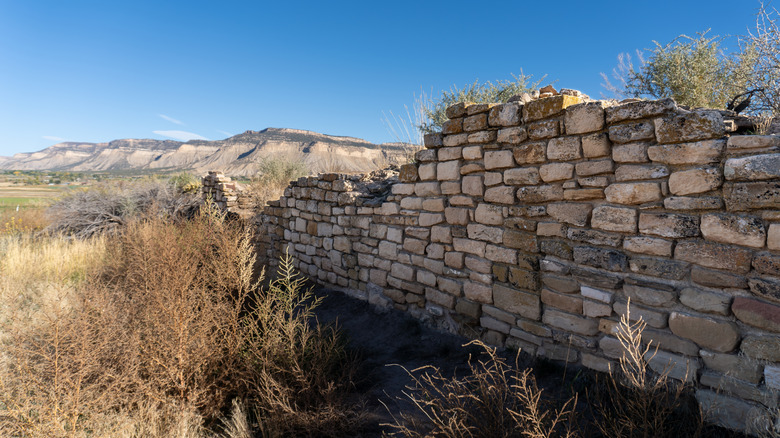
In southwest Colorado's expansive Montezuma Valley, a glimpse of Ancient Puebloan culture huddles in a field, partly covered in brush and surrounded by farms. This is Yucca House National Monument, which sits about an hour's drive from Mesa Verde National Park, an underrated archaeological wonder. To get there, you'll need to follow the instructions provided on NPS.gov because, due to its location amid private land, there are no road signs to direct you. Once you get there, a clearly marked gate and boardwalk lead you to the site.
Visitors who have left reviews about the monument on Google and Tripadvisor have consistently rated the experience quite a bit lower than all other national monuments in the state. That largely comes down to its size — historically just under 35 acres, which didn't give people a lot to see. Although the purchase of an additional parcel of 160 acres was initiated in 2021 and the park is now nearly 200 acres, it's still one rather unkempt attraction. If you're looking for hikes or camping, this isn't the park for you. And it may not be worth a special trip unless you're really into Indigenous architecture. In that vein, however, Yucca House is quite an example. It was thought to have had around 600 rooms and more than 100 kivas, which were stone-lined ceremonial gathering areas sunken into the ground. Unlike the dwellings at Mesa Verde or Hovenweep — also about an hour away — it's not tidied up or reconstructed, so you're seeing the ruins just as they have been for hundreds of years.
Yucca House harkens back to the early days of national monuments when access was basic, and there weren't the visitor centers. and developed roads we take for granted these days. It was designated a national monument in 1919, and it essentially hasn't changed much, but it's still free to visit.
8. Browns Canyon National Monument, Buena Vista-Salida
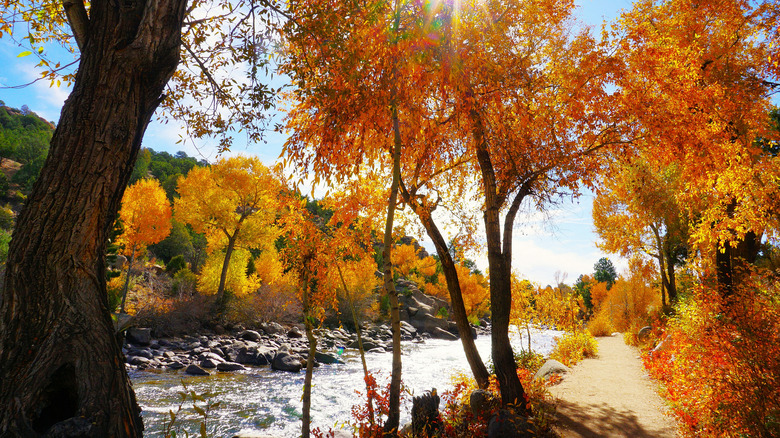
In 2015, Browns Canyon was designated a national monument in order to preserve more than 21,500 acres of canyons, riverine landscapes, and forest between Salida and Buena Vista, a unique Colorado town that has a "mountain beach" right in the middle of downtown. It's primarily known for access to the Arkansas River, especially for those who love the thrill of whitewater rafting, thanks to a partnership with the Arkansas Headwaters Recreation Area (AHRA) that helps to monitor boating traffic through this protected corridor. And it's also free to visit!
This striking area is managed by the Bureau of Land Management (BLM) and the U.S. Forest Service because it's predominantly a natural attraction comprising unique landscapes and delicate habitats for wildlife. The Arkansas River is also a destination for anglers, as Colorado Parks & Wildlife has designated these waters a Gold Medal trout fishery. And as a Dark Sky Park, it's ideal for stargazing. You'll see rocky spires, wildlife, and beautiful autumnal colors no matter how you choose to experience the park, whether you hike along a network of trails or hit the rapids. And since Browns Canyon straddles national forest and BLM land, dispersed camping is permitted in addition to a couple of primitively developed campgrounds at Ruby Mountain and Hecla Junction.
If you're not really into river recreation, Browns Canyon is probably skippable, although hiking or horseback riding to take in epic views of soaring Sawatch Mountains is worthwhile. There's also no visitor center right on site; you'll have to head to the AHRA headquarters. "If you're looking to get the stamp in your National Parks Passport book, you'll have to go to the visitor center in Salida," writes a visitor in a 4-star Google review.
7. Chimney Rock National Monument, Chimney Rock
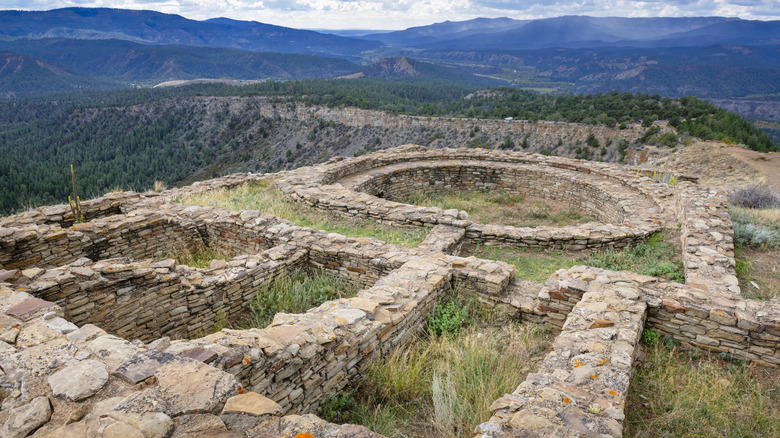
Located amid the beautiful San Juan Mountains, at the southern edge of San Juan National Forest on the Ute Reservation, Chimney Rock National Monument offers glimpses into the past of Indigenous Americans around 1,000 years ago. With evidence of their developed agricultural practices, homes, and spiritual life, it's considered to be an "outlier" of the expansive and advanced Chacoan culture, the epicenter of which is in New Mexico at Chaco Canyon — also a must-see national historical park. At Chimney Rock, elaborate stone structures, including houses and kivas, comprise one of the largest settlements in the region from a period that archaeologists refer to as Pueblo II, which ran from approximately 900 to 1150. This was when central communities began to be augmented by smaller, more dispersed settlements, and earlier architectural conventions evolved.
Chimney Rock isn't on the way to major tourist destinations. It's about a half-hour west of Pagosa Springs and an hour's drive east of Durango, which marks the southeastern corner of the scenic San Juan Skyway, Colorado's "essential journey for roadtrippers." Being out of the way, it takes a bit of extra planning to reach, and at just a bit more than 4,700 acres, it's not the largest on this list. But if you're fascinated by Ancestral Puebloan culture, it's one you won't want to miss. It's open seasonally from May 15 to October 15, with some park access restrictions depending on the time of day, so it's best to give yourself plenty of time. Vehicle fees, as of this writing, are $20 for cars and $10 for motorcycles.
6. Florissant Fossil Beds National Monument, Florissant
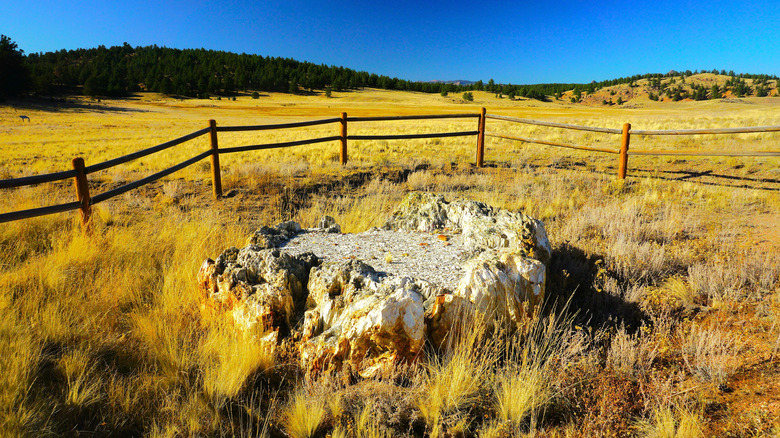
The ghost of a 34-million-year-old redwood forest can still be experienced at Florissant Fossil Beds National Monument, where giant petrified trees are now all that remain amid geology that contains some of the most abundant and diverse fossil deposits in the world. The park is easy to visit for just a couple of hours, making it a great option if you just have an afternoon to spare. It's also really easy to reach from the Front Range at less than an hour's drive west of Colorado Springs. That said, there are more than 14 miles of trails to explore, so it's also easy to extend your visit.
Head out on the 1.1-mile Petrified Forest Loop to see the "Big Stump," one of the park's most prominent ancient trees with its rainbow-like stone composition. This walk, along with the even shorter Geologic Trail and Ponderosa Loop, is perfect for the whole family. If you have more time, head along the Hornbek Trail to explore the historic Hornbek Homestead or enjoy forest and meadows alike along the Boulder Creek Trail. "It does get hot out here, so bring water and enjoy!" shares a Google reviewer. As of this writing, the daily pass fee is $10.
The visitor center at Florissant Fossil Beds includes interactive displays, a bookshop, and, during the summer, a yurt that doubles as a learning lab, where visitors can get up close and personal with real fossils. All this is also to say, though, that if you're not really much of a geology enthusiast, the attractions here will feel pretty limited.
5. Camp Hale-Continental Divide National Monument, Leadville
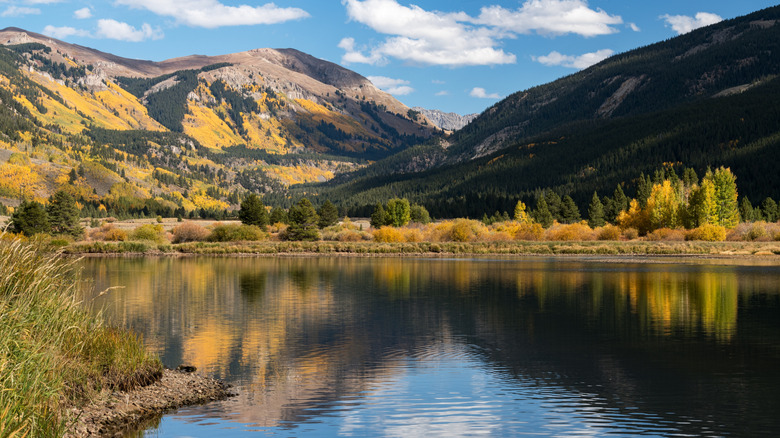
At just over 53,800 acres, Camp Hale-Continental Divide National Monument has two units in White River National Forest. Camp Hale preserves a former U.S. Army training ground used by the 10th Mountain Division, which served in World War II. At one time, Camp Hale could accommodate up to 15,000 soldiers, and it had its own hospital, ski hills, gunnery ranges, and more. Today, you can pitch a tent or park overnight at Camp Hale Memorial Campground.
The entrance to the Camp Hale Area sits about halfway between Minturn and Leadville on US-24, while the unit known as the Tenmile Area, which encompasses the Tenmile Range and the Continental Divide, is to the east. Here, you'll find 10 mountains that exceed 13,000 feet in elevation, and the tallest is well over 14,000 — a true "14er." For an easy hike from the northern edge of this area, strike out on the Rainbow Lake West Loop Trail from Frisco, which extends 1.6 miles. If you're serious about hiking, the Continental Divide Trail is accessible from Camp Hale, where you'll find just a taste — albeit a dramatic one — of the 3,100-mile route that extends from Canada to Mexico.
Camp Hale-Continental Divide National Monument is one of the system's newest, designated by President Biden in 2022, and thanks to a local tour company called Paragon Guides, you can even enjoy a scenic lunch with llamas in this mountain haven. The park is free to visit, but it takes some planning, plus a good amount of time if you want to visit both units. Arguably, Camp Hale is ideal for history buffs, and the Tenmile Area is best for rugged explorations of nature at its most incredible.
4. Canyons of the Ancients National Monument, Dolores
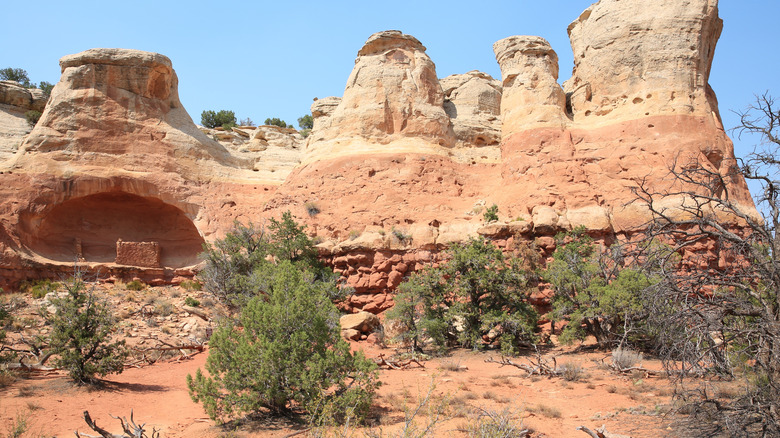
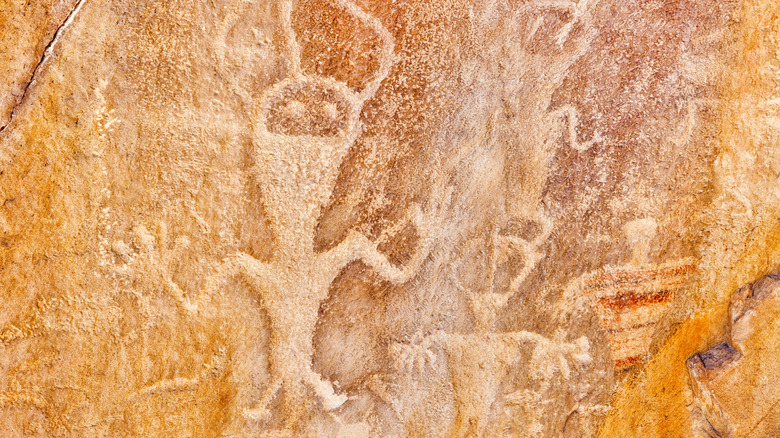
One enjoyable way to explore the American Southwest like never before is via the Trail of the Ancients, which extends for 116 miles in Colorado and includes a stop at Canyons of the Ancients National Monument. The sprawling park consists of a network of canyons containing archaeological sites relating to Ancestral Puebloan culture. It consists of a whopping 176,000 acres and encompasses well over 8,000 notable sites, from houses and kivas to centuries-old roads and petroglyphs. You may even be fortunate enough to stumble across one or two of the estimated 30,000 sites around the region that have yet to be documented. Just remember not to remove any artifacts you may find.
The visitor center for Canyons of the Ancients is located just an hour's drive north of Mesa Verde National Park, and it's a great idea to stop here first to orient yourself and experience some of the displays. A visit to this national monument requires a bit of an itinerary, as noteworthy sites are spread over a large area. You'll often wind through farms and private land on your way to the BLM areas, and many of the roads are dirt tracks. Along some routes, you'll find a few dispersed camping sites. The trick is working out where to go and how much you can fit in during a certain time span.
If you're anticipating pueblos on the scale of Mesa Verde or Chaco Canyon, you may be disappointed. It's perhaps better to think of Canyons of the Ancients as a cultural landscape, but it's a paradise for archaeology fans, and it's free to explore. Toward the northern edge of the park, an easy walk takes you to Lowry Pueblo National Historic Landmark, where you can even step inside.
3. Hovenweep National Monument, Pleasant View
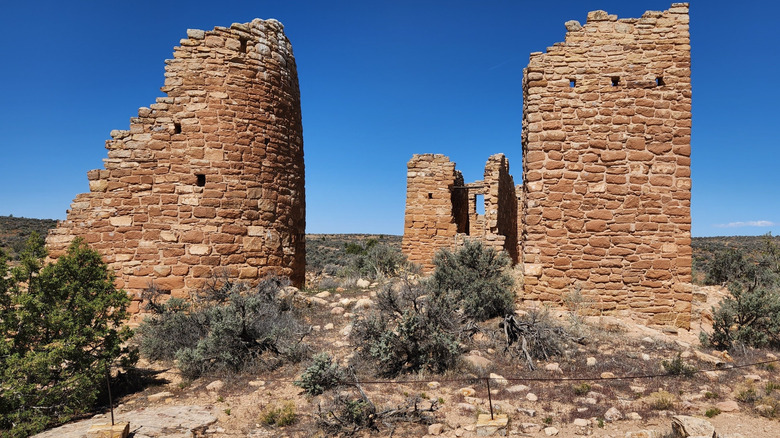
Partly overlapping with Canyons of the Ancients, and comprising six archaeological sites that straddle Colorado's border with Utah, Hovenweep National Monument is a remote, brilliant example of Ancestral Puebloan canyon dwellings. The masonry buildings found here, which perch on cliffs and sit within canyons, date to around 1200 to 1300, and a number of easy hikes are oriented around the structures. It's also the setting that continues to impress visitors. "Amazing historical site and a great place to reflect," writes a visitor in a Google review.
Hovenweep National Monument has a small visitor center just over the Utah border, which is a great first stop for information from a ranger and to grab a map. Since some driving is involved to access the different sites, it's good to get the lay of the land first. As of this writing, day passes for cars are $20, motorcycles are $15, and if you arrive via bike, it's $10. Those who have Fido along for the journey will also be pleased to know that Hovenweep is quite dog-friendly. Leashed pets are allowed essentially everywhere except inside the visitor center.
One of Hovenweep's greatest assets is its tranquil campground. Sites cost a reasonable $20 per night and are nestled amid the shrubs. Views of the open landscape and sky are wide-open, which is excellent for stargazing, as Hovenweep is officially a Dark Sky Park, too. The campground is open year-round and reservable on Recreation.gov.
2. Dinosaur National Monument, Maybell
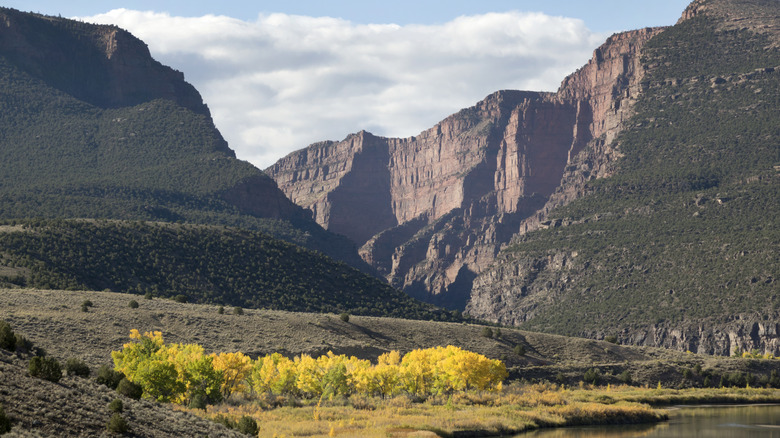
In the northwest part of the state, Dinosaur National Monument really doubles down on what it means to be ancient — 150 million years ago, that is. It's a vast park covering more than 210,000 acres, rightly considered a "hidden gem of the national park system" where you can raft, hike, and see fossils. It's a haven for camping in canyon country, scouting out petroglyphs, and exploring remnants of 19th-century homesteads. As of this writing, a standard vehicle day pass is $25.
Dinosaur National Monument boasts a total of six campgrounds to choose from, which is one reason we've ranked it higher than almost all of Colorado's other monuments. There are also two visitor centers in the park — Quarry Visitor Center at the west entrance and Canyon Visitor Center at the south entrance. Quarry is where you'll find Exhibit Hall, an astounding wall full of around 1,500 prehistoric fossils. This spot is actually in Utah; however, like Hovenweep, Dinosaur National Monument stretches between two states. You could easily spend a few days enjoying just the scenic drives, let alone hikes and other activities. About two-thirds of the park sits in Colorado, though, so if you've only got time to visit the eastern side, there's still plenty to experience.
If rafting is high on your list, a trip to the Gates of Lodor, carved by the Green River, is a must. Book a guided trip with a commercial outfitter such as Mild to Wild Rafting & Jeep Tours. For something a bit more relaxing, fly fishing is permitted with a Colorado license. And for the terrain-lovers, the Colorado side of the park features five mostly easy trails, ranging in length from a quarter of a mile to a little over nine miles.
1. Colorado National Monument, Fruita
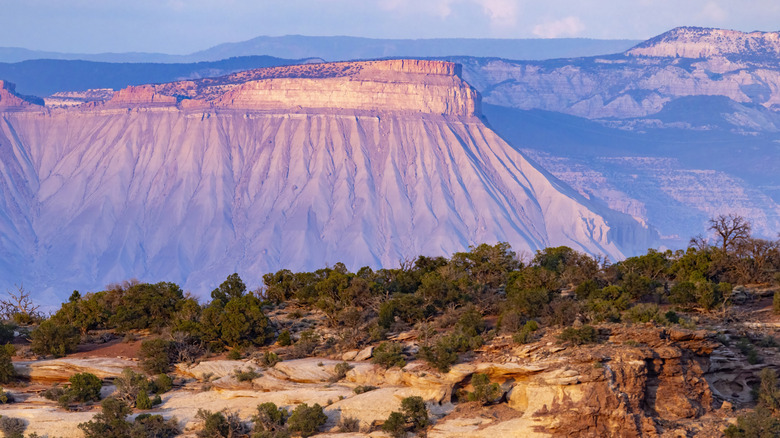
Colorado's crowning national monument is, well, the quite aptly named Colorado National Monument. Akin to a "mini-Grand Canyon" with breathtaking viewpoints and trails, this stunning destination offers camping, scenic drives through some of the state's most impressive red rock landscapes, and the chance to see wildlife like big-horned sheep. While only about a tenth of the size of Dinosaur National Monument, covering 32 square miles, this park packs a punch with its cliffs, mesas, and canyons. The standard entrance fee is $25.
Biking or driving along the 23-mile Rim Rock Drive is arguably the most classic way to experience this park. It connects the Saddlehorn Visitor Center to numerous trailheads and scenic overlooks. Cruise through three tunnels, take in panoramic views, sidle around switchbacks, and see exposed rock layers as old as 1.7 billion years. Saddlehorn Campground, open year-round, is located near the visitor center and is also an easy stop on the route.
To really immerse yourself in the park's remarkable landscape, nothing beats heading out on foot. The 4.6-mile, moderately challenging Monument Canyon Loop Trail is an ideal starting point, as it offers dramatic views of hoodoos and huge bluffs. In some parts of the park, rock climbers can even prove their mettle with climbs up striking sandstone faces. "While Colorado National Monument does not have the national park designation, its canyon, long park road with overlooks, and numerous hiking trails are comparable to those at these national parks," writes an enthusiastic reviewer on Tripadvisor.
Methodology
Any ranking of the most to least worthwhile destinations will always be a bit in-the-eye-of-the-beholder, but there are a few key factors that went into helping us determine this list. We weighed relative information about the parks' sizes, accessibility, amenities (such as campgrounds or robust hiking trails), diversity of recreation types, and average visitors' ratings on Google, Tripadvisor, and Alltrails. This information was combined with the author's personal experiences visiting Hovenweep, Canyons of the Ancients, Camp Hale-Continental Divide, and Browns Canyon National Monuments.
For specific information about seasonality, camping, and other recreation, historical context, maps, and statistical data, we referenced NPS.gov, BLM.gov, FS.USDA.gov, ObamaWhiteHouse, Archives.gov, BrownsCanyon.org, ChimneyRockCO.org, CDTCoalition.org, Colorado.com, CODOT.gov, Recreation.gov, NationalParks.org, and Britannica.com.