
The World's Most Beautiful Underrated Beaches Are Untouched Escapes Most Tourists Never Find
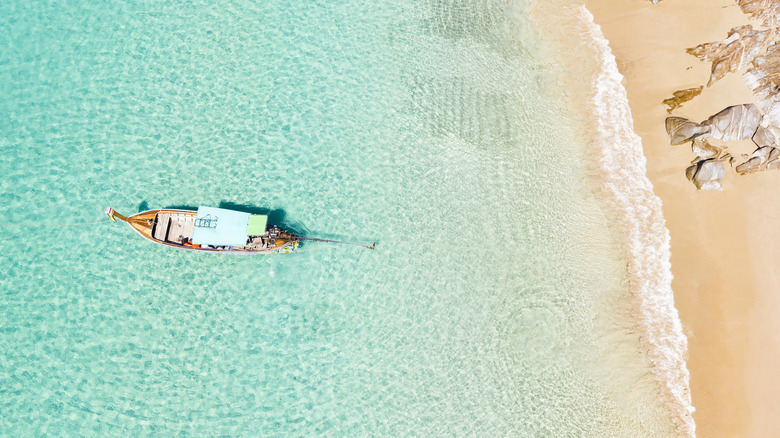
The most famous beaches in the world didn't achieve their status by accident. Waikiki, Copacabana, Bondi — all of them initially attracted tourists with their stunning beauty. Fast forward to today, and you might find that beauty hidden under beach bars, sun loungers, and Instagram crowds. The music gets louder every year, costs go up, and, of course, construction begins on new resorts as soon as the last of the high-season holidaymakers head back home. You would think the exponential development in these places is because there is nowhere else. But they are not the only beautiful beaches on the planet. Far from it.
Thankfully, there are extraordinary stretches of coastline throughout the world that still sit quietly unknown. No gaggles of tourists, no hawkers, no tailors pulling you into their shops. Just beautiful shores of sea and sand that invite you to stay for a little while. There are numerous reasons why they are quiet. They might sit in a country not known as a coastal paradise, or they might be too remote and difficult to get to. Some visitors may be put off by the lack of infrastructure, or maybe algorithms simply aren't pushing them onto social media feeds.
Most travelers never find them, but we have a few to share with you. This list has some of the world's most beautiful, most underrated, and most untouched beaches, and they were drawn from the collective opinions of travel bloggers, as well as the author's personal experience. But, please, if you visit, respect what makes them special and try to keep their secrets intact.
Windansea Beach, San Diego, USA
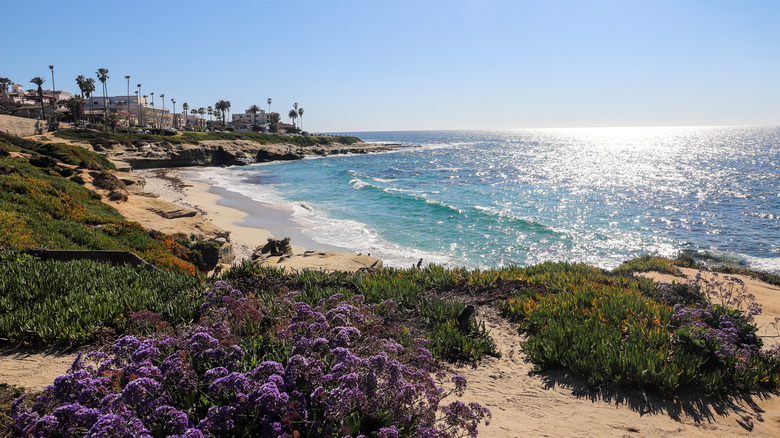
Windansea Beach, a short drive north of downtown San Diego, is a more peaceful, unhurried alternative to the busier beaches along the La Jolla shoreline. It's famed among surfers for its powerful winter breaks. However, it also rewards those who simply want to enjoy the SoCal seaside, breathe in the saltwater air, and relax and lose track of time.
The beach itself is stunning. Rocky outcrops push into the water at either end of the sand, while the stretch itself is broken into sheltered pockets by huge sandstone boulders. When the sun drops into the Pacific, the sky at Windansea burns with oranges and pinks that attract anyone with a camera and nowhere to be. However, strong wave breaks and currents mean swimming is not recommended. Taking to the water here is generally the preserve of experienced surfers.
A simple palm-thatched surf shack, first built in 1947, has become something of a local landmark. It sits toward the southern end of the beach and has been considered the heart of La Jolla's surfing culture for decades. Winter brings the swells and the biggest surf crowds, but spring and fall offer more peaceful beach time. Summer is also pretty quiet, at least on weekdays. Weekends see the ten parking spaces above the beach fill up quickly. Furthermore, there are no restrooms, showers, or other facilities, but you'll find a handful of restaurants and cafes within easy reach in the surrounding La Jolla neighborhood.
Nyang Nyang Beach, Bali, Indonesia
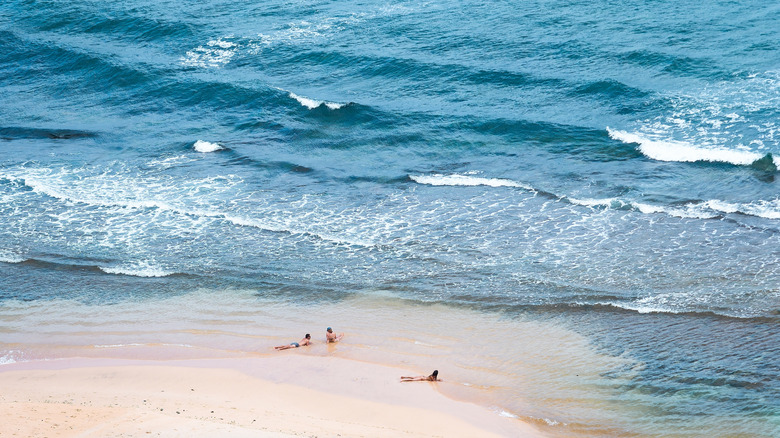
Kuta has its place for sure. The bars, the buzz, the beach vendors who won't take no for an answer. But it's one of those places in Bali to avoid if you hate crowds. For many, Kuta isn't quite the Balinese paradise they were dreaming about on the plane. When you've had enough, there's a beautiful, isolated beach that takes you to another world about an hour and twenty minutes down the road. Nyang Nyang is on the southwestern tip of the Bukit Peninsula. If you have a scooter, the west entrance has a steep, paved road that leads all the way down to the shore. Arriving by car means parking at the top and walking down. If you access via the east entrance, you'll need to trek down through dense vegetation.
The reward at the bottom is a mile-long stretch of pristine white sand that gently sighs underfoot as you admire the turquoise ocean on one side and the towering jungle-covered cliffsides on the other. High above, a Boeing 737 watches over it all from the clifftop after its retirement and conversion into a private luxury villa. Two rusting shipwrecks are also part of the landscape here. They sit beached in the sand, covered in layers of graffiti. You can clamber to the top of one for a unique photo opp, but swimming is out of the question. Strong currents and rip tides make the water here dangerous. You may also want to arrive early in the morning, given it's a good location for capturing those dramatic sunrises Bali is so famous for, while you can also avoid the midday heat.
Pink Beach, Bonaire
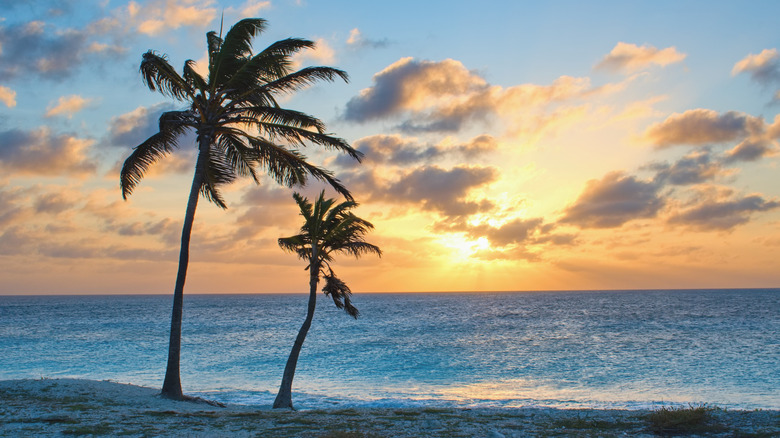
When Hurricane Lenny struck in 1999, it gave Bonaire's Pink Beach a bit of a problem — it blew away much of its famous color. As a result, the tourists never came back in quite the same numbers. What remains is a mile-long sliver of narrow shoreline that is largely untouched. It's surrounded by parched, rocky terrain, and the only sounds are the trade winds and the Caribbean Sea. The pink is still there in patches, though. You just need to know where to look. The color catches the light at either end of the day, and when the shoreline is wet, the rosy tint of the foraminifera, the microscopic organisms whose crushed shells produce the color, delicately contrasts against the turquoise water. It's subtle rather than vivid now, but no less beautiful for it.
You'll find Pink Beach just a short drive from Kralendijk, the island's capital. There's parking available, but no real facilities. Bring your own water and a picnic. You might want to bring your own shade, too. Just offshore is some of the healthiest reef in the Caribbean. It's close enough to swim to, but note the lack of lifeguards if you're with children or are not a strong swimmer. If conditions agree, the snorkeling is excellent. Visitor numbers are at their thinnest on weekdays, so you may even have the entire sea to yourself. A short drive south leads to dramatic changes in the landscape, where vast salt flats shimmering in the heat draw thousands of flamingos to feed at the Pekelmeer Flamingo Sanctuary.
Nanjizal Bay, Cornwall, England
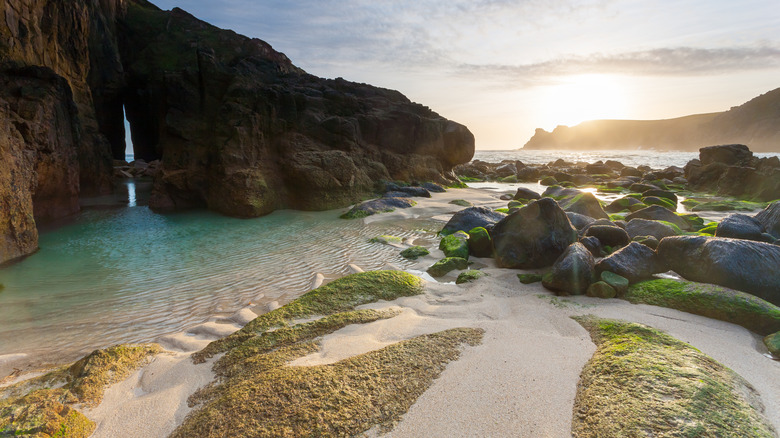
The Cornish people in the extreme southwest of England call this place "Porth Nansusel" or "Cove of the Howling Valley" in their native Celtic language. Nanjizal Bay is tucked away just beyond Land's End, and there's no road access. There are no facilities, either, and definitely no lifeguard. The walk there can take up to three-quarters of an hour, and the last stretch down to the sand is steep, with the trail's timber staircase eventually giving way to a rocky clamber.
Nanjizal Bay is a hidden beachy cove with dramatic cliffs and a boulder-strewn shore of pale golden sand. The reason people come here is to experience the cove's "Song of the Sea." It's a natural archway that the Atlantic has worked through the granite over millennia. On clear days, light pours through the narrow slit, throwing warm light over the rock faces and turning the water below into extraordinary, almost unnatural, shades of turquoise, emerald, and jade. It glows in an otherworldly stillness, but when the tide comes in, the arch disappears completely under the water. It requires precise timing to witness this spectacle.
The pool is open to the full force of the Atlantic. Things can turn dangerous in the water without warning, so swimming is not recommended. Elsewhere on the beach, you'll find a quartz-threaded rock known as Diamond Horse, which is said to resemble a horse's head rising from the sea. There are also the bones of a cargo steamer that foundered on the bay in 1912, while the surrounding cliffs attract nesting songbirds, making it a rewarding spot for birdwatchers.
Cala Corsara, Sardinia, Italy
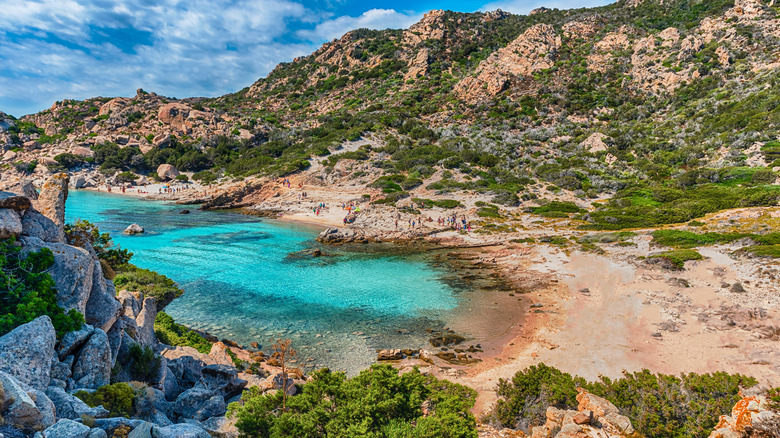
Legend has it that Cala Corsara, or "Cove of the Corsairs," was once a pirate hideout. Today, it still feels like somewhere that doesn't want to be found. Spargi is one of the more remote islands in Sardinia's Arcipelago di La Maddalena National Park. Cala Corsara occupies a sheltered bay on its southern tip. The interior is so dense with Mediterranean scrub that it is effectively impenetrable. The only way to visit is by boat. They leave from La Maddalena, Palau, and other nearby ports, but even in high season, visitor numbers are surprisingly low.
Those who make the trip are greeted by four small beaches with white sand so fine you can barely feel it running between your fingers. The bay is backed by low dunes thick with white sea lilies, pale pink wild roses, bright yellow broom, and dark green juniper. The sea is also an extraordinary range of colors. Close to shore, it's a bright turquoise before it deepens into emerald and azure, then an intense deep blue farther out. The pale sandy seabed is visible through the crystal-clear water, and submerged rocks throw up patterns of aquamarine.
On the western side stands the huddled Roccia della Strega, the "Witch Rock." Its hooked nose and hollow eyes have been carved by an eternity of wind and water, and it looks like it has been staring out to sea for a very long time. On the shore, you'll see the wreckage of a Roman trading ship that went down around 2,200 years ago. Its cargo is on display in the Museo Nini Lamboglia on the nearby island of La Maddalena, where you can find even more pretty, crowd-free beaches.
Traigh a Bhaigh, Vatersay, Scotland
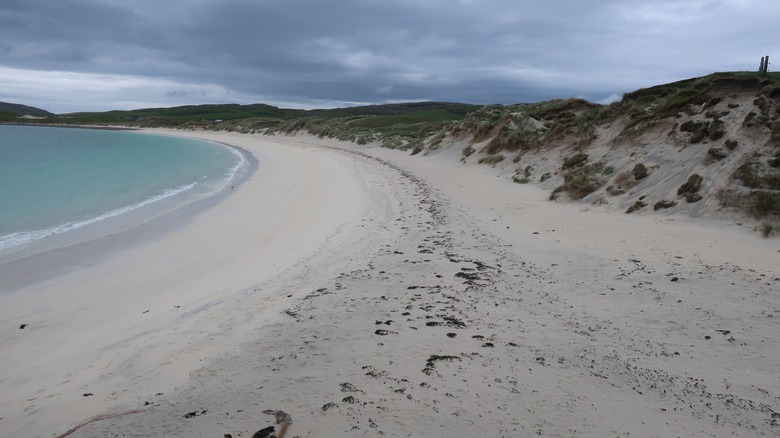
Scotland is one of the world's most beautiful countries, even if it can be practically sun-free at times. You can usually expect gray skies, horizontal rain, and winds that slap you on either side of your face. You probably wouldn't expect beaches that look like they could be part of some Caribbean island. But that's exactly what you do find in Scotland, minus the palm trees and the glorious sunshine, of course. Vatersay is one of them. When the sun comes, and it does come, the water at Traigh a Bhaigh, also known as Vatersay Beach, Vatersay Bay, or East Beach, turns a shade of turquoise that stops you in your tracks. The half-mile sweep of sand is backed by a native grass called machair, and in summer it bursts with yellow, purple, and white wildflowers.
Traigh a Bhaigh has soft, fine sand and is a good spot for swimming. July and August are the best times to visit, though spring and fall have even fewer visitors and more chances to spot wildlife. You might catch sight of seals offshore, while otters frequent Vatersay Sound and golden eagles circle overhead. Getting there is an adventure in itself. You can fly into neighboring Barra and land on a runway that might make you second-guess your destination. From there, the causeway is a short drive or cycle away. You can also take a ferry from Oban, but once there, you're pretty much on your own. There are no buses or taxis, and none of the 90 or so inhabitants has opened a hotel.
Anapai Beach, Abel Tasman National Park, New Zealand
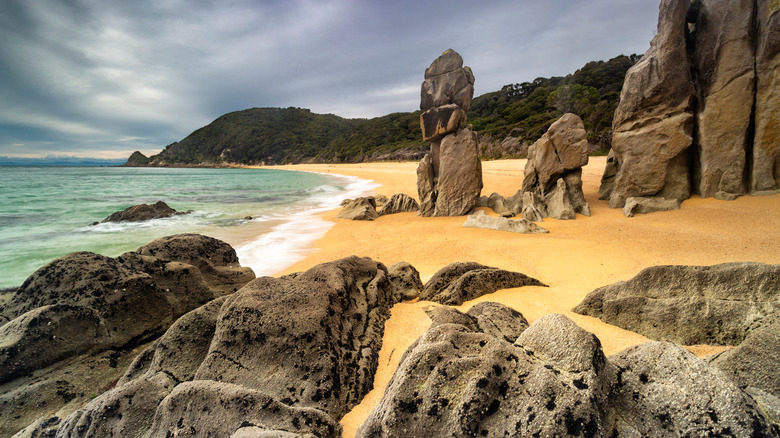
Abel Tasman is New Zealand's smallest national park and one of New Zealand's most visited natural areas. It's a coastal park comprising a string of golden beaches connected by water taxis, kayaks, and a well-worn coastal track. Most of it isn't considered too remote — aside from Anapai Bay, that is. Even the water taxis don't venture that far. It's tucked behind a rocky peninsula at the northern tip of the park, and the primary way in is on foot. It's about a three-hour hike from the Tōtaranui car park and campsite, where it winds its way through native bush and around coastal inlets. If you're not up for a hike, you can also arrive by sea kayak.
However you get there, the reward is considerable. You'll find a long curve of warm golden sand framed all around by dense native bush. Green hills roll down to the shore, and the brilliant turquoise water is transparent. At the northern end are granite towers rising from the sand, splitting the beach into two distinct sections — rough and angular at the northern end and smooth and worn by centuries of weathering to the south. In between, a natural lagoon gathers. It's calm and clear at low tide, but then disappears under the sea when it returns. There's a campsite just behind the beach for those who make it, and it's best to arrive between November and April for the warmest weather.
Breivika Beach, Værøy Island, Norway
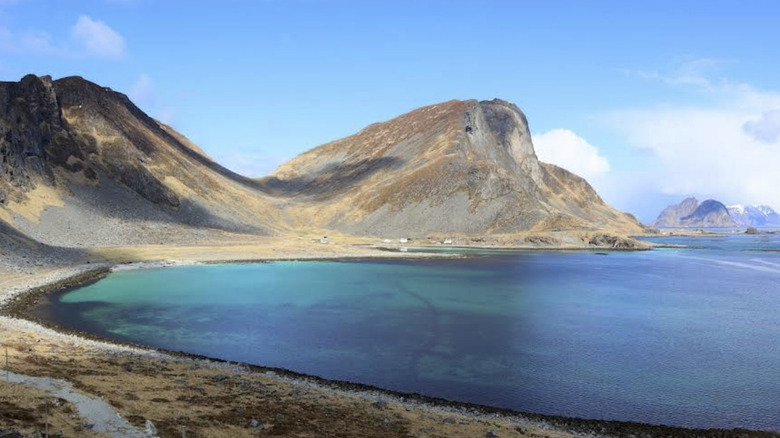
Picture a world buried under snow with jagged peaks rising against skies of pink and purple, a sun that barely clears the horizon, and scattered houses huddled against a cold, frozen landscape. This is Værøy in winter, a tiny island floating alone in the Norwegian Sea. For two and a half weeks, the sun doesn't even rise. But then summer arrives. It might be short, and the temperatures barely nudge past 57°F, but the snow retreats. And, at Breivika, on the western shore, something entirely unexpected reveals itself. Fine white sand and turquoise water so intensely clear it seems impossible. You'd be forgiven if you thought you were actually in the Mediterranean. But this is the Arctic Circle.
The beach sits at the foot of colossal mountains that dwarf everything beneath. Their flanks curve down in long, smooth lines almost reaching the shoreline. The luminous water bends in a wide arc tight against their base, and the seabed is visible through the turquoise shallows. On a clear evening, with the light still blazing at midnight, the water of Breivika glows against the barren peaks above like something from a lucid dream.
Reaching the island takes some commitment. Værøy lies beyond the main Lofoten chain and is served by a ferry connection so unforgiving that a missed departure can result in being stranded for days. This alone keeps many tourists away, and only a handful of hotels exist. Those who make it find a shoreline that feels genuinely impossible — but it's not the only stunning beach nestled in this Arctic wilderness.
Kauapea Beach, Kauai, Hawaii, USA
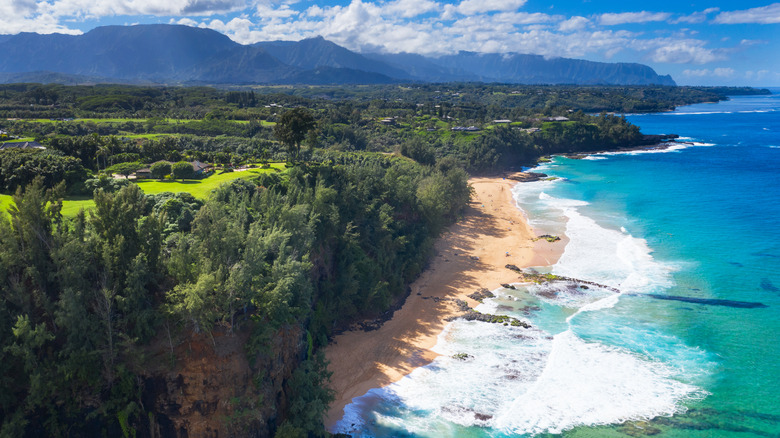
There are no signs pointing the way to Kauapea Beach, also fittingly known as Secret Beach. You leave the highway, wind down Kalihiwai Road, and seek out the unmarked dirt trail that leads there. You'll have to park wherever the undergrowth allows, push through the vegetation, then look for another trail that nobody has bothered to mark. It's an ankle-twisting, rain-soaked descent that drops steeply through a dense canopy of wild plum trees whose roots stretch across the path like trip wires. You might slip, and you might need to grab hold of a root or two. Proper footwear isn't merely a suggestion here.
Eventually, the trees thin — and there it is. Just over a half-mile of golden sand so soft it collapses underfoot. Cliffs rise sheer behind, and ribbons of water spill down their faces, giving the place an ethereal glow. Lava pools along the shore hold fish at low tide, and, on still days, the ocean shifts to a blue so deep that it seems to have weight.
You can swim here, but only on calm summer days. Dangerous currents are known to sweep the entire length of the shore, and the sea has claimed lives. There are no lifeguards or any other facilities. Expert surfers take on the swells in winter, and, at this time, you might catch a glimpse of humpback whales passing offshore. All in all, Kauapea Beach is one of those gorgeous beaches in the U.S. kept secret from tourists. Making it there is a privilege.
Thung Wua Laen Beach, Chumphon, Thailand
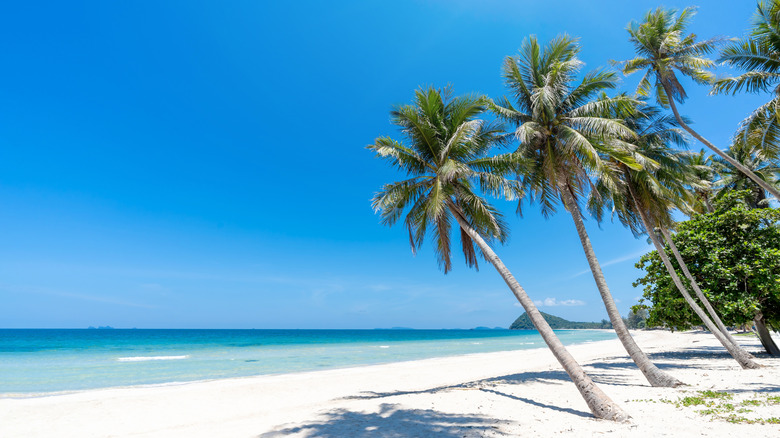
There is an endless stream of tourists in Chumphon every day. But they are all passing through, en route to Thailand's Gulf Islands. For the vast majority, Chumphon serves only as a transport hub. For the adventurous few, it offers some surprisingly beautiful coastline. A $1 songthaew (local bus) ride outside of town takes you to Thung Wua Laen, Chumphon's standout strip of sand. It's over a mile and a half of soft, white powder with coconut palms dropping down to water so clear and turquoise it could well be the idyllic Thai escape that you've been searching for.
Behind the sand, you'll find a low-key strip of guesthouses and restaurants, but nothing like the resort sprawl that has overtaken Koh Samui or Koh Tao on the gulf or the large coastal towns to the south. Its name translates roughly to "Running Buffalo Beach," which is rooted in the story of a buffalo that vanished into the trees after a relentless pursuit by a hunter. That vanishing act was enough to cast it in bronze and display it on the sand. It watches over the calm, warm water and, on weekdays, might be your only company. This is the perfect time to rent a kayak or SUP because there could be no one else between you and the horizon. In general, November to April is the best time to visit most places in Thailand for dry weather, but there are reasons why you might want to visit in the wet season.