
Unwritten Rules You Should Know Before Visiting Miami
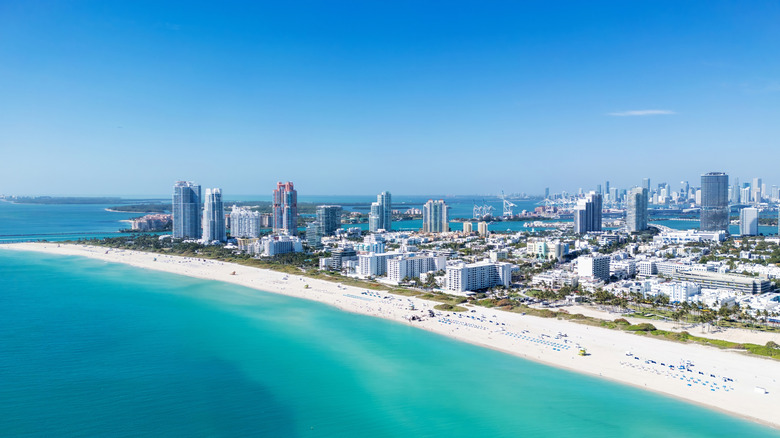
Miami scores high on the versatility meter. From beaches to nightlife and everything in between, visitors can often find the exact kind of escape they desire, no matter how particular their tastes. Ethnic districts like Little Havana and Little Haiti transport culture seekers to the sights and tastes of foreign lands. Those wanting to combine their beach escape with agrarian bliss will delight in an under-the-radar farm district with tropical fruits and orchids. And with the city ranking as America's best city for foodies in 2025, an eclectic mix of cuisines awaits those seeking culinary experiences. Wellness escapes, family vacations, and more are also popular in the Magic City.
If you're like us, it may all seem too exciting to only focus on one or two types of experiences. After all, variety is the spice of life, and there's no rule against going all out on vacation! If you're considering undertaking a vacation of such epic proportions, there are a few unwritten rules that can make life easier.
That is where this list may be helpful. We've compiled a collection of tips and rules to help you make the most of your vacation, no matter where your days take you. From rules on party etiquette and communicating with locals to tips that can help you choose the best attractions, this guide is a good resource to read before your trip. We've also included a few pointers for staying safe and avoiding scams. One rule may even save you from hefty fines if your trip includes celebrating a milestone!
Check your bill before tipping
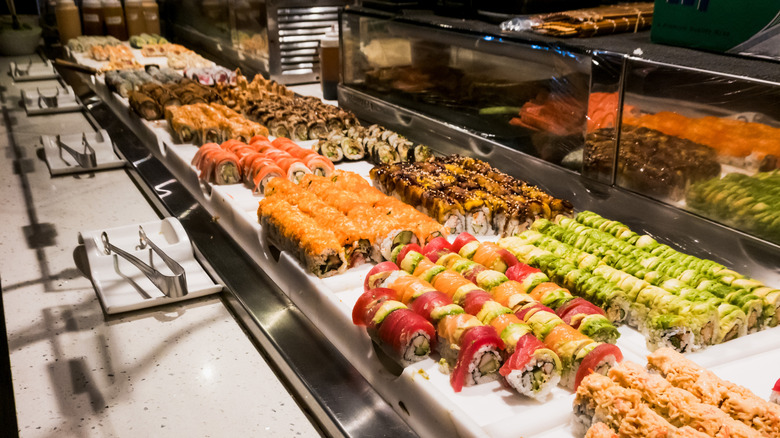
If Miami is your next dream destination, get ready to have your fantasy interrupted by double tipping when dining out. According to complaining visitors, it's common for the city's restaurants to covertly add automatic gratuities of up to 20% of the bill. And by all indications, these can be added to any bill — from small groups of two to fast-food eateries. Patrons then add an additional tip, never suspecting it has already been included. When you consider the extra tip you may add on top of the secret charges, you can see how your dining costs can get high, really fast.
The practice was so prevalent that in 2025, Florida State Representative Demi Bussata pushed for it to be made illegal after she fell victim. According to a CBS report, she testified to a House panel that she had been given a bill with both a service fee and gratuity automatically added. To add insult to injury, the bill also had a line for an additional tip. She went on to explain that the practice was common in all Miami restaurants, including take-out eateries. Ultimately, a law was passed requiring that as of July, 2025, all restaurants in the city post visible notices when a bill includes extra charges.
You can protect yourself from tipping twice by looking out for these notices every time you eat out. Judging by multiple complaints after July 2025, it appears some restaurants still add the charges covertly, so we recommend checking your bill in all cases. If you do find an automatic gratuity, follow this Redditor's lead and inform your waitress they've already been tipped: "Was just there! They add a 20% surcharge on everything – food and drinks. We treated this as a tip."
Don't release balloons at your celebration (or anywhere else)

Miami is verifiably one of America's best cities for partying and nightlife. A 2025 study in U.S. News & World Report ranked the city second, behind Las Vegas, for its party scene. And popular wedding-planning website, The Knot, called it the best place to celebrate a 30th birthday (very specific, we know!) With this reputation, it's quite likely your travel plans include a balloon-filled celebration. That celebration could even be for a tiny one's birthday if you're traveling with kids. While enjoying your special occasion, be aware of a law that could cause headaches if you plan to release balloons as part of the festivities.
To protect marine life, both state and municipal laws ban the release of balloons outdoors. Hunter Miller, the field campaigns manager of Oceana, an ocean conservation non-profit, explained the importance of the state law in an NBC report: "Florida made the right call today in banning intentional balloon releases. Balloons are one of the deadliest forms of plastic pollution for ocean wildlife." With this worthy goal, it's no surprise the bill quickly became law and now fines $150 for outdoor balloon releases (at the time of this writing). If you're planning a celebration in a park, beach, or public marina, the city goes further and fines $100 per balloon, up to a maximum of $1000.
These fines apply even if you use biodegradable or photodegradable balloons, or if you release only a few. The best plan is to keep the balloons inside if you're celebrating. You could even do an indoor release, as that isn't an infraction. If you're worried about your young kids accidentally releasing balloons, you can put those fears to rest. Kids under six are exempt from the law.
Only swim in designated areas
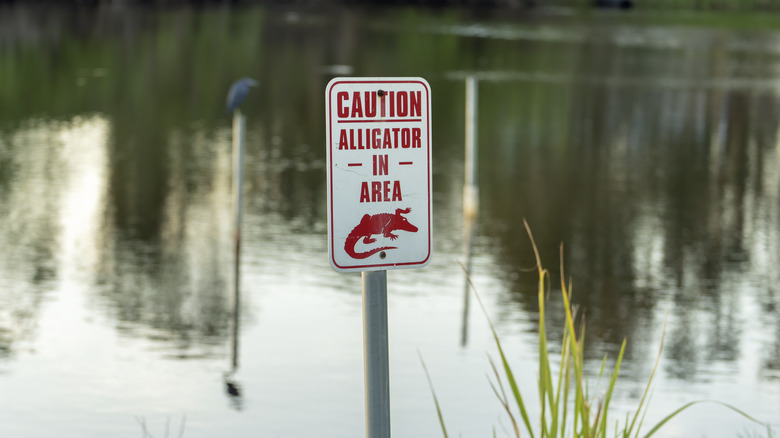
We all know that Florida and alligators mix very well together. Whether it's a gator popping up in one of Miami's residential neighborhoods or a painful accident with one of the reptiles, the creatures and Florida are synonymous. If you plan on being anywhere in the state, swimming is an exercise that should be undertaken with caution — Miami included. This is especially true around bodies of freshwater, which alligators like to frequent. They've also been known to show up on Miami's beaches, so some care should be taken in saltwater as well.
Take special precautions around rivers, lakes, and other bodies of freshwater. Look out for advisories of the creatures' presence or any signs of closures before going in. If the water looks safe and there is no warning against swimming, try to get out before dusk, as alligators are most active between dusk and dawn. If you have a pet, keep it away from the water, as it can look like prey to alligators and is sometimes attacked by them.
If you plan on spending time on one of Miami's famous beaches, take the same precautions. Don't attempt to swim in a beach if signs signal the beach is closed. If a beach is safe for swimming when you get there, and the lifeguard starts indicating that conditions have changed, follow directions and leave the water immediately. Once an alligator is spotted, lifeguards will close down a beach so they can capture it. If you spot one of the creatures after taking these precautions, get as far away as possible and call the Nuisance Alligator Hotline at 866-FWC-GATOR.
Watch the weather if visiting in summer

There's a reason December to March is peak travel season in Miami. Those months see dry weather and mild temperatures that attract hordes to the beaches and other outdoor attractions. The off-season months of October and November, and April to June, also offer decent weather for enjoying the city. That being said, there are a few reasons you may want to visit in the summer. You may be traveling with kids and want to take advantage of summer break to visit the family-friendly city. Or you may be drawn by the fewer crowds in the hotter months.
Whatever your reason for a summer trip, it's worth considering Miami's weather as you plan your itinerary. The city can experience multiple consecutive days during the season when the heat index reaches 108 degrees Fahrenheit (how temperatures feel on the skin), causing numerous heat-related illnesses. The situation is so concerning that in summer, officials activate a Heat Season Protocol that provides water features, public advisories, cooling stations, and more, to help residents stay safe. Hurricanes are another concern. Florida's hurricane season is from June to November, and Miami is the U.S.'s most vulnerable city to hurricanes. According to AccuWeather, the destination has a 16% chance of being hit each year.
Given these risks, it's a good idea to have a plan for extreme weather conditions. Organize your days so you spend early mornings on the beach or other outdoor sites, and afternoons in air-conditioned attractions. Always bring plenty of water and wear light-colored clothing. To prepare for a hurricane, check whether your accommodation is in a Hurricane Evacuation Zone before booking, and stay away if it is. If you can't, keep a list of shelters so you can leave quickly if a hurricane strikes.
Try Floribbean cuisine
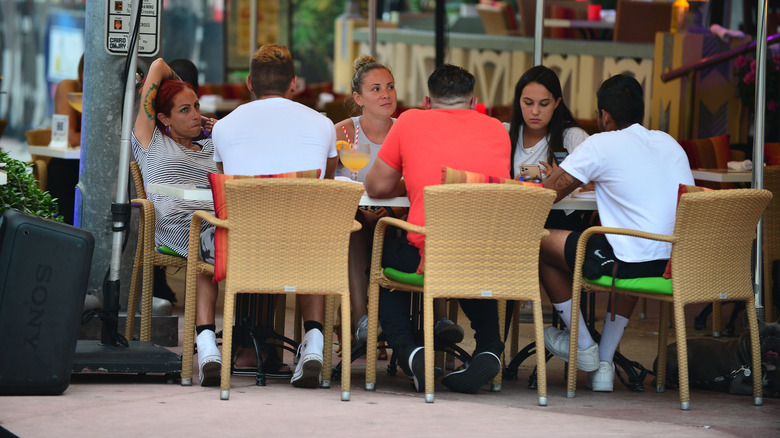
If you're a foodie with a penchant for spicy Caribbean food, Miami will be a delight. Head to Little Havana and a world of Cuban eats and culture opens up. Or check out Little Haiti, where Kreyòl-punctuated conversations, eateries, and markets serving flavorful Haitian eats abound. With Miami being its birthplace, the Caribbean-inspired Floribbean cuisine should also be on your radar, even if you haven't heard of it.
Floribbean cuisine merges the bolder tastes of the Caribbean with the fresh fruits and seafood characteristic of Florida. Jamaican, Cuban, Puerto Rican, Haitian, and Bahamian food blends with mangoes, pineapples, and other tropical fruits, while fresh shrimp, grouper, and other seafood make appearances. The result of the fusion is marked by contrasting flavors and freshness in every bite.
Caribbean-style shrimp gets the sweet treatment with mango salsa, and crudo fuses with pineapple and watermelon radish. Just in case you're wondering, these aren't made-up recipes. Both can be had at Bayshore Club Miami, a highly rated Dinner Key eatery with a Floribbean menu. If you can't make it out to Dinner Key, the Pollo Tropical chain serves Floribbean food and has numerous locations around Miami.
Don't fall for the scams on Ocean Drive
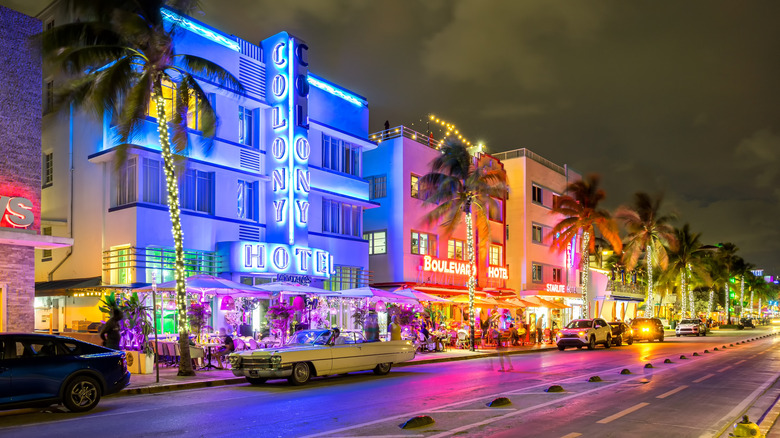
Miami isn't the only city with these kinds of scams. In New York City, con artists target Times Square visitors with discounted show tickets to see a celebrity performer who never shows, making it one of Times Square's top tourist traps to avoid. In Miami, it's a different scam, but the result is similar: you end up paying far more for entertainment, drinks, and meals. While you can get scammed in any busy area, it's most likely on Ocean Drive, the Art Deco District's hub for nightlife, restaurants, and live shows.
One common hustle happens next to restaurants and bars. Hostesses offering 2-for-1 specials or other discounts will stand in front of their establishments, tempting you with their 'deals.' If you take their offer, expect these specials to suddenly become more expensive or to include additional charges you weren't made aware of. Ocean Drive is also notorious for club promoters offering all kinds of perks to get people to party at their clubs. You may be promised drink specials or the VIP experience, only to find that the club you end up paying for has overpriced drinks and lame vibes not worth the cover charge.
If you visit the area, study the menus of any eatery you dine in, and if you're offered a special, be clear on what the final price will be and what the special includes before ordering. If you plan on partying, do some research on reputable nightclubs or get recommendations from your hotel so you know exactly where you're headed. That way, club promoters inviting you to the 'latest club' won't be tempting.
Avoid the most popular beaches, like South Beach
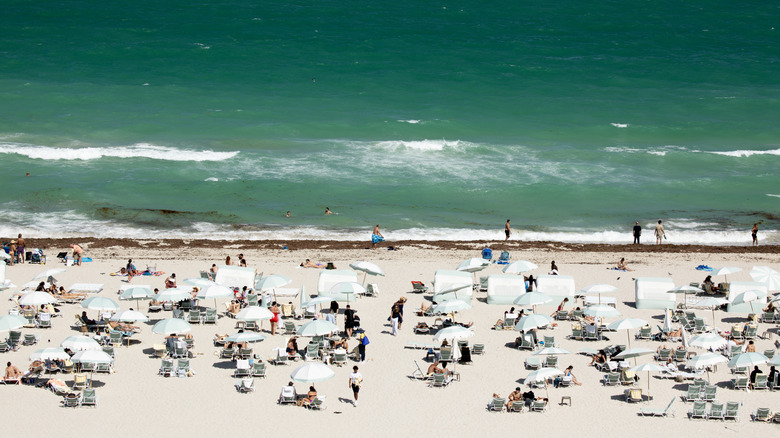
With its jam-packed crowds, one could easily believe South Beach is Miami's only beach. Around 28 million people visited the city in 2024, and 10 million of them headed to the popular beach. Many travelers go for the coastal hotels, delicious eats, and lively nightlife after hours. During daytime, swarms of younger beach-goers blaring music and the beach clubs lining the coastline make for an overstimulating cacophony of noise and crowds. Apart from South Beach, other popular shores, like the beach at Bill Baggs Cape State Park, get so crowded on weekends and holidays that temporary closures are common.
These energetic crowds may appeal to some, and if you're one of these visitors, by all means, enjoy the popular beaches. If you're the type that likes your beach day to come with peace and quiet, avoid South Beach and its crowded cousins and head to one of Miami's quieter options. One locally approved option to consider is the less touristy Crandon Park Beach. The 2-mile-long beach sits on the palm-tree-lined shoreline inside Crandon Park and offers amenities like cabanas, picnic tables, and watersports. But it's the peace and quiet that locals rave about on Reddit, " I do beach naps here on Saturdays, and it is usually blissful. Every once in a while, we'll have a crowded day, but it's the exception."
Around five miles from South Beach, quiet Surfside Beach is another option to consider. Clear waters, powdery sand, and a tranquil atmosphere make it ideal for both families and seekers of quiet. After a day on the beach, eateries offering lunch or dinner are steps away. There's also a path connecting Surfside to the upscale town of Bal Harbour, where Bal Harbour Shops, one of America's best malls, await.
Don't be on time

Miami is not the Caribbean, but with its island-time mentality, it might as well be. Perhaps this can be explained by its proximity to the islands. The city is only 44 miles from the closest Caribbean island and probably picked up on the region's laissez-faire attitude. "If you want to meet at 3:30, tell them 2:30. They'll still be late – but only by about 10-15 minutes," suggested one local on Reddit when asked how to deal with Miamians' loose relationship with time.
"You're in Miami. Punctuality is a foreign language," said another local Redditor. With tardiness being a part of life, you can expect a certain level of leeway when it comes to when you're expected to arrive at events and dates. This is especially true if the event is hosted by a local. Since locals seem to interpret time so loosely, if you arrive early, they may find it rude, as they may still be in the middle of preparations for the guests. If you arrive on time, they'll also find it strange, as it doesn't align with local culture.
If you're partying in a club, you can also be less rigid with time, as the city's partying culture tends toward the later side. In fact, a Lyft study found that the city beats all others in the U.S. for late-night partying. It's not unusual for club-goers to arrive at 3 am and party until 5 am. Our suggestion? Do as the locals do and arrive late if you want to be right on time.
You can wear white after Labor Day

Wearing white after Labor Day has been a faux pas in colder cities for centuries. For reasons related to class, status, and the makeup of city streets, white was almost always out of fashion in the colder months. Most people consider the rule outdated today. But ideas from the past still persist among some. While conceding that people should wear what they like, celebrity stylist, Mel Ottenberg, owned up to following the rule personally in an Inside Hook article: "If you're a clothing traditionalist like me — and personally I dress really boring — don't wear white after Labor Day unless you're playing squash or tennis."
Bruce Pask, men's fashion director at Bergdorf Goodman and Neiman Marcus, had a more nuanced opinion that visitors to Miami may want to take: "In Miami, say, you can pretty much wear white pants year-round given the temperature there, but in New York City ... I would be more apt to follow the suggested Labor Day timeline." The truth is, not only is white perfectly acceptable if you're visiting Miami after the first week of September, but it is also advisable.
With the city experiencing extreme heat in September, one way to keep cool is to wear lighter colors like white. While other factors like fabric and cut help keep heat away, white is known to reflect light, making it the ideal color for a warm city like Miami. The good news is you can wear it whenever you visit, as the city remains pretty warm throughout fall and winter!
Learn a few Spanish words
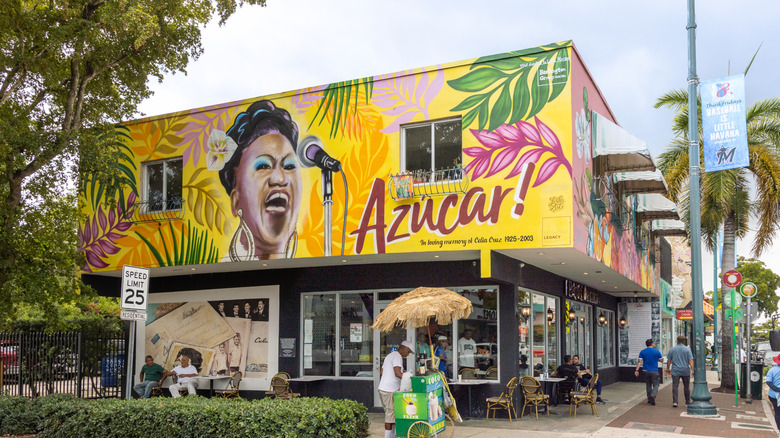
If you plan to explore Little Havana or any of the Latino cultural hotspots in or near Miami, learning a few Spanish words will be helpful. With around 66% of the city's population speaking Spanish at home and 71% identifying as Hispanic, chances are very high that you'll encounter people with Latina roots, and knowing a few words in the language most familiar to them may make your day go a bit more smoothly.
If you go to Little Havana, where shopkeepers and the other people you're likely to encounter mainly speak Spanish, you could be greeted in the language. And according to locals on Reddit, people will often approach you with Spanish, assuming you'll understand them, "Bro, only in Miami... people just assume you speak Spanish. I'll be at Publix, or walking into Hard Rock Stadium, and out of nowhere someone's hitting me with full speed Spanish."
While learning a few words won't make you suddenly fluent, knowing how to return a greeting or to explain that you don't speak Spanish is a good way to start your interactions off on the right foot. Some Spanish greetings to practice include: good morning (buenos dias), good afternoon (buenas tardes), and good night (buenas noches). You can also practice saying: "Hi, I don't speak Spanish" (Hola, no hablo español). Most of Miami's Spanish-speaking population also speaks English (97% of U.S.-born Hispanics who speak Spanish at home speak English fluently, too), so once it's known you don't speak English, your speaking partner can easily switch over.