
10 Ways Rick Steves Saves Money While Traveling In Europe

For many, Europe is the dream trip. The Eiffel Tower at sunset, gondolas drifting through Venetian canals, the Colosseum standing exactly where it has for almost 2,000 years. In Europe, every corner turned has the potential to be another postcard-perfect view. While this may be true for much of the continent, anyone who has been there also knows the downside: Europe isn't cheap. Flights, hotels, tickets, restaurants — it all adds up fast. But there are ways to take the sting out of those prices, especially if you listen to Rick Steves — whose name carries a lot of weight when it comes to European travel.
For decades, Steves has been dishing out practical tips and money-saving advice to his followers, helping them stretch their budgets without cutting into the experience. Being a guidebook author with decades of best-sellers, a permanent place on television, and the trusted voice of American travelers since 1976 doesn't come easy. He spends around a third of his time exploring Europe, scouting new finds and giving firsthand updates to his guidebooks. This is why his advice tends to hold up. We've scoured his website to pull together some of the most useful tips he has given travelers going on a European trip, and here are 10 of the best.
Withdraw cash at ATMs
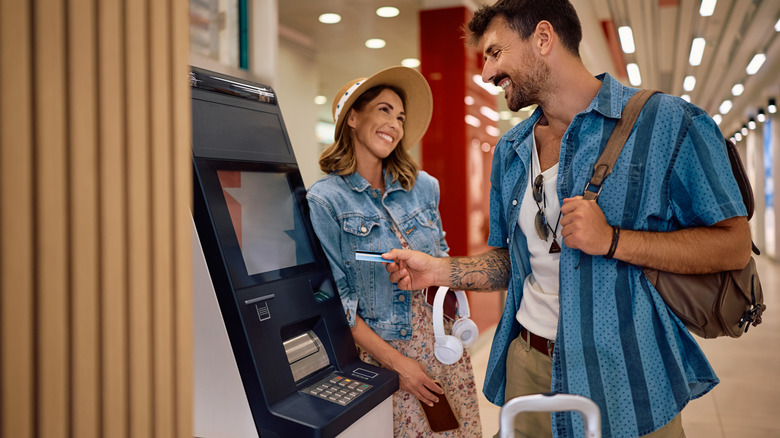
You might think you're ahead of the game if you already have a pocketful of euros when you step off the plane. However, you can mark that as your first overpayment before the trip even starts. That's because currency bought at home comes at a steep markup. In fact, it's probably the most expensive way to get foreign cash in your hand. Landing first, then finding a cash machine at the airport, is the real smart move. Rick Steves himself will tell you he has "yet to see a European airport that didn't have plenty of ATMs." Any Visa or Mastercard will do the job at almost any terminal on the continent.
Arriving with dollars offers no advantage either. Travel exchange desks at airports come at a real cost. The cut taken can even hit double-digit percentages. Paying directly with dollars is another option some travelers take up, which might be convenient — but this is one more convenience you definitely pay for. The total you fork out is often inflated by about a fifth compared to just paying in the local currency.
ATMs have the best exchange rates and are simply the cheapest and easiest ways to get money in your pocket. But a little setup is sensible and is one thing that makes the Rick Steves-approved checklist to always do before a vacation. For example, cash machines across Europe are wired to checking accounts only. So if all your money is in a savings account, you won't be able to withdraw any cash. Make sure your checking account has enough funds before departure.
Plan ATM withdrawals to minimize fees
Many travelers withdraw cash reactively, taking out what they need, then repeating the process a day or two later whenever they spend it. But while ATMs do offer the best exchange rates around, every single transaction still comes with a fee — and they can add up fast with repeated visits. This is where a little bit more planning comes in.
Making fewer, larger withdrawals easily beats running back and forth and is one of Rick Steves' top cash and currency tips for Europe. You should, however, consider the security factor with such large withdrawals. They might save you money, but it's a bigger loss if you're the target of a pickpocket. Make sure those banknotes go straight into a money belt or a similarly secure spot as soon as you withdraw them.
It makes sense to get a rough sense of what your local currency withdrawal is worth in dollars. It doesn't have to be precise math, but it does give you an idea of what to withdraw. Some people opt for the maximum allowed, which is the point of Rick Steves' advice. But if you only have a few days left in a country that accepts euros, you don't want to be forced into exchanging them back to dollars again or a new currency when you leave. In other words, when you're at the airport going back home or about to do a border crossing into a non-EU country like Norway, your last withdrawal should cover you for those last few days only. Spend up your euro coins before crossing into a new currency zone, too. They usually can't be exchanged and may just turn out to be a relatively useless souvenir.
Use bank-run ATMs
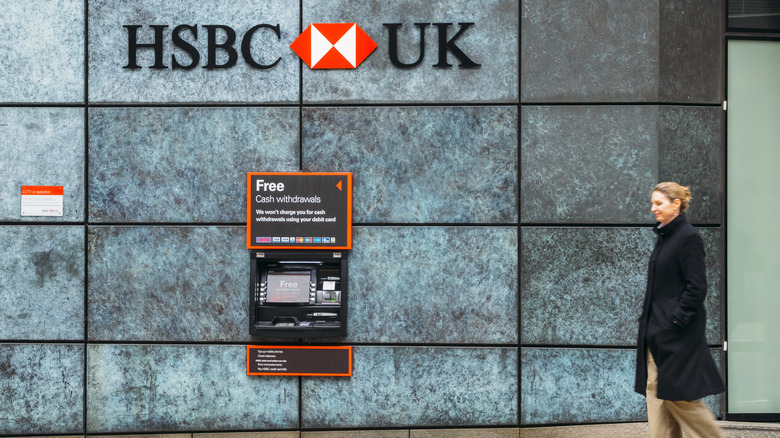
Bank-run ATMs are not always an easy spot for the untrained eye. Independent operators usually set up shop right beside them, assuming travelers won't know the difference. "Their machines may even have signs that scream 'Free Cash Withdrawals' — don't believe it," is sage advice from Rick Steves. These signs are convincing traps. Bank-run machines often offer genuine free withdrawals — a handful of U.S. banks even have partnerships with specific European counterparts. If it isn't to tack on a high withdrawal fee that lands on top of whatever your card issuer already charges, the independents usually have some other dastardly plan to get at your money.
It pays to know which bank-run ATMs are in the country you're visiting before arrival. Avoid independent networks like Travelex, Euronet, and Cashzone. It's not just the fees, however. There's a security angle, too. According to Rick Steves, "independent" cash machines, no matter what they may promise, charge high withdrawal fees (and tend to be less safe)." Bank ATMs usually sit near surveillance cameras and other safeguards that make them less of an appealing target for criminals. Independent machines often lack this protection. However, you're still not out of the woods. Declining currency conversion also matters at ATMs if you want to save money.
Decline dynamic currency conversion
European ATMs often try to slip the dynamic currency conversion (DCC) scam past travelers with words offering to "lock in" or "guarantee" a rate or asking you to "Press YES for dollars." Go for the option the words are not trying to direct you toward, which is often blandly labeled something like "continue without conversion." Dollars may be appealing, but you can be sure the exchange rate will be based on the merchant's own marked-up rates on top of your card issuer's regular foreign-transaction fee. Research from 2017 by the European Consumer Organisation found that travelers opting for DCC paid between 2.6% and 12% more than they would have with a standard currency conversion. It shows up across most of Europe, and some banks on the continent even require merchants to offer it.
The same goes for paying by card in any European store. The machine may ask you a seemingly innocent question along the lines of "Charge in dollars or local currency?" This is also DCC. Rick Steves says if you accept anything other than the local currency, all you're doing is paying "a high price for the 'convenience' of seeing your charge in dollars." DCC recognizes a foreign card and routes your payment via a home-currency conversion before it reaches your bank. As it does so, it folds the markup and fees into that single on-the-spot dollar statement that you thought so convenient. Sometimes, you might have to navigate the arrow on the machine to avoid it, but it's a small task to perform for such a worthwhile saving. Switch the display away from USD and onto the local currency before continuing.
Claim VAT refunds
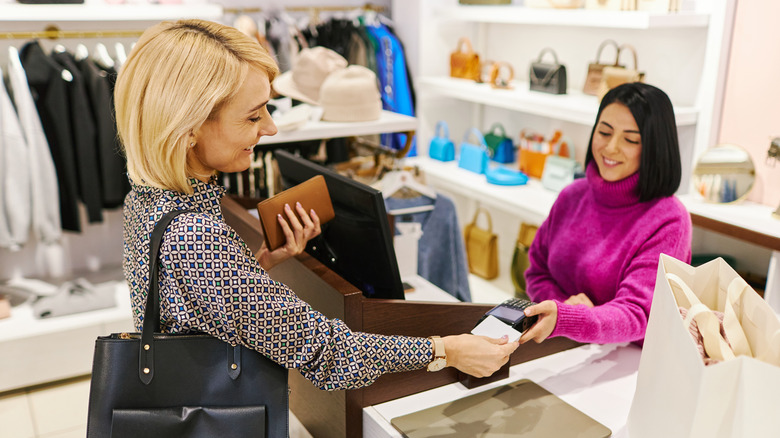
Most tourists who are shopping their way through Europe are leaving money on the table without realizing it. It's money that has already been paid as tax — and it's money that non-EU residents, including Americans, are fully entitled to claim back. That tax is called value-added tax (VAT), and unlike sales tax in the U.S., it's included in the price tag rather than added at checkout. Rates can range from 8% in Switzerland to an eye-watering 27%, depending on the country you visit.
Access to these refunds starts with keeping your passport on you while you shop. You'll need to present it to the cashier, who you must ask for the VAT refund form. Some retailers issue the refund directly. If not, keep that paperwork and receipt until the departure point of your last EU stop, where you can get refunded. Make sure you get the EU VAT refund before crossing into a non-EU country and vice versa. It should be noted that the UK (other than Northern Ireland) no longer offers VAT refunds post-Brexit. It should also be noted that each country sets its own minimum spend at a single shop to be eligible for the refund. Spain has none, but Switzerland's sits at around 300 francs (about $370).
The payoff is biggest on luxury purchases like designer clothing or jewelry. Depending on your spend, you can get refunds worth hundreds or even thousands of dollars. However, there is a small downside: Goods must remain unused and unworn until they leave the continent. As Rick Steves himself says, "If you show up at customs wearing your new Dutch clogs, officials may deny you a refund."
Don't tip American style
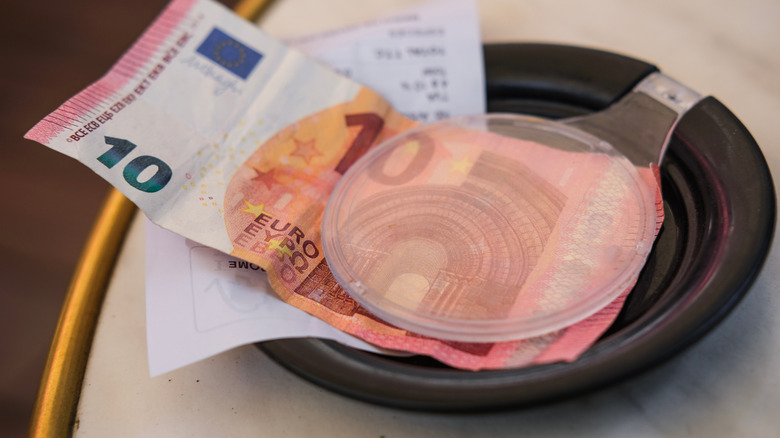
Many Europeans break restaurant rules in the U.S. without realizing it. Naturally, this works the other way in Europe, especially when it comes to tipping. Over-tipping in Europe isn't just wasted money; it's a visible sign of being an out-of-touch tourist. "If your bucks talk at home, muzzle them on your travels," is what Rick Steves says.
European servers earn a living wage, so a 15-20% tip doesn't carry the same weight as it does in the States. Sticking to around 5% covers most situations, and 10% lands as a genuinely generous gesture. It's actually common for locals to just round up the total or leave some loose change. Some will even walk out without tipping at all. In other words, it's always appreciated, but not always expected. For many tourists, especially those looking to cut costs, this can be a huge sigh of relief.
You shouldn't tip at places with counter service in Europe. You also shouldn't tip at places where the menu notes "service included." Be aware, though, Steves says some tourist-heavy restaurants in Germany and Austria can post a misleading "tip is not included" line on the check, even though the menu already states a service charge is already covered. If you're unsure about the tipping culture of the particular European country you're in, you can always ask a local. Maybe not the server, though.
Look for fixed-price meal deals
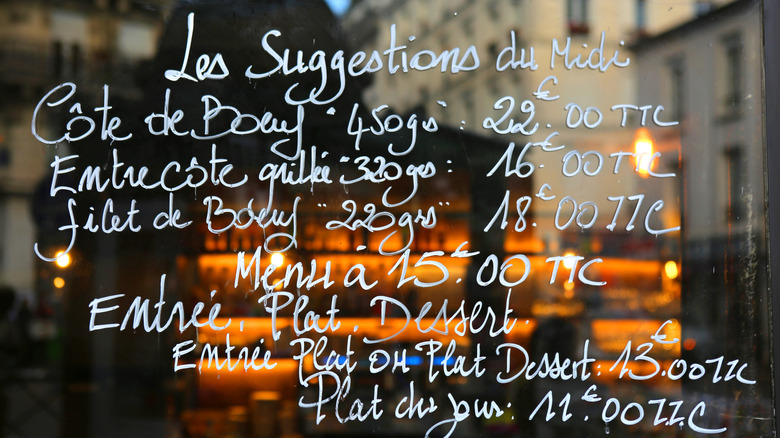
Fixed-price menus are one of the best Rick Steves travel tips we've learned. Naturally, they go by different names across the continent, but they all offer the same thing — a slap-up meal for a bargain price. In France, it's called the prix-fixe or formule; in Spain, Menu del Día. Hungary and Czechia have their "menü" and "denní menu" versions. They usually bundle several courses and sometimes even a drink into one set price, and it's almost always a lunchtime menu. It's a reliable way to eat how locals do, and Steves says you can score meals for under $15.
Steves also says to look "for a short, handwritten menu in the local language only." This might mean running the text through a translation app if you're unfamiliar with the language, but it's another small task for substantial savings. Places that advertise "we speak English" or print menus in five languages are almost certainly charging tourist prices. They also tend to serve food that a local would probably turn their nose up at.
Since these set-price deals usually run at lunchtime, it makes sense to make it the splurge meal of the day and keep dinner simple. Maybe a supermarket spread in the evening would stretch the daily food budget. But if you don't see any handwritten A-frame sign enticing you inside, look for places like a small galette stand or a family-run eatery where you're all but guaranteed to get a much cheaper meal than you would in a steakhouse or seafood restaurant. Restaurant apps like TheFork can also land you a good meal for peanuts, with deals of up to 50% that make some higher-end meals look a lot more affordable.
Use public transit passes strategically
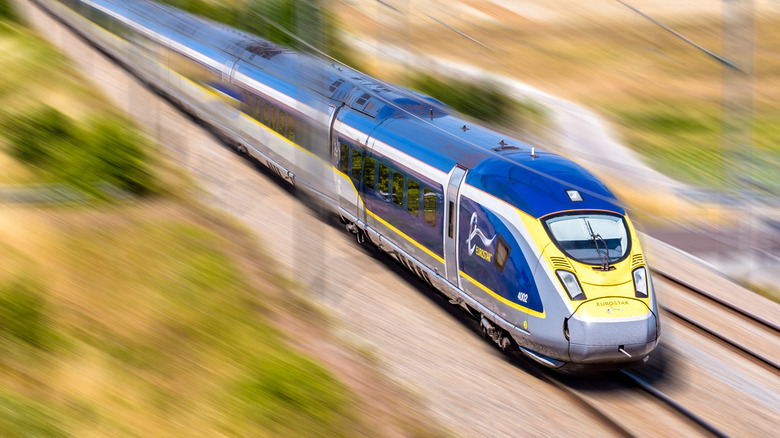
The question isn't whether you should buy a transit pass; it's whether you need one at all. They can offer great deals, but only if you're actually going to use them enough. For rail passes, Rick Steves advises running a quick mental checklist and considering how many days you'll actually spend traveling, how many countries you'll visit, and whether the region even has good coverage. They aren't always the smart play in every country. There are disadvantages to buying rail passes in Italy, for example, while places with thin rail coverage, like the south of Spain, can prove to be a pointless purchase.
Once you start throwing in the mandatory extras for specific high-speed routes, the rail pass can lose even more of its shine. Italy, for example, adds roughly $15 per ride, and the Eurostar between Paris, Brussels, and Amsterdam charges $35 to $45 extra. Steves says, "Many travelers make a costly mistake by skipping over the details of this decision, as rail passes are no longer the sure bet they once were."
City tickets are definitely worth considering, though, and work the same way as rail passes. Stacking up three separate fares almost always costs more than just grabbing a day pass. London's 2026 Tube prices are a good example. Five cash rides that total £23 ($30) prove poor value against £15.90 ($21) for a Day Travelcard, while the Oyster or contactless daily cap comes in lower still at £12.80 ($17).
Use museum passes

Rick Steves might say some types of museums in Europe are total tourist traps, but there is no doubt the continent has some of the finest institutions in the world. An excellent way to save money when visiting them is to buy a museum pass. However, most people assume they are purely about cutting costs. While you will save some dollars buying museum passes across Europe, you also get the added bonus of saving your time. Considerable time, in fact. The standout perk is being able to cut the line. Without it, you could find yourself queuing for hours, which is not unusual in the more popular European museums.
Museum passes, which are sometimes branded as city cards, can unlock free or discounted entry to a set list of museums, and sometimes other city attractions, over a fixed window of time (usually two or three days). Starting off early is essential since the clock starts ticking down from your very first stop (not the point of purchase). Some passes even throw in more money-saving perks, like a free canal cruise and public transit on an Amsterdam card. The Paris Museum Pass is often regarded as one of the best for value. It "pays for itself in three visits and saves you hours by letting you skip the long lines," Rick Steves says. Other cities have their own thresholds, with a London Pass working best if you plan to visit two or three paid sites daily.
Stay in hostels

Many people still view hostels as grimy dorm rooms full of strangers and a potential horror story, but it's a reputation that is well out of date and one that should be put to bed. With over 10,000 hostels scattered across Europe, the number of options competing for business has forced even the more budget-priced options to step up their game. That competition has also ensured that grabbing a dorm bed remains one of the cheapest ways to lay your head in Europe. If the thought of sharing a room with snoring backpackers still doesn't appeal, most hostels also have private rooms. They are usually very competitive in price against hotel rooms, too.
Dorm rooms have lockers that can handle the worry about valuables, while plenty of hostels come with amenities like laundry facilities and a full kitchen. Using that kitchen instead of eating out every night turns up even more substantial savings, especially if you're traveling with family. What's more, the best hostels are rarely located far from the attractions and nightlife, which saves on taxi fares or the hassle of public transport. Rick Steves advises that "a hostel membership pays for itself in four nights," and don't think you need to be part of the young crowd; travelers over 55 get a discount on those cards. However, Steves assures us that hostels are not the only cheap lodging option in Europe, should you remain unconvinced.