
America's 13 State Parks That Are Best-Kept-Secrets From Tourists
We may receive a commission on purchases made from links.
State parks are some of our country's most enduring treasures. From historic sites to nature preserves to outdoor recreation havens, they're as diverse and distinctive as their geographies. Whether you like to pitch a tent or park the rig by a lake, hike through biodiverse landscapes, or take advantage of a great spot to picnic, there's a state park for you. Here, we round up 13 around the country that are considered best-kept secrets from tourists due to being relatively out of the way or less visited compared to states' more popular parks. In their own right, though, they're well worth visiting for an array of activities and beautiful views.
State parks are managed by their respective governments, so the regulations, fees, and reservation portals can differ. Some are more affordable than others. Typically, there's a daily entrance fee for individuals or vehicles, depending on in-state or out-of-state license plates. Camping rates may or may not include the park's daily fee. And if you plan to visit a particular state's parks often throughout the year, an annual pass is a great value.
For this list, we've run the gamut of small to large parks across a wide array of landscapes. Many states don't publish visitor numbers per park, so where we didn't have specific statistics, we relied on blogs and a range of other articles in addition to the author's experiences to highlight these under-the-radar places. We've also consulted regional tourism websites, official state government and park management resources, and visitor reviews on sites like Tripadvisor and Google. Read on for some of the best hidden-gem state parks across the U.S.
Kodachrome Basin State Park, Utah
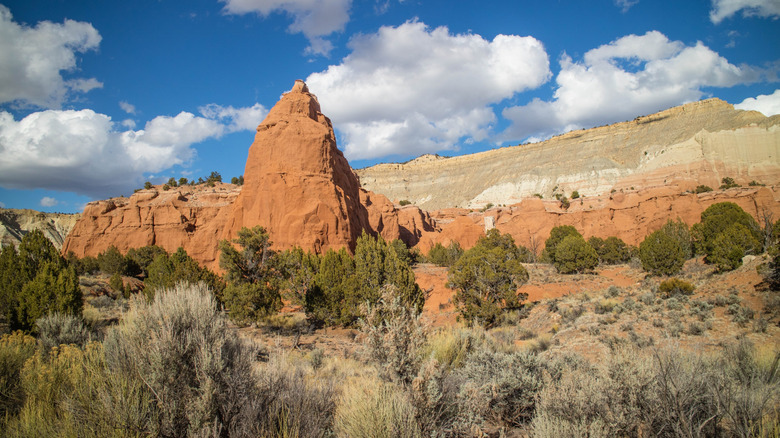
Escape Bryce Canyon crowds at this wildly under-the-radar state park named after Kodachrome, an iconic color film produced by Kodak. Kodachrome Basin State Park, opened to the public as a state park in 1963, is a photographer's dream, with its red sandstone landforms that pop against the sky. The park sees about 125,000 visitors per year, a fraction of the numbers who experience Dead Horse Point, Sand Hollow, and Bear Lake State Parks, among others. It's also a spectacular place to camp with three campgrounds to choose from, especially during the late spring and early fall when temperatures are still warm but the nights aren't too cold. "I personally go in the midst of winter on the warmer weekends; you really have the whole place to yourself," says Janiel of Culture Trekking.
Kodachrome Basin is located in south-central Utah and is known for its towering cliffs and spires, against which campsites are nestled. There are a couple of adorable, furnished adobe huts if you prefer a less rustic overnight stay. The 3-mile Panorama Trail loop is an easy hike that packs in beautiful vistas and the opportunity to link to longer routes. And there's even an 18-hole disc golf course. Regardless of your state residency, the day-use fee is $10 per vehicle or $5 if you bike, walk, or ride in on a motorcycle.
Butano State Park, California
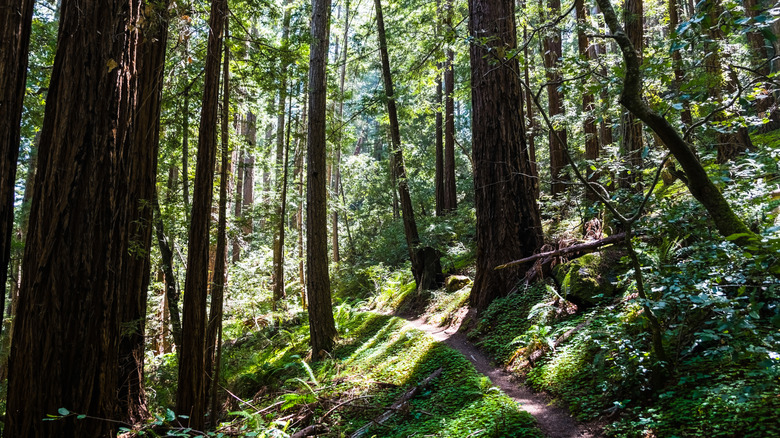
Just a little more than 50 miles west of San Jose and only 3 miles off Highway 1, Butano State Park is an oasis in the redwoods. At 4,000 acres, it's smaller and sees fewer visitors than neighboring Big Basin Redwoods State Park, and the daily fee per vehicle is $10. Although the park's campground has been closed since a wildfire damaged the water system in 2020, there's still plenty to recommend this verdant destination, including backcountry camping at Butano Trail Camp. Even though it's a primitive option in the forest, reservations are still required.
There's quite a bit to explore along 40 miles of hiking trails in Butano State Park. Bring your binoculars to spot birds and other wildlife, plus expansive views over the Santa Cruz Mountains from routes like the Six Bridges Trail and the Butano Creek Loop. Combining the two into a lollipop-shaped loop covers about 4 miles and crosses some of the titular bridges that make for lovely photo ops. "So many banana slugs!!!" enthuses a hiker on AllTrails.
Ka'ena Point State Park, Hawaii
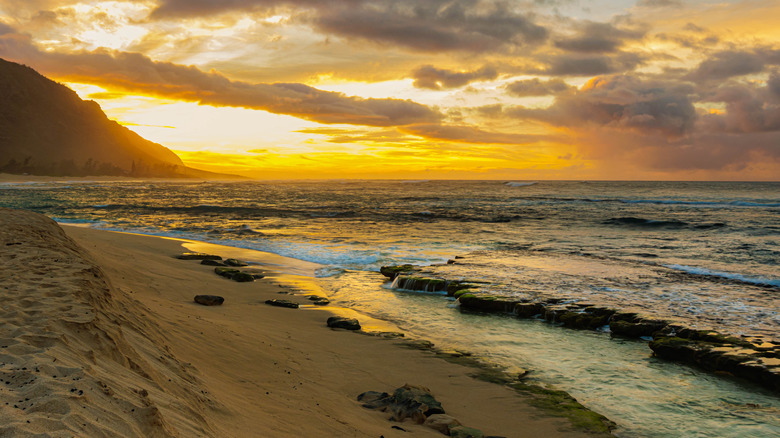
A remote and wild park on the northwest coast of Oahu, Ka'ena Point State Park is ideal for Pacific views, hikes, and more. This underrated, hidden Hawaiian paradise is far from the crowded beaches of Honolulu on the opposite end of the island, and while it takes a little bit of effort to reach, the reward is a tranquil destination that's popular for fishing and surfing. One thing that's important to keep in mind is that this park has limited private vehicle access — a permit decal is required to enter. Pedestrians and cyclists can enter freely without a permit.
There are two sections of this park: the Mokuleʻia Section on the north shore of the cape and Keawa'ula to the west. During the summer, when the ocean is calmer and safer, a lifeguard is on duty for swimmers at Keawa'ula Bay. And connecting to the adjacent Ka'ena Point Natural Area Reserve, which lends an even more serene, remote energy to this area, the Ka'ena Point Trail follows a former rail route and road. And while there's no camping in the park, head 15 miles northwest along the coast to Backpackers Hawaii Vacation Inn and Hostel in Haleiwa for a budget-friendly stay right across from the beach.
Cottonwood Canyon State Park, Oregon
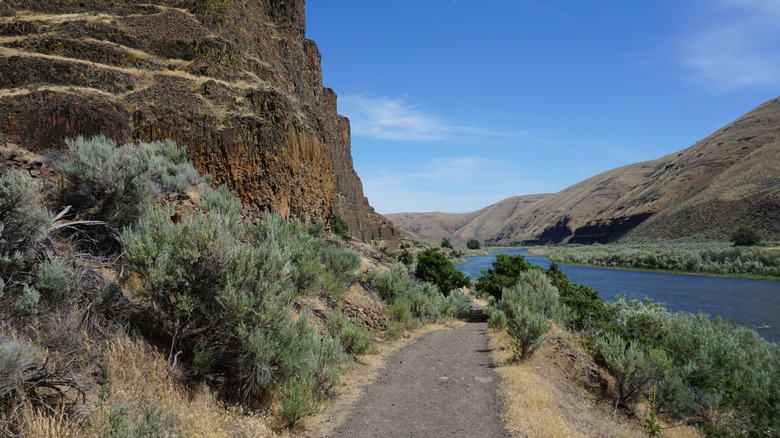
Stunning canyons and camping on the banks of the John Day River await in north-central Oregon at this must-see park that welcomes fewer than 40,000 visitors annually. "Cottonwood Canyon is one of only a few official Dark Sky Parks in Oregon, and cabin rentals remain extremely competitive, yet it somehow always finds itself on this least-popular parks list," writes Jamie Hale of The Oregonian on StateParks.org. Its remoteness makes it less visited but also perhaps even more attractive, and there's no entry fee.
Cottonwood Canyon is Oregon's second-largest state park, with views, fishing for smallmouth bass and catfish, and paddling from the J.S. Burres day-use area on the south bank. It's a pleasant place to hike, especially with trails spanning more than 4 miles on both sides of the river, plus the scenic Hard Stone Trail or a series of old ranching roads that veer away from the river. There's also camping available year-round in a small rustic campground, with sites reservable during the warmer months. The cabins, of which there are four — and two are pet-friendly — are also available year-round, but a reservation is always required. Register in advance via Oregon State Parks' virtual store for occasional events like observing the night sky.
Big Bend Ranch State Park, Texas
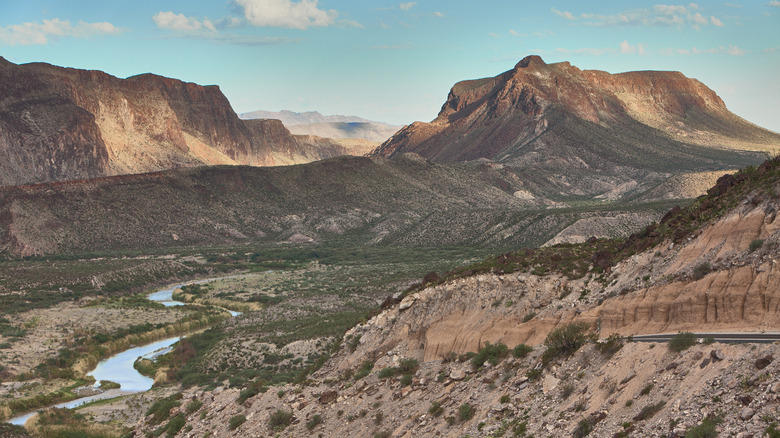
Seeing fewer than 12,500 visitors in 2025, which is far below most Texas state parks' recreation visits, Big Bend Ranch State Park is right next door to Big Bend National Park, but it's often overlooked for that same reason. It's an incredible park in a biodiverse desert with well over 200 miles of trails to explore. Texas Parks and Wildlife calls it "the other side of nowhere," where visitors can enjoy hikes, bike rides, camping, 70 miles of roads for four-wheel-drive vehicles, skies dark enough to earn it a spot on the International Dark Sky list, and more. It's also a great place for horseback riding or paddling on the Rio Grande. For visitors 13 and older, entry is $5, and anyone younger is free.
The Chihuahuan Desert is biodiverse, and you'll want your binoculars for spotting gray foxes, kangaroo rats, bighorn sheep, some of the desert's hundreds of species of birds, and more. Mountain lions and black bears also live in the region, so practice caution on hikes and keep food and smelly items stored tightly and out of reach at your campsite. And if you head to the river, you'll be in for a scenic trip, and Colorado Canyon has Class II and III rapids. Put in your own craft or contact a local outfitter like Big Bend Boating & Hiking Company in Terlingua for group rafting trips.
Wyalusing State Park, Wisconsin
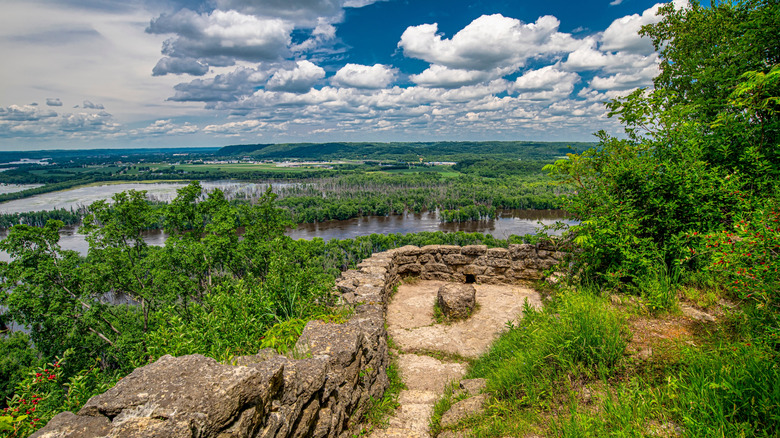
Perched at the confluence of the Wisconsin and Mississippi rivers, western Wisconsin's gem of a state park for hiking and camping is often overlooked and less visited than the state's other perennial favorites that are closer to major cities in the south and east, including Governor Dodge, Peninsula, and Devil's Lake, which is Wisconsin's largest. Wyalusing State Park is just south of the town of Prairie du Chien, and it's an oasis for camping, biking, hiking past beautiful bluff views, canoeing, and exploring Native American effigy mounds. Incidentally, it's also only about a half-hour drive to Effigy Mounds National Monument, which sits across the river in Iowa, if you want to delve further into the story of these archaeological treasures.
Fall is a great time to visit Wyalusing. "Very few at the park this time of year and no bugs making for a very pleasant time," shares a visitor on Tripadvisor. A daily vehicle pass for in-state visitors is $13, and it's $16 for out-of-state plates. During the summer, head to the Bluff Top concession stand to grab last-minute supplies or rent kayaks and canoes. The backwaters are teeming with panfish, walleye, and more. The park also features over 14 miles of hiking trails, including the 0.9-mile Bluff Trail Loop for marvelous panoramic views, which can be easily combined with the Old Immigrant Trail to create a 3.6-mile loop. Then, meander to the Lawrence L. Huser Astronomy Center to take in a free program presented by the local StarSplitters Astronomy Club.
Aroostook State Park, Maine
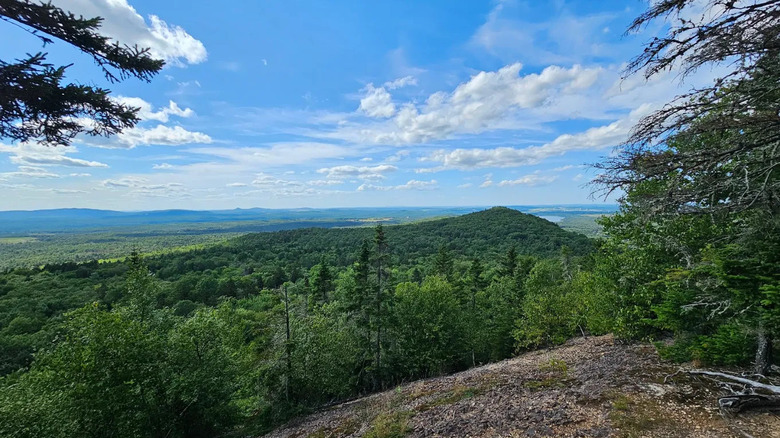
Nestled on the western shore of small Echo Lake in northern Maine, Aroostook State Park is a remote gem close to the border of New Brunswick that's less visited than parks farther south. "The park is located in the upper east area of Maine, which is in a very quiet and less crowded section of the state," shares a camper on The Dyrt. It's an affordable visit at $3 per person for Maine residents and $4 for out-of-state visitors. And it's the state's oldest park, founded in 1938 with a starter 100 acres. Today, it spans almost 800 acres, and aside from the lake, its major feature is the beautiful Quaggy Jo Mountain, short for its Indigenous name "Qua Qua Jo," which indicates its two peaks.
Hiking trails lead to both summits in Aroostook State Park, plus a scenic ridge hike that connects them, along which you can stop for a snack at a lookout near a rustic lean-to. Leaf peeping is a treat in the fall, and in the winter, groomed cross-country ski trails through the woods are a beautiful way to enjoy fresh snow. Camping is also a treat, with 30 standard sites tucked amid the trees, complete with access to showers and a small kitchen pavilion.
Lehigh Gorge State Park, Pennsylvania
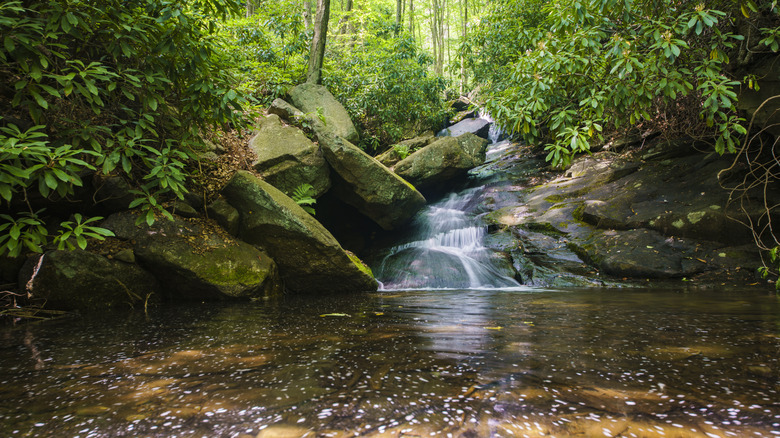
Pennsylvania state parks see tens of millions of visitors each year, and some of the most popular, such as Pymatuning and Presque Isle, see millions on their own. Lehigh Gorge State Park, about an hour's drive northwest of Allentown, still sees around half a million visitors each year, but at more than 6,100 acres, there's room to breathe in this gorgeous oasis with waterfalls and trails.
While there's no camping at this state park, where entry is free, visitors will find a little more than 20 miles of the Delaware and Lehigh National Heritage Corridor, often referred to as the D&L Trail, which follows a historic train route for 165 miles. Its namesake gorge is a highlight, with picturesque cascades and moss-covered boulders. Hike along 33 miles of trails, raft on Class II and III rapids in the Lehigh River, and in the winter, find snowshoeing, snowmobiling, and cross-country skiing routes.
Lake Herman State Park, South Dakota
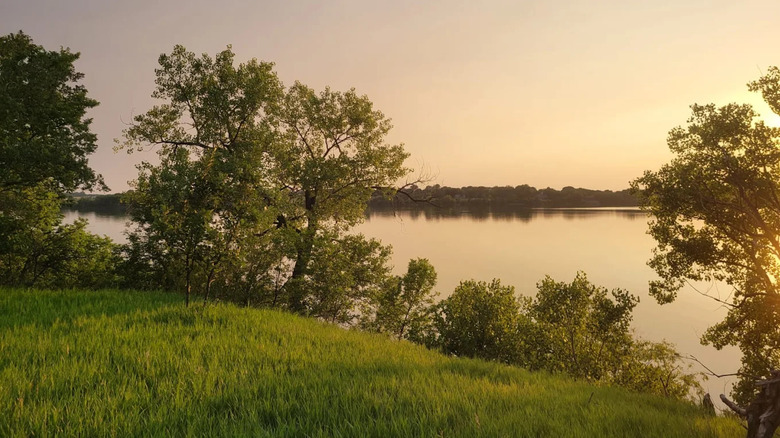
South Dakota's western side usually gets most of the attention when it comes to wilderness and destination-worthy escapes, thanks to favorites like Custer State Park in the Black Hills and Badlands National Park, which see millions of visitors every year. But don't discount the east. Lake Herman State Park is about an hour's drive northwest of Sioux Falls, one of the Midwest's artsiest cities, but it is a worthy stop. Go camping in a modern campground, which includes four cabins, and motor out to fish for carp, catfish, and white bass. The daily entrance fee is $10 for South Dakota residents and $15 for everyone else to visit this lesser-known lake escape.
Lake Herman, which is a natural glacial lake with a long history as an assembly place for Plains Indians, is named for the area's first European settler, Herman Luce. His late-19th-century oak timber cabin still stands, serving as a reminder of that storied period of westward settler migration. Today, the 1,350-acre lake is a great place to spend an afternoon or longer. Rent a canoe, test your Frisbee skills at the 9-hole disc golf course, swim, hike along three trails that are around a mile or a little more in length, and cross-country ski on more than four miles of trails in the winter.
Smith Falls State Park, Nebraska
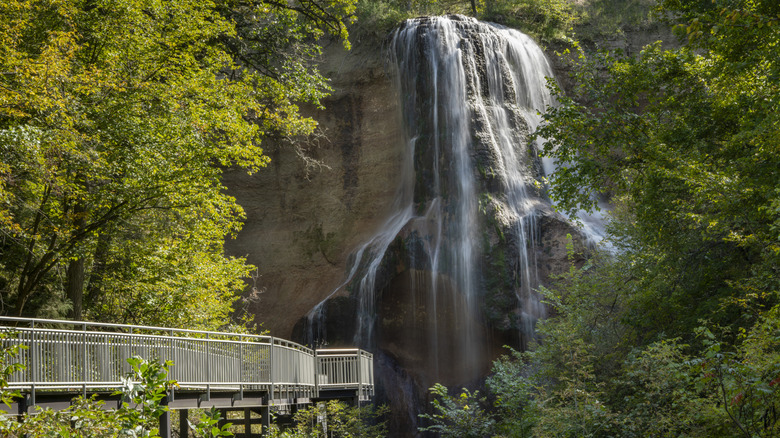
Nebraska oversees more than 70 places that vary from recreation areas to historical parks, but only eight are formally designated as state parks. The busiest are near the state's larger urban hubs such as Omaha and Lincoln, but for less touristy seclusion, head to the Sandhills region of north-central Nebraska, where you'll find the beautiful Smith Falls State Park along the Niobrara National Scenic River. The park preserves the state's tallest waterfall, which cascades over 60 feet, and provides an amazing stretch of undeveloped riverway for relaxing tubing and paddling.
During the summer, stop into the visitor center to peruse displays about the park's history, geology, and even paleontology, and make the most of your stay by spending the night at one of two small, rustic campgrounds. Entry to the park is $7 per day for Nebraska residents and twice that for visitors from other states. Walk across the river along the picturesque footbridge for a photo op, and keep an eye out for the area's diverse array of birds, reptiles, insects, and more.
Monson Lake State Park, Minnesota
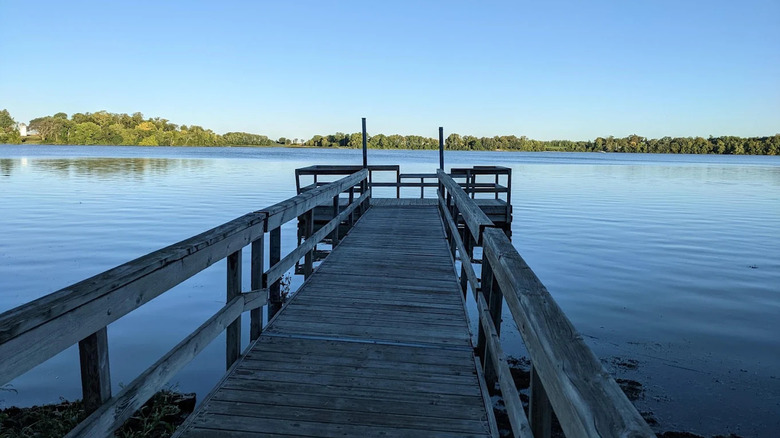
Located in southwestern Minnesota, where the heavily forested northern forests give way to prairie and agriculture, Monson Lake State Park is a peaceful retreat for fishing and camping just 10 minutes southwest of the town of Sunburg. "Very quiet and small park that you mite just have all to yourself," shares a visitor on Google. It's also only a 15-minute drive west of Sibley State Park, making it an ideal stop for a "two-fer" experience. Sibley is busier and more developed, with a park store, ranger station, and interpretive programs, and it sees high visitation to the tune of around 200,000 visitors, according to Minnesota Trails.
Monson Lake is a more tranquil alternative that still provides camping — including six sites with electrical hookups — and plenty of opportunities for fishing across its 208 surface acres. Head out in a canoe, with the option to portage to neighboring West Sunburg Lake, and fish for crappie and walleye. Then, fuel up with a picnic in the historic stone shelter constructed by the Civilian Conservation Corps in the 1930s. Vehicle permits are $7 daily, or an annual pass is $35, good for one year from the month of purchase.
Fakahatchee Strand Preserve State Park, Florida
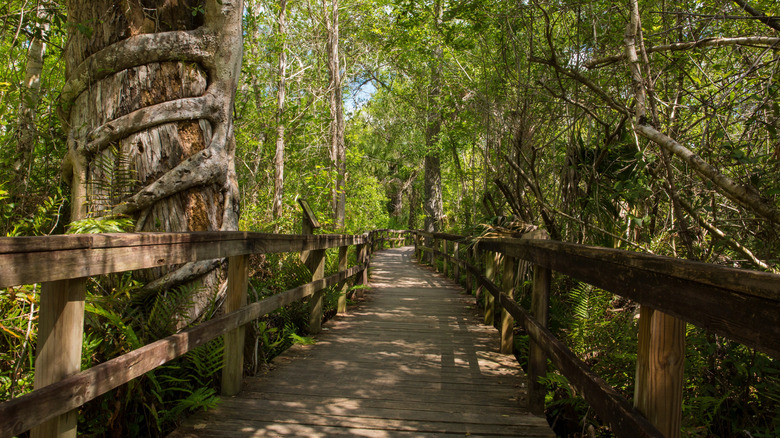
FFlorida's largest state park, Fakahatchee Strand Preserve State Park, is a haven for wildlife viewing, boardwalk strolls, and scenic drives. It's a unique destination north of Everglades City that's distinctively biodiverse, but it sees only a fraction of the visitors of nearby Everglades National Park and Big Cypress National Preserve, according to CBS News. The park preserves its namesake swampland, a freshwater variety specific to southern Florida known as a strand swamp that, in this case, runs north to south. A wide array of plants and animals, including endangered panthers, make their homes here.
Even though it's expansive, Fakahatchee Strand Preserve State Park is less visited than some of the more popular parks along the coast, but it's well worth a stop, and entry is only $3 per vehicle. The park is primarily dedicated to protecting nature, but there are four areas where visitors can explore: the 2,500-foot-long Big Cypress Bend Boardwalk, the 6-mile dirt road of Janes Memorial Scenic Drive, East River with its canoe launch, and Jones Grade lakes. Those looking for a longer hike in the Jones Grade area, you can connect to a series of tram roads, which were used between the 1940s and 1960s when the area was being logged.
False Cape State Park, Virginia
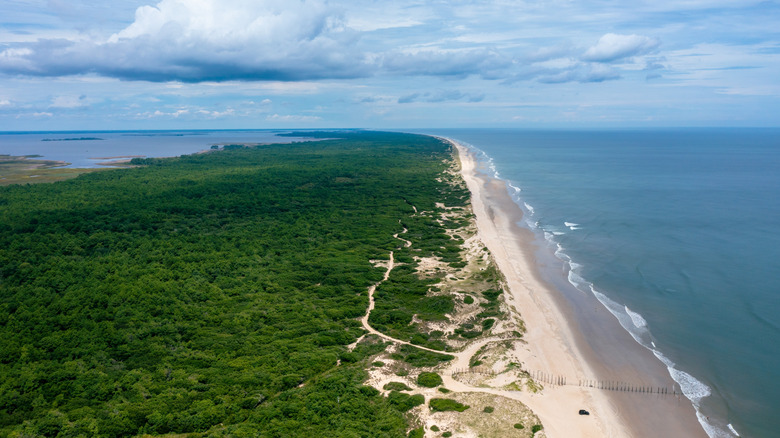
Virginia's secret coastal paradise, False Cape State Park, boasts untouched beaches and wilderness and is a hidden gem. The pristine sandy stretches along the Atlantic are what draw visitors here, although only a small number of tourists ever make the trek. "False Cape State Park is one of the least visited Virginia State Parks for a good reason," writes Shelli Leete on the Virginia State Parks blog. That's because there's no way to access the park by private vehicle. Those who do get here, though, are rewarded with more than 3,800 acres to explore, including nearly 6 miles of shoreline and direct access to Back Bay National Wildlife Refuge.
False Cape is ideal for hiking — the wildlife refuge can also be reached on foot — and paddling around Sand Bay. Between April and October, one way to reach the park is by the Blue Goose tram that heads through the refuge and into the state park. There's an $8 per-person tram fee, plus a $5-per-vehicle entry fee to the wildlife refuge from April through October, but the state park is free. Primitive camping is also permitted on the sandy beach, ideal for adventurers who really enjoy escaping it all, but unless you take the tram, you need to be prepared to walk, bike, or boat in with all your gear.