
9 Chef Tips For Finding The Best Local Cuisine When Traveling
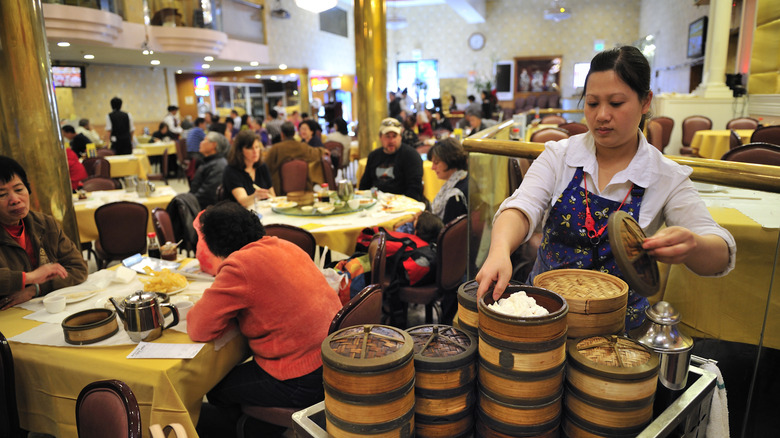
If you often sit down for a proper Indian curry or dim sum, you know that there's no shortage of diverse food in the U.S. In fact, British-style fish and chips joints make up a significant portion of our list of best fried fish spots in every state. And it's widely accepted that Mexican eateries can be found in every state. Still, there's a difference between eating a particular cuisine in the U.S. — where it may have been Americanized to appeal more broadly to locals — and eating it in its country of origin. That said, you can't assume that a local dish is authentic just because you're abroad. There's a difference between eating the local cuisine served in a destination's touristy areas and the spots the locals gravitate to. And chefs, being the professional food connoisseurs they are, know this.
For one, native residents usually prefer to stick to places that serve authentic traditional cuisine that hasn't been tamed down to please tourists' palates and eschew hotspot areas where food may be more bland and made from mass-purchased ingredients. Secondly, these smaller eateries are often off the beaten track where you're likely to experience the real culture of a destination rather than a canned experience. Importantly, your dollars support the native communities of your destination when you spend locally. These are just a few of the reasons well-known chefs (and a few less-popular ones) often give advice on how to find the best regional foods.
From the perennial favorite, Anthony Bourdain, to a sommelier with less name recognition, we've rounded up some pro tips for discovering your next best meal when traveling. Fair warning though: if you can't imagine yourself going through a market with local kids and pets running wild or your style is more upscale restaurant than tiny neighborhood gem, this list may fall flat. But if you're the type that prefers to act more like an explorer than a tourist, you may just learn a trick or two for your next adventure.
Mingle with the locals -- but watch out for scams
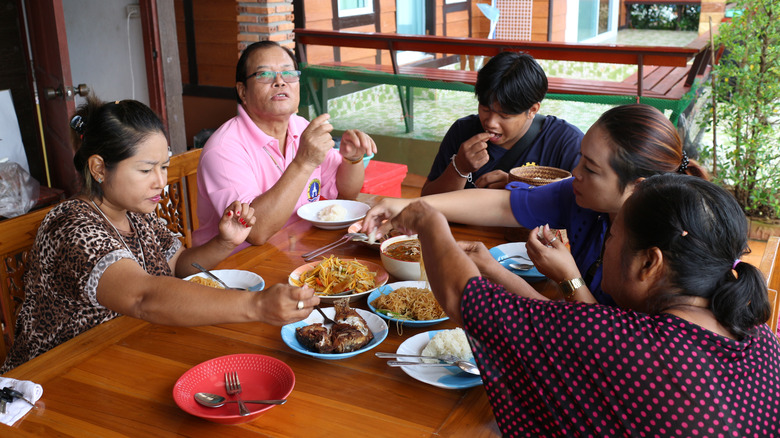
The renowned chef behind New York City's popular Momofuku restaurants, David Chang, is also an avid traveler. So it's no surprise that Expedia turned to him for advice on finding local cuisine while traveling abroad in an interview on their YouTube channel. His answer? Go mingling. And he had quite the interesting story to back it up: "In Istanbul I got to celebrate a 50th birthday of a total stranger at a kebab shop, and it turned out to be one of the best meals I've ever had."
Meeting locals who may invite you for a home-cooked or restaurant meal can easily happen under the right conditions. It's quite likely if you find a neighborhood hangout spot and socialize with the people there. At the very least, you'll have interesting conversations — and you may get an invitation for dinner! According to a Reddit thread, travelers who go off the beaten track sometimes get these kinds of invitations. One user even got backstage access to a play along with meal invitations. Your chances are also higher in friendlier countries. In 2026, Canada, Spain, and New Zealand lead the list of the 16 friendliest nations according to a study by World Population Review.
There is, however, one downside. If you're in a touristy area where scamming is common and get approached by locals with a seemingly kind offer, it may turn into a demand for payment. Travel expert Rick Steves calls this scam the "attractive flirt," and other travel experts call it the "attractive local" scam. In a nutshell, a good-looking local approaches you to share a meal, then leaves you with a high bill and the threat of harm if you don't pay. While you'll want to mingle with the locals, always be on the lookout for scams.
Don't pass up on local festivals
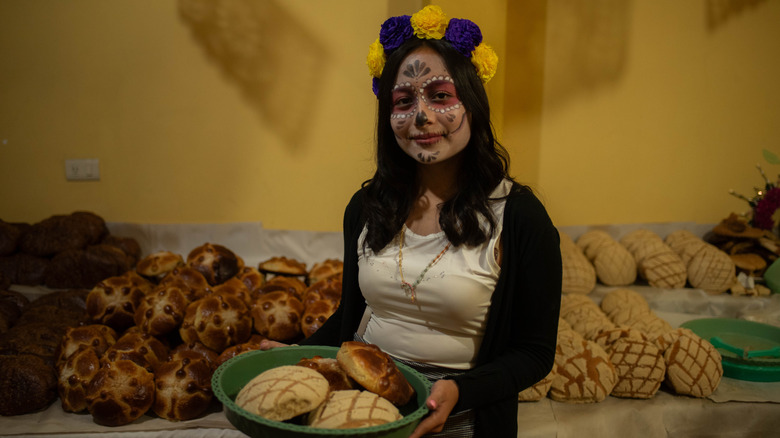
Heady music forcing your hips to sway and vibrant outfits are only part of what makes local festivals so special. Along with the festivities, most also serve up customary foods that go well with the traditional practices. Chef Denise Macuk knows a lot about this. In addition to being a travel enthusiast, she often shares tips on finding regional cuisines on her blog, Chef Denise. She offered this insight on the blog Dreams Abroad: "Attending festivals gives a glimpse into the culture of its people. Yet, it also usually offers insight into the food culture as well."
If you think back to the last time you had a big win or special occasion, you probably remember commemorating it with food. Whether it was a wedding anniversary or job promotion, food was likely a big part of your celebration. It's much the same with those fun festivals around the world. Traditional meals remain an important aspect, whether they're religious or seasonal in nature. Food is often used to symbolize the cultural meaning behind the celebrations and is therefore an integral part. Where the celebration is religious in nature, it is also highly likely that the food will have a special meaning.
Festivals and their local foods can be found all around the world. If you visit Mexico as October turns to November, the Día de Los Muertos festival includes Pan de Muertos, a sweet bread that symbolizes deceased loved ones and the sweetness of death, among other things. And in Porto, Portugal, the popular Festas de São João festival serves traditional grilled sardines and pork on corn rye bread. Incidentally, if you've always wanted to visit Porto but find it expensive, consider these tips for visiting on a shoestring budget.
Check out the line outside
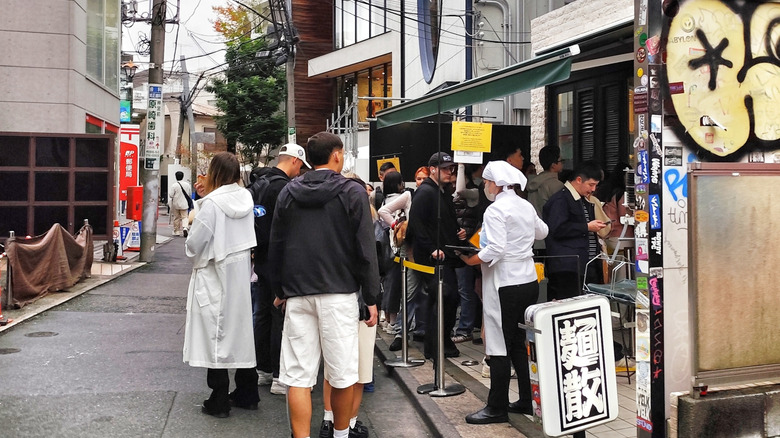
When it comes to food, the opinions of the late, renowned chef Anthony Bourdain carry weight. And he gave many tips on finding the best local restaurants when traveling. One way he determined where to get local cuisine was to look at who is lining up outside an eatery. "If you're in Singapore and there are two chicken and rice places, and there's one with a huge line, go to the one with the huge line. Already, that's a clue. If a place is crowded, but the people lining up are not local, that's a clue—a bad clue," he said in an interview in Bon Appétit.
The thinking that an eatery with long lines is likely to serve good food makes sense. But Bourdain was more concerned with who is in that line. If the line is full of tourists, the food may be good, but it may not be local or authentic. Instead, the local cuisine on offer may be a toned-down version, with less spice and less oomph to satisfy the largest number of palates. On the other hand, if the line is mostly native residents, it's very probable that you've found a local hotspot.
Evidence backs up these assertions. One study from YouGov found that residents of the majority of nations largely prefer eating foods grown locally. If a restaurant has a crowd of locals waiting outside, it's very likely that it serves cuisine that's original to the region, as this is what many prefer. If you happen to encounter this on your journeys, follow the locals' lead and join that line with them.
You can't go wrong with street food
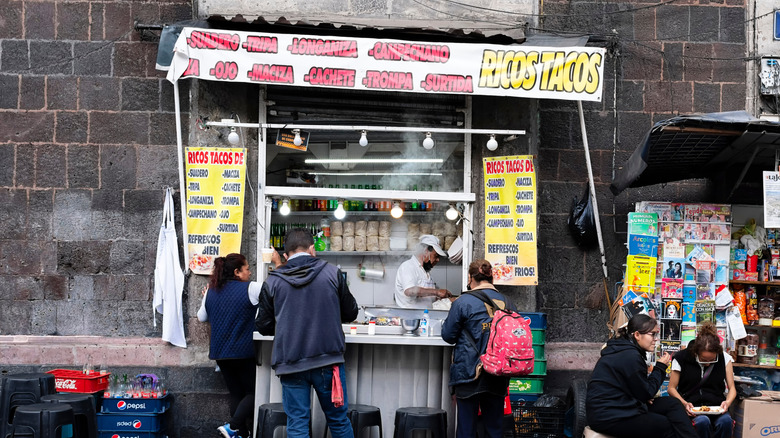
The world's first street food was tiny fried fish served on the streets of ancient Greece. But street food has long left those early Greek beginnings and gone on to become a popular way for busy locals all around the world to get affordable regional foods quickly as they go about their hectic lives. The convenient cuisines are so common that they're one of the top ways renowned chef Wolfgang Puck finds local food on his travels. "I always try to find the small hole in the wall places with delicious food and unique experiences. This can often be street food. You have to try new experiences," he explained in HuffPost.
With the main audience being locals, it makes sense that street food carts around the world would major on local fare. They also form the backbone for some of the world's most celebrated cuisines, so no matter where you travel, you should be able to find a cart or stall with traditional cuisines. If you go to Mexico, take a side trip to Mexico City for its famous street-side taco stands or Centro Histrico, the city's oldest neighborhood and a popular destination for seafood stalls. From steamed buns to bubble tea and oden, street food can be found all over China. Greece's cities and towns hide carts selling meat-filled pita wraps and gyros. And in Singapore, the delicious street food culture is actually UNESCO-recognized. There are even countries brimming with Michelin-recommended street food!
Stay away from anything written in English
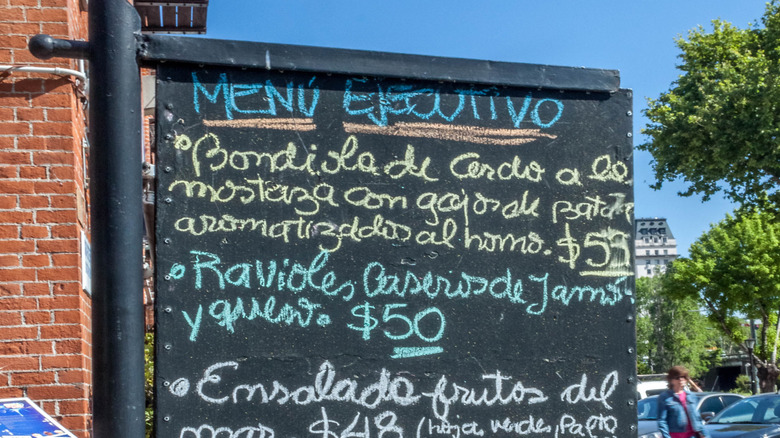
Before you start protesting, we know this one needs some explanation. When Anthony Bourdain said, "If it doesn't have signs in English, it's almost always worth investigating," in Bon Appétit, we're pretty sure he was mainly referring to those menus you see posted on chalkboards or wood on the sidewalks of restaurants in some destinations. But according to Rick Steves — who recommends looking for a handwritten, one-language menu if you want to eat like a local — it could equally apply to the menu inside.
So, what does language have to do with finding good local cuisine? Globalization Partners International, a U.S.-based translation provider, gives a good clue. The first tip on their guide to menu translations is for restaurants to consider who their audience is. Restaurants wanting to attract tourists are advised to translate differently from restaurants wanting to attract locals. This already shows that the language on a menu is a good indication of whether or not an eatery is touristy or more likely to serve locals — and by extension local fare.
A guide to Japanese menus, published on Note.com, gives another hint. It explains that the more local eateries in Japan aren't likely to have English menus because they're usually smaller establishments run by a small team or family who don't have the resources or inclination to translate their menus into English, since their main audience is other locals. This is a good explanation that can probably be extrapolated to other destinations, and while not understanding the menu may sound inconvenient, it's a small trade-off to make for an authentic cultural experience. On the downside, if you have a food allergy, it should go without saying that this tip isn't the best one to follow.
Spend some time in the local market
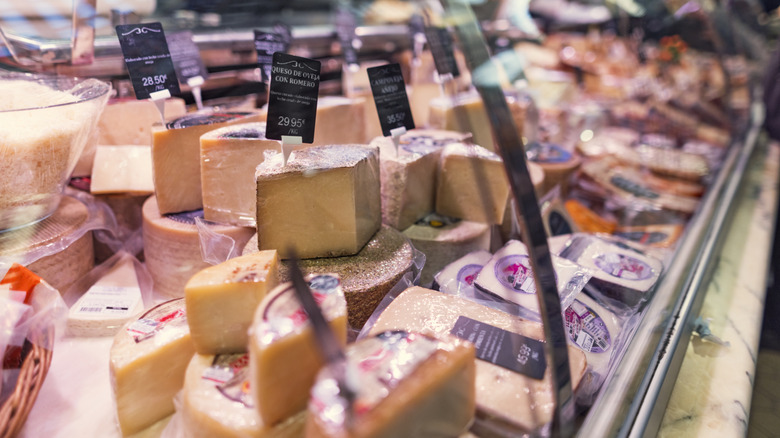
"Typically, the best way to learn about a culture's foods is at the markets ... One of the best markets I've ever been to was in Valencia, Spain, which was probably the size of New York's Javits Center." This is Brad Barnes' advice (via Full Time Travel) for finding local food. And given his master chef training and role as director of consulting and industry programs at the Culinary Institute of America, it's worth taking. While we can't tell you which market Chef Barnes happened upon, Valencia is an underrated Spanish foodie city where delicious trails lead the way to dozens of markets, filled with fruits, vegetables, breads, spices, and more. It's not unthinkable that its markets would be a good way to discover authentic Spanish foods.
This isn't to suggest that some markets don't sell foods from other, further regions. But the majority of the markets you'll discover while traveling offer foods grown in the region, especially if they're designated as farmer's markets. If you grab pastries or other prepared foods, the likelihood of them being local is also high.
One Yale report tells the stories of vendors in Thailand's Night Bazaar Market, a destination where you're as likely to find hand-woven crafts as Pad Thai. Some are former farmers, and some are women from the nearby Hmong villages, their children and dogs darting in and out of stalls. And this is typical for such markets — even U.S. farmers' markets tend to attract local vendors selling locally sourced goods. With markets being filled with local sellers offering their prepared foods and produce, if you stop in one, you really can't go wrong if you're after authentic cultural cuisines.
Go off the beaten track
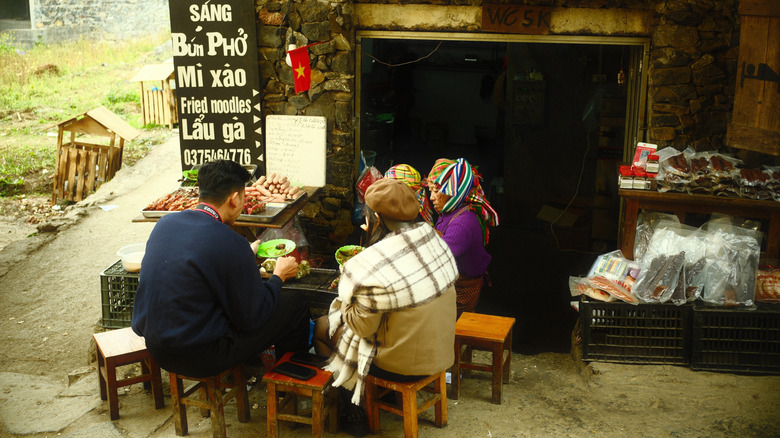
We've all heard the stories of travelers going down a side street and walking into a delightful cultural experience. Whether it's crashing a Vietnamese wedding or discovering a Guy Fawkes celebration, then having mulled wine and enjoying homey festivities with locals in England, going off the beaten track often yields the best adventures. It's the same with food, according to sommelier and food journalist Veruska Anconitano. "By keeping a distance from other travelers, particularly in the most renowned and crowded locations, you're more likely to have a more authentic experience," she explained in an article on finding the best restaurants while traveling in The Foodellers Travel and Food Magazine.
Her advice ties in with the new travel trend of eating hyper-local. Travelers are moving away from more polished dining experiences and seeking out the most local, most genuine food experiences they can find. Not only are they seeking delicious eats, travelers today want to understand the history and meaning behind the foods they eat, and the regions these foods belong to. They're also looking to connect with those who prepared the meals.
Most of these things can't be found in bigger, busier restaurants where everything is mass-produced, and staff are too busy getting in a new round of diners to offer any genuine connection. If you're after homegrown cuisine and real connection, going off the beaten track and stopping at an eatery that catches your eye remains one of the best ways to meet your goal.
Add a cooking class to your itinerary
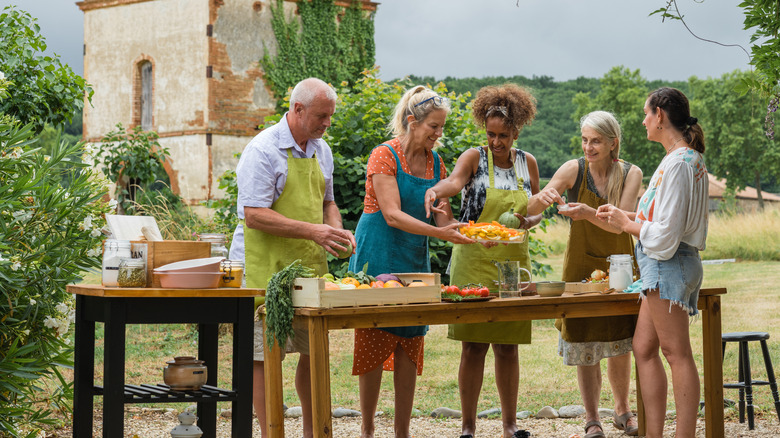
Sampling delicious eats while learning to make a meal should rank up there as one of the top travel experiences to have. You get a practical lesson, a recipe you can practice back home, and some really good local food to boot. "All over the world there are opportunities to pay to eat a home-cooked meal in a group setting ...take a food tour or cooking class if you can," suggested Chef Denise Macuk in her article in Dreams Abroad. And you don't have to go to Italy to follow this tip.
Tuscany may have helped carve out cooking classes as a distinct niche in travel circles, but other regions have since jumped onto the bandwagon. The Caribbean has some good options for cooking lessons with locals. Bangkok's cooking experiences are a whole adventure. And if you ever find yourself in New Orleans, there's a museum where you can make your own gumbo. All it takes is a little research to find an incredible cooking experience on your next trip. Airbnb is a good place to start, as cooking lessons are offered under their experiences pages for many destinations.
Just ask
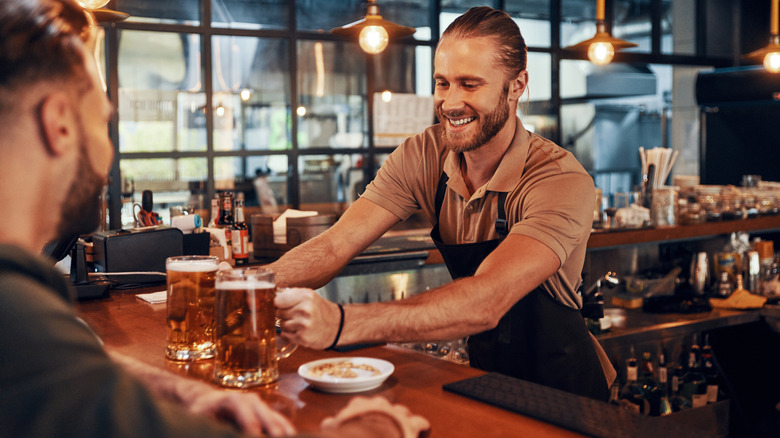
We're ending our list where we started it, with David Chang. Another of his recommendations for finding the best local eats is simply to ask. "I try to get recommendations from people actually living in that city. I avoid the tourist-heavy lists, he clarified in an interview on Mansion Global. "Then I'll ask people in service industries—baristas, bartenders, taxi drivers—where they eat." When you think about it, this sounds like a straightforward way to get good recommendations.
But in all actuality, this tip isn't as simple as it sounds. If you stop someone walking down the street, there's a slight possibility they don't spend lots of time eating out or aren't into food like you are. There's also a possibility (again, small) that they are motivated by reasons other than giving you real advice — for example, they may have a relative who owns a less-than-stellar restaurant and send you there to help said relative's business.
If you follow chef Chang's advice and ask others in the service industry, you're more likely to get genuine recommendations. A waitress, barista, or bartender might have worked at other establishments: they're also likely to have friends working in other eateries. This, in addition to their local knowledge, makes it more likely you'll get a good recommendation. When asking for a tip, try to be as specific as possible. Just as you have a favorite place for pizza, for Chinese, and so on, locals will have their favorites for specific meals and may find it difficult to give you an answer if you just ask for the best food in the area. Do your research, have a list of meals you want to try, and then ask for targeted advice instead of posing a wide question.