
These Countries Are The Best Destinations For Michelin-Recommended Street Food In 2026
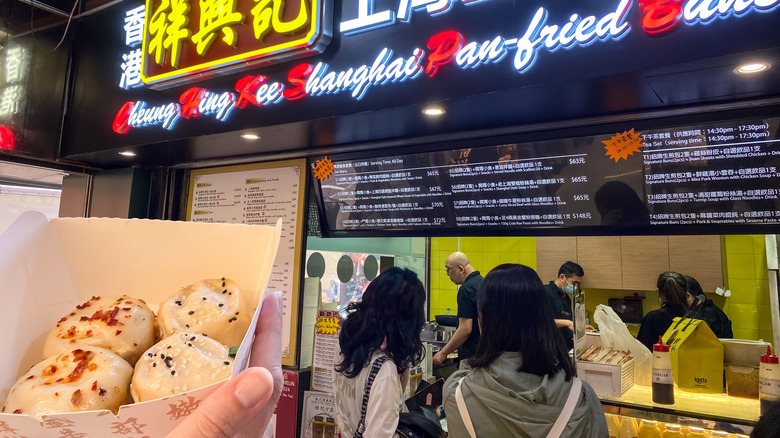
When we cast our eyes at the world of Michelin-star food, our minds are drawn to thoughts of fine-dining experiences. We recall half-whispered tips from friends and colleagues about European cities blessed with an unexpectedly high density of starred establishments. We check which restaurants made the latest top 50 list. We think back to past meals that our words failed to do justice to. And, on occasion, we take time to wax lyrical about that one vendor that took us by surprise as we walked the streets of a strange and unfamiliar city. Oh yes, Michelin is more than happy to put its stamp of approval on street food.
Well, sort of. There are very few street vendors that have managed to obtain an actual star. The first was named in 2016 when Chef Chan Hon Meng received a star for his rather excellent Singapore- Cantonese-style street offerings. Only three other stalls have been awarded the same honor. Bib Gourmand-rated establishments are more numerous but still few and far between. Such places meet Michelin's strict quality standards but do so at an affordable price. Many are street food to their very core.
Some fit our mind's-eye view of what street vendors should look like, but Michelin's definition emphasizes accessibility and cultural timbre over physical amenities (or lack thereof) — they're not all tiny, roadside stalls. Yes, you can sit down to eat street food in some of these places with tableware and cutlery. It's still street. Regardless, we've done some serious legwork here, looking for the best of the best. We combed through those Michelin guides that focus specifically on street food and looked over the Bib Gourmand lists as well: it was far from a straightforward process, but once we threw in personal knowledge and checked over accredited reviews, we arrived at what we think is something approaching a definitive list.
The Philippines
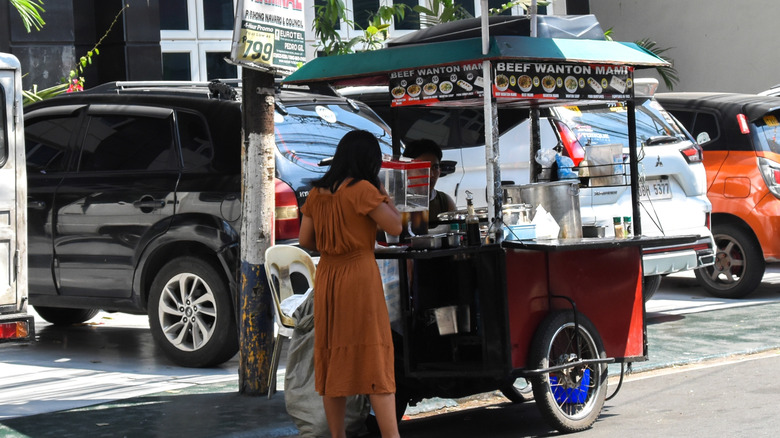
The Philippines is a land of turquoise waters, jungles, and stunning waterfalls, where close to 120 million people rub shoulders with more than 6 million international tourists each year. But it's also a place dominated by urban sprawl, with the capital, Manila, earning itself the dubious accolade of being the world's most densely populated city. Still, the contrast between cultivated land and an ever-growing metropolis finds expression in the national cuisine. And there are few places to find a purer expression of this reality than in the country's most excellent street food scene.
The cuisine on offer is very much of a high-octane variety. Charcoal grills are everywhere, and the nose-to-tail philosophy of the local pagkaing kalye style of cooking, as it is known, combines grilled meats with sharply acidic sauces even as it produces spicy seafood broths and fragrant stir-fried masterpieces as a near-afterthought. Despite not being a traditional street food, the signature chicken adobo is served at some spots and is the most well-known of said options (it's the unofficial national dish, after all), but it is a mere pit stop on the map of delicacies to be found on the streets of Malaysia's cities.
Michelin recognizes several street food locations across the country as being worthy of note. Over in the capital, for example, you'll find the Morning Sun Eatery sitting at a roadside, showcasing the Ilocano cuisine of the nation's north with effortless precision. Said style emphasizes the importance of umami, using a combination of bagoong shrimp paste and sharp vinegars to create salty stews and moreish empanada. Meanwhile, Chie Chie's is best known for a savory stir fry known as pancit batil patung. Michelin-approved street food can be found in other parts of the country, too. The unassuming-looking Esmen, located in Cebu some 500 miles south of the capital, has turned the creation of linarang, a sour fish soup, into a work of art.
South Korea
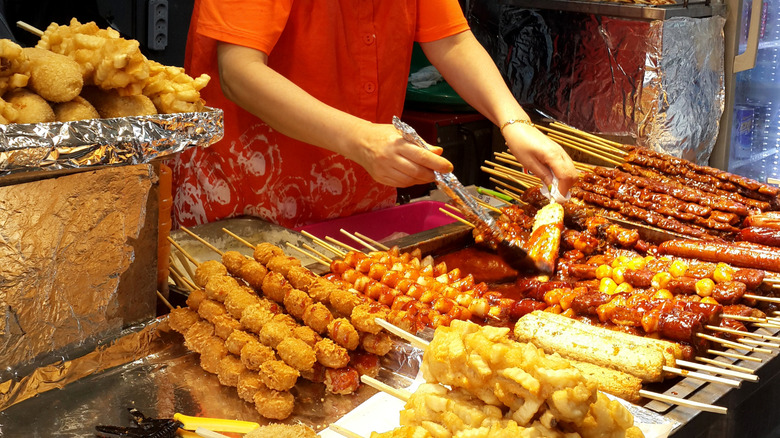
The self-proclaimed coziest city in Asia is home to thousands of cafés, storybook palaces, and rainy-day magic, but it's also a place where the street food is so good it is at times preferable to the fine dining experience. Yes, there is more to South Korea than its capital city (it's home to one of the longest and best coastal walks in the world for one), but as far as the Michelin guide is concerned, Seoul is king. The Michelin-approved street food vendors within the city limits are definite culinary standouts.
You'll find some of the best street food on offer in the Jogno District, a central hub dominated by its theaters, temples and galleries and joined together via the ever impressive Gwanghwamun Square. The area is also home to Gwangjang Market, one of the city's most important foodie hubs and a tourist attraction in its own right. Here, Myeongdong Kyoja serves Michelin-approved pork dumplings with a side of kimchi. It's a sit-down affair, yes, but the food on offer is street to its core and, let's be honest, Michelin knows what it's doing with its designations.
Meanwhile, at the order-at-the-window of Samcheongdong Sujebi, a hand-torn potato noodle soup known as sujebi rules the roost — it's delicious, go find it. You can find even heartier traditional Korean food at the much-beloved Halmaejip, provided that you can find the blink-or-you'll-miss-it place. It's tucked away down a back street and is best known for its gamjatang – a spicy pork bone stew — and jokbal, a dish of braised trotters in a sweet garlic and ginger sauce.
Macau
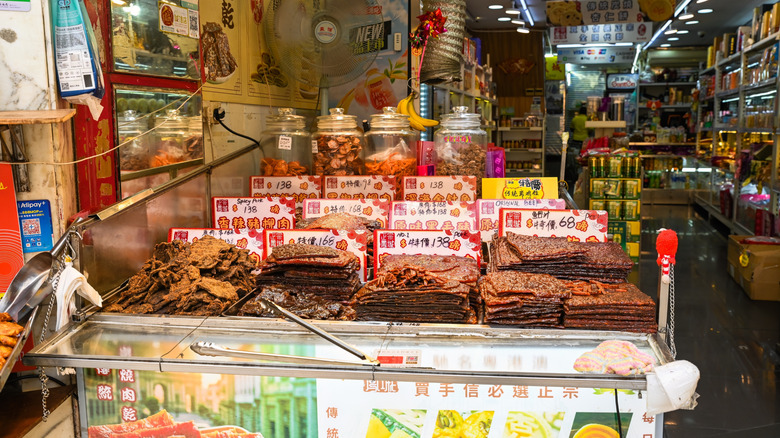
The so-called Las Vegas of Asia might very well be a curious blend of Chinese culture and Portuguese architecture, but when it comes to the blending of two world-class cuisines, Macau has few rivals. Ok, so Macau isn't a country; it's a special administrative region of China. But it's also somewhere that can lay claim to plenty of vendors and restaurants that somehow managed to rise above the fray and catch Michelin's eye.
Of course, some attempts had to be made to define Macau street food prior to said selection. Where Portugal rests its culinary attention on seafood, Peri Peri seasoning and fragrant oils fresh from the olive grove, Macau's Chinese influence favors the roasted meats of the Cantonese barbeque and the dim sum of traditional tea houses. What comes out on the other side is something widely regarded as the world's first fusion cuisine. Dishes such as tacho — a hearty stew reminiscent of the Portuguese classic cozido à Portuguesa fortified with Chinese sausages — dominate the zeitgeist, but other options abound. Taking a break from the thrill at the world's largest gambling hub is only enhanced by the presence of the stir-fried excellence known as minchi, or the ubiquitous pork chop bun served hot with the bone sometimes still in play (they'll remove it if you ask nicely).
Such simple wares are well represented within those establishments Michelin has seen fit to grant their seal of approval. From the boa buns and broth combos of the appropriately named Unique Soup House, to the melt-in-the-mouth egg rolls of the walk-in-off -the street Fong Kei, Macau's best and brightest offer fine dining quality at a reasonable price. And yes, you'll find pastel de nata that are the equal of anything found in Portugal here also; Lord Stow's Bakery makes them fresh every day.
Taiwan
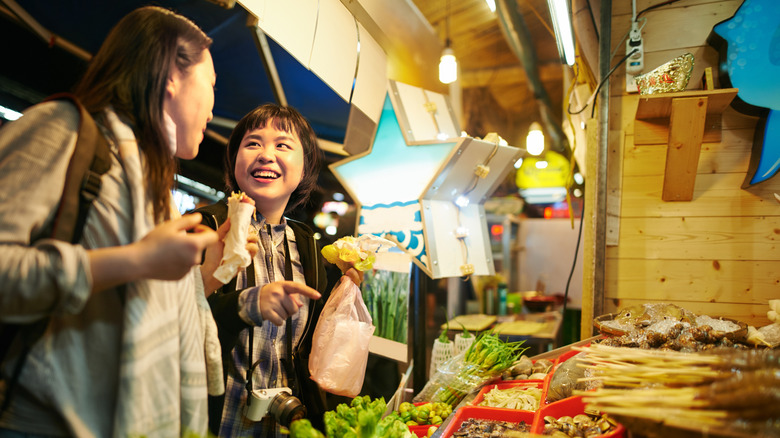
That Asia continues to dominate this list is hardly surprising; the continent's food tends to lean towards being affordable for travelers as well as delicious. Still, to attract the attention of the Michelin organization to the point where they offer a full star to an establishment working with necessarily primitive equipment requires something extraordinary. The island of Taiwan, it seems, must have something of the Midas touch in that department; the famous French guide has certainly cast its eye over the street food scene.
Listing every one would be a challenge indeed be feasible, but since East Asia's happiest country is an underrated paradise in its own right, highlighting a few chosen pit stops should suffice. Still, understanding the three pillars of Taiwanese street food goes some way to helping you decide what to try first. Terminology ensues: First, Southern Min, or the Fujianese style of cooking, is of mainland Chinese origin and forms the basis of many Taiwanese offerings. The second pillar is of a Japanese persuasion and hints at the island's colonial past; said ties find expression in the use of bonito in Taiwanese oyster vermicelli and other such dishes. The last principal influence is of Hakka origin, and the culture's heavy, robust flavors are present in dishes such as yong tau foo, salt-baked chicken and comfort food luminary mei cai kou rou, a dish of braised pork belly and pickled greens.
Armed with such knowledge, navigating Taiwan's vibrant night market culture becomes something of a breeze. Meanwhile, Michelin's own guide to Taiwanese street food can help you zoom in on the absolute best the island nation has to offer. All but one of the establishments is in Taipei, and it's an eclectic list that is well worth exploration.
Mexico
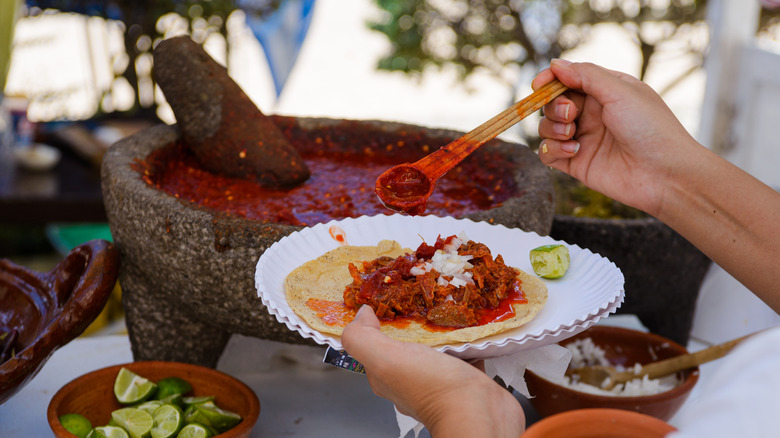
Mexico's long-standing tradition of street taco culture caught the attention of Michelin many years ago. There are those who swear that Mexican street food is the best in the world. I might very well be one such person. Still, in terms of hard numbers, Mexico has managed to bring the receipts; while there are plenty of Michelin-level eateries that fit the street food category, one of them, the standing-room-only El Califa de León, has an honest-to-goodness star in its own right.
First up, Mexico is one of those destinations where you should never drink the tap water; locals can handle it, you can't, so steer clear of uncooked vegetables and ice cubes while you are at it. With that caveat out of the way, what you are left with is a wealth of travel options, incredible foods to discover, and hidden gems that spread by word of mouth as much as by anything else. Mexico City took fifth place in Timeout's 2026 rundown of the world's best street food, but other regions also shine. Tacos Y Gorditas Elvira over in Guadalajara is just one reason you should take a second look at Mexico's second -largest and tourist-friendly gem of a city. You'll also find Tacos Doña Mary La Gritona in the northern province of Nuevo Leon, and though it's a seated affair, the food is street to its very core.
Still, it is to the aforementioned taquería El Califa de León that most foodie minds turn to. Awarded its first star in 2024, the menu quite famously consists of just four items. If you can't make it to Mexico, check out the branch in New York City.
Vietnam
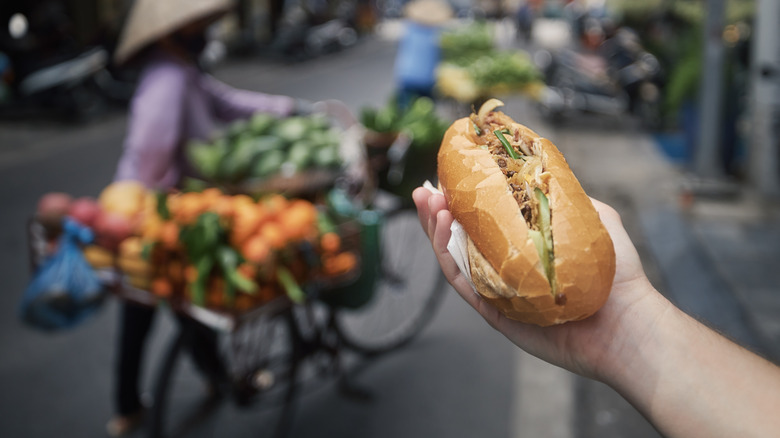
A trip back over to Asia takes us to Vietnam, an affordable bucket-list-worthy destination with a reputation as a tourist-friendly paradise and a land of incredible food that extends well beyond the fan-favorite Bánh mì nod to its colonial past. Michelin certainly has positive thoughts about the street food scene here
Once again, that is too many to go over in detail, but standouts exist even among such esteemed company: Bò Kho Gánh over in Ho Chi Min city offers a masterclass in a local beef stew known as bò kho served in traditional stone bowls with either noodles or rice. Elsewhere in the city, Bánh Canh Cua Bà Ba specializes in crab noodle soup, Cơm Tấm Ba Ghiền offers grilled pork and rice dishes smothered in secret sauce and pickled radishes, while Xôi Gà Number One is a sticky rice emporium with few peers.
Of course, no list of street food vendors would be complete without mention of Vietnam's most cherished offering, and breakfast staple of Hanoi, Pho. The iconic dish is served in three varieties: chicken, beef, or vegetarian. Irrespective of your selection, you'll find a broth infused with charred ginger, garlic, fresh herbs, and other aromatics. As to where you can find the best of the best, opinion is divided, but as far as Michelin is concerned, an unassuming storefront in Hanoi called Phở Gà Nguyệt stole the crown some time ago and is in no hurry to let it go.
Malaysia
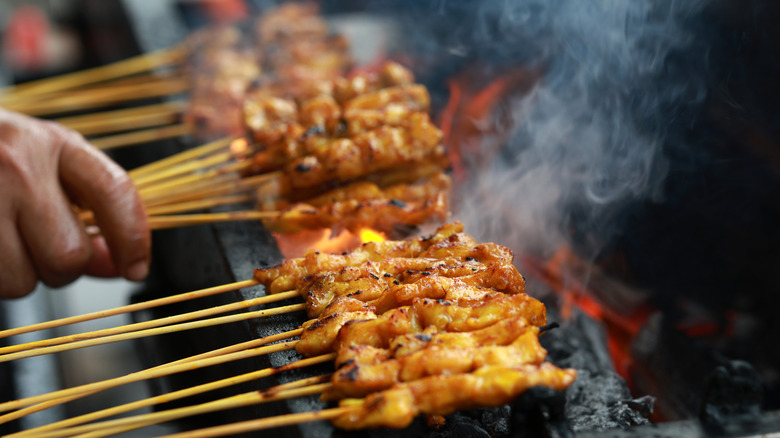
So many street food locations caught Michelin's eye in Malaysia, you could be forgiven for thinking that Kuala Lumpur is the best place to look. You'd be quite incorrect, though. George Town, over 200 miles to its north, is so well known for food that it deserves special attention irrespective of earned accolades.
The city is built upon one of those under-the-radar islands that Malaysia is famous for, and its blend of historic architecture and multicultural heritage led UNESCO to grant the entire city World Heritage status in 2008. The food there is incredible. There's no point being subtle about that fact. Satay is much beloved here, but it's far from the only dish you can't miss.
Penang Famous Samosa does what it says on the tin; Jalan Ipoh Claypot Chicken Rice is equally happy to telegraph its wares via in-your-face nomenclature. You'll find world-class laksa at Wan Dao Tou Assam, charred rice cakes at Sister Yao's Char Koay Kak and grilled savory treats at BM Cathay Pancake. There are so many more delights to discover that listing them feels almost superfluous. Foodies should simply put George Town on their bucket list and make a beeline there at the next available opportunity.
Hong Kong
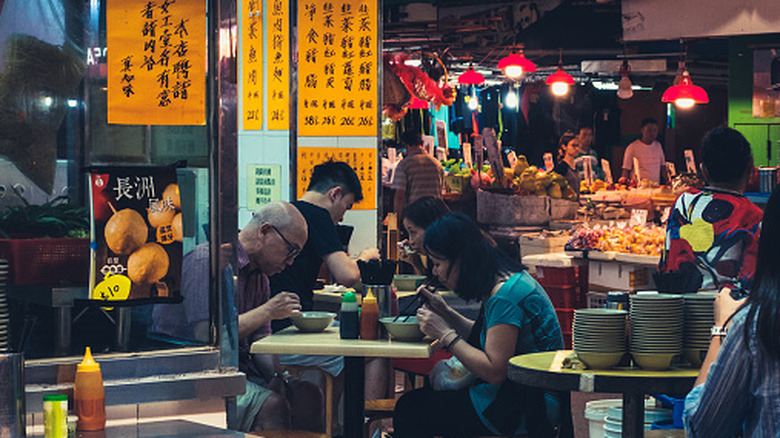
Hong Kong has long considered itself to be the culinary capital of Asian cuisine, and it's true the city (like Macau, Hong Kong is a special administrative region of China) and surrounding area are a foodie paradise of impeccable standing. At its core, the food is unashamedly Cantonese, but British colonial influences are there to see for those who know where to look. Yes, there are siu mei roasted meats and seafood stir-fries on offer, but you'll also get to experience sweet milk teas, ham and macaroni soups. and sweet pineapple buns called bolo bao that do not actually contain any pineapple.
Truth: the street food in Hong Kong is so good that you don't have to follow Michelin's guide to discover the absolute pinnacle of street-served loveliness. Those who do, though, will find plenty of locations to explore, each one guaranteed to leave an impression upon your palate. Parsing things down to a few select recommendations is a genuine challenge, but we'll do our best.
Locals swear by Fisholic, found in the street market-strewn Northpoint, a quaint city suburb just across from Kowloon Bay. If seafood isn't your thing, then Bánh Mì Nếm, located on Hong Kong Island, might quite possibly sell you the best sandwich you have ever eaten. Or you could head back across the bay to sample some technicolor marvels at Hung Hom Pancake. That choices abound is not really in question. Indeed, your culinary journey can take you to any corner of the sprawling city and still reveal a relaxed attitude towards great food that is incredibly refreshing. And while that reads like a carefully crafted outro, the fact remains that we've yet to recommend Banana Boy as a must-visit location. Which it is.
Thailand
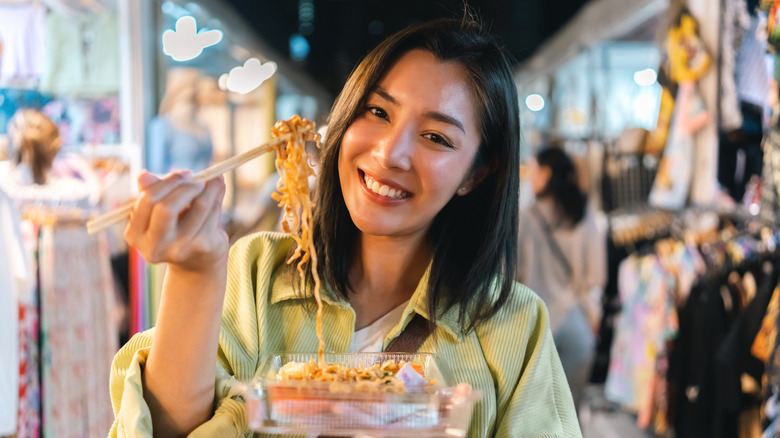
Few people in the world are unaware of the excellence of Thai food. Still, even those of us who have visited Phetchaburi, the much-lauded city of three flavors and UNESCO-recognized center of gastronomic excellence, have not sampled all that is on offer. Thailand has a glut of Michelin-recognized vendors to its name and, for once, said places are evenly distributed around the country.
From the beach-fringed island of Phuket to the picturesque Buddhist temple-filled Chang Mai, some thousand miles to its north, there are plenty of bucket-list-worthy destinations in Thailand where you can enjoy delicious street food and soak in the history and culture of this beautiful country. If you visit just one city, though, head to the capital city of Bangkok, which boasts several Michelin-recommended street food vendors. In fact, Bangkok is well-reputed for its cuisine in general, so there's no shortage of gastronomic delights here.
Unusually for a cuisine as ubiquitous and beloved as Thailand's, the street food scene in Bangkok isn't always familiar. It's a characteristically fast-paced affair, filled with noodle dishes, sticky rice and mango puddings, must-try soups such as khao soi, and endless rows of roadside barbeques. To take things to the next level, you could always take a tuk-tuk tour dedicated to the Michelin experience, but Bangkok is a delight to navigate on foot. Doing so allows you to experience the magnificence of Mae Prapha's crispy pancakes, grilled pork noodles at the delightfully unassuming Bunloet, or sample the offerings at Fried Banana Rama 5.
Singapore
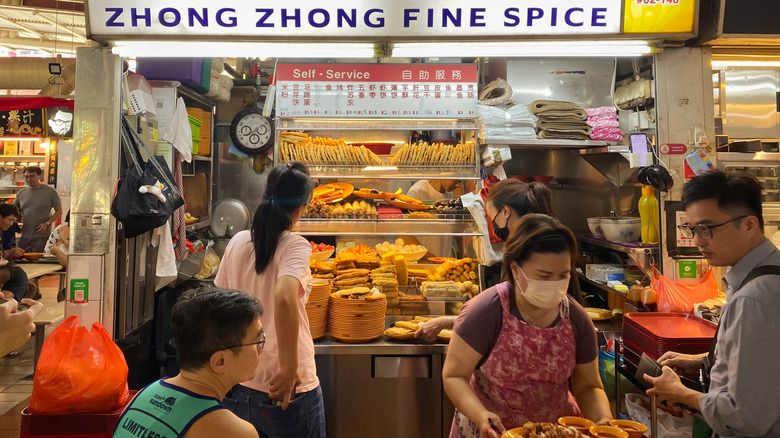
When it comes to Michelin-recognized street food, there really is only one contender for the top spot. Singapore, with its UNESCO-approved culinary scene and position as both a global transportation hub and financial center par excellence, has more than 100 Michelin-recommended locations to choose from — and that's before you do any digging of your own.
That the city-state is obsessed with great food is hardly breaking news. It sits at the nexus of multiple globally revered cuisines, after all, and the Singaporean willingness to take liberally from each of them is deliciously self-evident. There are aromatic stir-fries from China, tamarind-infused curries from Malaysia, South Indian tandoor-grilled meats, and the shamelessly fusion-positive delights of Peranakan cooking.
Such fare is as good as it is ubiquitous; you don't need to search for the Michelin stuff in Singapore to satisfy those foodie urges. Those who do, however, can either follow the guide or rely on a little word-of-mouth advice. Don't miss Chey Sua's carrot cake. Then there are mutton soups, varieties of Hokkien noodles to experience, and iced chendol desserts that simply cannot be untasted once you've taken that first bite. Indeed, there is so much on offer that a visit with the specific intent of sampling the wares is far from the overreaction it sounds like. On the contrary, it's a bucket-list-worthy idea.