
10 Travel Tips For San Francisco From Locals So You Don't Waste A Second Of Your Vacation
We may receive a commission on purchases made from links.
Few cities in the U.S. brim with as many legendary landmarks as San Francisco. A walking tour is a great way to see some of the most iconic sights, from the Golden Gate Bridge and views of Alcatraz Island to the city's historic cable cars and the stunning row of Victorian townhouses known as The Painted Ladies. There are plenty of really busy touristy areas, such as Fisherman's Wharf and Chinatown, although they're popular for good reason: you'll find excellent food, famous views, and exciting attractions.
There are also a few unwritten rules you should know before visiting San Francisco, and advice straight from locals will help you get the most of your visit. That means visits to memorable landmarks, destinations for delicious meals, postcard-worthy vistas, and tips for packing so you don't get caught out unprepared in the city's confusing — and sometimes surprising — weather. The best thing about knowing a few things before arriving? Not having to waste time waiting in long lines or looking for a jacket you probably should have thrown in the suitcase in the first place.
Below, explore 10 tips from locals to help you prepare for a visit to the city, from what to pack to specific spots to add to your itinerary that you might not run across until you dig extra deep into a guidebook. In addition to the author's experiences visiting San Francisco a few times, giving her a good sense of both the city's major draws and some of its hidden gems, we've also researched blogs, Reddit threads, magazine articles, and regional tourism sites to share tips directly from locals so you can spend your time enjoying San Francisco to its fullest.
San Francisco is safer than it's been in years
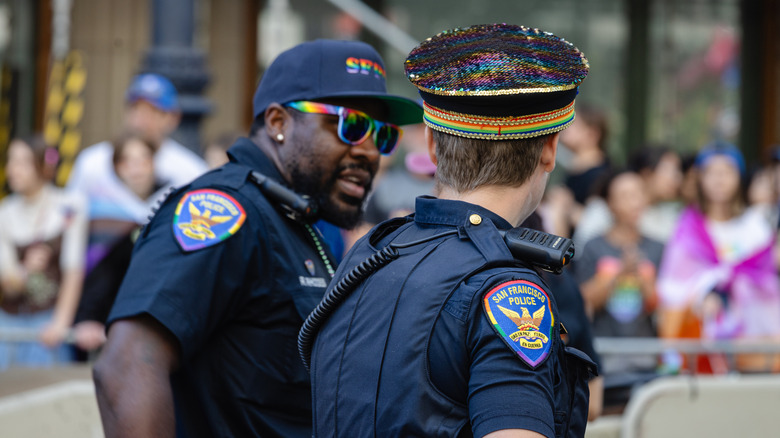
While you might be nervous hearing about crime rates in San Francisco, don't be. Local resident Ellen of Ask Me SF is sometimes frustrated by the number of times she still hears the question, "Is San Francisco safe?" The answer is a resounding yes. "Like any major city, basic awareness goes a long way, but SF is a genuinely wonderful place to visit and live. Don't let outdated headlines scare you off," she says.
San Francisco has had a reputation for crime, but not just any kind — mostly, it's property crime like theft and burglaries that keep the authorities busy. As in any large city, there are also issues with homicide and assault, but those rates have also fallen in recent years. There were historic declines in all crime in 2025, even though 2026 saw a bit of an uptick in homicides. Public transit is also quite safe overall, with Muni statistics as of June 2026 noting an average of 1.9 crimes for every 100,000 miles traveled. And in 2025, crime on BART trains dropped 41% thanks in part to an increased police presence.
Statistics are one thing, but what about the reality of visiting the city? The San Francisco Chronicle hosts a live car break-in tracker, which makes it clear how the prevalent crime is typically concentrated in the busiest, most touristy areas like Fisherman's Wharf. Don't let it make you nervous; use it as a reminder to stay alert if you're driving in the city and don't ever leave any valuables in your car.
Use public transportation rather than driving in the city
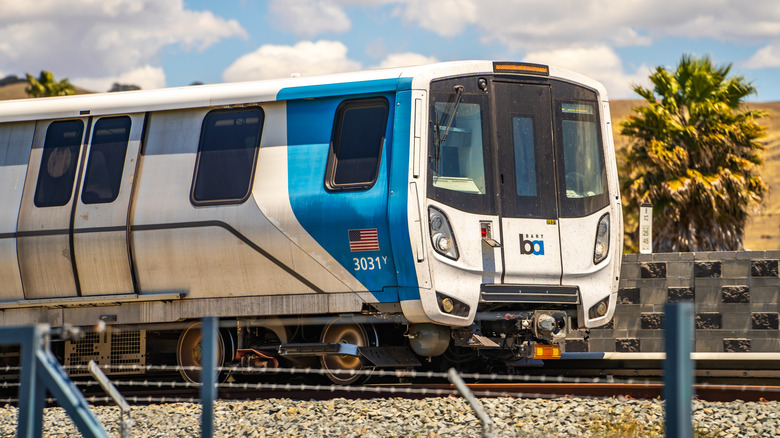
While you might be tempted to rent a car in San Francisco, you should know that the city's public transit networks are robust. You'll find light rail, cable cars, buses, and the Bay Area Rapid Transit (BART) trains that also connect visitors via San Francisco International Airport and cities across the bay like Oakland and Berkeley. Waymo driverless rides, rideshares like Uber and Lyft, and good old-fashioned taxis are also available, but on-road traffic can get hairy.
"Traffic has gotten almost unbearable after the tech boom, so I highly recommend using public transportation (Muni or BART) to avoid all the above-ground traffic whenever possible," shares local resident Andie Eisen in Coveteur. Avoiding driving will also save you a headache trying to find parking.
Muni is San Francisco's primary bus and light rail operator, including cable cars and streetcars. Its app makes it easy to plan your route and track vehicles, and fares can be paid with your contactless card right from your phone. You can also get a digital Clipper card, which can be used to purchase fares on a wide range of San Francisco area transit services, including the San Francisco Bay Ferry. And if you prefer to get around on your own power, biking is also popular in the city thanks to great cycling infrastructure, including bike shares. Lyft provides more than 5,400 bikes at 600 stations across the Bay Area as part of its Bay Wheels program.
Visit the Sutro Baths, an under-sung landmark
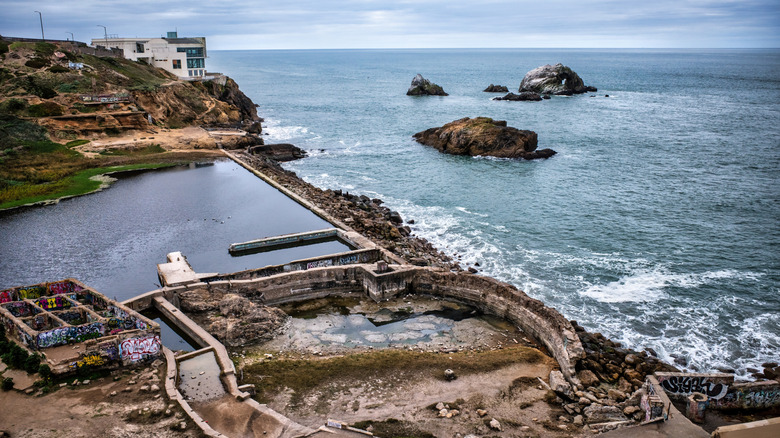
Occupying a broad peninsula, the City by the Bay has no shortage of waterfront views. But one of San Francisco's most unique attractions has coastal views and is a truly distinctive slice of history. "Land's End is a fun hike and if you plan properly, you can end your walk at the beach," shares a Redditor. "And if you're not up for a hike, it's fun to walk around the Sutro Baths ruins or Sutro Heights Park (plenty of photo ops at both places)." The Sutro Baths in particular comprise a ghostly yet fascinating sight on the rocky shoreline.
Located within the Golden Gate National Recreation Area at Lands End, the Sutro Baths have a fascinating history. Like many other California landmarks such as the lavish Hearst Castle estate in San Simeon or the uncanny Winchester Mystery House in San Jose, the Sutro Baths were the vision of a man who had deep pockets and big dreams. Adolph Sutro oversaw the 19th-century redevelopment of the waterfront resort called Cliff House and envisioned the baths as an architecturally inspiring 3-acre public complex right next door. Over time, they were demolished, and nothing but the concrete foundations remain. Take in the view from above at Point Lobos, and explore more of the park along its numerous paths, including a segment of the 1,200-mile Coastal Trail.
The city's steps are attractions unto themselves
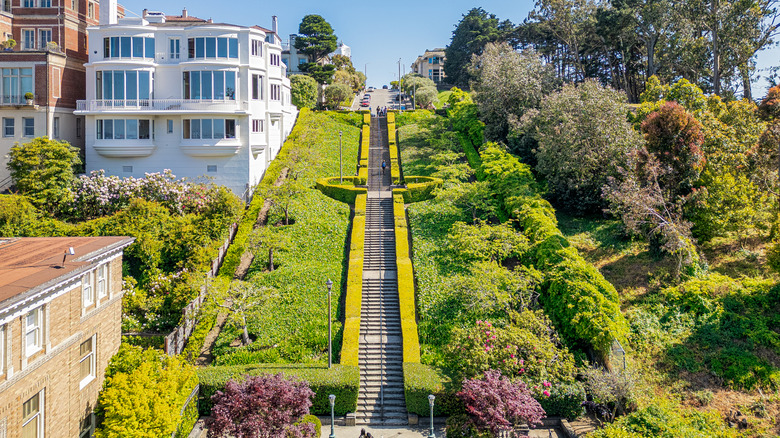
San Francisco is famously a city of hills, and with inclines come steps — lots of them. They're a distinctive part of the city, and traversing them gives visitors an insight into local life that feels a world apart from most tourist hubs in the city. There are dozens of well-known locations, from the 3-block-long Filbert Steps up Telegraph Hill to the beautiful gardens tended by residents along the Vulcan Steps. Some are more utilitarian in appearance than others, but the tallest offer spectacular vantage points across the city, so it's worth adding an urban hike to your itinerary for hilltop views. There's even a renowned book on the subject titled "Stairway Walks in San Francisco," penned by locals Mary Burk and Adah Bakalinsky.
"I like the Lyon Street Steps for the heart at the bottom, view from the top, and proximity to the Presidio (including Andy Goldsworthy's Wood Line and Presidio Social Club)," shares a Redditor, nodding to one of the most famous stairwells in San Francisco. This art-filled, beautifully landscaped option includes one of the city's long-running series of fundraiser heart sculptures, which are auctioned to raise money for a local hospital. And if you do head to the Presidio, a historic park and former military site, wander alongside Scottish artist Andy Goldsworthy's installation "Wood Line" in the eucalyptus forest, an otherworldly sight.
Pack for weather that can be confounding
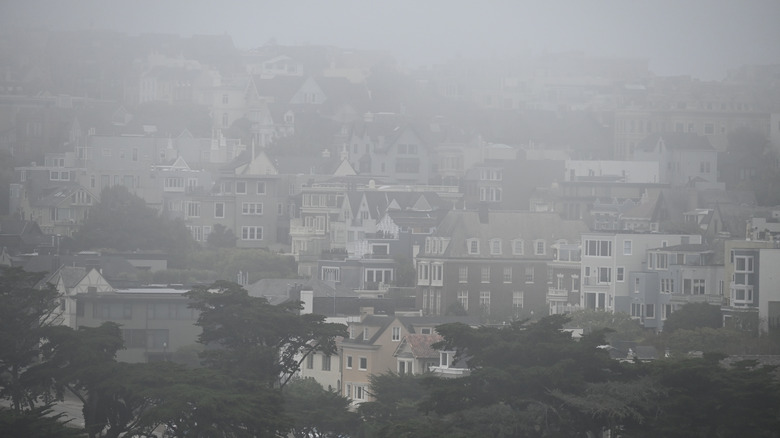
Coastal weather can always be a bit of a trickster, and in this way, San Francisco is exemplary. It's estimated that there are more than 26 microclimates across the city, something nobody believes about San Francisco's weather until they see it for themselves. Any local will tell you to be prepared with layers, even in the summer. If you pack a few different lightweight layers, you can bring along a sweater or a light jacket wherever you go in the city. "Don't be the chump that only packed shorts and t-shirts," says local Andie Eisen in Coveteur.
With its mild, Mediterranean climate, which means relatively warm winters and comfortable summers, it's also famous for its fog, which is prevalent in the summer. If you visit between November and March, it's likely you'll experience some rain, and the fog and wind can come through at any time. Ellen of Ask Me SF describes the east side being warmer and sunnier while the west side is cooler and foggier. "San Francisco weather is legendarily confusing," she says. "People arrive in July expecting beach weather and find themselves shivering in 55°F fog. They pack winter coats for January and discover it's 65°F and sunny."
Don't miss the dim sum
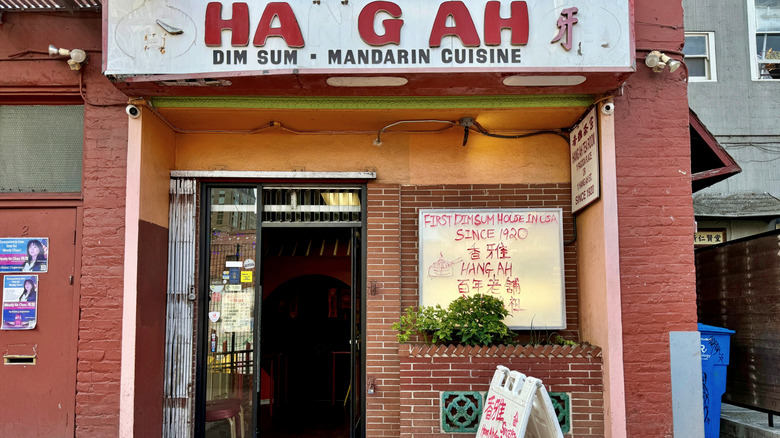
San Francisco is renowned for its wide array of dim sum options, from sesame balls to shu mai. It's also home to the oldest Chinatown in America. A local professional guide suggests on Reddit that if you head to this vibrant neighborhood, you shouldn't miss Hang Ah Tea Room: "Its a hole in the wall, and may not be the best Chinese [food] in the city, but it's delicious and they make their own chili oil you can purchase to take home." This Cantonese hotspot has been open since 1920, making it the oldest dim sum restaurant in the country.
The best spots in Chinatown, Hang Ah included, are unassuming holes in the wall. Another highly recommended spot is Delicious Dim Sum (carryout only) or City View Restaurant for a seated experience. You'll also find excellent dim sum outside of touristy Chinatown in the Inner Richmond neighborhood. Ellen of Ask Me SF recommends heading to Clement Street, known fondly as San Frnacisco's "2nd Chinatown." She says, "Good Luck Dim Sum is the local's takeout dim sum spot (cash only, expect a line). The whole stretch of Clement between 2nd and 12th Avenues feels like a neighborhood that exists entirely for residents, not visitors."
Get some of the best views from Top of the Mark
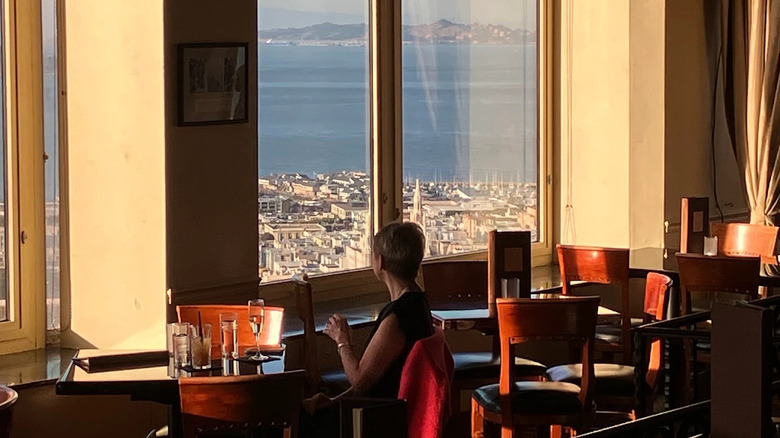
After a day spent climbing up and down blocks-long stairwells, sampling dim sum, viewing art, and riding cable cars, "Go to the Top of the Mark for a cocktail," says a Redditor who's a professional city guide. "Fantastic views, very swanky and an SF institution." Top of the Mark is a penthouse-level establishment that's been operating since 1939, taking its name from the luxury hotel it crowns, the InterContinental Mark Hopkins, which opened its doors in 1926. It's long been known as an upscale drinks spot, but it took on a memorable poignancy during World War II when servicemen preparing to ship out would stop in for what became known as the "Squadron Shot."
San Francisco is known for iconic bars, such as the Tonga Room & Hurricane Bar that Anthony Bourdain once described as "the greatest place in the history of the world." For a refined mixology experience, though, Top of the Mark is a great place to land, even if it's just to see the sunset and sample a shared plate before dashing off to dinner elsewhere. There's also live music from Bay Area artists every Saturday night (there's a $15 cover charge, or $10 if you're a guest of the hotel).
Stay out past the city's 2 a.m. last call at after-hours hotspots
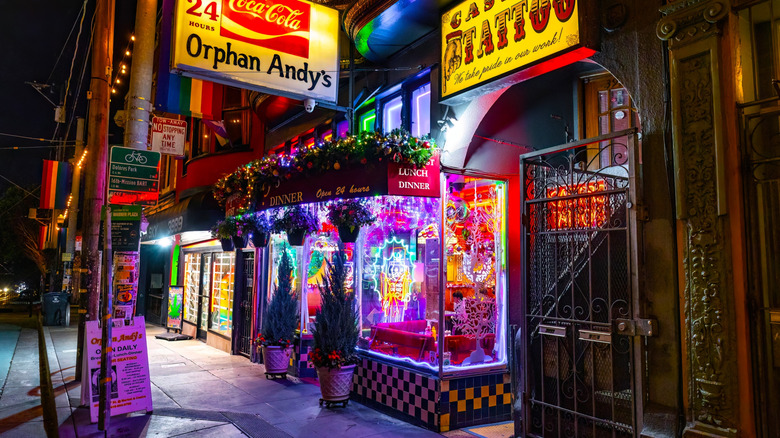
Bars and nightclubs in San Francisco legally must stop serving alcohol by 2 a.m. That may be a little too early for some folks, but you don't have to call it a night just yet! Locals know that there are a handful of after-hours bars that can stay open later, just without the booze. "The End Up is properly the most commonly known afters spot," says a Redditor. The Endup is kind of what it sounds like: the place where roads lead late at night when you still want to hear great music. Public Works is another nightclub that sometimes remains open later than its 1:45 a.m. last call, depending on the evening's entertainment. And although it's not a bar, the legendary Orphan Andy's diner is open 24/7 in the Castro neighborhood.
The same Reddit contributor adds that "there are many local promoters who organise underground afters (or shows that simply go on much later) at rotating venues across the city and east bay." Locals often learn of text chains via word-of-mouth to find out about these "afters" events, but if you're just in town for a short while and want to have the best bet of finding a later opportunity, attend a show that already runs at least until last call. Chances are, you'll learn about something else happening from others there.
Definitely ride the cable cars, but don't wait forever at the turnaround
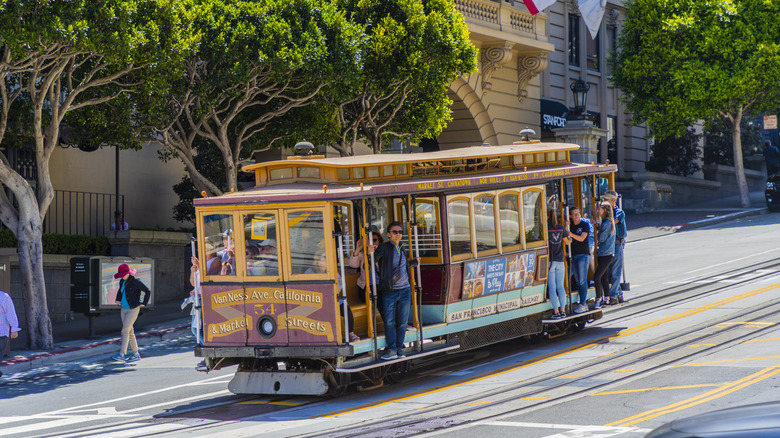
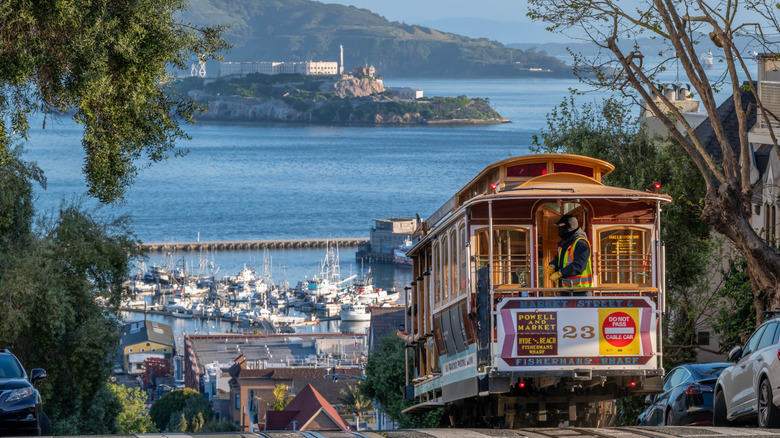
In a city as vibrant, historic, and iconic as San Francisco, locals enjoy many of the things that tourists flock to, including the famous cable cars. The city is home to the world's last manually operated iterations, and with huge hills to climb, they're a practical way to get up and down easily. Just don't wait forever at the Powell and Market turnaround, says Ellen of Ask Me SF. (Another busy locale is the stop at Beach and Hyde in Fisherman's Wharf.) "Board at a mid-route stop instead (any stop along the Powell-Hyde or Powell-Mason lines)," Ellen says. "Or better yet, take the California Street cable car line, which runs from near the Ferry Building up through Chinatown and Nob Hill. It's mostly commuters, the wait is usually zero, and the views are just as good."
It also just so happens that the California Street cable car is the oldest still-operational cable car route in the city, so it's an inimitable slice of California heritage. To board mid-route, you'll just need to find a stop along the way that's marked with a tell-tale brown-and-white sign. If you do head to a turnaround, there are ticket kiosks to purchase an advance ticket, or you can buy one directly from the operator once you board. As of this writing, the fare for a single ride (no transfers) is $9, which is a flat fee applicable no matter where you board or how long you ride.
Embrace the history and quirks that give the city its one-of-a-kind character
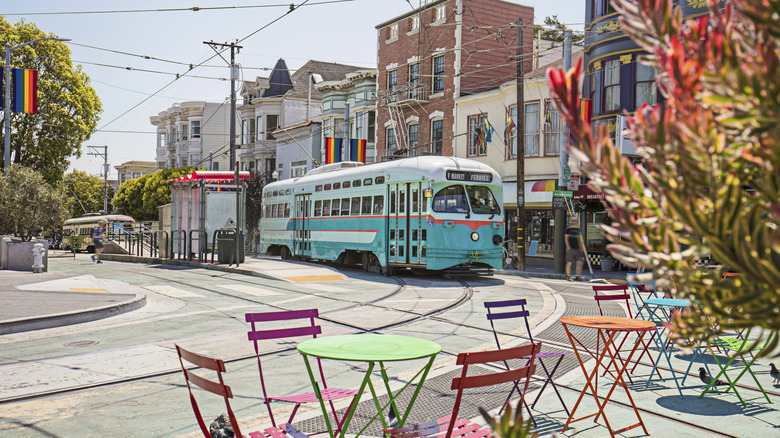
San Francisco is known for being a little bit weird, and it has worn that reputation proudly for quite a long time. Embrace it! That "weirdness" is a remarkably unique mish-mash of historical events and a wide range of cultural, subcultural, and countercultural movements. The city's architecture, climate, geography, and heritage — San Francisco is one of the most diverse cities in the U.S. — are a really fantastic blend of influences, with huge parks, eclectic neighborhoods, feral parrots in the trees, a reputation as a nudist-friendly city, its fame as the locus of the hippie movement, and more. The fog is even nicknamed "Karl" for some reason, and it has its own social media account.
"[The weirdness is] what we love about it, and we embrace its weirdness entirely. But like, it's really weird," says Midwest transplant Lia Garcia in her blog Practical Wanderlust. For the most part, that weirdness is really positive, even though gentrification over the past few decades has meant incredibly high housing costs and a more techy, less hippie vibe. But its characteristic funkiness is still there. Take a tour along around the famous Haight-Ashbury area, head to the Marina District between Fisherman's Wharf and the Golden Gate Bridge, or cruise the Mission District, an artsy gem brimming with murals.