
England's 10 Hands-Down Worst Cities For Traffic
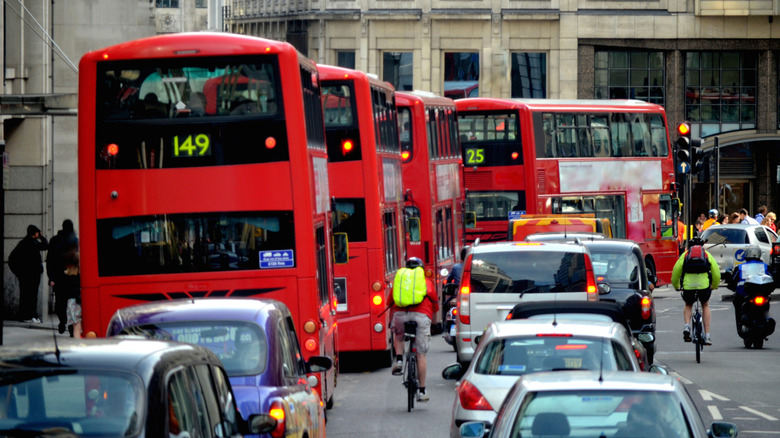
The United Kingdom, when all is said and done, is a pretty small place. Still, England — although only one of the U.K.'s four constituent parts — is by far the most populous and most densely populated of the whole. England has a considerably higher population density than the U.S., and while most of England's major cities are smaller than their American counterparts, urbanization levels in both countries are broadly comparable. Hardly surprising, then, that so many of England's towns and cities have something of a traffic problem.
Of course, such things are difficult to pin down within a single metric. What counts as a traffic delay? In some cases, it's all about the rush hour; anyone who has driven through L.A. during peak traffic knows Dante himself might have added a foreword to his Inferno describing the experience in detail. In other cases, it's all about the cost per driver: fuel and time wasted in traffic contribute to direct costs, while commercial vehicles idling on the road create additional expenses for businesses that are ultimately passed on to consumers. Commuters attempting to get in and out of Bath waste more time than those passing through Manchester, but Manchester has more commercial vehicles on the road, so the associated costs are higher.
Still, for most of us, the number of hours lost stuck in traffic is the salient point, and with that in mind, we created a list based on the hours spent white-knuckling the wheel. Data was mostly drawn from the INRIX Global Scorecard, but we also consulted the Taxi Centre's data and added some local perspectives for good measure.
Aylesbury (57 hours lost)
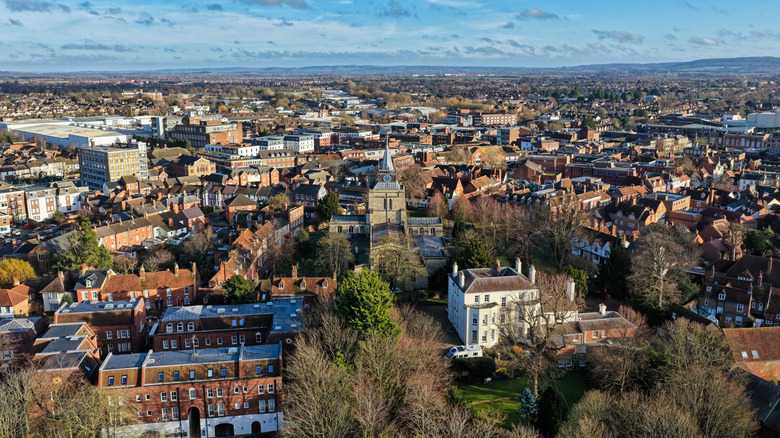
Many towns and cities in England owe their very origin to the Roman occupation of Britain, but surprisingly, Aylesbury isn't one of them. It began life as an Iron Age hillfort, centuries before the Romans arrived in Britain. True, the Romans saw fit to build a 73-mile-long road that cut across the fertile valley where it lay, but decades after the Roman presence on the island had become a passing memory, Aylesbury's story continued. Today, the road itself is little more than a straight line that slices its way across arable farmland. The occasional tractor makes use of it, of course, but that's of little comfort to the average commuter.
All that history plays against attempts to modernize the traffic grid. The radial layout sees several strategic routes converge on the town center, and while such a system no doubt made sense during the horse-and-cart traffic of the past, in the modern world it creates an unavoidable choke point. Commenters on YouTube have complained incessantly about the presence of roadworks, while The Bucks Herald reported motorists' fury at continuous delays.
Which is not to say that the place should be avoided. It's less than an hour by train from the university city of Oxford, the historic market square is still very much in situ, and the Roald Dahl Children's Gallery is something of a Mecca for fans of the author's somewhat unique take on children's literature. Meanwhile, scenic walks along the town's stretch of the Grand Union Canal can be enjoyed traffic-free, and for those willing to accept a much slower pace of travel, there's always the possibility of drifting through the town on a narrowboat.
Birmingham (57 hours lost)
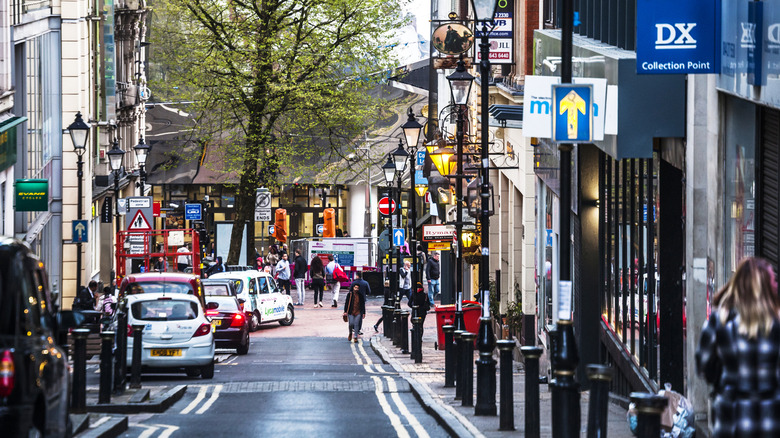
That very same canal can take you all the way from London to Birmingham, albeit at an average speed of 2 to 3 mph, making for a considerably more leisurely journey than motorists might appreciate. Although Birmingham and Aylesbury commuters both lose 57 hours per annum stuck behind the wheel, there is a slight discrepancy in the speed on the last mile of the commute: Aylesbury residents manage 14 mph; Birmingham's manage to hit 15 mph. Faster than a canal boat, but still.
Birmingham is often considered the United Kingdom's second city, a claim hotly contested by those living in Manchester but sustained by one metric at least; with around 1.2 million residents, it's the second-largest city in the U.K. That the ring roads surrounding the city are colloquially known as Spaghetti Junction is the first sign that all is not well with Birmingham's transport links. The Birmingham Mail took time to name the worst road in the city — it's the A4540 for those who really want to know — while Birmingham City Council's trialing of a one-way system has, according to Birmingham Live, yet to reach the proof-of-concept stage.
But it's also a central route through the country writ large and a vibrant foodie gem well-situated to help you avoid the London crowds. Traveling along the north-south axis of the United Kingdom via train is a relatively pain-free experience, and millions of people pass through the city by rail every year. Birmingham remains, in many ways, one of the best home bases for a wider exploration of England itself. Just, you know, don't drive through it.
Chelmsford (57 hours lost)
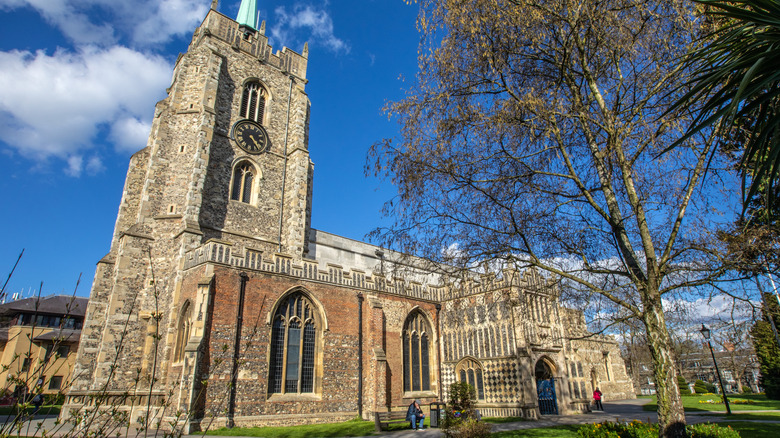
Squeezed between London and Colchester lies Chelmsford, a town known as the birthplace of radio, thanks to its association with wireless pioneer Guglielmo Marconi. He opened the world's first factory dedicated to the burgeoning industry there in 1898, and the moniker kind of stuck. Little more than a market town for most of its existence, it briefly served as the de facto capital during a time of unrest known as the Peasants' Revolt in 1381. That market is now over 800 years old and still in operation. The town's transport network, on the other hand, offers less-impressive metrics; it currently operates at 96% capacity during peak times, according to Essex Highways. As with Aylesbury, the conflict between the need to preserve the purity of an historic center and the realities of a modern transport system has created a series of frustrating bottlenecks.
Charles Dickens famously described the place as "the dullest and most stupid place on earth," an unfair description, to be sure, no doubt penned while the great author seemed to find himself at something of a loose end. Modern Chelmsford is, after all, a highly desirable location, recognized in the Sunday Times' 2026 Best Places to Live guide, and has been the recipient of multiple tourism awards over the years. It is known for its vibrant riverside shopping district, award-winning parks, and stunning cathedral. It is also well served by the train network; travel to and from central London can be completed in less than 30 minutes, placing the town well within day-trip distance.
Leeds (59 hours lost)
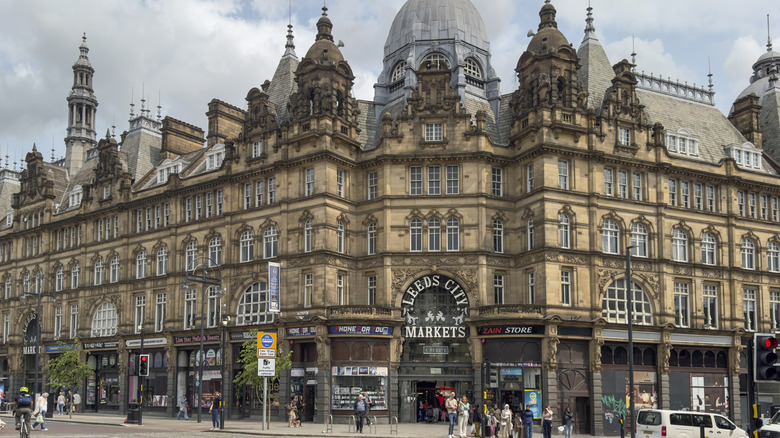
Leeds is often considered the unofficial capital of Yorkshire, and it is the largest city in the historic West Riding. It's also a hub for those who commute in from neighboring communities for work. Indeed, you can find artsy towns littered with outdoor pursuits less than 25 miles away, and charming market towns filled with natural beauty not much farther out. Such beauty and convenience come at a cost, though; the last mile of the commute slows to an average crawl of just 16 mph during peak traffic.
Indeed, a recent article in the Yorkshire Evening Post described the situation as a "nightmare," highlighting issues ranging from potholes to an overabundance of cycle lanes, and the ever-present reality of roadworks. And although Leeds also has origins as a medieval market town, rapid industrialization during the 19th century swept much of that history aside. We cannot blame the Romans and their classical approach towards town planning for all the delays.
No, Leeds is simply an oasis in a desert; Yorkshire is not known for its high population density and even within the more peopled West Riding, Leeds stands out as a beacon of activity. It is home to the largest indoor market in Europe, houses the ruins of the once-mighty Kirkstall Abbey, and is also one of the most exciting music and foodie hubs in the north of England. An economic powerhouse in its own right, taking the train to the center of action is by far the easiest way to explore the many delights that await a prospective visitor.
Cambridge (60 hours lost)
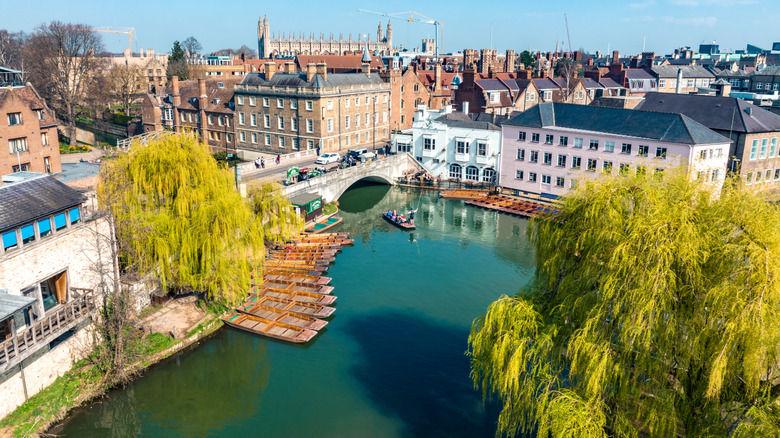
Famed as the home of one of the greatest universities in the world (anywhere that can count Sir Isaac Newton as an alumnus is deserving of respect), it also just so happens to be one of the prettiest cities in England. You'll find Cambridge further north from London than Chelmsford, but it's still an easy day trip from the English capital. At least, it is if you are prepared to take public transport there. Because 60 hours stuck in traffic at a final-mile speed of just 12 mph is far from conducive to the kind of relaxation one might expect from a vacation.
The city and surrounding regions are notoriously flat; in truth, they are absurdly so. The lack of topographical texture makes the city very easy to traverse by bicycle. Indeed, cycling is deeply embedded in local life: according to one report, 31% of Cambridge residents traveled to work by bike. That, combined with the huge influx of students during term time, means that cyclists can clutter the streets and roads, and cars often come to a complete standstill. Indeed, as one commuter put it while speaking to Cambridge Live, "The traffic is ridiculous; it doesn't stop — ever. We've lived here for three years, and it just seems to get worse every day."
Which is a shame, because Cambridge is a delight. Its university is one of the most beautiful in all of Europe; it is a thriving center of the arts, music, and entertainment, and home to many world-class museums. It is a place of bridges and romanticism and, as a former resident, I can confirm that it is home to the best pastry of all time: the criminally delicious Chelsea bun. Sure, the bun originated in Chelsea, but it shines brightest in Cambridge.
Manchester (62 hours lost)
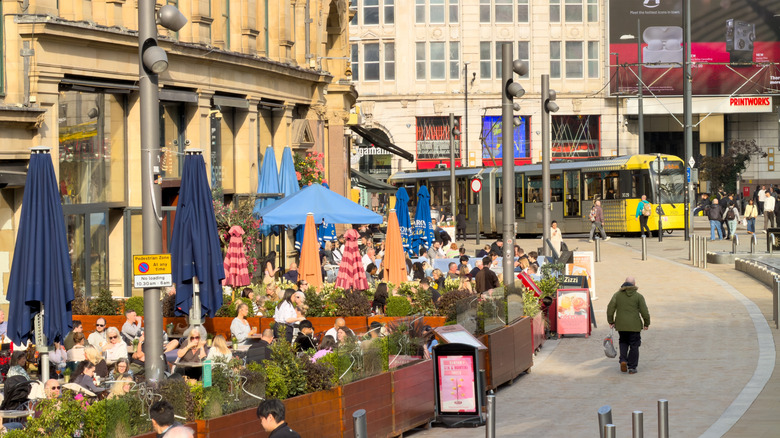
Ah Manchester. The city of my birth, a city of free city center buses, senior-friendly airports, and home to the Smiths, Joy Division, and Oasis. Like Birmingham, it's a big hitter in the population department, and the wider metropolitan area makes it one of the largest places in the United Kingdom. But the city also has an extensive tram system connecting all parts of what is known as Greater Manchester. Such networks are great for those using public transport but less convenient for those wishing to make their way into the city by car. My advice is not to bother; trust me here, it's personal.
The 62 hours lost metric is bad enough as it is, but having to navigate the city center with so many roads given over to the exclusive use of trams complicates things. It complicates things to the tune of £1.3 billion in economic losses, as reported by the Manchester Evening News. Former mayor and current Prime Minister Andy Burnham has been championing the need for an underground rail system for years.
Such measures are years away from completion, but in the meantime, those willing to make use of the tram or rail network are in for a treat. Over the holiday season, the city hosts one of the best Christmas Markets in Europe, as well as a year-round shopping experience that is the equal of any city in England aside from London. The food is good, the soccer is excellent, and, if the weather tends to veer towards the inclement at times, it's a small price to pay for those wishing to explore all that the cradle of the Industrial Revolution has to offer.
Rochester (63 hours lost)
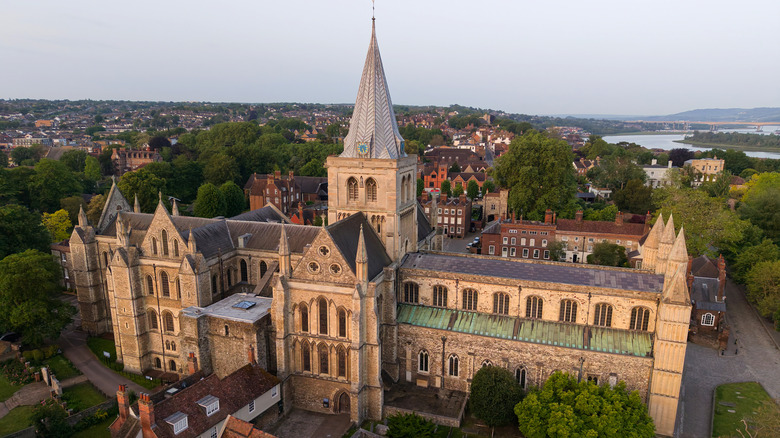
It would be easy at this point to lay the blame for all of England's roads at the feet of the once-glorious Roman Empire. Rochester grew from a former Roman camp, as so many place names ending in the Chester suffix did, and, in what is no doubt something of a predictable development, became a medieval market town following the Empire's demise. It received its first royal charter from Richard I in the year 1190.
The River Medway is probably to blame for the subsequent congestion. It twists as it meanders through the town, necessitating no fewer than four bridges that collectively carry 32,000 vehicles (according to the Rochester Bridge Trust) from one side to the other every single day. For a town of fewer than 70,000 people squeezed into an area of less than 6 square miles, such numbers inevitably lead to gridlock. Still, once again, the rail networks are excellent, and those choosing to commute in will find themselves less than 40 minutes from London.
There's plenty to see once you get there. The city is blessed with the remains of its old Roman walls and is a place of cobbled streets, cafes and second-hand bookshops. Its castle features one of the best-preserved Norman keeps in the country, and its association with the author of Oliver Twist, who lived very close by as a child, has created a slew of Dickensian landmarks that are a delight to literature lovers world over.
Bristol (68 hours lost)
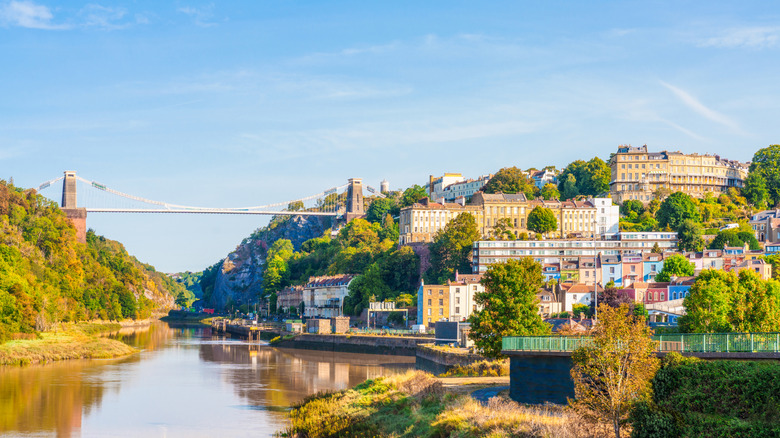
Bristol is far from an under-the-radar location. Situated two to three hours west of London, it is a vibrant, artsy city that was recently named one of the best places in the world to travel. To travel to, that is. Traveling through Bristol by car has been described as something of a stumbling block by residents (as reported by Bristol Live), and with 64 hours lost each year to traffic jams and an average last-mile speed of just 15 mph, it's easy to see why.
The city has long been a bastion of maritime power and engineering since its location on the River Avon has held strategic value for over 1,000 years. Famed engineer Isambard Kingdom Brunel left his mark on the city in more than one way: he designed the stupendous Clifton Suspension Bridge and the original Bristol Temple Meads train station, whose subsequent Victorian expansion gave us the magnificent railway hub we see today. His masterpiece, the world-famous SS Great Britain, still resides in the city and is a must-see.
All of which reinforces the running theme here that the city is best arrived at via train. The harbourside walks and converted shipping containers-slash-independent shops are worth a visit all by themselves. But there are also museums, great eating, and an indelible energy to the place that stays with you days after you've departed and entices you back sooner than you might think.
Bath (68 hours lost)
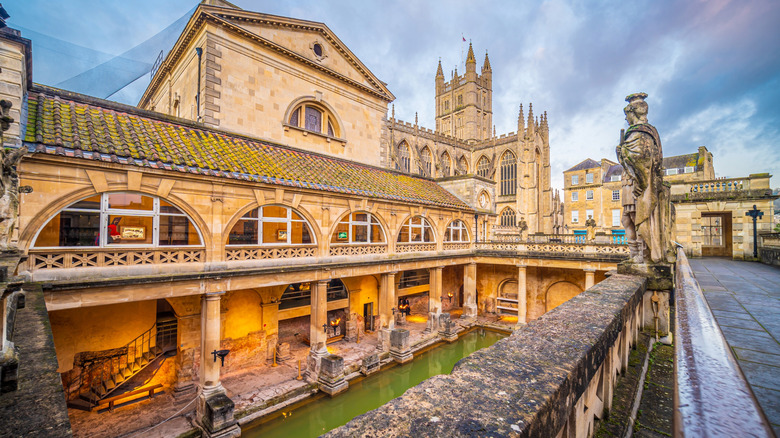
Less than 12 miles to the southeast of Bristol, you will find the city of Bath, named after a Roman spa built almost 2,000 years ago. That spa still stands to this very day and continues to draw crowds from miles around. In a country known for its beautiful cities, Bath stands out as a special case. Still, that 12-mile drive down from Bristol? Yeah, that's going to take you the best part of an hour on a good day, and that's in off-peak traffic.
The problem is a by-now familiar one. The Romans did not build towns with cars in mind; the historic beauty of such ancient places makes them highly desirable places to live. Visitors are spoiled for choice regardless. Despite its Classical origins, the town is best known for its Georgian architecture, and highlights such as the Royal Crescent — a Palladian masterpiece with few peers — are often cited as reasons to visit in their own right. The bathhouse is the obvious highlight, but the entire city is a UNESCO World Heritage Site. And while taking a sip of the natural spring water is not the cure-all Georgians once thought it was, it won't do you any harm either. Pro tip: it tastes nasty, so don't bother.
Throw in a magnificent medieval Abbey, associations with literary giants such as Jane Austen and Mary Shelley (both of whom lived in Bath for a time), and a rather excellent foodie scene, and the overall appeal comes into sharp focus. As indeed does its awful relationship with traffic. Once again, rail services are not only an option but a preferred one for those looking to day-trip out of London.
London (91 hours lost)
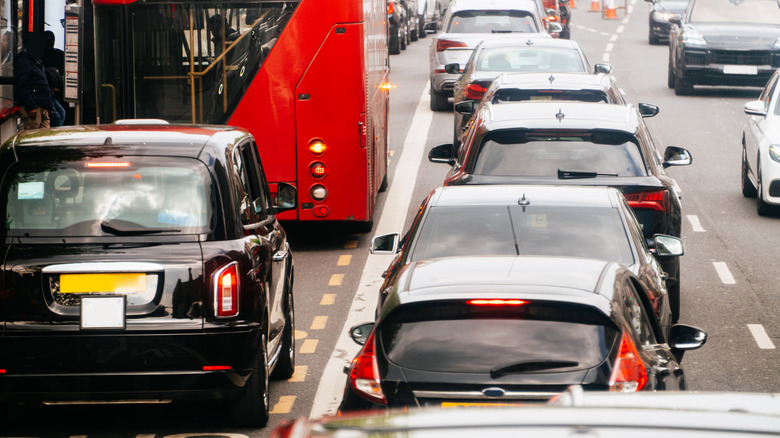
If Cambridge needed no introduction, London needs one even less. With almost 9 million residents, it is larger in population than any U.S. city, with only New York coming anywhere close to such numbers. That the traffic is bad is something of an understatement. In terms of hours lost, London ranks eighth-worst in the world, with only Dublin and Istanbul commuters suffering more on the European League table. With 91 hours lost and a last-mile speed of 11 mph, London isn't all that far behind the perennially gridlocked New York City. Still, as with the Big Apple, London also benefits from an extensive subway system, the first of its kind anywhere in the world.
Above ground, however, traffic is a genuine nightmare at times, something compounded by the introduction of Ultra Low Emission Zones that force older, more polluting vehicles to take more circuitous routes or pay a daily charge. Buses and bicycles compete with Black Cabs, Ubers, and other commuter traffic at all times, but during rush hour, things often slow to a crawl.
Which is not to say that things aren't also a bit hectic on the Underground during such times, but tourists can forgo the worst of the scramble by timing their pit stops with a little proactive forward planning. Pro tip: Have breakfast at your hotel and don't hop on the tube until after 9:30 a.m. Regardless, London is one of the most visited cities in the world, and for good reason. For most travelers, navigating the place by car is an exercise in missing the point, and its historic districts make it one of the most walkable places in Europe.