
5 Disadvantages Of Renting A Car On Vacation
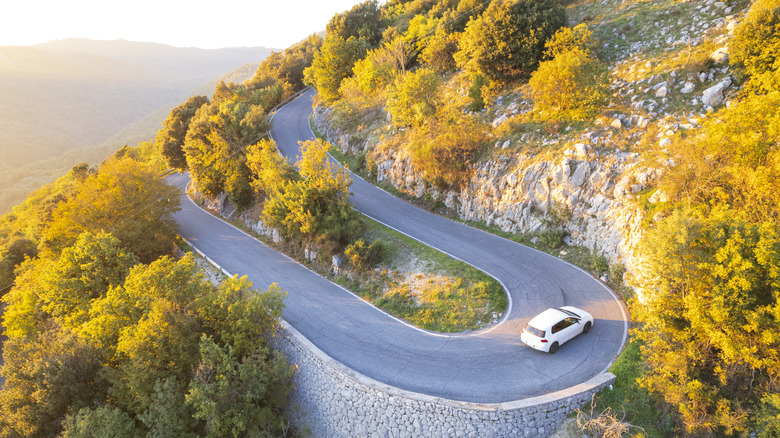
The concept of a car-free vacation isn't exactly a new one. The 1960s and '70s saw the rise of the "Hippie Trail," popularized by backpackers making their way overland on the old Silk Road routes from Europe to Asia by bus, train, and (someone else's) car. Although some did travel with their own vehicles, for many, the point was to travel economically and shed as much baggage as they could, literally and figuratively. While today some opt for a car-free vacation for similar existential reasons, others choose to do so for more practical purposes.
Of course, renting a car has its benefits: like moving freely, setting your own schedule, accessing more remote or hard-to-reach locations, being able to make spontaneous stops, and bonding with loved ones while screaming along to "Baby One More Time" on a road trip. But these days, there are a slew of disadvantages to renting a car on a vacation, ranging from the financial to the environmental. Luckily, many destinations offer easy and convenient alternatives to renting a car, such as public transportation, ride shares, or good, old-fashioned walkable streets.
Car rentals aren't budget-friendly
For many, the biggest disadvantage to renting a car on vacation is the cost. With airfare, accommodations, tours, attraction tickets, and daily expenses, even the most budget-friendly vacation adds up and can make you (and your wallet) want to scream into a pillow. Depending on your destination, a car rental can add substantially to those costs. For example, in the United States, the daily rate for an economy car ranges from $12 to $86 per day, and $21 to $127 a day for an SUV (via Skyscanner). Sometimes it's worth it to buy the extra insurance, so that's another added expense, plus any deductibles or out-of-pocket fees if you get into an accident.
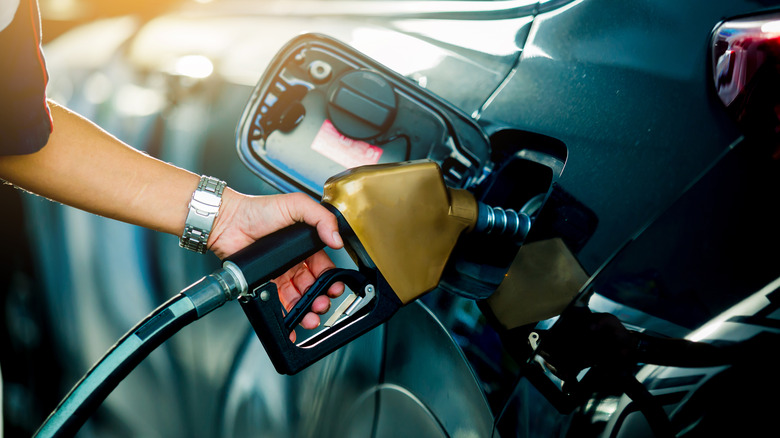
There's the issue of gas to consider, particularly as gas prices are rising. If you're traveling to a city, you'll have to pay for parking (or find a spot on the street and pray that the parking gods smile upon you — and then pray you don't get a parking ticket — an uncertain tactic). Some hotels charge parking fees, even more for the convenience of valet parking. Folks traveling cross-country may have to factor in tolls, too. Besides all that, you'll have to pay for the car for all the days you have it, regardless of using it or not.
Although a rental car is an undeniable expense, it doesn't have to break the bank. Holidays and peak seasons mean higher rates, so consider taking an off-season vacation. Longer rentals cost less per day than short-term ones, and even renting a car for just a week can save you 15% to 25% than a day rate (via Skyscanner). Some rental agencies have rewards programs so if you travel a lot, this too can save some cash. And although it's convenient to get a car at the airport, rental prices are typically lower in non-airport locations, so check out the city center and other rental locations for your destination.
Renting a car doesn't always feel safe

Even the most seasoned driver can have their confidence shaken when driving in a new country where the geographical landscape and rules of the road are unfamiliar. Driving culture differs from place to place, so years of experience and following certain norms can be thrown out the window depending on your destination. In Greece, for example, driving laws and safe practices are mere suggestions, so you might suddenly find yourself nearly run off a harrowing mountain road by a speeding truck that just has to pass you on a curve in the dark (speaking from experience).
Plus, the state of the roads may be enough to deter people from renting a car on their vacation. Many destinations have steep, winding, pot-holed, and unpaved roads that may take you to the most beautiful place you've ever seen, but cause a near-heart attack and test your strongest relationships to do so. Just ask Romania, one of Europe's most dangerous countries for drivers. Several countries have the reputation of being especially unsafe for driving. These include Argentina, Greece, Turkey, South Africa, and the United States (due to a high percentage of younger, inexperienced drivers and drunk driving incidents).
As for the safest countries to drive in, Norway, Iceland, Japan, and the Netherlands are a few where some of these issues can be alleviated. If you plan to rent a car and are concerned about what to expect with driving, visit the U.S. Department of State website and enter the country you're visiting into "Learn About Your Destination." Under "Transportation," you'll find details about driving rules and customs. You could also map out routes before renting a car to see what they're like and if you'll feel comfortable driving them.
Driving isn't the most sustainable practice

According to the United Nations Economic Commission for Europe (UNECE), about ⅕ of the world's CO2 emissions comes from transport, which makes up a significant part of an individual's carbon footprint. The U.S. Environmental Protection Agency notes that passenger vehicles release 4.6 metric tons of CO2 annually. Considering those numbers, those looking to travel sustainably may be interested in alternatives to renting a car. After all, according to the UN, individual CO2 emissions can be reduced by up to 2 tons just by taking public transportation. And in many places, this is more than a viable option, it's a preferable one.
Europe and Asia have robust intra and inter-network rail systems that can get you around without a car while allowing you to better enjoy stunning landscapes or traverse picturesque passes where cars aren't allowed. Japan, South Korea, Mexico, and Switzerland are all known for their excellent public transportation, and some cities even offer free public transit options. Meanwhile, destinations like Taipei, Montréal, Copenhagen, and Wellington are some of the most bike-friendly cities, where it's easier and more fun to get around on two wheels than four. For many, taking a long-distance bus in Central and South America is like a rite of passage whether you're traveling around one country or visiting multiple ones. That said, major rental car agencies do now carry electric vehicles. So if your vacation plans really do require your own car — or you just prefer it — then search for an EV or hybrid when it comes time to book your wheels.
Renting a car isn't necessarily relaxing

Arguably the point of vacation is to, well, vacate. As in, to leave or abandon one's obligations, service, or work. For some, one of the main disadvantages of renting a car is that it adds an obligation in a moment where you're trying to relax. This can be the case for those who drive a lot for work, while others may just not enjoy driving, so the idea of doing so on a trip feels more stressful than not.
The practical reality of renting a car does cut into precious relaxation time on a vacation. If you rent a car at the airport, that's extra travel time both after and before a flight, when you could instead be enjoying one last coffee in Italy (a.k.a. getting side-eyed for ordering a cappuccino after the morning). If you're traveling to a big city, driving in traffic and dealing with parking is anything but a relaxing vacation experience. Plus, the driver never gets to enjoy the sights while they're focused on the road, so that can be reason enough to skip the car rental.
Sometimes, the best part of vacation is letting go of control and responsibility, and that can come from just letting someone else take you around. Many destinations have airport transfers to get into town, plus taxi or ride share options, so you can sit back and let someone else take the wheel. They probably knows the routes and local driving culture better than you do anyway. Rick Steves recommends that tourists avoid driving in European cities, as in many of them, cars are unnecessary and they're best experienced as the locals do: on foot or by public transportation.
There can be restrictions with renting a car

While one of the most appealing aspects of renting a car on vacation is the freedom it gives you, that freedom may come with some fine print. In the United States and elsewhere, most car rental companies have an age requirement of 25+. While some allow younger drivers to rent vehicles, it usually comes with an extra fee. It's not just the youth who have to pay either; some companies have a surcharge for those 70 and older to make up for higher insurance fees.
Many countries require American drivers to get an International Driver's Permit (IDP), which currently costs $20, and can be obtained via the American Automobile Association (AAA) and American Automobile Touring Association (AATA). Be aware that any other site offering an IDP is a scam that produces fraudulent permits. Check the U.S. State Department website to see whether your travel destination requires an IDP or not.
There may also be restrictions in destinations that will potentially make renting a car more frustrating and expensive. Some cities like London, New York, and Singapore have congestion pricing to mitigate traffic — drivers must pay tolls to drive in city centers or even larger areas during peak traffic times. Places like Athens limit the days during which you can drive in parts of the city center — odd-numbered license plates on odd days of the month and even on even. Some historic city centers ban cars entirely, like Rome and Morocco's Fes, one of the best destinations to visit in 2026.
Meanwhile, there are popular destinations where tourists simply can't rent a car (and don't need one), like Mackinac Island in Michigan, where you can get around in a horse carriage, or the breathtakingly beautiful Catalina Island in Los Angeles County. Other idyllic destinations like Gili Trawangan in Indonesia and Hydra in Greece are also among the islands where you don't need to rent a car. In these picturesque, peaceful places, the question "to rent or not to rent a car?" is answered for you.