
These 5 American Cities Have Lost Over Half Their Population
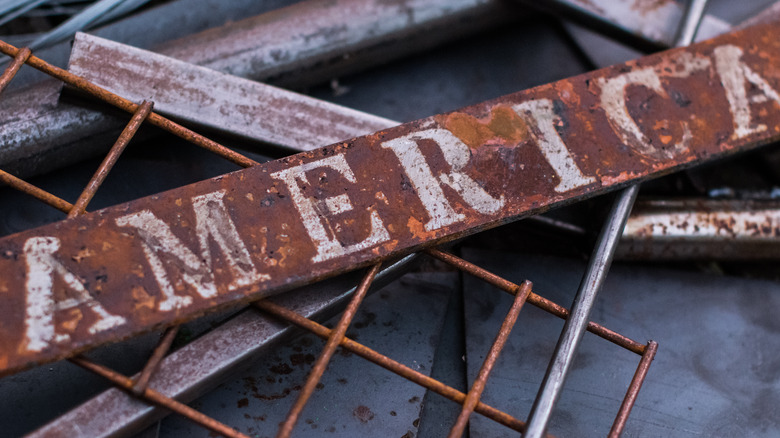
From New York and Pennsylvania across to Michigan and Ohio, Illinois, Indiana, and Wisconsin, even a small spot of Missouri: These are the states that make up America's so-called Rust Belt. It's a term that reflects the swathe of abandoned warehouses and derelict factories, left behind by the collapse of American manufacturing industries.
What were once some of the world's most powerful cities are now literally less than half the size they used to be. As businesses relocated out of state and sometimes out of the country, residents migrated out, leaving behind an industrial heritage that is now being rediscovered and repurposed.
Disused rail lines stretching across the Northeast and Midwest have been transformed into some of the best rail trails in North America, for example. Waterways that were once used to ferry agriculture and manufactured goods are now recreational areas. Similarly, the Ohio and Erie Canal towpath has become a popular canal route through a former manufacturing area that's now criss-crossed with hiking trails. Also, in the search for more affordable homes, families are rediscovering some of America's most underrated cities in the Rust Belt. Of these cities, which ones had the steepest drop in population and which are now looking to grow again?
Buffalo, New York
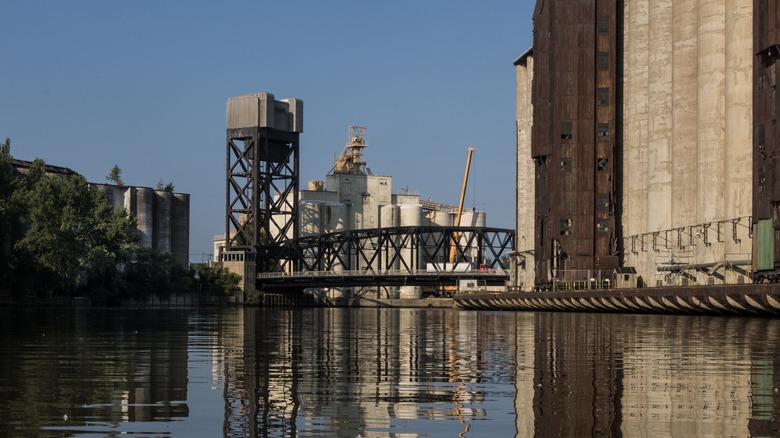
The city of Buffalo, New York, is defined by its geographic location straddling Lake Erie and the Niagara River. The Erie Canal, built in the early 19th century, turned Buffalo into a transportation hub linking the Midwest to the East Coast. The city hit its population peak in 1950, at roughly 580,000 residents, according to Buffalo.org. By the 1960s, however, the city was already shrinking, ultimately losing nearly half of its residents.
Today, the city has an estimated population of 274,000, according to Census Reporter. The reasons for the decline are diverse. Like other industrial cities in America, it suffered from the shuttering and outsourcing of steel and manufacturing. Buffalo also lost its top spot in transportation. The St. Lawrence Seaway was built, providing an alternative to Buffalo's Erie Canal. The city's abandoned warehouses and factories have become dilapidated landmarks of America's de-industrialized Rust Belt.
Still, there are signs that Buffalo is recovering some of its old spark. Online real estate company Zillow has named Buffalo as America's hottest property market in 2025. Some of the old industrial buildings have now been repurposed as unique attractions, including a set of striking waterfront silos that is now the city's hippest new neighborhood.
Pittsburgh, Pennsylvania
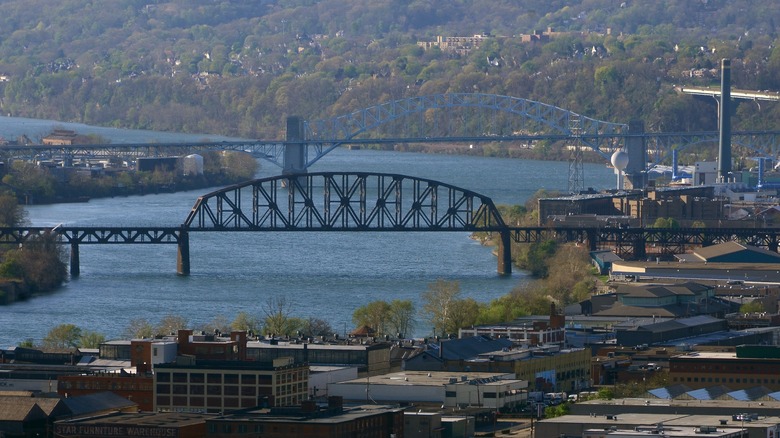
The Steel City is justifiably proud of its industrial heritage. According to the World Economic Forum, Pittsburgh once produced more than half of the country's steel, churning out the metal used in the country's railways, bridges, and skyscrapers. By the 1970s, however, Pittsburgh's steel mills were losing out to cheaper foreign competitors. Making matters worse, coal processing and steel mills ravaged the city's environment, polluting the air and rivers. The Steel City was also known as The Smoky City for the thick blanket of smog that once hovered over its streets.
It's no surprise then that Pittsburgh's population fell. A report by the Allegheny Institute states that the city reached its peak in 1950, with a population exceeding 675,000. By 2023, it had been cut by more than half, down to 367,000. With the collapse of the steel industry and rampant pollution, many residents chose to leave in search of jobs and healthier lives.
Today, Pittsburgh is a good example of how even the dirtiest cities can be cleaned up. Its polluted rivers are now waterways for paddling and kayaking, and the air quality has improved dramatically. Some of its abandoned steel mills have also received a new lease on life as outdoor recreation areas that double as landmarks of industrial heritage.
Cleveland, Ohio
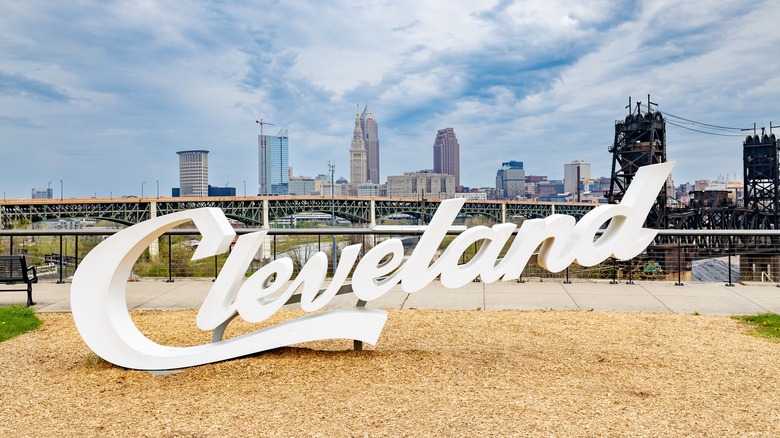
This midwestern metropolis boomed from the 1920s to the 1950s, with steel and manufacturing powering Cleveland's economic growth. It created a flourishing city that's now famed for the Rock & Roll Hall of Fame and powerhouse sports teams. Cleveland was also the birthplace of the iconic Superman comic and the city that installed the world's first electric traffic signal.
Cleveland's population peaked at more than 900,000 in 1950, according to Cleveland.com. By the 1970s, however, the city's population had fallen sharply and continued to shrink over the following decades, down to less than half of its previous size. What drove Cleveland's decline? The rapid loss of jobs in the steel and manufacturing industries certainly didn't help. According to a report by Case Western Reserve University, one-third of manufacturing jobs had disappeared by the 1980s. Many residents also moved outside of city limits to gain more space and a better quality of life. "What appears to be population decline is really just urban sprawl, people moving out of the city center and into the suburbs," explained Jennifer Mapes, a professor of human geography at Kent State University, to Broadcast Reporting.
There are some signs that Cleveland is rebounding. In 2024, the city celebrated the fact that it had not lost more residents, with the population plateauing at about 360,000. It has recently emerged as a budget-friendly big city that's an alternative to expensive coastal giants. Some neighborhoods, like the popular Tremont area, have also managed to lure residents back with a mix of walkable streets, Victorian charm, and tasty food.
Detroit, Michigan
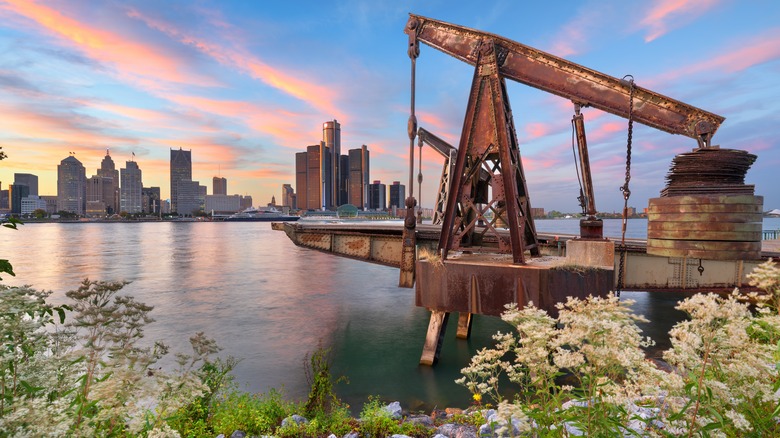
From Motor City to Motown, Detroit is the classic case of a booming industrial and arts city that was gutted by the loss of manufacturing. On the one hand, Detroit still considers itself and the wider state of Michigan to be the automotive capital of the world. America's big three automakers, General Motors, Ford Motor Company, and Fiat Chrysler Automobiles (now known as Stellantis), all have roots in Detroit. However, while the U.S. remains a leader in automobiles, China has eclipsed it as the world's biggest manufacturer of cars. According to Reuters, China built more than 27 million vehicles in 2024, with the capacity to double that. In contrast, the U.S. only assembled about 14 million vehicles in 2024, according to Federal Reserve Economic Data.
This shift in manufacturing devastated the Motor City. Detroit reached its peak in the 1950s with a population of 1.8 million, according to a study by the Economy League, but by the mid-2000s, the population had dropped by more than 60%. According to the urban regeneration nonprofit, Detroit Future City, there are more than 100,000 vacant lots that have become symbols of urban blight.
It's not all grim, though. In 2024, the city celebrated its first year-on-year population growth in more than six decades. That regeneration is also visible on the streets, with Corktown, Detroit's oldest neighborhood, attracting young creatives with hip cafés and rooftop bars.
St. Louis, Missouri
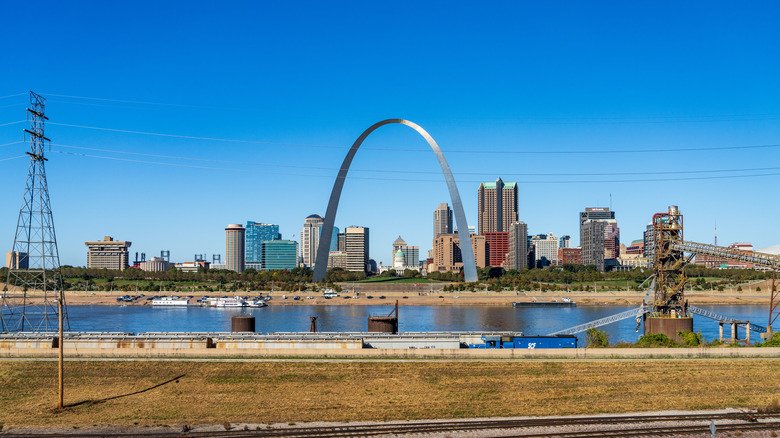
The city with the steepest population decline is an iconic American city known for its landmark arch and national park. At its peak in the 1950s, St. Louis had nearly 900,000 people living in the city. Now, the population stands at just under 280,000. That's a drop of about 65%. Unlike Detroit, however, the city is shrinking at an accelerated rate. According to St. Louis Public Radio, 2024 U.S. Census data showed that St. Louis had the most severe population decline of any American city, losing more than 20,000 residents in just four years.
What's happening to St. Louis? Like many Rust Belt cities, St. Louis also suffered from industrial decline. St. Louis was a booming manufacturing hub in the late 19th and early 20th century, and the International Shoe Company was the world leader in footwear production with dozens of factories in the city and state. Since then, industries have moved abroad for cheaper production, leaving behind abandoned factories and vacant lots. The loss of jobs hit the low-income neighborhoods of factory workers hard. Today, areas like Peabody-Darst-Webbe are often listed among the nation's most dangerous for their high crime statistics.
There are still echoes of the city's great industrial past. Anheuser-Busch still brews its iconic Budweiser beer at the flagship St. Louis brewery, for example. On the flipside, vibrant suburb Clayton has reinvented itself as a hip and trendy "second downtown." That said, demographers say that the city needs an infusion of young families or new transplants for it to grow.