
Things You Didn't Realize You Could Get For Free On Economy Flights
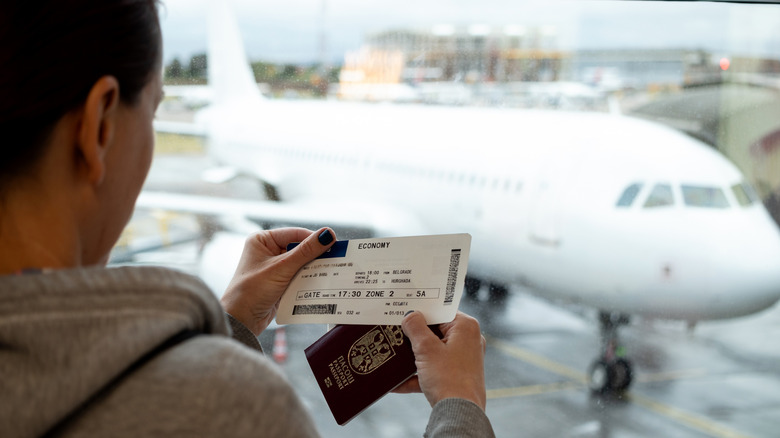
For a long time, flying economy came with low expectations, as far as premium onboard experiences were concerned. You booked the cheapest ticket that guaranteed little more than a seat on the flight and assumed that anything beyond it would come with a price tag. Luxury perks and complimentary comforts were largely associated with the front of the plane. Luckily, for those of us who fly within reasonable budgets, economy-class freebies have evolved over the years — and how. Across airlines and routes, small but meaningful additions have been made to economy cabins, which are no longer defined by the bare minimum.
From free Wi-Fi and complimentary drinks to amenity kits and even occasional cockpit visits, passengers can access a range of free perks — if they only know what to look for and, more importantly, know when to ask for it. This shift is not without reason. As travel trends change and global passenger numbers rise, airlines increasingly see the value of improving customer service. It is no longer unusual to find (delicious) hot meals on long flights or basic comforts like blankets and pillows built into the price of an economy ticket. Many of these perks aren't advertised upfront, but availing them can significantly upgrade your travel experience.
Here are things you may not realize you could get for free on economy flights.
Wi-Fi
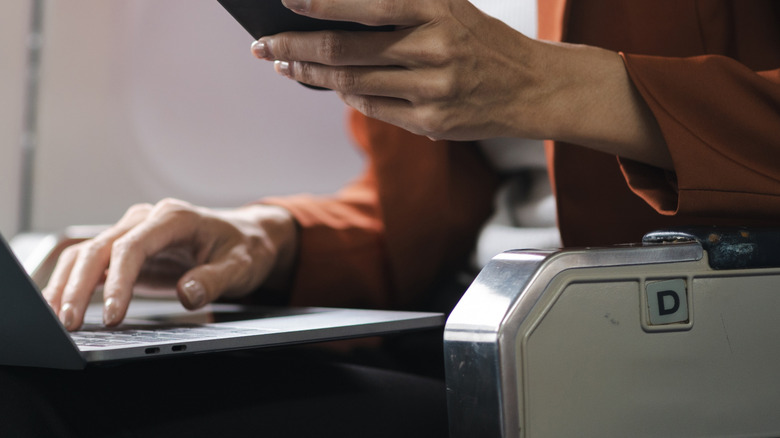
The way the world works today, Wi-Fi feels less like a luxury and more like a necessity, whether you're on land or at 30,000 feet. Airlines know this, and many have made it easier for passengers to stay connected to the internet. In the United States, JetBlue is the gold standard, priding itself on being "the only airline to offer fast, free wi-fi to everyone, on every plane." Carriers like American Airlines have also stepped up their game in recent years, albeit with some fine print that requires free membership sign-up. Network providers like T-Mobile have also made in-flight Wi-Fi free for users on Delta, Alaska, and other airlines.
Given the patchy history of free Wi-Fi on planes, many travelers are wary of this offering. Today, on some economy flights, the service is actually good enough for sending work emails or even just doomscrolling through social media until touchdown. Even on premium airlines like Etihad, where unlimited internet browsing comes at a fee, passengers can still opt for free chat packages that allow for basic functions like messaging. Though there have been concerns about certain hidden dangers of using in-flight Wi-Fi, it's definitely a positive upgrade to the way economy travel has evolved over the years.
An extra meal and snacks
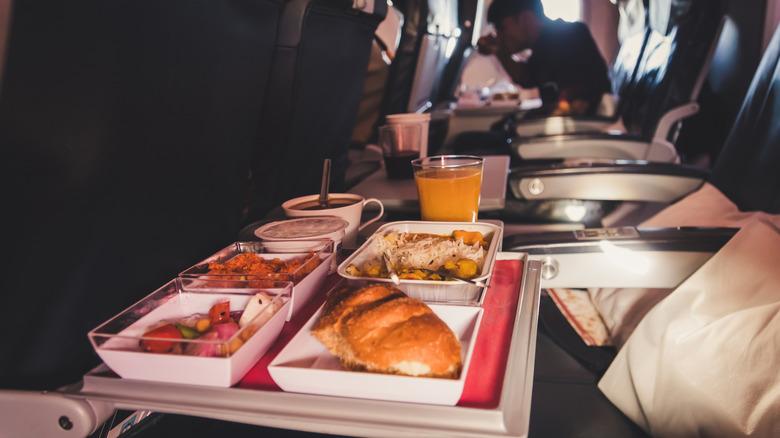
Airplane food has come a long way from being just "edible" and nothing more. Today, many airlines go above and beyond to treat their passengers — even those in economy — to complimentary, world-class in-flight dining experiences at 30,000 feet. In many cases, this service doesn't stop at just a single snack box or one tray of food. On many long-haul international routes, economy flyers can expect to be treated like royalty, with something resembling an elaborate, full-course meal keeping hunger pangs in check throughout the entire journey.
United Airlines, for instance, keeps passengers satiated with free bread, salad, dessert, a sandwich, and yet another meal on its international aircraft. Air Canada has a similar offering. Etihad adds a cultural touch to the whole experience by serving meals inspired by local Emirati flavors as well as the destination you're headed to. While it may seem improper to ask for more than you're served, certain airlines will oblige if you ask for seconds of snacks or meals. Airlines like the Dutch KLM make it explicit in their policies, but on many other airlines, food refills thrive as an unwritten practice. Make your request politely and judiciously once meal service is complete; if there are extras or leftovers, flight attendants will be happy to hand them out.
Essential amenity kits
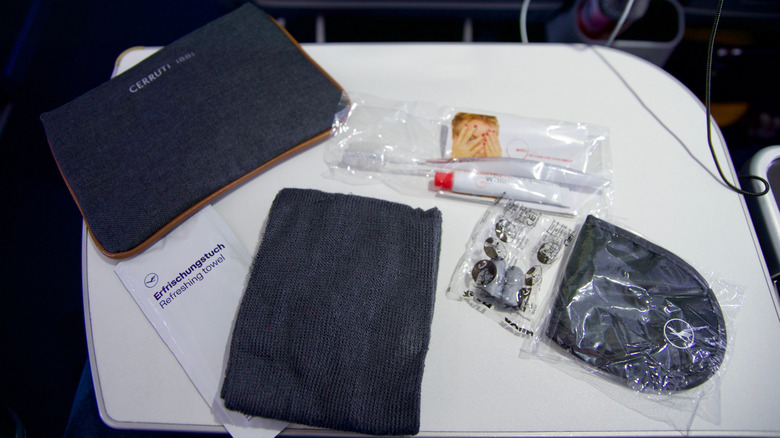
Amenity kits were once the hallmark of luxury air travel. Think eye masks, cozy socks, neatly packed toiletries, and other small trinkets waiting at a business- or first-class seat. Today, these indulgences are no longer reserved just for high-end travelers. Many airlines committed to premium service across the board extend these amenities even to economy passengers. Though these amenity kits may not be too elaborate, they are a highly welcome comfort upgrade to the typical economy experience.
Emirates does a great job of it, offering economy passengers collectible kits that are as interesting on the outside as they are on the inside. Within colorful nature-themed bags, flyers are treated to everything from eye shades to dental items, and earplugs; premium economy takes it up a notch with branded skin care products. Other airlines like Etihad and Qantas are similarly thoughtful when it comes to tending to the essential comforts of their economy passengers. This service typically depends on flight duration and is most common on long-haul routes rather than short hops. That said, don't hesitate to request an amenity you need. Even without a full kit, you might still score individual essentials.
Seat selection
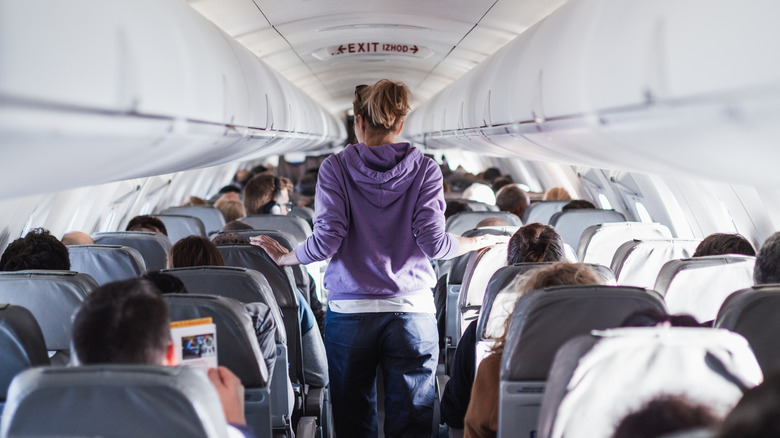
Many flyers are perfectly happy with the auto seat assignment feature airlines offer. They may see an advantage in slipping easily into whichever seat they get or plan to plug in earphones and tune the rest out — or they simply could not care less. But for a lot of travelers, the seat they get can end up defining their entire flying experience. The window seat, for instance, is the best option for germaphobic travelers or even flyers who want to get office work done without disturbance. Many others might prefer the aisle seat for ease of movement or relatively better legroom.
Though it's usually a restricted perk bound by multiple factors — such as loyalty status or airline policy — free seat selection is available in quite a few international economy flights. Singapore Airlines, for instance, lets budget passengers choose seats for free in advance, albeit under only some economy fare buckets. Emirates takes a similar approach, allowing complimentary seat selection with only Economy Flex and Flex Plus tickets. If it feels like a steeply priced benefit, you can try the so-called "check-in chicken" travel hack, in which holding off on check-in until the last minute can occasionally land a premium, unoccupied seat for free.
Activity books for kids
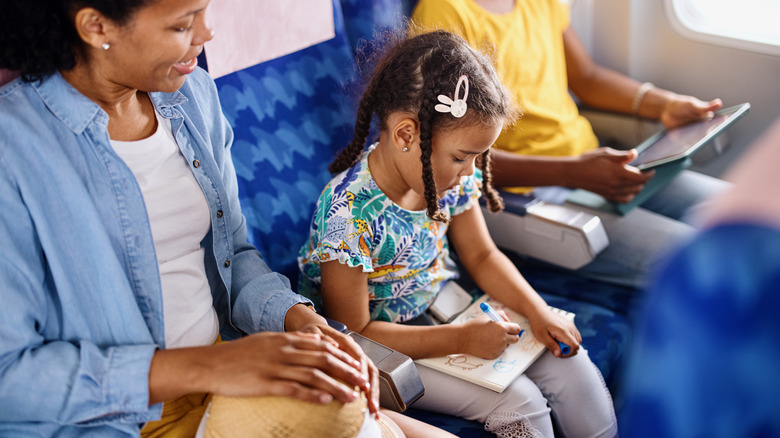
Few things are more exhausting than dealing with restless children on a flight — for both parents and fellow passengers. And for all the flak noisy kids and their caregivers get, it's hard to pin blame on anyone; flying, especially long-haul flights, can test even the most seasoned traveler's patience. It doesn't help that a common mistake parents make when flying with kids is trying to keep them stimulated with too many things at once. More airlines are catching on to the predicament and have begun introducing a range of in-flight entertainment to keep younger flyers engaged.
From activity books to kiddie magazines, children have several options to choose from when flying with carriers like Emirates or United Airlines. "It's a nice way to serve [kids], to give them something to do ... Families really appreciate it," United's brand identity lead Mark Muren told The Washington Post, which also conducted a fun experiment by having children test in-flight toys. Though Air France's goodie box emerged as the clear winner, with its puzzles and wooden toys proving popular, activity kits from other international carriers, such as Singapore Airlines and Qantas, were also approved by the publication's young judges.
Pillows and blankets
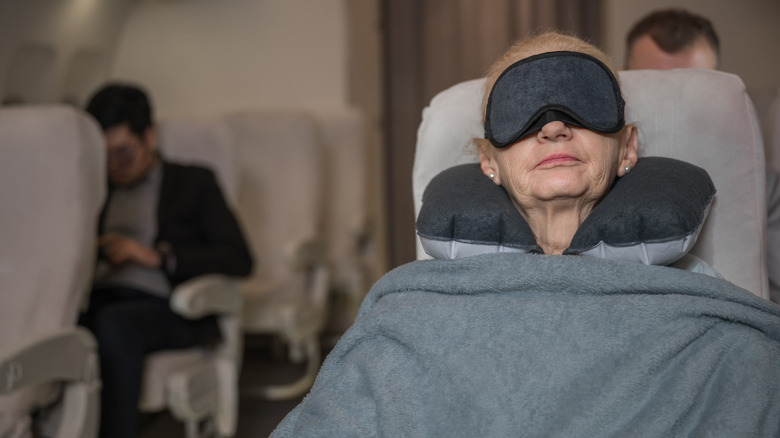
Flying economy does not mean giving up sleep comfort — in fact, there are many sleep hacks to get you through a long-haul flight. Realizing that these amenities shouldn't just be the domain of business- or first-class passengers, many airlines offer budget flyers free blankets and pillows so they can settle into naptime with greater ease. It's a small detail that goes a long way, especially on intercontinental or overnight flights where getting some shuteye becomes essential. Air Canada is particular about it on its international routes, offering its passengers sanitized pillows and blankets, as well as an adjustable headrest on each seat.
While there is a range of neck pillows on the market, lugging one along on travels can quickly become cumbersome. That is where airlines that fill the gap with in-flight comfort gain an edge and goodwill from customers. Emirates fulfils this service well, adding a nice touch to their economy bedding setup by offering blankets made from recycled bottles. Thai Airways also provides complimentary sleep essentials to long-haul flyers (who can also request cozy extras like sleep masks).
The full can of soda
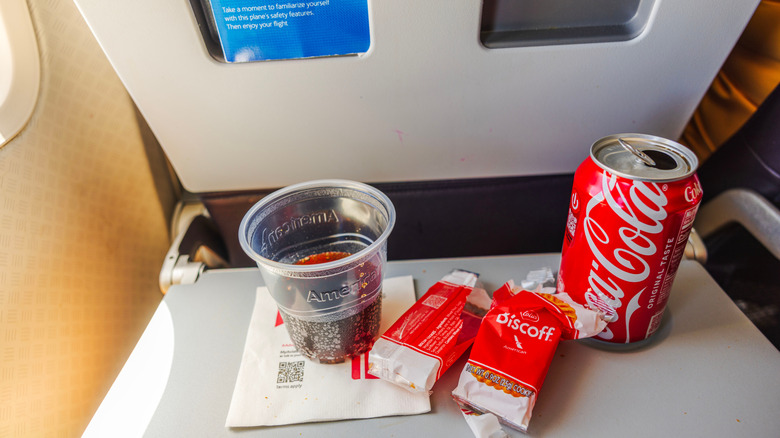
That small plastic cup of soda handed mid-flight can feel underwhelming, especially on a long journey. What many passengers don't know is that in many cases, you can actually ask for the rest of the can you were served from. Though it may feel like a forbidden request, since it is not common practice, it does not break airline rules or count as bad in-flight behavior. Carriers like United, for instance, have been known to hand over full cans during beverage service when supplies are adequately available.
It's a lesser-known travel hack that also exists across other airline brands, which may be more than happy to oblige when a passenger makes a polite request for the whole can instead of just a cup. Remember, the key words are "polite request." Timing can also make or break the deal. Flight attendants hate being interrupted during their food and beverage service, and often have more flexibility once they have accounted for all passengers on board. So requesting your can after they are through with their routine is a good idea. Alternatively, you can also try your luck right before the attendant pours your soda into a cup; it will make their job easier and cut down on unnecessary waste.
Headphones
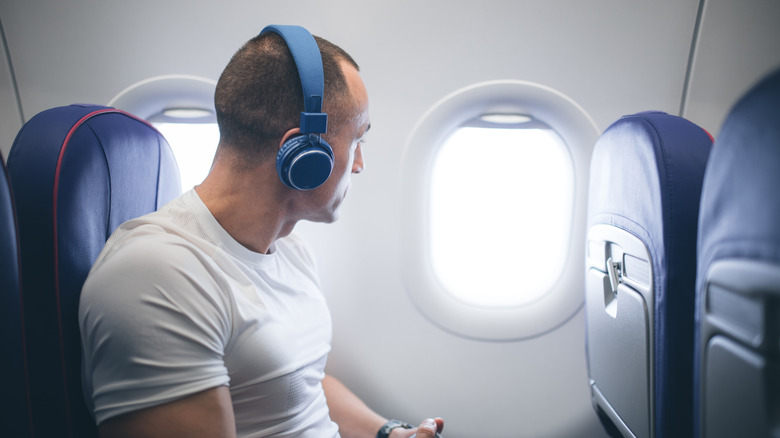
The importance of a good set of headphones on a flight cannot be overstated. A handy tool for tuning out noisy co-passengers or simply watching a movie in peace, they can make all the difference between an uncomfortable air journey and a pleasant one. And for people who aren't carrying their own, many airlines go the extra mile and hand them out for free. Air Canada, for instance, provides complimentary headphones in international economy, and allows passengers to keep them after the flight. Pair this with their wide-ranging in-flight entertainment offering, and you're all set.
That said, even as airlines warm up to the idea of including the perk on economy tickets, free headphones remain a rarity in budget cabins. Some fill the gap with basic services, such as United Airlines, that offer earbuds to economy passengers free of charge. While they may not deliver the same level of comfort or sound quality, they still do get the job done. That said, carrying your own wired earphones while flying can be a good idea, since many aircraft still have auxiliary jacks on their systems.
Alcohol and other beverages
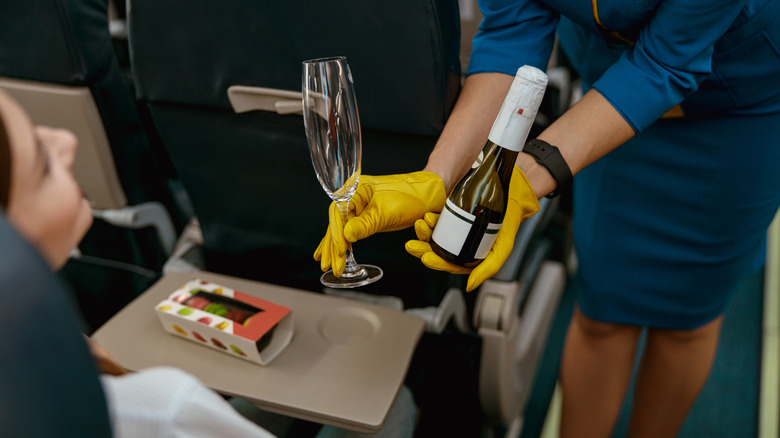
Free alcohol and economy class haven't historically been synonymous. Except, on some airlines today, they are. In a change to the dated policy of reserving the indulgence for passengers flying business- or first-class, many airlines offer complimentary spirits as part of the economy experience. Air Canada is one of the most generous carriers, treating economy flyers to free beer and wine on all its routes and aircraft; they also have non-alcoholic beer and health shots for the teetotalers.
For most other airlines, this complimentary service depends on the route and flight duration. For instance, though non-alcoholic beverages like soda, juice, coffee, and tea come free as part of the onboard economy experience across Delta and United Airlines, free beer and wine are available only on certain international routes. Japan Airlines has a similar arrangement, offering a variety of spirits — including gin and sake — on select flights. While the idea of making the most of free-flowing drinks on an economy ticket might seem tempting, do think twice before ordering these common beverages midair — especially tap water.
Sanitizer wipes
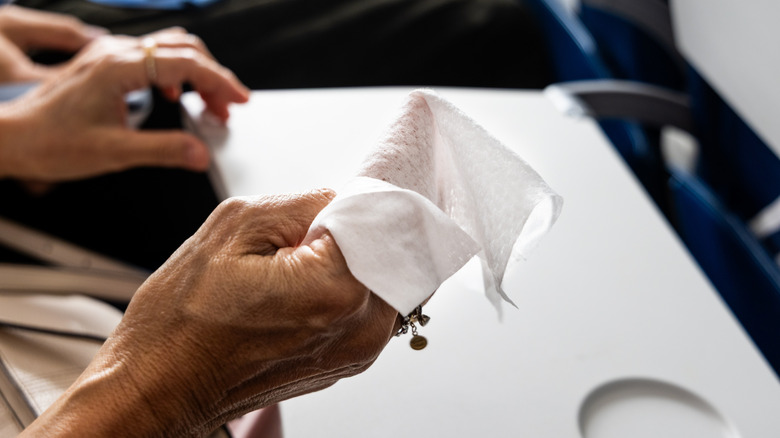
Airplanes are notorious for having some of the dirtiest surfaces. From tray tables to armrests and seat belts, the degree of grime and pathogens these seemingly innocuous-looking parts of your seat accumulate is unimaginable. It is never a bad idea to wipe these surfaces down before touching them or at least sanitize hands afterward. In a post-COVID-19 world, such hygiene practices have become the norm for many passengers, but if you ever find yourself without a sanitizer on a plane, many airlines offer free sanitizer wipes.
These are usually available to passengers across the board, including those in economy. The catch is, in some cases, you might have to manually request a wipe instead of automatically expecting one. Sanitizer wipes available on United Airlines aircraft are a longtime flyer favorite, with users on travel forums like Reddit raving about their incomparable quality. While the detail is appreciated, United still recommends that passengers, especially those with allergies, carry their own sanitizer.
Cockpit tours
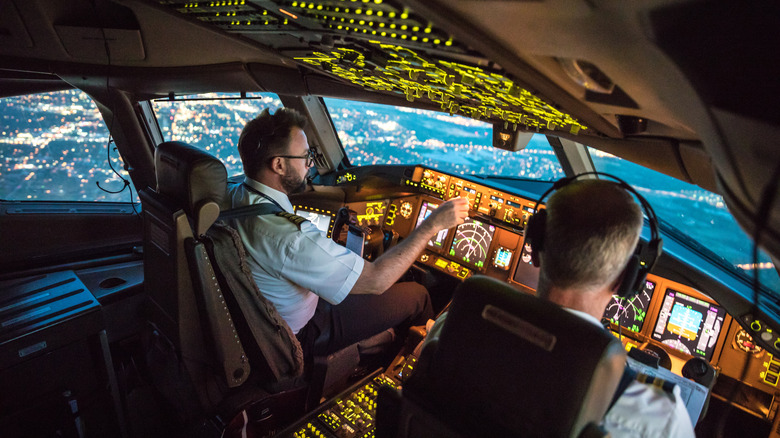
Cockpit tours may seem like a bygone, old-school feature of air travel. Few passengers know that, despite tight travel security regulations, the perk still exists across many airlines. Many pilots are still happy to welcome aviation enthusiasts — both young and old — into the cockpit and indulge their curiosity by examining the glowing panels and switches that run the aircraft. Delta and American Airlines have been known to extend this friendly service to passengers, while Emirates also occasionally allows it as well.
While cockpit visits mid-flight are off the table, the opportunity of taking a (supervised) peek into the captain's den is usually highest before takeoff and after the flight has landed. The captain will have the final say in whether passengers can enter the cockpit, so it is important to be judicious in the request. Make a polite request to the flight crew when operations aren't busy, and the pilot actually has a free moment to show you around. "When you begin to sense the pilots are getting busy, politely offer to leave and go back to your seat," Captain Richard Levy, who flew for a major airline for over 40 years, told Islands. Traveling with a child can also increase the chances of receiving an invitation.
Basic medical supplies
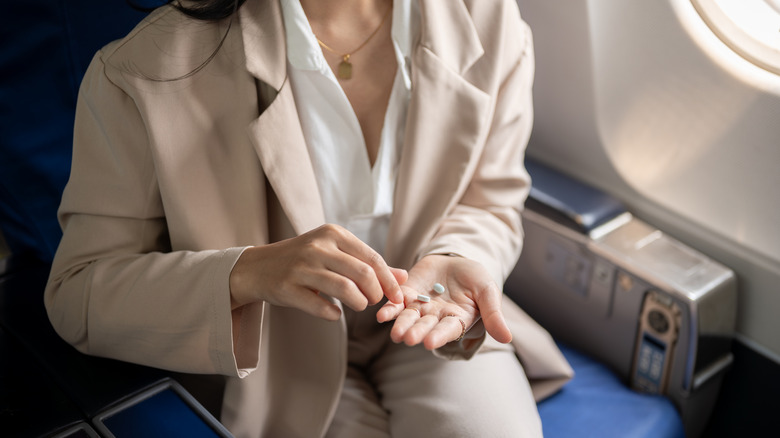
Commercial flights are not just stocked with snacks and drinks. Many also carry medical supplies that can be used to tend to minor illnesses and basic emergencies midflight. And if such a situation arises, it would not matter if you're flying business or economy. Regardless of cabin class, passengers are entitled to medical care on flights, as the Federal Aviation Administration (FAA) mandates certain aircraft to carry first aid kits, emergency kits, and defibrillators (via Centers for Disease Control and Prevention).
So if you find that a headache is building or your allergies are acting up, do not hesitate to inform the cabin crew and inquire about the medicines they have on board. As confirmed to CBS News, carriers such as Alaska Airlines, American Airlines, and Delta carry a pretty robust stock of medical supplies, which sometimes even go beyond FAA requirements. That said, it is always a good idea to travel with personal medical supplies if a passenger has a known condition or is prone to specific health issues. International carriers like Japan Airlines will also have you covered in mild cases with their store of pain relievers, motion sickness medications, and even thoughtful extras like bamboo foot massagers.
Methodology
Putting together this list of economy freebies first meant looking past long-held assumptions about flying on a low-fare ticket. Economy cabins function differently in modern aviation, offering passengers a host of small comforts and thoughtful upgrades that go beyond the bare minimum. The reporting began by reviewing the fine print and policies airlines publish on their websites and comparing pages detailing onboard services, fare buckets, and amenities across major U.S. and international carriers. This helped confirm what airlines say is included with an economy ticket and which factors affect these perks.
Next, to see how the freebies appear in practice, the reporting turned to firsthand accounts shared on user-first forums such as Reddit, where flyers swap stories about what is genuinely available in economy and offer tried-and-tested tips on how to get them. We also leaned on reporting and research by trusted publications like The Washington Post and CBS News. Going back to our own past interviews with aviation experts further added context on how decisions are actually made in the industry. Sure, not every perk is guaranteed — and conditions, including route length, aircraft type, and crew discretion, can affect availability — but together, they show how often economy passengers have way more access than they realize.