
America's 10 Lakes That Are Best-Kept Secrets From Tourists
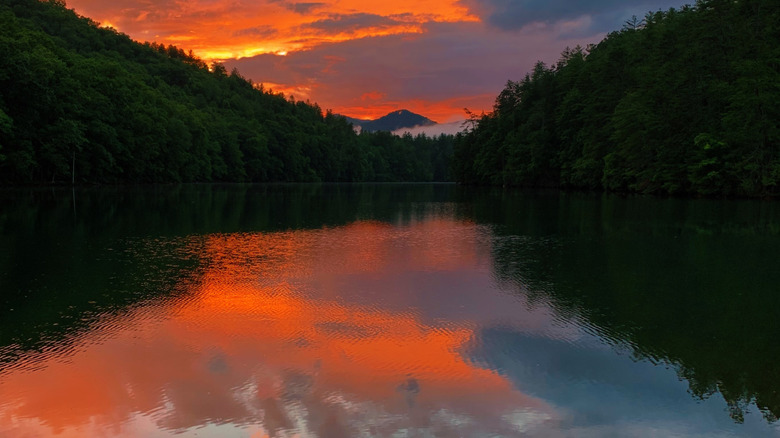
A stunning lake is a real showstopper. Lake Tahoe pulls in around 15 million visitors annually, while Lake Mead draws close to 8 million, and Lake Michigan's shoreline fills with cooler-dragging tourists from Chicago to Traverse City the moment temperatures start to rise. The U.S. has some extraordinary lakes, but the most well-known ones have a problem: Crowds. The masses tend to arrive early, stay late, and pretty much bring everything with them, from Jet Ski noise to frustrating bumper-to-bumper parking. By midsummer, they can feel less like pristine nature and more like visiting a theme park with nice scenery.
However, America is vast. For every Tahoe, there are a dozen more that you may never even have heard of. Some are tucked deep inside national forests and wilderness areas; some are framed by majestic mountain ranges that most tourists never get near. Some are so pristine that they rival natural spring water for purity. There are hidden-gem lakes in America that have inspired great writers and shaped communities; you might even discover one or two that carry historic significance you never would have suspected. Here is a very small number of the countless lakes across the country that we consider to be among the U.S.'s best-kept secrets.
Lake Jocassee, South Carolina
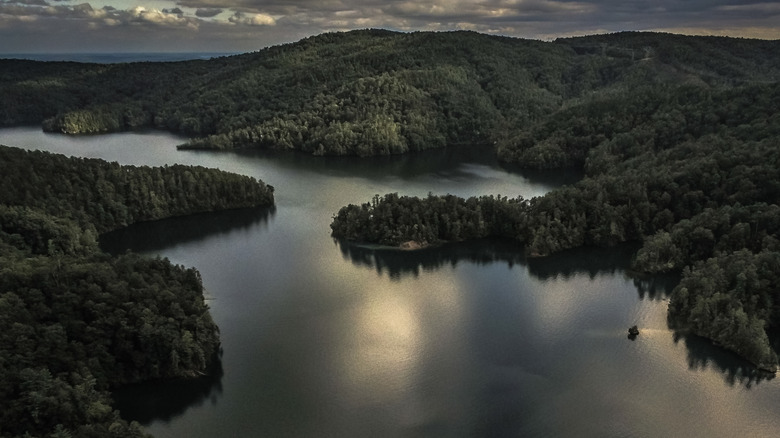
The Cherokee called this place Jocassee, or "Place of the Lost One," and they likely didn't know just how fitting that name would eventually become. In the 1960s, Duke Energy began buying up Jocassee Valley through a subsidiary company to build a dam, and, according to local accounts, it did so without revealing a word of its plans to the families whose communities sat directly in its path. By 1973, Jocassee Valley was underwater — along with everything in it. Homes, schools, businesses, and even the Mount Camel Baptist Cemetery, made famous by the 1972 movie "Deliverance," were all submerged.
However, what replaced the valley is extraordinary. The 7,500-acre Lake Jocassee is so crystal-clear and picturesque that it's closer to the Bahamas than it is to the South Carolina foothills. Visibility stretches beyond 50 feet in places, but it's not just the transparency that attracts scuba divers. What's below the surface is unlike anywhere else. It's a lost world of sunken buildings standing on the lakebed, preserved in cold, clear turquoise water. The cemetery reveals headstones with names still legible, and a teak Chinese junk boat is another of the many relics lying undisturbed.
Above the surface, half a dozen waterfalls pour into Jocassee Lake, and with 75 miles of forested shoreline, you can explore by boat or kayak for days and never get bored. But don't forget your rod and reel; the fishing draws serious anglers chasing trout and bass. Spring is the most rewarding visit. The rare Oconee Bell blooms at this time, while peregrine falcons nest along the cliffs above. The quiet mountain town of Salem is the gateway, with Devils Fork State Park offering villas and campgrounds by the water.
Clear Lake, Oregon
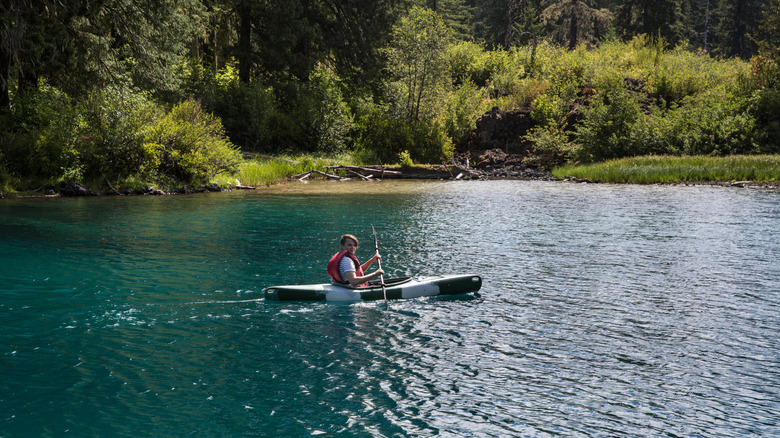
Hidden inside Willamette National Forest is a lake born of geological violence that took place around 3,000 years ago. A lava flow from nearby Sand Mountain blocked the McKenzie River, creating a natural dam and swallowing the forest that lined its banks. But the trees never rotted. They're still down there, standing upright in the cold, clear water, unchanged for those three long millennia. It's fed by snowmelt drawn through those thousands of years of volcanic rock, eventually emerging through underground springs so cold that the lake never warms. That is the story of Clear Lake.
Motorboats are not permitted on Clear Lake. It sits in perpetual quiet, a pristine, eye-catching refuge surrounded by mountains. Below the surface, volcanic silt blankets the lakebed like virgin snow, while masses of mist hover over craters so odd that locals have seen fit to name them "witches' cauldrons." Scattered in the depths lie centuries-old shipwrecks, another draw for scuba divers who are attracted to these waters of remarkable clarity.
Clear Lake Resort is the only lodge on these shores. It offers cabins and camping, as well as rowboats and kayaks for rent. The Clear Lake Loop is an easy 5-mile trail that winds through lava fields to the Great Spring, a vivid pool where you can see tree trunks from the submerged forest on the bottom. If you want to base yourself in the area for a few days with access to more amenities, McKenzie Bridge, a small mountain town 21 miles south, and Eugene, Oregon's quintessential university town 73 miles west, are your best choices.
Hanging Lake, Colorado
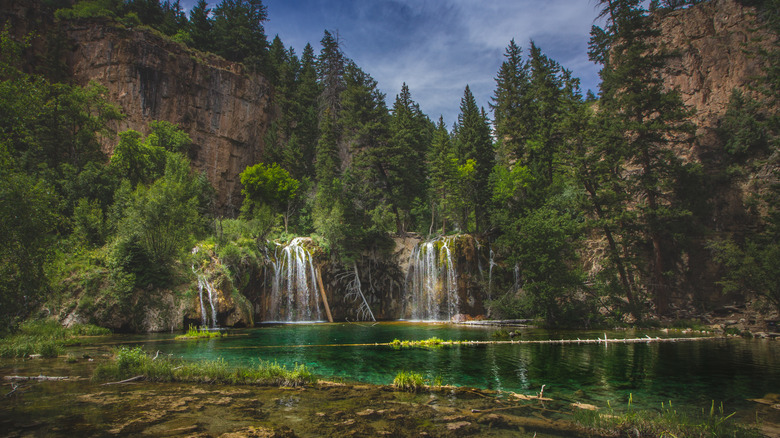
A thousand feet above Glenwood Canyon is a lake impossibly suspended in the rock face. Three silvery curtains of water spill side by side into its startlingly clear waters, so transparent that the travertine bottom is visible from the surface. Swimming is not permitted here, nor is fishing — and you'll need to leave your pets at home. This is a place for standing still, breathing in deeply, and letting nature work its magic. However, as recently as 2020, a devastating wildfire tore through the area. The Grizzly Creek Fire triggered debris flows that buried the trail and forced an eleven-month closure. That trail leading to those ethereal green waters has since reopened, and despite being one of Colorado's best-kept secrets, Hanging Lake is quietly becoming a bucket-list destination for those in the know.
The path follows Dead Horse Creek, where picture-perfect red-rock canyon views open up along the way, but you'll need to scramble through fields of boulders before the final push up to the boardwalk that surrounds the lake's fragile edge. Just beyond, Spouting Rock forces water through gaps in the canyon wall, creating another white ribbon of water that either thunders at full force or slows to barely a trickle depending on the season. It can get busy in summer, and parking may be gone by early morning. Come in the quieter fall or spring months, but don't forget to purchase the $12 permit. Glenwood Springs is the nearest base, where Iron Mountain Hot Springs waits as one of the best winter hot springs in the country, offering weary hikers a warming winter season soak after the descent.
Jenny Lake, Wyoming
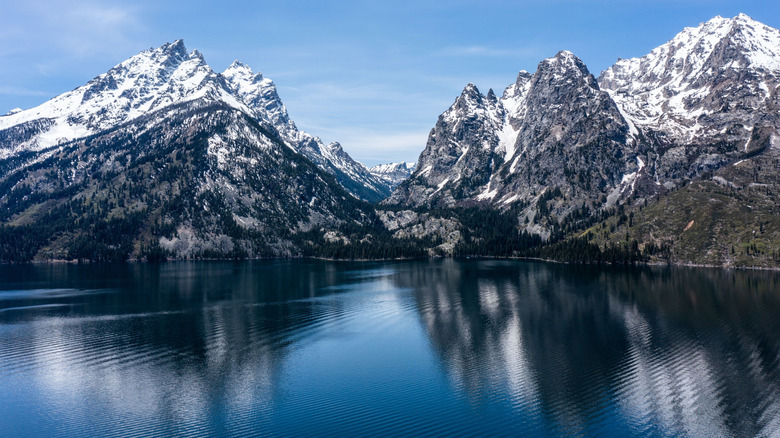
A Shoshone woman who went by her English name, Jenny is said to have helped guide the first federally backed expedition through this part of Wyoming over 150 years ago. In recognition, a glacially carved bowl of clear, ice-cold water was named in her honor. Jenny Lake in Grand Teton National Park is 250 feet deep, nearly 1,200 acres in size, and fed entirely by snowmelt. The impossibly clear water might look enticing for a refreshing dip, but the temperature rarely climbs above 50 degrees Fahrenheit, making swimming here entirely a matter of choice rather than a must-do.
But this ethereal lake with mountain views might be the most beautiful spot in Wyoming. On the western shore, the Teton Range rises from the pebble-lined water's edge. The Cathedral Group, a jagged, snow-streaked range including Teewinot, Grand Teton, and Mount Owen, is mirrored on the deep blue surface. From the eastern shore, the view opens back across the broad glacial expanse of Jackson Hole. Few lakes frame their surroundings quite like Jenny Lake. Shuttle boats cross several times every hour from around May to September, helping you access spectacular sights like the 100-foot Hidden Falls and the trail to Inspiration Point, an overlook 420 feet above the water with incredible views across the lake, valley, and canyon.
Hikers can push deeper into Cascade Canyon or loop the entire 7.1 miles around the lake. You might catch sight of elk grazing nearby, and both black and grizzly bears are regularly spotted in the area. But Teton Park Road closes from November through April, and Grand Teton National Park sees peak numbers in July and August. Come in spring or fall, when parking is easier, and boat lines are shorter.
Lake Chelan, Washington
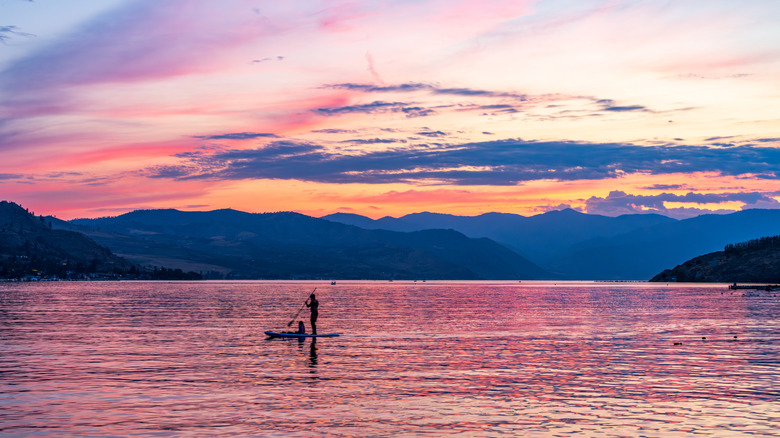
At 1,486 feet, Lake Chelan is America's third-deepest lake. Its floor is carved so far below sea level that the canyon it sits in is believed to be the deepest in all of North America. Lake Chelan is narrow, barely a mile wide in places, yet it stretches for 55 miles into the heart of Washington's Cascade Range. That shape may be why it feels like it exists in two entirely different worlds. At the southeastern end, you'll find the lake's namesake town, Chelan, and Manson, a sunny escape of wine, casinos, and orchards that draws in crowds of summer tourists to its beaches and waterfront.
However, make your way up the long, snake-like lake to the northwest, and it's an entirely different story. There you'll find the remote community of Stehekin, sitting at the head. No road connects it to the outside world, and the only way to get there is by boat or floatplane. It's much quieter, with a more off-the-beaten-path vibe, but there's still plenty to do. You can ride horseback through mountain trails to alpine lakes, kayak the upper estuary where you'll find native pictographs, go fly-fishing, or hike trails that push deep into the backcountry of North Cascades National Park.
Despite fewer visitors, there are still plenty of places to stay. There's the North Cascades Lodge or the Stehekin Valley Ranch, and there are a couple of low-key campgrounds lakeside. The Lake Chelan Boat Company runs passenger ferries with same-day roundtrips or overnight tickets, or you can charter your own vessel if you'd rather plot the course yourself.
Lake Lure, North Carolina
Many scenes from "Dirty Dancing," starring Patrick Swayze and Jennifer Grey, were shot around Lake Lure, and its namesake town in the Blue Ridge Mountains has never quite let go of it. It plays host to an annual festival every September in honor of that 1987 coming-of-age teen drama. However, it wasn't the only Hollywood production to be charmed by this irresistible corner of North Carolina; "Last of the Mohicans" was filmed here, too.
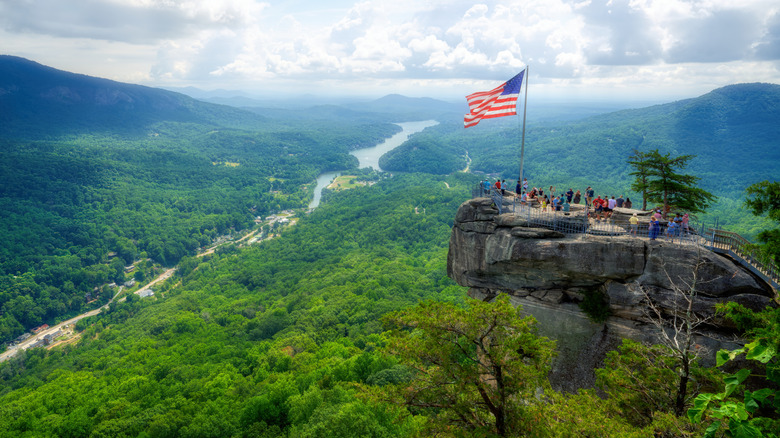
Nestled in Hickory Nut Gorge and hemmed in by granite cliffs and mountain slopes carpeted in forest, Lake Lure spreads across 720 acres with 27 miles of shoreline. Chimney Rock rises dramatically above, an outcrop towering over the green valley and lake. It rewards the climb up there (or the elevator ride through the mountain) with stunning views across the gorge for miles. For something gentler, Flowering Bridge just outside Chimney Rock Village displays over 2,500 species of bright flowers and plants and serves as a natural habitat for monarch butterflies between May and July.
The lake itself is beautiful. At dusk, soft golden light spills across its surface, turning it to liquid rose gold. Hazy beams of light filter through the clouds above, silhouetting the layered mountains beyond. On calm days, the tree-lined shores perfectly frame the water in postcard-perfect stillness. However, if it's only "Dirty Dancing" you care for, guided boat tours will take you on a fan-service sweep of filming locations from April through October — and if you're a true fan, you might want to find out which room Patrick Swayze stayed at in the Lake Lure Inn and Spa.
Lake Santeetlah, North Carolina
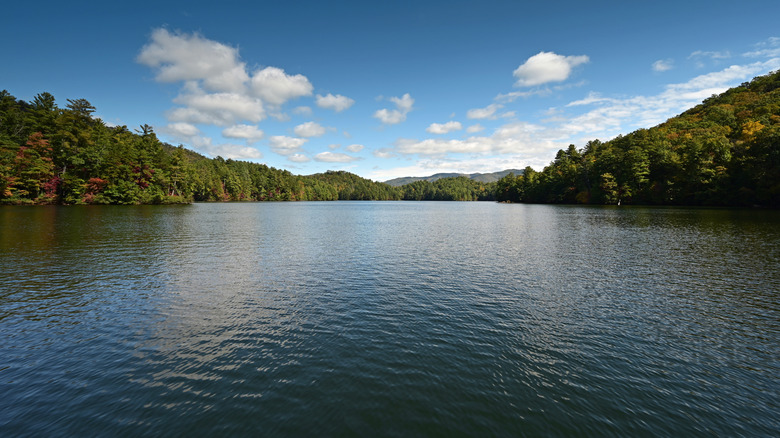
This secluded lake is nestled in North Carolina's Smoky Mountains, and with just 38 residents, the namesake town of Lake Santeetlah is barely a hamlet. This near-forgotten pocket lies deep within the Nantahala National Forest. The Appalachian Mountains rise on all sides and feed the pristine waters of Lake Santeetlah below that span 2,800 acres across 76 miles of shore. A handful of cottages and lodges sit quietly along the water's edge, or you can camp or fish at Cheoah Point Recreation Area.
Wildlife lovers will be in their element here. Along the shore, you might spot bald eagles teaching their hatchlings to fly or even see the occasional bear or deer swimming across the open water. Otters occasionally surface to say hello to kayakers, and wild boars move through the surrounding forest. Snowbird and Santeetlah creeks flow into the lake and draw anglers in search of wild trout. You can also fish on Lake Santeetlah itself with outfitters offering boat rentals, while kayaks are also available if you simply want to paddle and take in the scenery.
Nearby, the Joyce Kilmer Memorial Forest stands tall in humble silence. Yellow poplars tower up to 100 feet into the canopy and share the forest floor with more than 100 other species. In late spring, the hillsides blaze with thick clusters of fiery orange flame azaleas, while peak fall foliage turns the lake's surface into a mirror of autumnal color. May through July sees the lake getting busier when nearby Cades Cove attracts visitors to its firefly display. This natural spectacle is so sought-after that entry is by lottery only.
Ross Lake, Washington
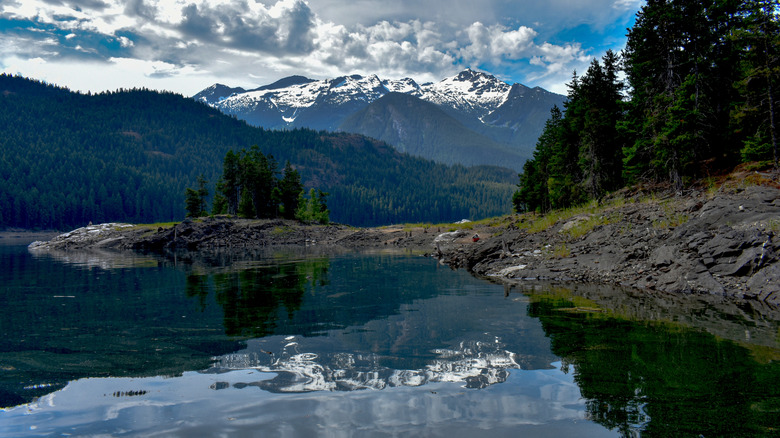
American author Jack Kerouac spent days alone on Desolation Peak, high above Ross Lake in the North Cascades of Washington. That was back in 1956, but his time there gave him the inspiration for two of his novels, "The Dharma Bums" and "Desolation Angels." It's 22 miles of vivid-blue waters that run like a snake from Diablo Lake before crossing into Canada at the far end. Thick forests cascade down the slopes of jagged, snow-capped peaks to the shoreline, and beneath the surface, the rock is made up of ancient fragments of ocean floor and distant continents collected over millions of years. In 1949, it was all impounded together into the reservoir you see today when Ross Dam was built.
The southern end of the lake has no road leading to it. You'll need to launch a canoe or kayak from Diablo Lake, then carry the vessel around Ross Dam on a mile-long gravel road or use Ross Lake Resort's portage service before paddling out onto the lake and letting the vast blue expanse reveal itself. Hiking is also popular in the area. The East Bank Trail runs for around 30 miles along the shore — don't go too far, or you'll end up in Canada. You'll pass by the site of an 1880s gold rush along Ruby Creek, as well as an old trapper's cabin preserved deep in a remote valley. You can stop for a cool dip whenever you please or cast a line out when the feet get tired. Camping under the stars in any of the many campsites along the trail is recommended, but Ross Lake Resort offers wildly cozy lodges on the water from June through October.
Waldo Lake, Oregon
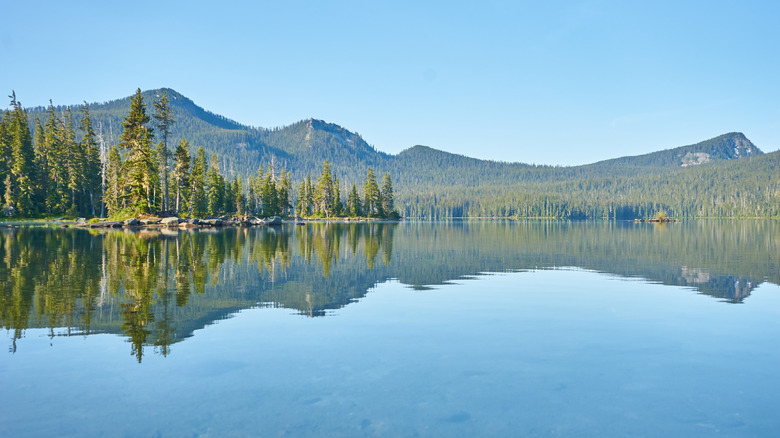
Hidden in the Oregon mountains is Waldo Lake, one of the world's clearest lakes. It's fed by nothing but rainfall and snowmelt without even a stream flowing in to disturb the pristine balance. Environmental groups fought for years to ensure this place remained unspoiled, and the result is a ban on gas-powered motors and floatplanes that leaves Waldo Lake in near-perfect silence — all you'll hear are the sounds of wind on water and the creak of the occasional paddle.
The water is a vivid indigo blue and is so extraordinarily clear that visibility can reach up to 100 feet. It covers around 6,700 acres, plunges into the depths for 420 feet, and sits high up in the Willamette National Forest at 5,414 feet. You'll see Diamond Peak shimmering across the water to the south, and you may even get the occasional view of the Three Sisters to the north. Kayakers, canoeists, and sailors find the open water and steady winds hard to resist, but hikers have plenty to entertain them, too. A 21-mile loop circles the entire shoreline, while 170 miles of further trails push into the wilderness.
For anglers, Waldo Lake is home to kokanee salmon, eastern brook trout, and rainbow trout, and there are lots of campsites on the east shore where you can cook your catch over a campfire by the water's edge. Mid-August is the start of the best window to visit. Just forget about June and July, unless you wish to encounter the area's notorious mosquitoes.
Fontana Lake, North Carolina
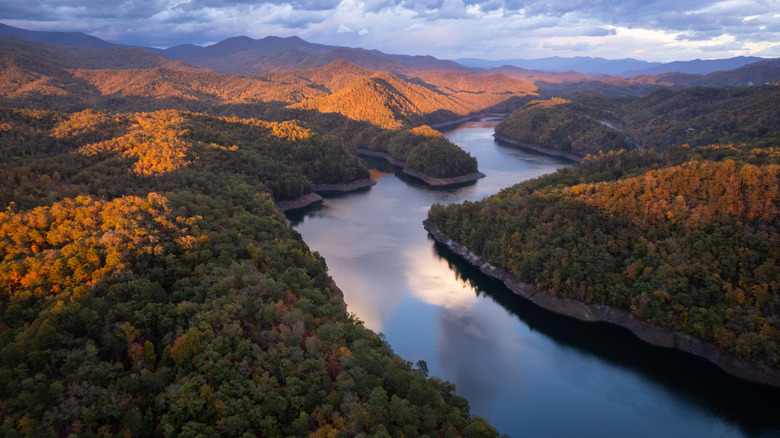
The Great Smoky Mountains rise on all sides, doing their best to hide the big secret that Fontana Lake carries. In 1945, Fontana Dam was constructed to supply electricity to Oak Ridge, Tennessee, where a certain J. Robert Oppenheimer and his team were quietly developing the atomic bomb. A construction town of 5,000 workers sprang up almost overnight, and nowadays, that town is known as Fontana Village Resort — though the secret it now holds is somewhat less classified.
Almost all of the surrounding shoreline is in the possession of the National Park Service or U.S. Forest Service — keeping things an entirely different kind of wild. The fishing is extraordinary. Fontana has produced record muskie and walleye, and it's also considered one of America's finest lakes for smallmouth bass. Additionally, Fontana Dam sits on the route of the Appalachian Trail, which allows you to stand on one of the country's most impressive dams while crossing the world's most famous long-distance trail.
For mountain bikers, the Tsali Recreation Area offers a 42-mile trail network that is one of the best in America. It also draws in hikers, as well as trail runners and horse riders. When it's time to cool off, the Finger Lake Day Use Area is a cut-off cove where powerboats are banned. It's a calm, family-friendly spot perfect for swimming, and it's open from April through October, the prime time for visiting Fontana Lake.
Methodology
To find lesser-known lakes that could be considered secrets, we scoured through sources like Lonely Planet and Fodor's Travel, as well as outdoor outlets like Outside Online. There were plenty of contenders for our list of hidden-gem lakes, so we focused on those that had activities and views worth making the trip for. We excluded any that could be considered too difficult to reach, and natural beauty was, of course, a big factor.