
America's 10 Beaches That Are Best-Kept Secrets From Tourists
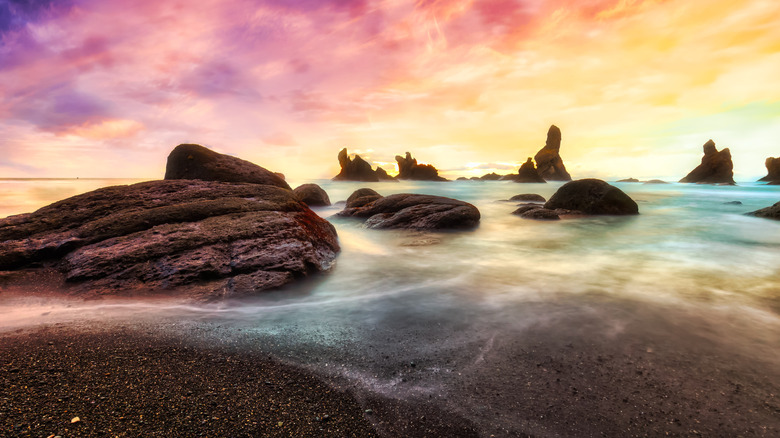
The most famous beaches in America need little introduction: Waikiki's turquoise waters and swaying palms, Santa Monica's sun-bleached boardwalk, and South Beach's Art Deco backdrop and endless white sand are all iconic for good reason. The seaside restaurants and bars, the beautiful people, those saturated sunsets — America's best beaches offer it all. However, they can sometimes feel less like an escape and more like a music festival with no headline act, especially in the summer. Trying to relax when you're towel to towel, enduring long queues for parking, and the nonstop thump of Bluetooth speakers make it feel like everyone came up with the same idea on the same weekend you did.
However, there are thousands of other beaches in the U.S. Beaches where you can hear the water crashing on the shore. Beaches where seals haul out on rocks without paying you much attention. Beaches where eagles circle overhead. And, on a lucky day, beaches where you can witness whales breaking the surface out on the horizon. These are America's lesser-known beaches, and they might ask something of you first before they reveal their secrets. It could be a choppy ferry journey or a steep, muddy trail, a tide-timed crossing, or even a rope-assisted descent down onto the sand. Any effort to get to them makes your arrival feel earned, and it has been easy for locals to keep these beaches secret. However, here are a handful we're letting tourists in on.
Bush Key, Dry Tortugas, Florida
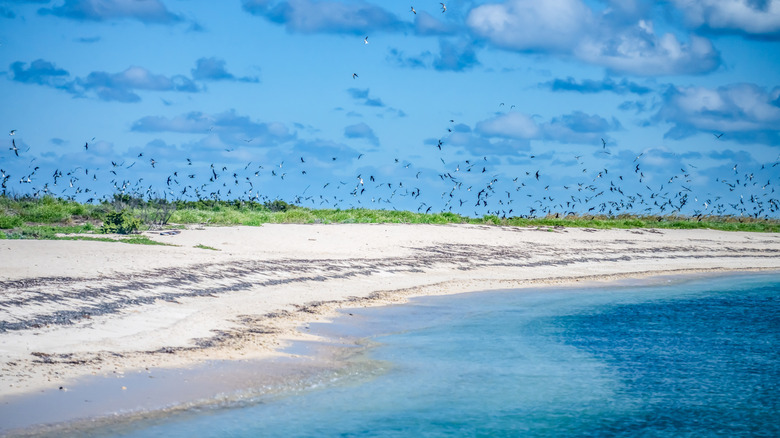
Seventy miles from Key West in the Gulf of Mexico lies Dry Tortugas National Park. It's made up of seven small islands, and most of the 85,000 tourists who make the journey there every year do so for one reason: Fort Jefferson. This colossal 19th-century military fort dominates Garden Key, the park's primary island, and very few think to go beyond it. However, the adventurous may well visit Bush Key to the east, a 16-acre subtropical island where tourist numbers are capped at 24 visitors per day. From Garden Key, you'll need to obtain a landing permit from the park ranger, then cross a natural land bridge to the island. However, it isn't always accessible, and the only other way to get there is by kayak or canoe. Unfortunately, there are no rental shops on Garden Key, so unless you bring your own, you're out of luck.
If you are fortunate enough to make it, you'll be privy to pristine, undeveloped beaches where coral-strewn shores give way to windswept dunes threaded with sea lavender and prickly pear cactus. You'll see frigatebirds circling in unhurried arcs overhead, while hermit crabs pick through the driftwood. In fact, wildlife watching is one of the primary reasons for visiting Bush Key rather than beach life. But when tens of thousands of small, black-and-white sooty terns and around 4,500 brown noddies descend to nest from February through September, the island closes. Therefore, the visitor window is from October 15 through January 15.
Kauapea Beach (Secret Beach), Kauai, Hawaii
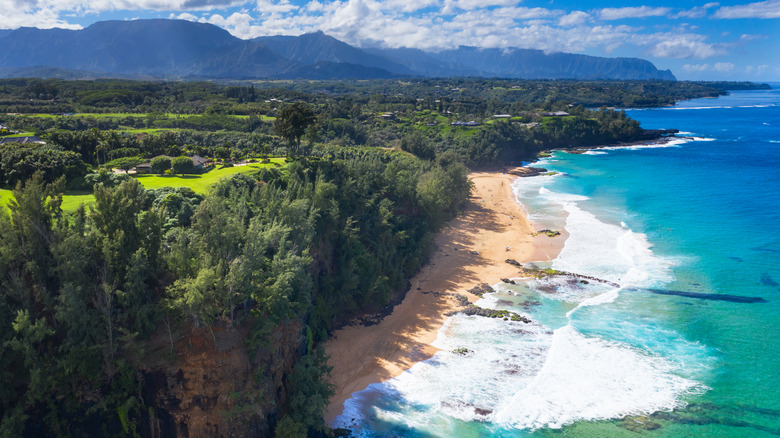
Most visitors to Kaua'i find themselves on Poipu Beach or Hanalei Bay — a situation Kauapea Beach is perfectly happy with. Locals call it Secret Beach, or simply "Secrets" (which will help you to sound like one of them). There is very little to announce its presence, but you'll find it on the North Shore when you turn off Kuhio Highway onto Kalihiwai Road and take the first dirt track on the right (Secret Beach Road). You'll need to vacate your car there and descend a steep trail through a canopy of wild plum trees. It's a short descent, maybe ten or fifteen minutes at most, but the rooted path can be hazardous, especially after rainfall.
Kauapea Beach is a half-mile-long stretch of deep, golden sand that lies beneath soaring cliffs, thick with palm trees. You'll find volcanic tide pools along the shore and waterfalls trickling down from the cliff face, and off in the distance, you'll see Kīlauea Point with its lighthouse gleaming in the sun. On calm summer days, the water is a brilliant blue, and the powerful currents and shore breaks ease off just enough to make swimming safe.
Come winter, the waves are for experienced surfers only, but the dramatic scenery is still worth the effort, especially when you consider you might catch sight of humpback whales passing through offshore. Pack everything you need, as there are no facilities here, and wear sturdy shoes for the trail down. Kīlauea is close enough for amenities, but if you want luxurious seclusion, Secret Beach House is perched on the cliffs above and available for rent.
Cumberland Island National Seashore, Georgia
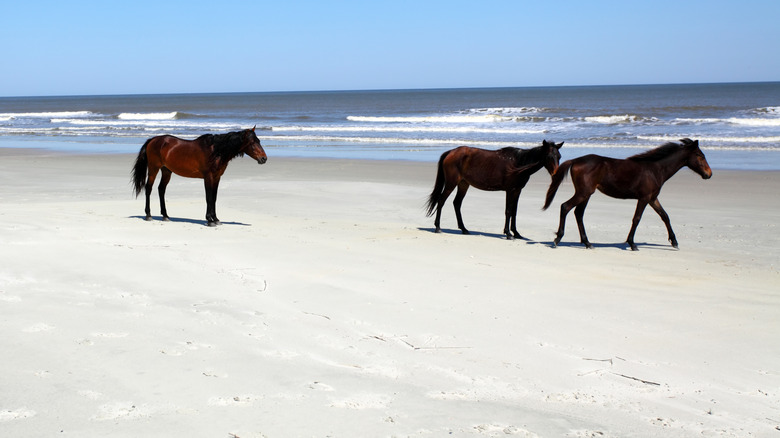
The only way you're getting to Cumberland Island is by a 45-minute ferry ride from the coastal town of St. Marys. There's no bridge or causeway to Georgia's largest barrier island, but once there, you'll find 18 miles of coastal wilderness that's among the most untouched on the Atlantic seaboard. It's known as the Cumberland Island National Seashore, and the beaches run the full length of its Atlantic coastline. The sand is firm and wide and backed by rolling dunes and ancient live oak trees heavy with Spanish moss. Wild horses roam freely, sharing the island with nesting sea turtles in summer while bobcats slip through the forest behind the dunes.
Inland, you'll find the Gilded Age ruins of the Carnegie family's Dungeness mansion standing half consumed by decades of vegetation. But the only places to sleep on the island are in a tent or at the Greyfield Inn, a Carnegie-built property from 1890 that remains the sole commercial establishment on Cumberland. Little to no food is available beyond the inn, so come prepared. Island entry is $15 (no cash), while the ferry ticket will cost up to $44 round trip for adults. From spring through fall, two ferries depart every day, but the service is reduced to five days in the winter months, which is the best time to come if you want bug-free beaches and the sand almost entirely to yourself.
Secret Beach, Brookings, Oregon
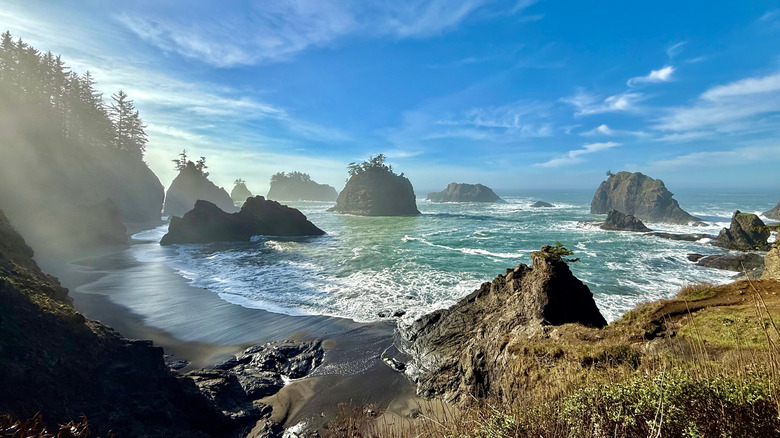
There are no signs pointing the way to Secret Beach from Highway 101, just a pullout that most drivers blow by without a second thought. It sits within the borders of the Samuel H. Boardman State Scenic Corridor, a 12-mile stretch of protected Oregon coastline, about halfway between Brookings and Gold Beach. From the pullout, two trails drop down to the shore, each around three-quarters of a mile in length and both steep and rather unforgiving when the weather is wet. The final drop even demands a rope descent to get to the sand, which is manageable for most but worth knowing before you go.
It's worth the effort in the end because this hard-to-reach beach is beautiful. It's actually made up of four beaches. The main cove stretches for around 600 feet and is ringed by dramatic sea stacks rising from the water, which give this section an enclosed feeling of isolation. Nearby, Miller Creek drops from the cliff edge above directly onto the sand, and, depending on the light, the ocean shifts through layers of green and blue. You'll catch sight of seals and otters working the surf close to shore, but come when the tide is low, when all four beaches are accessible.
There are no amenities on Secret Beach, so bring everything you need. The nearest accommodation is in Brookings or Gold Beach, but if you visit on a summer weekend, you should expect more company than you might anticipate, as locals in the know like to visit then. The warm months are the best time to come, but if you decide on winter, you can hunt for semiprecious stones and other minerals along the shore that are exposed by winter storms.
Second Beach, Olympic Peninsula, Washington
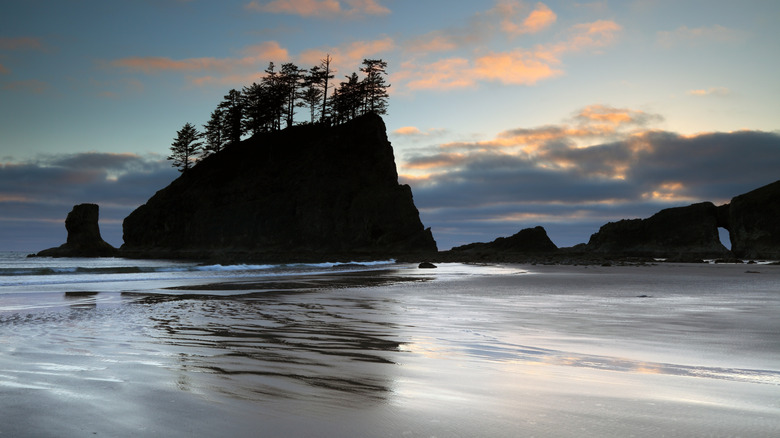
Many visitors to the Olympic Peninsula make a beeline for Forks, drawn by its charming walkable downtown and its connection to the "Twilight" Saga. Few think to press on another 12.5 miles down Highway 110 to La Push, a small community on the Quileute Reservation. This is where Second Beach awaits. It sits at the end of a three-quarter-mile trail that cuts through dense old-growth forest, dips into bogs, and descends switchback stairs before depositing you on the sand.
It's a secluded getaway with dramatic cliffs and rock formations. The beach sweeps out in a broad, gentle curve of cool-toned sand framed by dark, tree-capped sea stacks that rise like stone towers offshore. At their bases, tide pools reveal starfish and anemones, while sunsets spill crimson, violet, and molten gold reflections across the wet sand. Seals patrol the water, and bald eagles are often seen circling overhead. Visit from March through October, and you might even see gray whales and orcas passing through on their annual migrations.
You'll need an Olympic National Park Wilderness Permit for an overnight stay for $8 per person, plus a $6 reservation fee. Summer spots go quickly, so book as early as you can if that's when you want to visit. The best weather is from April through October, but take note: bear-proof containers are mandatory for food and scented items, and that means you must also leave pets at home.
Caladesi Beach, Caladesi Island State Park, Florida
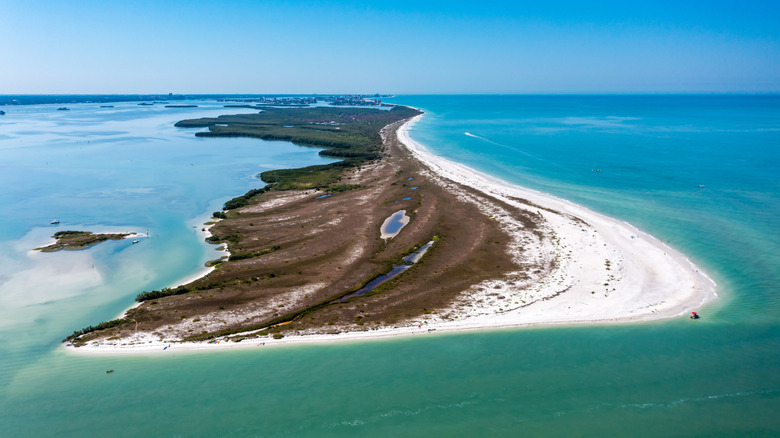
If you're in the Clearwater area, you're probably heading to Clearwater Beach. It's one of Florida's most Instagrammed stretches of sand. However, a 15-minute ferry ride from Honeymoon Island to the north takes you to Caladesi Island, one of the most underrated gems on the Gulf Coast. Despite being voted America's top beach in 2008 by the trusted coastal scientist Dr. Stephen P. Leatherman, known as Dr. Beach, the beach in Caladesi Island State Park has managed to evade development entirely and remains one of Florida's best-kept secrets.
Its three miles of powder-soft white sand are lapped by still, azure water, and a trip here, particularly on weekdays, is about as far as you can get from the Clearwater experience without having to leave Florida. Ospreys, herons, egrets, and shorebirds peck their way along the shoreline, while the sand yields conchs, whelks, the occasional sea sponge, and sand dollars. Beyond lounging around and enjoying the views, there are over three miles of kayaking channels through mangrove tunnels and a 2.5-mile nature trail that cuts through pine forest and wetland.
The park opens at 8 a.m., but the first ferry doesn't set sail until 10 a.m. And because there is no camping allowed on the island, the only people who can enjoy those first few hours early in the morning are those who have moored their private boats overnight at the marina. The ferry costs $20 for adults and $10 for kids, but no pets are allowed. Once on the beach, you'll find enough amenities to make your day a comfortable one, from beach chairs for rent on the sand to restrooms and outdoor showers.
Roque Bluffs State Park, Maine
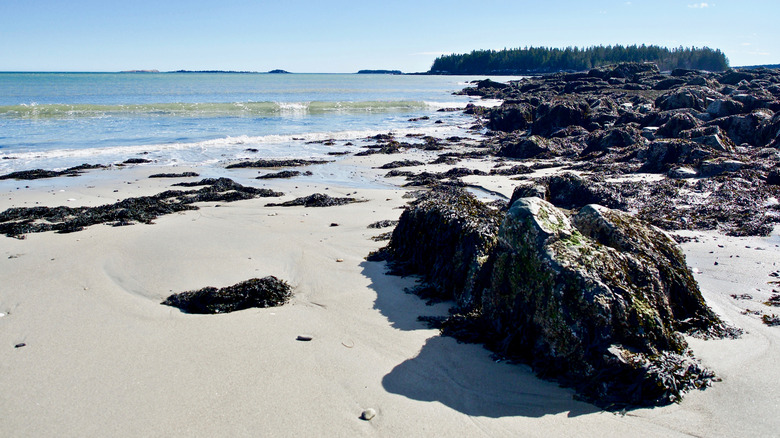
The Down East coast in Maine is a fortress of rocky shores, bold cliffs, and serene swims, but finding a sandy beach there is rare. Roque Bluffs is the exception. It's home to a gentle arc of pale, gray-beige sand, speckled with pebbles and drift, curving along Englishman Bay. You'll catch the stout Libby Island Lighthouse sunning its weathered granite blocks on the horizon, and when the tide pulls back at the northern end of the beach, it reveals an ancient bedrock etched by glacial movement. In fact, Roque Bluffs is Stop 29 on the Maine Ice Age Trail, a self-guided route through 46 geological features that were the result of the Laurentide Ice Sheet.
Englishman Bay demands a bit of respect — fog can roll in fast, and the winds can turn quickly. Directly behind the sand is Simpson Pond, a 60-acre freshwater haven with warmer and calmer dips than the unguarded bay in front. You can rent a kayak to explore or fish its trout-stocked waters, while wading birds and rare ducks peck along the shallows as bald eagles circle above. The park sits 7 miles south of the small town of Machias on Schoppee Point. It's reached via Roque Bluffs Road off Route 1, but the only hint that you're near the access point is a wall of wild roses lining the approach. The park opens on May 15 and remains open through October 1, and you can enter from 9 a.m. until it closes around sunset. Entry is $6 for non-residents, but there's no camping, and parking areas are gated at night.
Shi Shi Beach, Olympic Peninsula, Washington
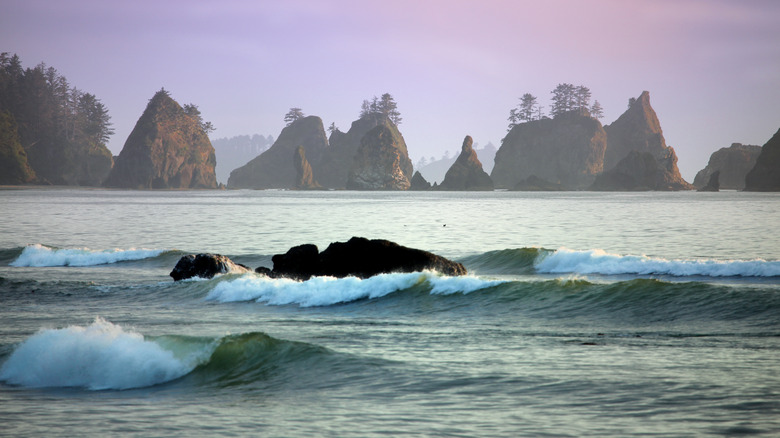
Shi Shi is pronounced "shy shy" — fitting given that it's not a beach that tries to grab your attention. Reaching it is a bit of a task, too. You need to purchase a $20 Makah Recreation Pass, which you can find at several businesses and gas stations in Neah Bay. Then, you must drive along Tsoo-Yess Beach Road, and if you're staying overnight (for which you'll need an Olympic National Park Wilderness Permit), you'll have to leave your car at the Shi Shi Beach Trail Overnight Parking (that's the name on Google in case you're wondering), setting you back another $20 (cash only). You then need to push on to the trailhead about a half-mile further. Once located, there's a 2-mile trail crossing boardwalks and bridges through Sitka spruce before turning into what is probably one of the muddiest paths on the Olympic Peninsula. The final stretch drops steeply down a 150-foot bluff before you finally reach the sand.
For most people, every muddy step and effort is worth it. Shi Shi Beach is 2 miles of wild coastline, strewn with driftwood logs and backed by old-growth forest. The water is packed with dramatic sea stacks, and at sunset, they rise in silhouettes with wind-bent trees etched sharply on top against glowing horizons of apricot and lavender. They are Washington's most glorious coastal sunsets, and it's no wonder many who make it wish to stay a night or two. If you do, bear canisters are mandatory for all food and scented items, and you'll need to filter all water sourced from the creeks there. Summer weekends are the busiest; you can expect more tents than usual pitched along the shore. So, for more solitude, visit in spring or fall.
Driftwood Beach, Jekyll Island, Georgia
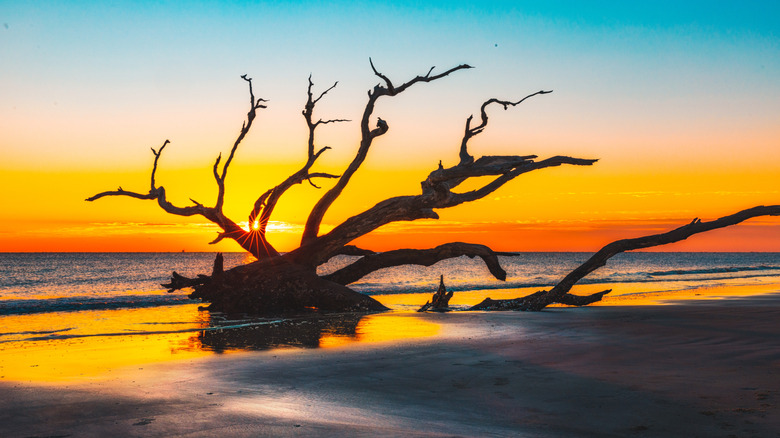
Jekyll Island is a barrier island sitting off the Georgia coast that's accessible via a causeway and a $10 entry fee. Driftwood Beach occupies the northern tip of the island. It's an otherworldly beach consistently rated as one of America's best. But even though the secret is slowly trickling out, it remains one of the most unspoiled on the coast. The maritime forest that once lined this shore has slowly surrendered to the sea. What remains on the sand can be described as somewhere between a sculpture garden and a shipwreck. Tree trunks and branches of fallen oak and pine lie scattered across the golden sand, with silvery-gray surfaces that are smooth and deep with ripples. Some of the trunks are broad enough to sit astride, while others twist in contorted shapes against the sky.
You'll need to visit at low tide to see those gnarly yet stunning formations because at high tide, the water can swallow the entire scene whole. Sunrise and sunset are the perfect times for photographers, and wedding parties here are becoming more popular. After dark, the Milky Way opens up in a spectacular display of constellations and wonder. Unfortunately, you can't admire it while camping on the beach, but you can pitch a tent in the nearby Jekyll Island Campground, a half-mile away. Additionally, there are beach houses for rent on the island, and pets are permitted on the sand, so if you bring Fido, there will be no shortage of sticks for him to chase.
Ocracoke Lifeguard Beach, Cape Hatteras National Seashore, North Carolina
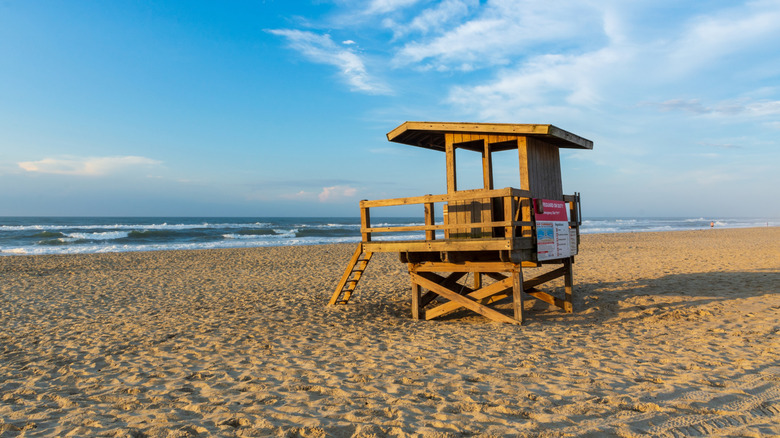
The Outer Banks is a group of long, thin barrier islands off the coast of North Carolina, and Ocracoke Island is one of its least visited. It's only reachable by ferry, an inconvenience that is enough to keep the hordes away. But they're missing miles of undeveloped national seashore coastline. And despite its remoteness and fewer visitors, Lifeguard Beach has been voted as America's best on two occasions by Dr. Beach (according to the Ocracoke Observer).
It's just a short drive north of Ocracoke, where a timber walkway will take you over the dunes and onto the sand. The beach is wide, the sand is pale, and the water can shift to a clear aquamarine reminiscent of the Caribbean. It's all backed by those windswept dunes, and the Gulf Stream keeps temperatures toasty in summer. Piping plovers and sea turtles use the shore as a nesting ground, and when they do, sections of the beach close until the young have hatched — a reminder that this is genuinely wild coastline. However, the beach isn't devoid of people, but you can always find plentiful space, especially if you're willing to walk a little further up the shore for more secluded spots.
Smoking is forbidden here, and there is no littering. This is part of the protected Cape Hatteras National Seashore, so leave no trace. However, it's not without some simple beach luxuries. There are restrooms, showers, and changing rooms, and pets are welcome, as long as they are on a leash. Lifeguards are on duty from late May through early September from morning until dusk, but camping is not permitted, at least on the sand.
Methodology
We searched through dozens of "secret beach" articles from reliable sources, including travel magazines like Travel + Leisure and U.S. News & World Report, as well as city and lifestyle sites like Time Out. From those, we chose beaches repeatedly described as quiet or hard to reach, and known by few. Go and find those hidden shorelines that reward the curious with quiet, unspoiled sand and stunning sunsets.