
The Top 13 Things Park Rangers Wish You Knew Before Visiting A State Or National Park
We may receive a commission on purchases made from links.
It's easy to think of park rangers as someone who points you to the nearest trailhead or gives you directions at the Visitors Center. But in reality, they're often the backbone of the entire park experience. While many travelers spend their time planning viewpoints and photo stops, behind the scenes, rangers are wearing more hats than most realize, from handling search and rescue operations to protecting fragile ecosystems and providing educational resources. And when it comes to a state or national park visit, their advice can often mean the difference between a smooth trip and a stressful (or even dangerous) one.
As state and national parks face growing crowds alongside staffing shortages and steep funding cuts, rangers are stretched thin — and common visitor mistakes can have bigger consequences for both safety and conservation. For travelers, that means a little extra preparation and awareness goes a long way. To highlight what rangers wish you knew before your next trip, we dug through the National Park Service website, Reddit, and social media to gather advice straight from rangers, while occasionally also using other sources like the U.S. Forest Service, National Parks Conservation Association, and Washington Trails Association for additional information.
Rangers do more than you may expect
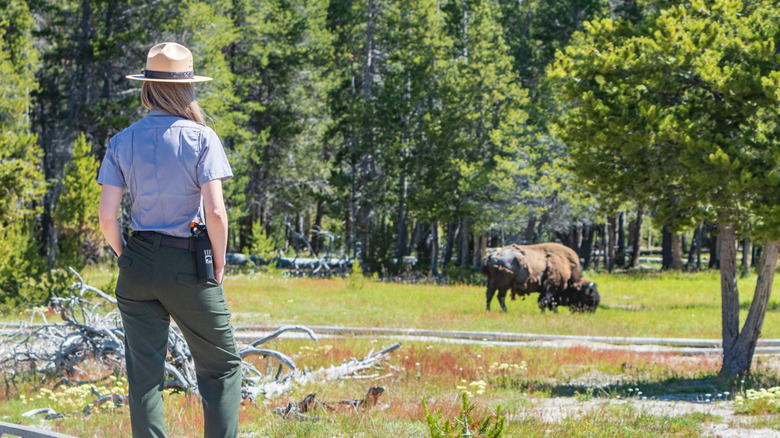
With 85 million acres of land across the U.S. managed by the National Park Service, and over 20 million acres dedicated to state parks, it's impossible for a park ranger's job description to mean just one thing. While some rangers are government employees, others work for private companies, or are local community members or volunteers. Regardless, they play a critical role in protecting the park's natural resources, and ensuring a safe experience for visitors, so if a park ranger asks you questions about your hike, it's most likely with your safety in mind.
"You are the front-facing person for the park," said park ranger Felicia Jimenez in a 2022 TikTok. "My entire job revolves around talking to hundreds of people a day ... it is a customer service job, and part of that is conflict de-escalation." Leading guided hikes, educational programming, trash collection and trail maintenance, and research are just some of the many tasks that rangers can perform. Some are more charged with protecting the park's natural resources, and even have the power to issue citations, and must go through a training similar to a police academy, according to Jimenez. Backcountry rangers, meanwhile, patrol the park's most secluded areas, and may conduct search and rescue operations.
Be patient with rangers
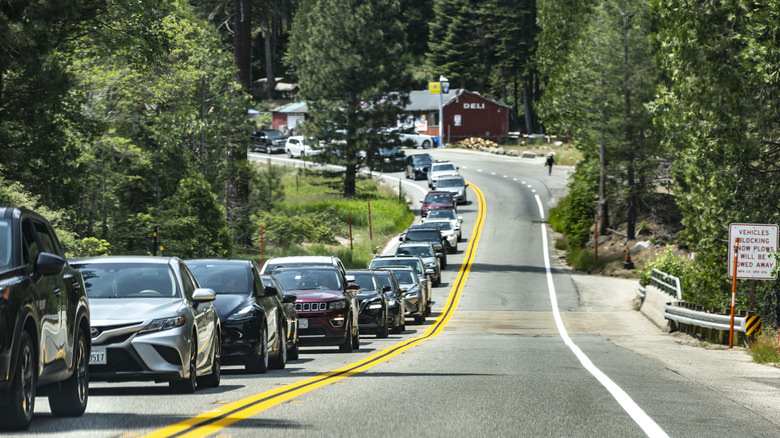
Not only do parks have busy seasons, but during times when park funding and staffing are undergoing challenges, it's more important than ever to remain patient and not take out any frustration with the rangers. This is more important now than ever. According to the National Parks Conservation Association, the Park Service has lost 25% of its staff — over 4,000 people — since January 2025, despite over 323 million visits in 2025. Still, threats of more funding cuts loom, as the White House's current budget proposal involves a $736 million reduction in the National Park Service's annual budget, which would be "catastrophic," said the National Parks Conservation Association in a statement on April 3, 2026. "These cuts have already led to fewer ranger-led programs, weakened resource protection, delayed maintenance and diminished visitor experiences."
Also in April 2026, the Department of the Interior revealed more plans for the National Park Service; specifics were not given, but the shift will involve adjusting positions to visitor-facing roles, and offers for deferred resignation and voluntary early retirement. "The most important thing you can do is be kind," said Dee the Ranger on TikTok. "When you're waiting in line for hours to get into a park, you finally get up to the entrance station, all you want to do is yell at that ranger and tell them how awful your day has been — they're already there. And they've had to deal with 100 people before you yelling at them."
Support conservation
While it's impossible to generalize about everyone in a certain career, it's safe to say that park rangers all care about protecting nature — and they want you to care too. "What do I get to do tomorrow? What impact can I make tomorrow? That's what it's like to work for the National Park Service," said one park ranger, Harley Monteiro, in a TikTok encouraging users to help protect public land by contacting local representatives and signing petitions in support of U.S. parks.
The idea of supporting conservation of course connects to key principals like "leave no trace," when you aim to minimize harm to the outdoors, but it also has to do with what happens when you leave the park. With iconic destinations slowly being destroyed by climate change across the world, and U.S. parks under threat, rangers across the r/ParkRangers and r/NationalParks subreddits encourage people who care about parks to contact state representatives and voice support, and protest if possible. Numerous petitions exist on the National Parks Conservation Association website, and taking actions like using public transportation and reducing spending also help to support conservation efforts.
Parks are more than just nature
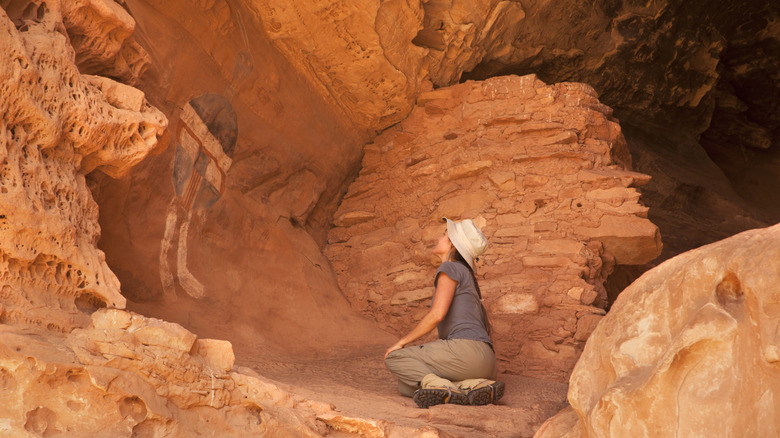
There's no doubt that our state and national parks offer stunning escapes into nature. But their significance also goes far beyond just their natural beauty, offering immense cultural value that connects us to history and other communities. Many parks are home to cultural landscapes, or places with historic significance, revealing everything from traditions to land use. Sometimes, these can date back thousands of years. One Redditor in r/ParkRangers who worked almost entirely in historical parks said, "The joy of changing how people understood the past and exposing them to historical ways of thinking they never considered before," was their favorite part of the job.
New Mexico's Chaco Culture National Historic Park, striking ruins that were once the largest buildings in the continent, is one such example, tracing back to the Pueblo people of 850 to 1250 CE. Utah's Canyonlands National Park, meanwhile, is rich in spiritual significance, with numerous burial grounds, petroglyphs and pictographs, and ceremonial sites, some of which are thousands of years old, according to the National Park Service. Dry Tortugas National Park, one of America's least-visited national parks, offers some more recent history, with its 19th-century military fort and historic shipwrecks containing submerged artifacts like pottery and anchors.
Engage with rangers
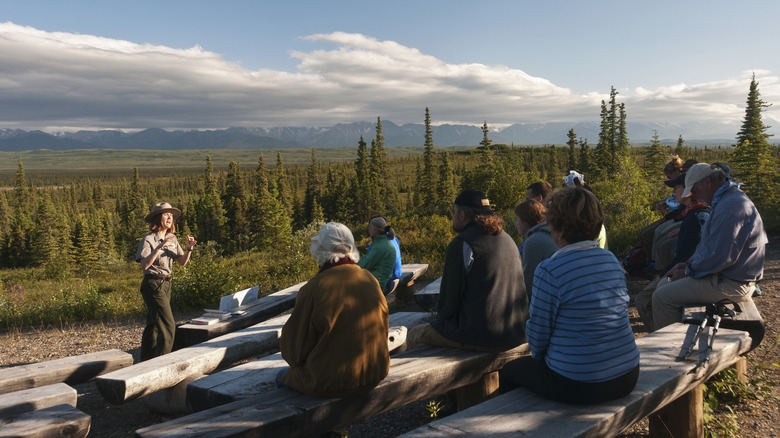
Not only do park rangers have an abundance of useful information, from recommendations for which trails are best for your skill level, to updates on trail closures and current conditions, but they are often more than happy to talk to visitors and share their love and knowledge of the outdoors. "Pretty much everyone working those jobs LOVES what they do and if you show them interest will be happy to tell you what they know," said one Reddit user in r/CampingandHiking.
Apart from just conversation, some rangers even offer guided hikes or other educational programming, to further engage with the public. "This is probably something no one else has said, but my favorite part is welcoming/meeting international visitors," said another ranger in r/ParkRangers. "A lot of the time they share that they've never seen something like 'this' before and the smiles on their faces just makes my empath self so happy."
Prepare ahead of time
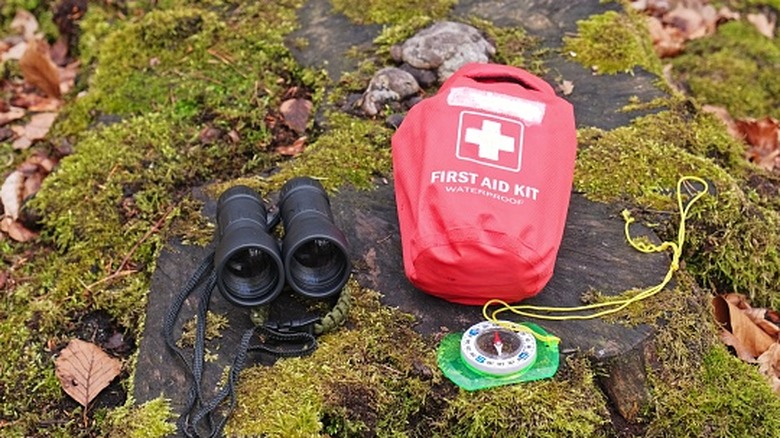
A lot of rescues come down to lack of preparation, not recklessness — and you don't need to be embarking on one of the most dangerous hikes in order to plan your state or national park visit ahead of time. Before your trip, some easy to-dos include looking at different trail options ahead of time, and getting clear on the specifics of the park you're visiting, like any entrance fees or reservation requirements. The National Park Service (NPS) also advises bringing a first aid kit and supplies like triangular bandages and moleskins for blisters.
Bring more water than you think you need as well, as the NPS also recommends drinking water often. In addition, dress in layers and bring a physical map and compass (and learn how to use them). Closer to your trip, you'll also want to check the weather, look over the park's website and social media for any closures or other updates, and make sure to dress appropriately for the climate and conditions of the park. Keep in mind that weather can change quickly, so it's best to prepare for different conditions, even if that means bringing a light jacket or rain jacket in the summer. Creating a trip plan (a written plan with your itinerary information) for someone at home is also an important step, in case the worse comes to worst. Templates are available on the NPS website.
Leave no trace
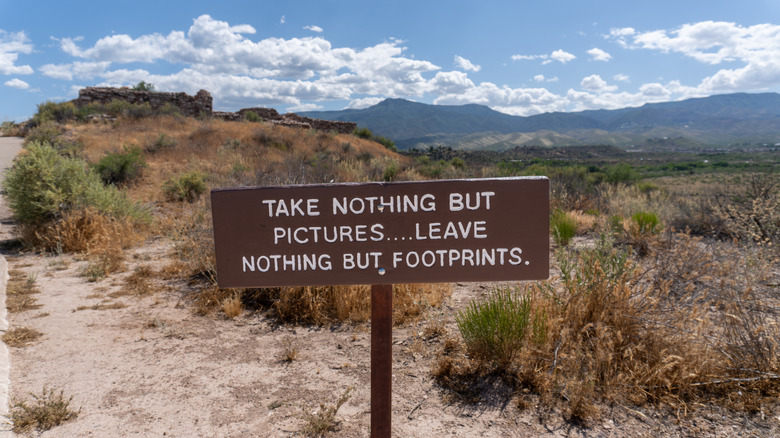
If there's only one thing you keep in mind before your next state or national park visit, let it be this. The idea of taking responsibility for nature has long been a principle of many Indigenous cultures, but "leave no trace" as an official concept began to take shape a few decades ago. In 1987, the U.S. Forest Service, National Park Service, and Bureau of Land Management jointly produced a "Leave No Trace Land Ethics" pamphlet, and a few years later, Leave No Trace, Inc., was officially created. Today, seven core principles are used as guidelines for treating the outdoors, and cover everything from planning ahead in order to minimize harm (i.e., scheduling your trip during less busy times and visiting in smaller groups) to leaving any rocks and plants as you found them.
"Practicing Leave No Trace is just that: a practice. It is not about being perfect, it is about doing the best we can as often as we can," says the National Park Service website. "If you stay on the designated trail, you're practicing Leave No Trace. If you pack out your trash, even your orange peels, you're practicing Leave No Trace."
Don't feed (or interact with) wildlife
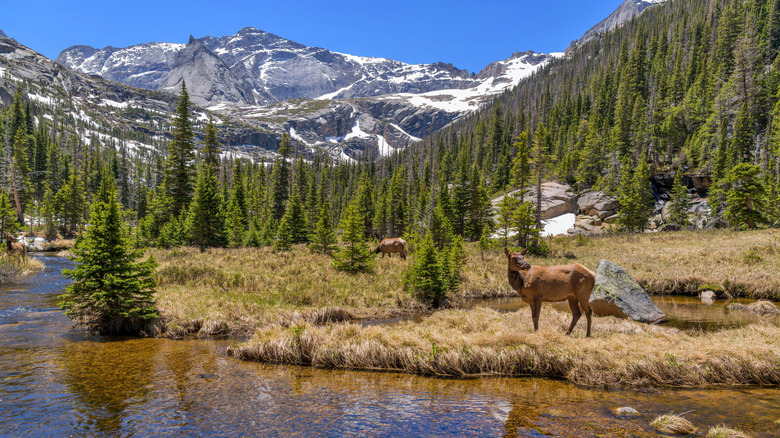
This is technically a philosophy of "leave no trace," but is well worth its own mention. Although one of the highlights of visiting state and national parks is spotting (sometimes rare and endangered) wildlife, it's important to enjoy from afar, without any interference. "When you visit national parks, you are entering animals' habitat and should behave like a polite guest," says the National Park Service on its website. "In fact, the safety and health of wildlife depends on the thoughtful choices park visitors make."
That goes for all sorts of interactions — petting or touching, feeding, or even just getting too close. A general guideline most parks follow is to stay 25 yards away, or 100 yards from particularly dangerous animals like bears, but specific distances may depend on the park. Even seemingly harmless animals like squirrels or small birds can face consequences of human interactions. Ground squirrels, for instance, can become aggressive after eating human food, while some bird species may abandon their nests if they're disturbed. Be sure to safely store all food and trash, and communicate with rangers if you have any contact with wildlife or have any sightings of animals who seem sick or are acting strange.
Stay on designated trails
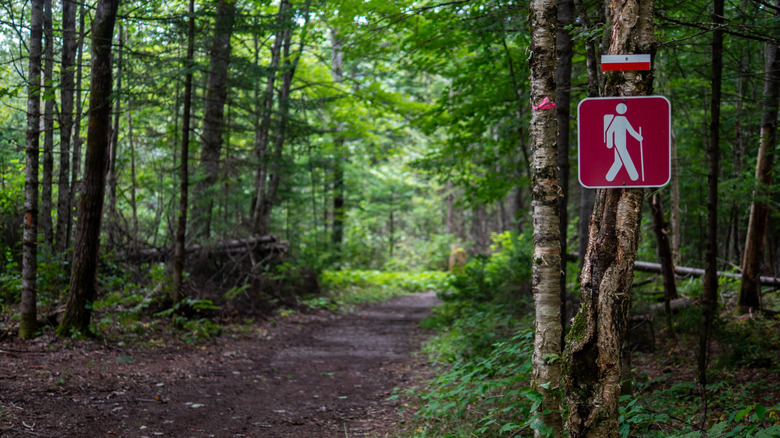
Trying to go off the beaten path is a common mistake first-timers make when visiting national and state parks. But for both your safety — and the safety of the environment around you — remember to stick to designated trails while exploring. According to a comment by ranger Ben Hughes on TikTok, some trails are specifically made by park staff, while others are preexisting trails that have been utilized for thousands of years. Either way, they play an important role in conservation by concentrating human impact, keeping water clean, and preserving habitats and fragile ecosystems, according to the Washington Trails Association.
Plus, "straying off can lead to injuries, encounters with wildlife, or getting lost," said the American Hiking Society in a Facebook post. This advice applies to drivers too. In places like Death Valley National Park — a park that you want to avoid visiting in the summer for your own safety — it's illegal to drive off designated roads, due to damage to the environment. It can also be dangerous for visitors, with motor vehicle accidents contributing to the majority of deaths in the park from 2007 to 2023.
Be realistic about your limits
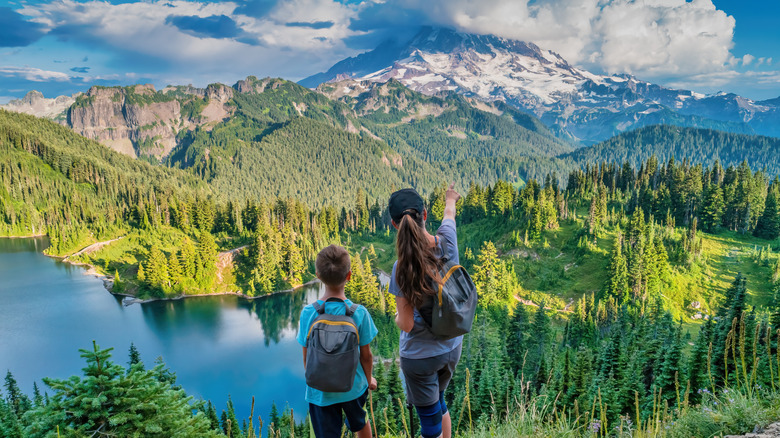
It can be easy to get carried away when visiting a bucket-list hiking destination, and want to go for the most challenging trek, and the most awe-inspiring view. But park rangers would urge you to reconsider, and be honest with yourself before you get yourself into potential danger. According to the National Park Service, some things to consider include your hiking experience and fitness level. Don't overlook the specific conditions of the park you're visiting, either. Even if you've hiked before or are physically fit, maybe you're not as comfortable with higher elevations, the climate of the park, or the particular terrains you'll need to trek through.
While that doesn't immediately disqualify you from visiting, of course, it's important to be realistic about the specific circumstances, as well as your own limits. Don't forget to think about what you'll need to carry, as well, including food, water, first aid supplies, and other equipment. Even if a certain park or trail doesn't seem like the best fit for you, the good news is, there are plenty of beginner-friendly parks with easy trails, and most parks will offer a variety of options for varying levels.
Pace yourself
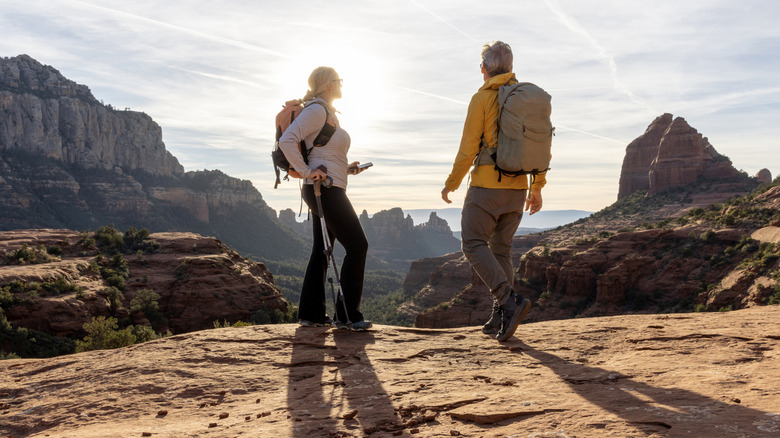
Whether you're an experienced hiker, or it's your first time, it's critical to pace yourself when hiking and exploring a park. Remember to take frequent short breaks for water and food, and go slowly enough so that you can easily watch your step, particularly in extra hazardous areas like near cliffs. A good rule of thumb is to try to match your breath to your pace, keeping your heart rate moderate, advise Reddit users in r/Hiking. The key is to be able to talk while you're walking — this means you're not over-exerting yourself.
When hiking in groups, the National Park Service also advises letting the slowest person set the pace, and make sure to stay together for safety reasons. You also want to be mindful of the time and distance traveled, accounting for how long you'll need to turn around and make it back before dark, noting that it can take double the time to go downhill than uphill.
Your safety isn't worth the photo
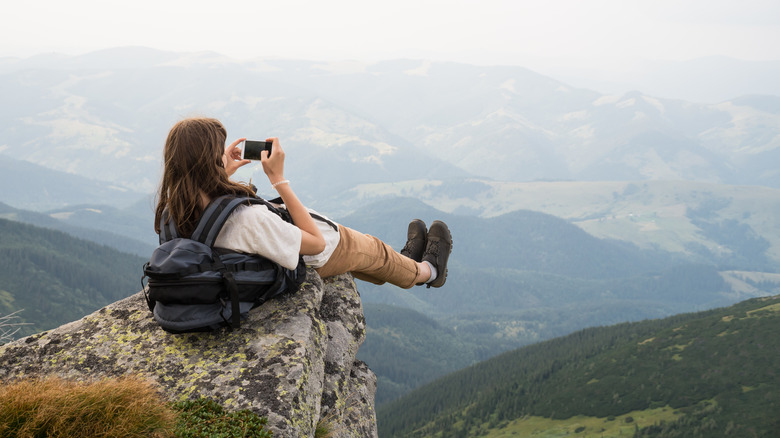
Whether it's getting too close to the edge of a cliff, or attempting to snap a selfie with wildlife, the National Park Services warn visitors against attempting any risky photo-taking during your park visit. Accidents are far too common. One study by Journal of Travel Magazine, which was conducted over the course of 13 years, attributed 379 deaths globally to selfie-taking, specifically. Plus, according to mortality data from the NPS (which is only available up until 2019), 17 deaths from 2014 to 2019 were due to photography-induced falls.
Although not nearly as high as other activities like hiking (which had 255 reported fatalities for the same time period), it was a leading cause of death at Grand Canyon National Park, while Yellowstone National Park even encourages visitors to take a pledge that they'll practice safe selfies and to "give wildlife room, use a zoom." So when you visit your park of choice, think twice before taking a selfie. A photo isn't worth the possible risk.
Know what to do if you get lost
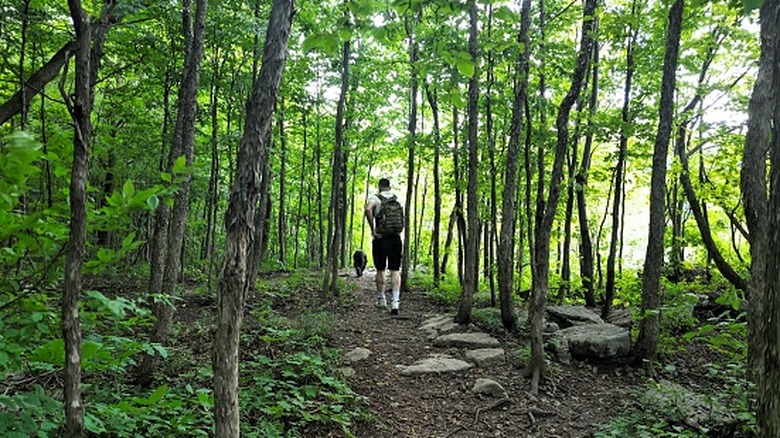
Getting lost is scary, yes. But as easy as it is to panic, try to take a breath, and remain calm. You want to think rationally about your next move, and listen for other hikers who may be nearby. As soon as you think you may be lost, you will want to pause and evaluate the situation. This is when having a map or a compass will come in handy — and the U.S. Forest Service advises not moving until you have a clear plan that you're confident in. Look for any recognizable landmarks, and try to retrace your steps, if possible. If you're not completely sure, you'll want to stay where you are (especially if it's nighttime, you're injured, or too exhausted), as moving around will make it more difficult for authorities to track you down, and will waste your energy, says NPS.
In case of an emergency, even if you have no phone signal out in the wilderness, newer iPhone models and some other phone types do offer emergency satellite connectivity, so you can call 911 — just keep in mind that your location can not be picked up by the call center, and they won't be able to call you back. You can also consider using a device like a satellite communicator, which can also help with navigation.