
9 Common Gen Z Travel Habits That Get On Boomers' Last Nerves
The generational divide has long been characterized by an inability to communicate across the age gap. Truth: Given the full span of human years, the world you are born in will not closely resemble the one you die in. The baby boomer generation was born from 1946 to 1964, meaning that the youngest boomers are in their sixties. Boomers grew up in a world without the internet, a universe where you could neither pause nor rewind movies. There was no cable, gasoline was proactively leaded, and breakfast was an entirely Pop-Tart-free affair. Actually, scratch that last one; like the last of the boomers, Pop-Tarts arrived in 1964.
Still, contrast that with Generation Z. Those born between 1997 and 2012 never experienced an offline world. These children of the app economy have always existed in two worlds: an online facsimile of themselves tussling with the grounded reality of actual existence. This generation is characterized by a preference for hybrid working, flexible hours, and a shift towards soft living rather than hustle culture.
Each generation creates a subculture that mystifies other generations in both directions. Sure, flights weren't all that great back in the day, but to boomers, overseas travel felt like the thin end of a whole new frontier. For Gen Z, the ability to globetrot seems less de rigueur and more like the de facto vacation position, which is probably why certain Gen Z travel trends tend to annoy boomers so much. We took a look at some of the latest data, discussions, and trends in travel, and how each side of the argument views them. And we did so without judgment. Because the idiosyncrasies of the boomer generation are no less virulent than the quirks of the zoomers. Of course, not everyone is the same. Individuals within each generation will defy the stereotype and have their own opinions. There's no right or wrong here — just the unravelling of decades' worth of misunderstanding.
Main character syndrome
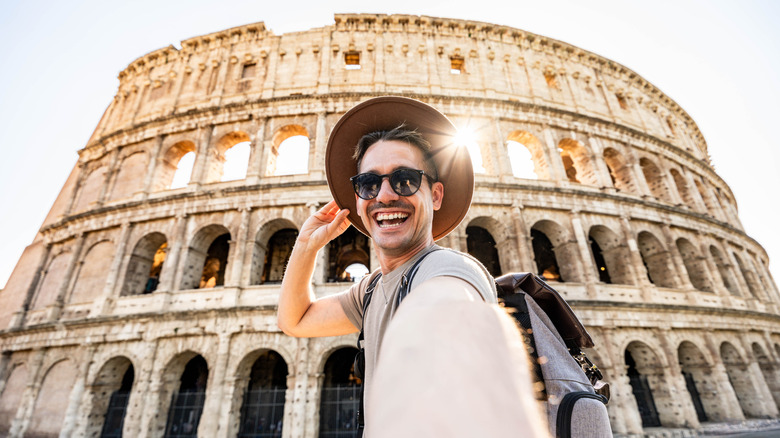
Picture the scene: It's a warm sunny day in Salisbury, you've made the trek from London, paid the entrance fee, and made the trek up the hill. There are those who describe Stonehenge as an underwhelming monument, but you are fully caught up in the mystique of the moment. Visions of ancient druids and traditions lost to the mists of time beguile your senses. You round a corner and come face to face with a wall of tourists taking selfies and making TikTok videos, their backs firmly turned to the structure at their rear. Welcome to main character syndrome.
For once, the sociological trend does what it says on the tin. Generation Z's relationship with the connected world bears all the hallmarks of a real-time experiment. By the time that they hit school age, the internet was all the rage, Facebook was on the cusp of global domination, and cell phones had transitioned from executive bragging rights to mainstream necessities. The transition had its upside, but the negatives soon became apparent. Zoomers were labeled the loneliest generation. Facing reduced moments of human interaction, some members of Gen Z turned to self-comfort. They created an online persona, a life filled with edited highlights, like that of a movie, complete with soundtracks, color-corrected visuals, and it-crowd fanfare.
To boomers, members of Gen Z look like they are missing the point. The camera is turned ever inwards; subject and object merge. The purpose of travel is reduced to the need to be there, not to grasp the true meaning of the moment. But to zoomers, it is simply an attempt to connect with their peers. Yes, some are main charactering for clicks — some are even making bank doing so — but most are just reaching out. Let them do their thing.
Using social media and AI as a destination guide

The oldest surviving travel guide is known as the "Itinerarium Burdigalense." It dates to 333 C.E. and details a sea voyage from Bordeaux to Jerusalem. By the 19th century, the expansion of the middle class and the rail network began to popularize travel for the masses; in 1826, publishing magnate John Murray published "Handbooks for Travelers."
The Information Age brought new vectors of delivery, with the internet being the most obvious medium. But the principles of travel journalism remained the same: a visitation to or information gleaned from those who had already visited a given location presented in an informative and entertaining way. And then, social media happened. Take TikTok, for example. With over 2.2 billion active users, its reach and influence are such that it can send ripples through the fabric of human culture. And when it comes to travel trends, such ripples can have a measurable effect.
Artificial spikes in the popularity of a given locale can appear almost overnight thanks to viral social media posts. Examples of TikTok tourists overwhelming locations crop up in the most unlikely places, but as always, there are two sides to the story. A list of the most overtouristed places in Europe reveals several locations just as — if not more — popular with boomers, who, at any rate, travel more than any other generation. TikTok did not invent crowds; any boomer who spent time in Venice knows that. Regardless, for every location that bemoans its newfound fame, there's another that actively covets the boost to the economy said fame brings. Social media sometimes makes a poor guide, sure, but it is neither blind nor without a filter.
Raw dogging flights
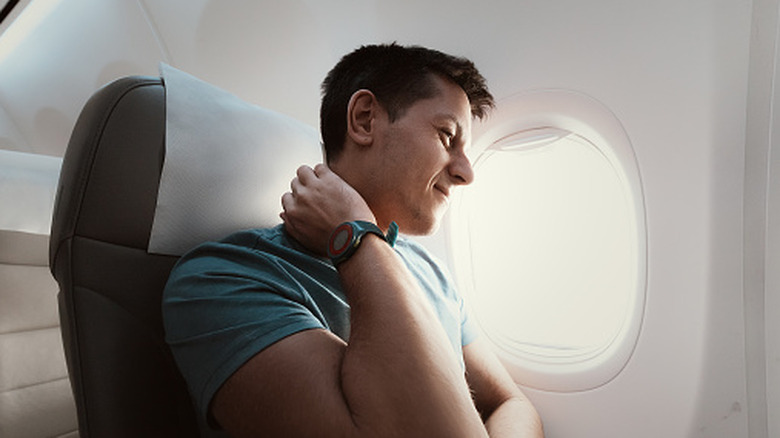
Distasteful terminology aside, the practice of raw dogging a flight has taken off in recent years. The basic principle is as follows: take a flight of any duration, although preferably a long-haul one to increase chances of bragging rights, and endure the entire thing without any distraction. No movies, no music, no reading, and, in certain extreme cases, no food or water either. For those who practice the technique, it's a test of personal fortitude; for others, it seems like nothing so much as an opportunity to show off, and one fraught with inherent dangers at that.
Boomer complaints about the attention-seeking nature of rawdogging behavior no doubt have validity, but such a question dodges the more salient query: Who are they hurting here? Well, according to health experts, there are definite risks. As Dr. Gill Jenkins told the BBC, the challenge of long-haul flying "Is that you're at risk of dehydration," in the first instance, and that those who remain still for too long may also bring on deep vein thrombosis, something compounded by said dehydration. Still, when it came to the less extreme aspects of the phenomenon, the GP from the United Kingdom adopted a more conciliatory tone, noting that "A digital detox might do you some good."
It sounds like more of a cautionary tale than an outright irritant. As to how many people go all the way with it, who knows? Surely not everyone who claims to have flown for 18 hours without a pee break is on the up and up. Nor is the past as rosy as boomers like to imagine. A quick look at once popular travel trends that are now outdated reminds us that smoking was once allowed on flights. And that had to have been even less healthy.
Funding travel via debt

In a world in which we all — and it is all of us, not just Gen Z — want to look windswept and interesting, the sheer cost of doing so sometimes gets in the way. Our online self eats in fancy restaurants. They care not why flights keep getting more and more expensive. Online, we'd never be seen dead admitting that we'd opted for a night in with Netflix and a Hot Pocket to save a few bucks. Ok, maybe the word never is overplaying the concept a little here, but the fact remains that during a cost-of-living crisis, funding a lifestyle worthy of Instagram is a luxury that not everyone can afford. Yet for many in Generation Z, non-participation simply isn't an option, which might seem reckless to people who find frugality more practical than going into debt.
Still, it's important to separate fact from fiction to avoid he-said,-she-said cross-generational ruckus. Yes, millennials and Gen Z are spending more on travel than ever before, and according to 2024 data, 42% of them were willing to go into debt to facilitate their travel plans. Of boomers, only 22% planned to go into debt for the sake of a vacation. So, case closed, right?
Well, no. Firstly, zoomers are a lot better at budgeting than older generations give them credit for. They prioritize soft saving over long-term planning, yes, preferring to live in the moment, but that does not necessarily equate to reckless spending. They are also more likely to live paycheck to paycheck than other generations. So, they are having fiscal issues, no question. But paying for a trip using a credit card — something only 21% of zoomers do — isn't anything new: the delayed gratification of the retail layaway is as old as the modern economy.
Hectic passion trips
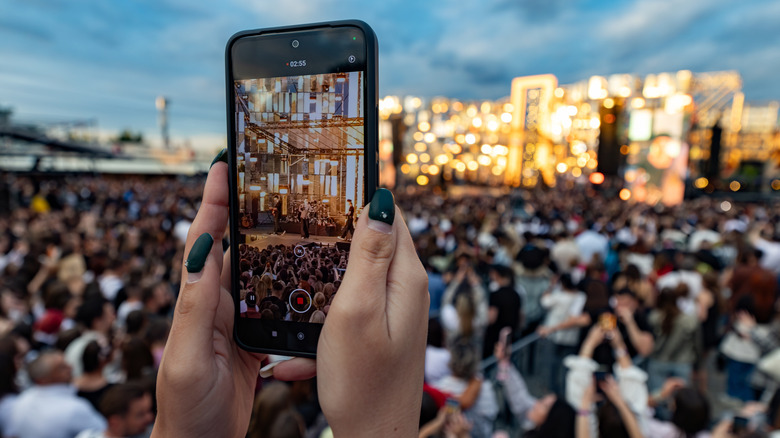
Generation Z loves to travel, but their love of a bargain is no less robust. Yes, 52% of Gen Z Americans say they will travel more in 2026, and the same number plan to do so at least three times per annum. But less than half are willing to part with extra cash to do so. With one exception. The must-see event.
The nature of the event is less interesting than the lengths zoomers will go to secure a place among the crowd. According to the data, around 55% of all travelers planned vacations around festivals or concerts, but among Gen Z, that figure was 20% higher. Hardly surprising, really; young people love a good show. What is slightly more unexpected is how far zoomers are willing to journey. A full third sees nothing wrong with a 100-mile sojourn, and over 10% admit that a 500-mile trip would not be out of the question. Indeed, one in five people has crossed international borders in pursuit of such entertainment.
So, is this annoying? Those who live within the shadow of major venues might argue that all the globe-trotting is driving up prices, crowd sizes, and creating an illegal market in ticket sales. But ticket scalpers prowled the streets during book recitals by none other than Charles Dickens himself; that simply isn't anything new. Nor can the increases in admission prices be laid at the feet of any one generation; a quick review of past Rolling Stones tours speaks volumes to such soaring costs. And at any rate, only the subject matter has changed, not the intent. It never occurred to me to go overseas to see a favorite band back in the day. But did I save up to visit the pyramids? Yes, yes, I did.
Ditching historic landmarks for vibes

The belief that using valuable vacation time on passion products is wasteful seems to be a lament for what could have been. And yes, those places that had the highest number of international travelers in 2025 were compelling, but for a Gen Z traveler interested in forging their own path, travel is about much more than the providence of historical landmarks.
Still, spending hours lounging at a highly photogenic café far from the throngs of more tourist-intensive activities is hardly the stuff red-faced rants are made of. Gen Z seems to prefer to use their own unique set of criteria when planning a trip away. They go off the beaten path, yes, but the notion that they are motivated by pure contrarianism simply does not hold up under scrutiny. To start with, zoomers, as we have seen, proactively search for bargains. Lists of the best Christmas markets in Europe are all well and good, but they focus on the quality of the experience, not affordability. Opting for Lyon over Paris is no rejection of the French capital's magnificence. Lyon is cheaper, the food is better, and who needs a more compelling reason than that?
Added to this is a recent rise in cases of nostalgification, a phenomenon that sees people return to the vacation spots of their youth. Over in the U.K, it was found that 82% of zoomers and millennials relive their formative years with a repeat trip or two. Lastly, Generation Z takes environmental concerns very seriously indeed. Close to half of all zoomers see themselves as greatly affected by climate change; sustainable travel holds great appeal to the younger set, but so too do social considerations. Some 94%of Gen Z are prepared to travel off-peak to help with overtourism.
Geotag hoarding
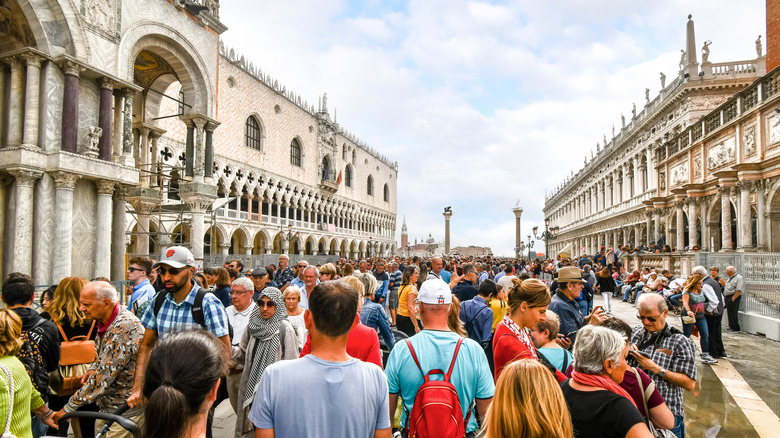
It's no secret that there are countless hidden gem destinations doing the social media rounds that are overrun with selfie-seeking tourists. The world we live in is one of viral sensations, of zeitgeists condensed into week-long trends, a place where the notion of the next best thing is a never-ending cavalcade of soon-to-be also-rans. Things move at pace, and that chic café with Instagram-worthy lighting you just found loses value as soon as people home in on its zip code. At least that's the theory: that Gen Z is hoarding locations for the sake of personal vanity. Sorry, but it's not like that at all.
Geotagging is a feature built into Instagram and other social media apps that allows you to keep track of where you've been. When turned on, it gives a GPS-accurate indication of where you were when you took the picture. It's a useful little tool in many ways, but is it downside-free? No.
The most obvious drawback stems from a question of privacy; letting people know exactly where you are in real time raises safety concerns. It's easy to see why a well-meaning parent or grandparent may get upset when they see the younger generation posting their whereabouts with wild abandon. But it's not just about safety; viral posts have been known to generate sudden and unexpected spikes in tourism to the detriment of locals and visitors alike. Zoomers, keyed into this reality, have become naturally cautious. Yes, close to half of all zoomers share their vacation across social media platforms, and almost as many surely choose locations based on how good the images will look online. But the decision to keep a specific locale on the down-low stems from a desire to protect it from the worst the internet can throw at it and approach vacations with sustainability in mind.
Chasing dupes

That Mediterranean beach holiday. The walk down the Promenade des Anglais as part of your tour of Europe's longest and best coastal walks. The Christmas market in Vienna. The shopping trip to Milan. The much-coveted premium trip has held the attention of vacationers for decades; best-ever lists proliferate, bucket-list moments are manifest, and everywhere, thoughts of a trip of a lifetime dominate the hearts and minds of would-be explorers — unless you'd rather just dupe the whole thing.
The word dupe is short for duplicate and refers to a noticeable trend found in the younger generations, whereby they choose to visit a location that is similar to another more popular destination. The word also carries an insinuation of duplicity: the idea that influencers are pretending to be in a premium location, when in fact their vacation is far humbler.
It's also the easiest to debunk when it comes to boomer irritation. To start with, there is scant evidence for the duplicity part, and a considerable amount is present for the idea of thrift. Again, zoomers love to travel, but they also love bargains. Choosing a location that offers a similar experience but at a fraction of the cost is hardly a crime. Nor is it in any way new. Choosing the Black Sea over the Mediterranean for a beach holiday results in something cheaper and less crowded, while the seaside South American city of Valparaiso is a lot like Barcelona with fewer crowds. And to those posting an Instagram picture of themselves in Salzburg while claiming to be in Vienna, well, that's a little weird and easily debunked, but the crime of the century it is not.
Ticking off countries one by one
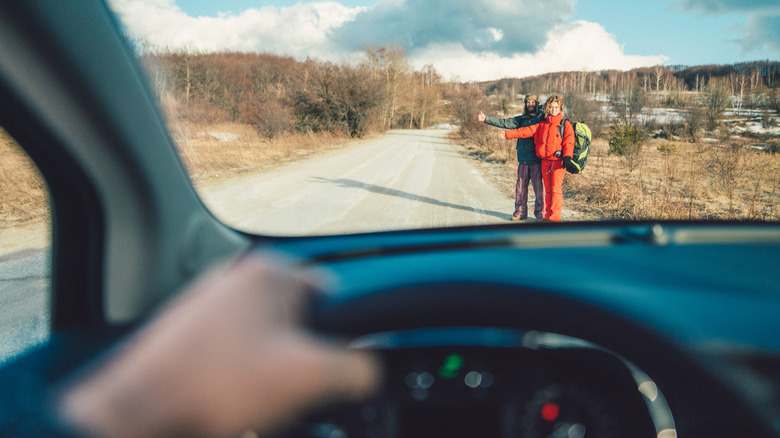
Spoiler alert: There are a finite number of countries, and all have something to offer – just make sure to take heed of travel advisory warnings. From mysterious places around the world that leave more questions than answers to underrated tourist destinations you need to see before they become too popular, the list only feels endless. It is most assuredly possible to visit them all. But should you? The answer to that is really a question of motivation. Yes, listing all the places you've visited sounds impressive at dinner parties. And yes, if travel broadens the mind, then crossing the globe in search of a Pokémon-style victory lap must leave people with a head as wide as a football pitch is long. That's no crime either.
Yet, this mentality can invite suspicion from older travelers; choosing quantity over quality is an easy thing to disparage. Still, to be clear, the phenomenon is no chimera; these grand tours are happening. Indeed, the Great British Holiday Audit 2025 found that over half of British zoomers and millennials deliberately select a new country when they go on vacation and, in doing so, arguably limit their options. Theirs is an exploration of Florence, not Tuscany; their three days in Amsterdam tick the Netherlands box but offer only the narrowest view of the country at large.
Once again, however, assumptions are being made about motivation. Competition with peers is an incentive for sure, but how exactly it differs from boomers who wax lyrical about their latest cruise at family get-togethers is less clear. The act of country ticking is not the exclusive domain of the younger generation, and it never has been. Young people are at the beginning of their traveling life; if they seem a little eager at the outset, well, so be it.