
10 Of The Hands-Down Best Bass Fishing Spots Around America
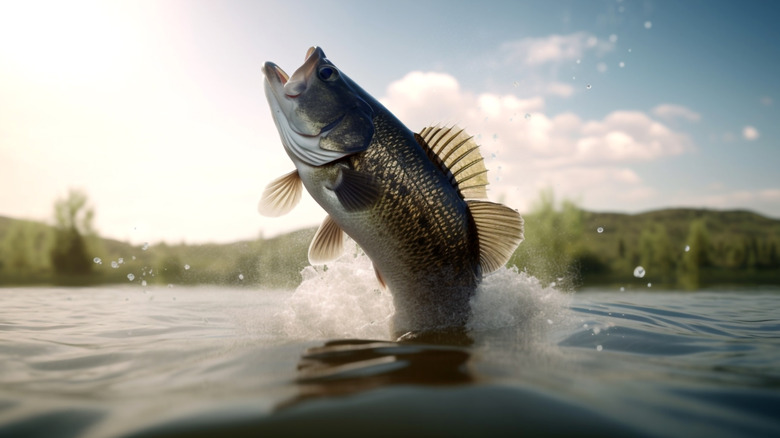
It all started with one fish back in 1932 when George Perry pulled a 22-pound, 4-ounce largemouth bass from a Georgia lake. It's a record that stood alone until a Japanese angler came within a whisker of beating it in 2009. Officially, they hold a joint record, but it was that first catch that changed the face of fishing. Almost overnight, bass fishing went from something you did to put food on the table to a sport that has captured the imagination of millions of Americans. And we do mean millions. Of the 50 million or so American anglers, around 60% specifically chase bass — a participation rate that puts the sport ahead of golf.
It's little wonder bass fishing is so popular. These fish are found across freshwater bodies throughout much of the country, and they put up a good fight. They don't give up easily, are aggressive, and, as George Perry discovered, can be big. So big, in fact, that every cast carries the possibility of catching something that will make your hands shake. The largemouth is the biggest of the black bass, a group of North American freshwater fish. The smallmouth is its cooler-water counterpart. It thrives in places such as the Great Lakes, while spotted bass and several other species round out the group, including a newly recognized species in the Savannah River, Georgia.
To find the best bass fishing spots in America, we consulted fishing publications and professional organizations like Wired2Fish and Bassmaster, as well as fishing forums for ground-level advice. These are the 10 best spots for bass fishing in America that kept coming up in discussions again and again.
Lake Fork, East Texas
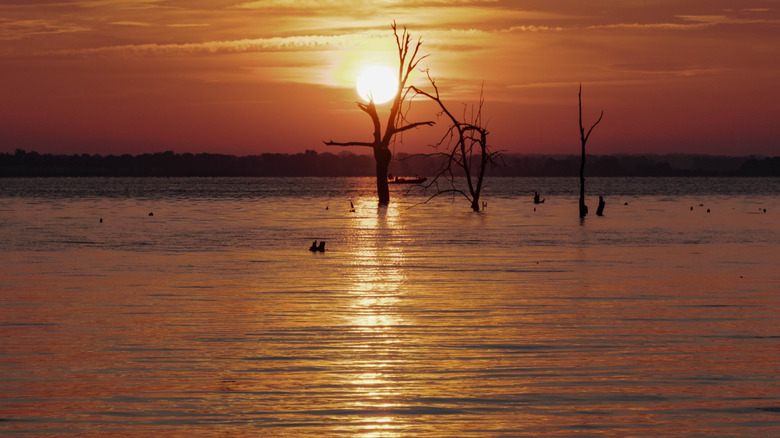
Lake Fork has no discovery story behind its legend. It wasn't stumbled upon by early explorers, and there are no tales of Indigenous people fishing its waters for centuries. Lake Fork was purpose-built to produce giant largemouth — and it's a creation that has paid dividends. Today, around 65% of the all-time biggest largemouth bass in Texas have been pulled from this 27,264-acre reservoir. Both the current state record of 18.18 pounds and the previous record of 17.67 pounds came from the depths here — and hundreds more largemouth over 10 pounds are pulled onto the banks every year. If all you want to do is retire and fish, this is one of America's best destinations to do it.
You'll find this lake in East Texas, about 110 miles or so from the Dallas/Fort Worth Metropolitan Area, and spring is the best time for monster hunting. Late February through April is the prime window for a genuine trophy, when large females feed hard during the pre-spawn and move into the shallows to bed. When the brutal Texas summer arrives, those trophy fish get more active when the sun goes down, and many anglers choose to take to the water after dark for more productive fishing.
Spinnerbaits, plastic worms and lizards, lipless crankbaits, and jigs worked slow along the shoreline are what the fish want. But there are strict slot and bag limits, and the submerged timber used to create this bass habitat can pose a navigation hazard. Buoyed lanes mark safe passage, but you should still take it slow.
O.H. Ivie Lake, West-Central Texas
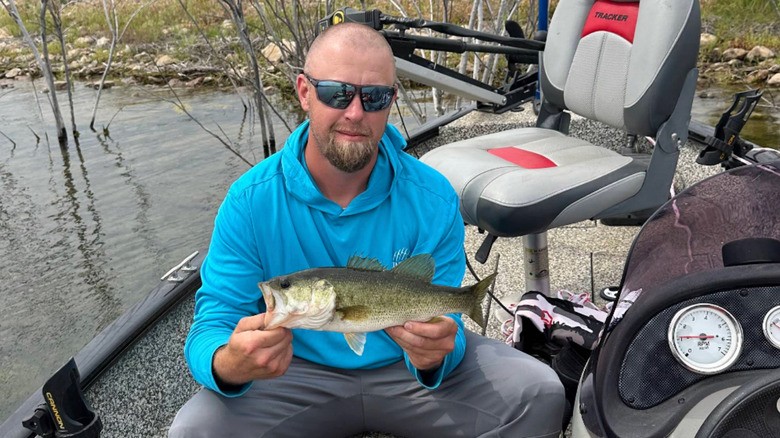
One of the most remote bass fisheries in the U.S. sits in dry desert country in west-central Texas. Like Lake Fork, O.H. Ivie is a man-made reservoir and was impounded in 1990 about 55 miles east of San Angelo. Here, when the rains come and water levels rise, acres and acres of oak, salt cedar, juniper, and mesquite that have grown along the exposed shoreline during drier years are submerged. This creates dense underwater cover where bass can hide, feed, and grow to enormous sizes. In early 2022, a largemouth was pulled from the water that set a lake record of 17.06 pounds. Yet guides insist there are a lot bigger fish under the cover that will never see a hook.
Those guides spend January through March hunting these trophies — and they do find them. Usually, they'll work jigs or soft plastic into the salt cedar or drag a Carolina-rigged plastic worm on a deep hump at 20 feet or deeper. In addition to that dense submerged cover, giants continue to ply these waters year after year thanks to Florida-strain stocking, a strain known for growing bigger than northern largemouth. There's also the ShareLunker program, which breeds bass weighing 13 pounds or more in a hatchery and releases their offspring in the lake. January through May is prime time, with April the peak for bed fishing.
Clear Lake, Lake County, California
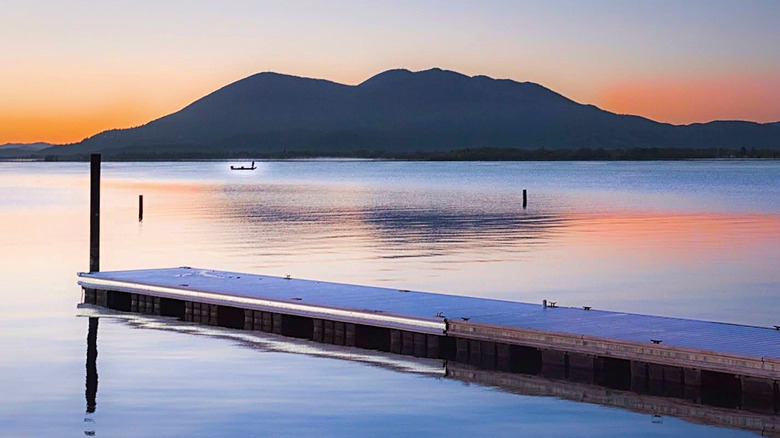
You might think that decades of relentless tournament fishing would grind a lake into the ground. Not Clear Lake. It just keeps producing. In 2025, it was ranked as the number-one bass lake in America by the renowned fishing organization and publication, Bassmaster. In surveyed tournaments alone, more than 100 bass weighing over 7 pounds each have been landed here, and catching fish over 10 pounds is considered just another day at the office. In 1990, Jerry Basgal set a lake record when he caught a largemouth weighing 17.52 pounds. It's a record that still stands today. But in spring 2025, professional angler John Pearl set a tournament record when he landed 15 bass totaling 102.81 pounds over the course of three days.
If you fancy a crack at catching a giant, you'll find Clear Lake tucked into Lake County in northern California, an up-and-coming wine region full of outdoor recreation. It's the state's largest natural freshwater lake at 68 square miles, and at 2.5 million years old, it's North America's oldest. The lake has earned itself the nickname of "Bass Capital of the West," and with two-thirds of every fish caught here a largemouth, it more than lives up to it.
In spring and summer, they sit in the shallows, responding well to topwater lures, spinnerbaits, crankbaits, and swimbaits. As the temperature drops, they move deeper. And that's when worms, soft plastics, and jigs work their magic. Bass are catchable during almost every calendar month, but it's worth noting that you can't always eat a Clear Lake catch due to mercury levels that sometimes hit high — check with local officials first.
Lake Okeechobee, South Florida
Clear Lake may call itself the "Bass Capital of the West," but Lake Okeechobee calls itself the "Bass Capital of the World" — and with good reason. Bass sit at the top of the food chain here. Few natural predators mean big, fat fish, and regular reports often put 7 to 10 pounds of largemouth in the boat. But the lake record stands at 15 pounds 5 ounces, so that gives you an idea of what else is down there. Literally millions of largemouth live just below the surface. In fact, the lake averages just 9 feet deep, so you could say the traffic is pretty heavy. When you're fishing the "Big O," you'll barely make a dent in its bass stock no matter how many trophies you bag.
The bass spend most of their lives hiding and swimming among the lake's maze of dense vegetation. Cattails grow out of the water while lily pads float on the surface. Down below, hydrilla, eelgrass, and peppergrass mean the fish have everything they need in the shallows of Okeechobee. The lake sits just north of the Everglades in central Florida and covers 730 square miles.
Late winter through spring is when Okeechobee draws in fishing fanatics from across America. At this time, the biggest largemouth push shallow to spawn along the southern and western shores. March and April bring peak sight fishing, when bass build visible beds. And as spring progresses, topwater lures in the early morning and swim jigs throughout the day work well. But if you want a bit more drama, the Bass Busters Trail has run monthly tournaments for decades, while the annual Big O Showdown series draws in competitive anglers throughout the year.
St. Lawrence River, Thousand Islands, New York
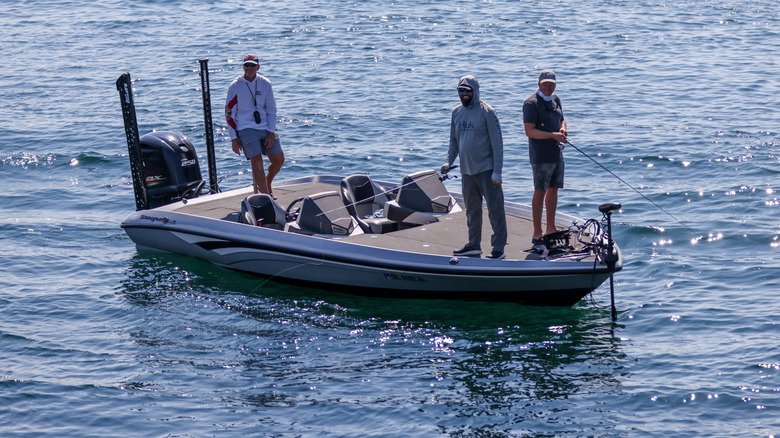
One of America's largest rivers is a New York gem nicknamed the "Fourth Coast," and two invasive species have turned it into what Bassmaster says "could be the greatest smallmouth fishery in existence." Zebra mussels have filtered the water of the St. Lawrence River to near-perfect clarity, which has, in turn, created ideal conditions for bass to hunt by sight. This has, in turn, created ideal conditions for anglers to do the same.
Round gobies are the second invasive species. When bass eat them, they become bigger and stronger than they would otherwise be — and tournament numbers back this up. When Jay Przekurat won the 2022 Bassmaster Elite Series held on the St. Lawrence in the Thousand Islands region, he won it with smallmouth that had an accumulated weight of 102 pounds, 9 ounces. In fact, nobody in the top five finished the competition with a weight of less than 98 pounds — some quite astonishing numbers.
You'll need to ensure you have the right license to fish here, as the Thousand Islands region on the St. Lawrence River straddles the New York-Ontario border. This is where the river reaches two miles wide and drops to depths exceeding 200 feet. The average smallmouth runs somewhere between 2.5 and 4 pounds, but the trophy fish push upwards of 6 pounds. Rubber worms, jigs, and spinners are the lures to use in late summer when the bass push deeper as the water warms. Earlier in the season, live bait like crayfish, minnows, and worms are what the fish want when they move into shallower water.
Lake St. Clair, Michigan/Ontario Border
Lake St. Clair is another place where you'll need to make sure you have the right license. It sits on the Michigan/Ontario border just minutes from downtown Detroit, and some say this 430-square-mile expanse should be considered the sixth Great Lake. The smallmouth bass that live there certainly love it. They return to the same spots season after season, meaning productive locations first marked as far back as the 1950s are still delivering plentiful fish today.
Perhaps their habitual return has something to do with the same invasive species that transformed the St. Lawrence River. Zebra mussels also scrub the water clear on this lake, offering perfect conditions for sight-feeding bass. Gobies are also found in St. Clair, as are crayfish, and as top food sources, they ensure the fish here are built big. The average smallmouth in the lake weighs around 3 pounds, but spring fish commonly push up to 6 pounds, with trophies exceeding 7 pounds being a realistic target for anglers.
April through June is the peak season. With the lake depth averaging just 11 feet with a 22-foot maximum, the fish never disappear into the deep. Their numbers are high — so high that Lake St. Clair earns a top-5 Bassmaster ranking year after year. In fact, Bassmaster and Major League Fishing both stage major events here from July to September, a reliable sign of just how good the summer bite is on top of the spring action. Come fall, the fish are just as hungry, but the crowds have thinned out considerably — and for many anglers, the quieter atmosphere makes it the best time of all.
Lake Guntersville, Alabama
Lake Guntersville is Alabama's largest lake, and it has some of the best fishing in the Southeast. The grass coverage is extraordinary, with feeding zones at a range of depths keeping the bass well-fed and catchable year-round. But this Tennessee River reservoir is not only defined by its expansive grassy banks. It's also famous for its ledges and creek channels that give anglers just about endless waters to explore. Respected fishing publication Wired2Fish was mightily impressed by the lake and called it "a very special bass fishing destination," and the sheer number of fish backs that up that claim. They are everywhere, and consistent action is the norm rather than the exception.
Spring is prime time. From February through May, the bass move shallow and feed hard through the pre-spawn and spawn. The shallow grass beds are where you want to cast. Work a rattle trap through the emerging grass for reaction strikes, or try jerkbaits, soft plastics, and jigs. In late March, Wired2Fish recorded three five-bass limits, the maximum an angler can weigh in competition, at 23.5, 26, and 24 pounds, with multiple individual catches weighing up to 7 pounds.
In fall, things get even more exciting. Bass start schooling, and the topwater action that follows is some of the best across the entire year. Rubber frog lures cast across the grass mats can trigger explosive strikes, while the Alabama Rig, a multi-lure rig that imitates a school of baitfish, is another weapon of choice.
Sam Rayburn Reservoir, East Texas
Sam Rayburn is one of those rare lakes where the fishing never truly switches off. Bass feed year-round in the shallows, the mid-water, and the depths because the water rarely drops below 48 degrees. Even in winter, they remain active when most other lakes have gone quiet. And it's a big lake, so you can be sure there's a lot of fish down there. In fact, at 114,500 acres, Sam Rayburn is the largest artificial lake entirely within Texas. It's a couple of hours northeast of Houston in East Texas pine country. Forested banks surround it, and below the waterline there is hydrilla, brush piles, creek channels, and flooded timber — although less of the latter sits just below the surface than in other lakes in the region, so boat navigation is straightforward.
The lake is a prime location for major bass tournaments. In recent years, forward-facing sonar has transformed competitions here, with anglers locating massive schools of bass in open water before picking them off with Carolina rigs and deep-diving crankbaits. These are the two lures that have pocketed more money at Rayburn than any other. The fish they catch are no slouches, either. Double-digit largemouth are a genuine possibility on any given day. In fact, Clark Reehm, who guides on the lake, told Wired2Fish that every angler can "fully prepare to catch a 10-pounder."
The biggest fish are at their most catchable from January through early April when they are grouped up in pre-spawn, heavy with eggs, and actively feeding. However, if it's overall numbers you're after, consider fall or winter, when the cooler water keeps bass active for longer.
Lake Kissimmee, Central Florida
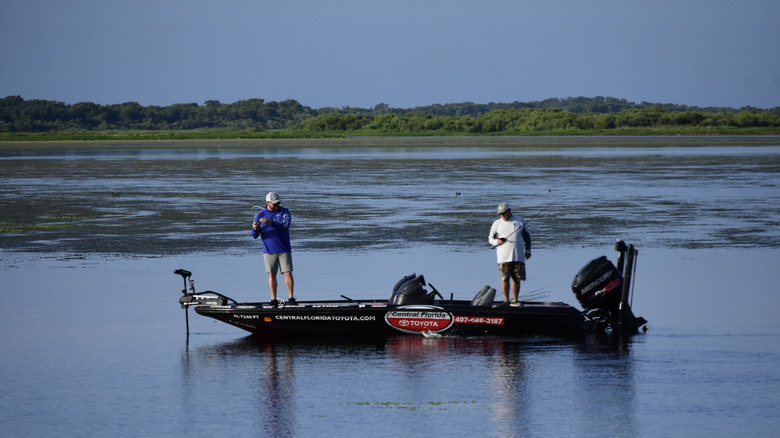
Lake Kissimmee is where serious bass anglers ultimately end up when fishing the Kissimmee chain. It's the largest lake in the system, and it captures the essence of what bass fishing in Florida should be like: mossy trees draped over dark waters and wildlife just about everywhere you look, including alligators drifting past the reeds. In fact, it's one of the most alligator-filled destinations in all of Florida. If that doesn't put you off, the 35,000-acre lake sits about an hour and a half from Orlando, anchored at the heart of a network of connected waterways that drain into the Everglades. Its uneven shoreline of islands, hidden coves, and jutting points means you could fish this lake for a week and never cover the same water twice.
Shallow and vegetation-rich, the grass beds, lily pads, and reeds create a labyrinth of cover that means the bass rarely need to leave. Catch rates are among the best in the state. According to the long-running local guide Bass Fishing Florida, tournament winners here routinely catch "a five-fish bag limit weighing 18 to 25 pounds." Ask any Florida bass guide where to take a serious trophy hunter, and Kissimmee will be near the top of the list. TrophyCatch data records plenty of bass over 10 pounds and even the occasional 13-pounder being pulled from the chain. For a genuine trophy shot, nothing seems to outperform a live wild shiner cast close to the grass and reed edges — and winter through early spring is when many of the largest females slide into the shallows to spawn.
Toledo Bend Reservoir, Texas/Louisiana Border
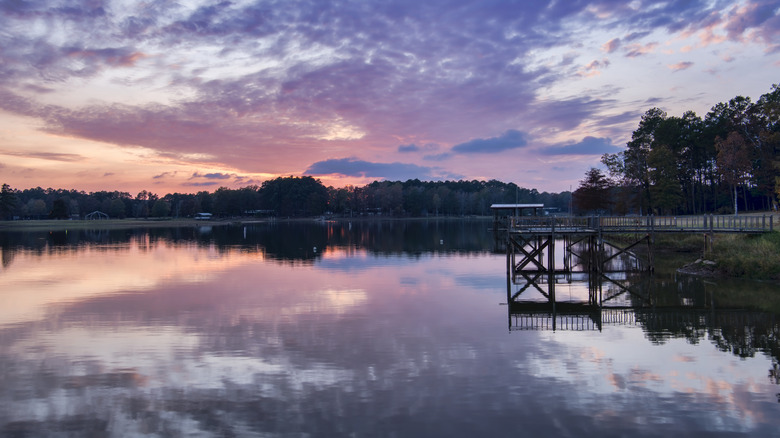
What makes Toledo Bend so special is the sheer length of its bass spawn. It lasts a full four months from February through May and is driven almost entirely by its high number of fish. There are so many of them that it takes that long to complete the spawn cycle, and the numbers are so high because the lake has been actively stocked with Florida-strain largemouth for decades. As a result, Toledo Bend has been running its own Lunker Bass Program since 1992, where anglers who catch a fish over 10lbs can register it and receive a free replica after releasing it.
The fishing has gotten so good since the program's launch that Bassmaster named Toledo Bend the number-one bass fishery in America in both 2015 and 2016. This was the first and only time back-to-back titles went to an individual lake, and in recent years, it still ranks highly. Double-digit bass remain a regular feature, with 2023 producing two new records: a largemouth weighing 16.67 pounds and a five-bass bag weighing 42 pounds. The following season saw 81 lunkers pulled from the water, which was the highest number caught since 2015. If it's a genuine trophy you seek, March is your best bet. The majority of lunkers are caught in this month.
You'll find the 181,600-acre lake just south of Shreveport on the Texas/Louisiana border. It's the American South's largest artificial body of water, and a fishing license from either state covers anywhere on the lake. But be ready for some navigating, as there is so much flooded timber that a system of marked boat lanes is in place to keep you on course.