
America's 5 Oldest Theaters You Can Still Visit Today, According To Data
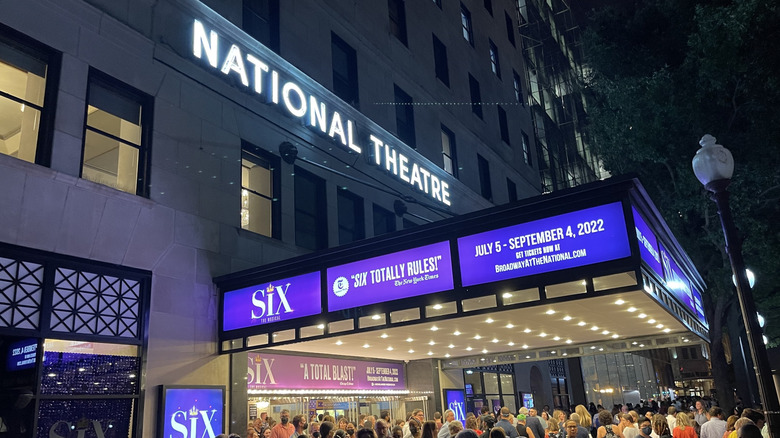
Theater has been a part of American culture since the colonial era. One of the earliest known playhouses in what is now the United States — the Williamsburg Playhouse — was built in 1716 in Williamsburg, Virginia. The building was demolished around 1770, but there's still a sign marking the place where it once stood. Today, there are many other historic theaters across the country where you can see a show on stages that have hosted decades' worth of performances.
While some of America's historic theaters now sit abandoned or have gone the way of the Williamsburg Playhouse, others have continued welcoming audiences since their doors first opened. Not all of these are in the cities considered the best for live theater, either. America's oldest purpose-built cinema, for example, is in Ottawa, Kansas, while the world's oldest continuously operating movie theater is in the small town of Washington, Iowa. Both of those theaters date to around the turn of the 20th century, but many American theaters built for live performances have histories that go back much further.
According to the League of Historic American Theatres (LHAT), which was founded in 1976 to help preserve the nation's opera houses, playhouses, and cinemas, dozens of theaters built in the 19th century are still in operation – and plenty more from the 20th century that meet its member requirement of being at least 50 years old. Using LHAT records and historical documentation, the following venues are among the oldest continuously operating theaters in the United States that still host performances today.
Walnut Street Theatre
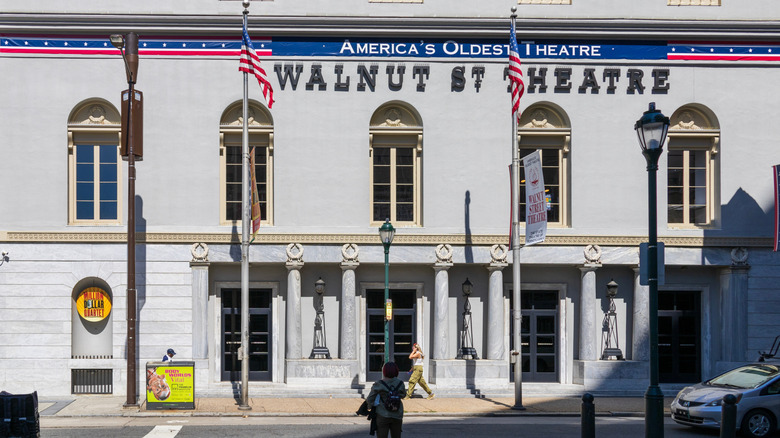
Claiming the title of America's oldest continuously operating theater, the Walnut Street Theatre has occupied the corner of Ninth and Walnut Streets in Philadelphia's Center City since 1808. It started as a horse-riding ring, putting on its first stage performance in 1812 with the likes of Thomas Jefferson and the Marquis de Lafayette in the audience. The tradition of the curtain call was said to have begun on its stage in the 19th century, just one of the Walnut's many contributions to American theater.
Its stage has seen performances from famous names like Edwin Forrest, Henry Fonda, and Katharine Hepburn, and has hosted a range of events beyond shows, from stand-up comics to the 1976 presidential debate between Gerald Ford and Jimmy Carter. While it's had a few renovations over the years, its history can still be seen today in the original rope-and-sandbag pulley system that's still used, one of the few left in the country.
The Walnut Street Theatre isn't just old — it's also quite popular. Its 50,000 annual subscribers make it the world's most subscribed theater and more than 300,000 people come every season to see its performances. Shows today are produced by the Walnut Street Theatre Company, which was founded in 1982 and is the most active in the Philadelphia region, putting on more than 250 performances every year. It's surprisingly affordable to see a show here, too, with ticket prices as low as $20 on the first Tuesday through Friday evenings of every month. The Walnut Street Theatre also offers occasional behind-the-scenes tours where you can learn more about its history, though the dates are limited by the active performance schedule. The upcoming tour calendar is available online, and it's recommended that you book in advance since the spots on each tour are limited.
National Theatre
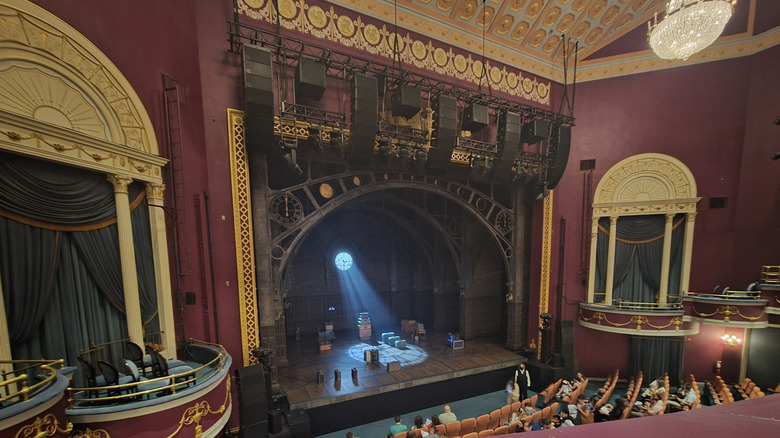
Washington, D.C., has no shortage of historic buildings, from the Capitol Building to the Willard InterContinental, one of America's oldest hotels. Counted among these storied structures is the National Theatre, which is located on Pennsylvania Avenue between the White House and the infamous Ford's Theatre. Founded in 1835, it's the oldest theater in the United States that puts on touring Broadway shows, with a 2026 lineup featuring well-known productions like "The Wiz," "The Book of Mormon," and "Hamilton." Many famous actors have performed on its stage over the years, from John Wilkes Booth to Laurence Olivier to Ian McKellen. It's also hosted non-theatrical acts including comedians, musicians, and even a speech by Winston Churchill.
While some version of the National Theatre has stood on Pennsylvania Avenue for almost 200 years, the building has gone through a few changes. The original 1835 structure burned down in 1845, reopening in time to host singer Jenny Lind in 1850. It was briefly remodeled into an equestrian circus in the early 1850s, then caught fire three more times, in 1857, 1873, and 1885. The last major renovation happened in 1922, and the exterior has remained relatively unchanged since then.
The National Theatre was almost demolished in 1982 as part of extensive changes to revitalize Pennsylvania Avenue but was thankfully spared. In fact, it was expanded with the backstage building that is today home to the National Theatre Archives, along with dressing rooms and a rehearsal space. If you want to learn more about the theater's history, the collection of records and artifacts in the National Theatre Archive is open to the public in a digital format and much of it can be viewed online (though in-person access is limited to special requests for research purposes).
Academy of Music
Founded almost a century before American independence, Philadelphia's rich history makes it a top travel destination. It's known as the "birthplace of America" and is home to the nation's most historic square mile. Given that, it makes sense that it's on this list twice: for the Walnut Street Theatre and the Academy of Music, also known as the "Grand Old Lady of Locust Street," which holds the title of America's oldest active opera house.
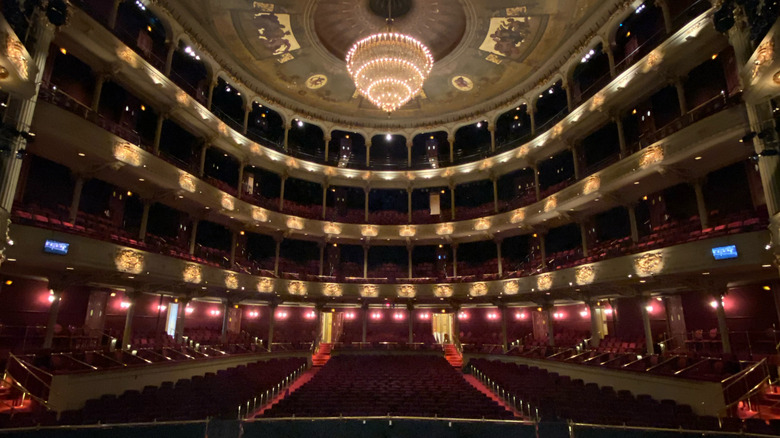
First opened in 1857, the interior of the Academy of Music was based on Milan's famous La Scala and embodies a European-style opulence, complete with gilded balconies and a 5,000-pound chandelier hanging over the seats. It's the permanent home of the Philadelphia Ballet and the Opera Company of Philadelphia, and regularly welcomes touring Broadway shows, with "The Sound of Music" and "Mamma Mia!" among those on the docket for 2026. It's a venue for orchestral performances in addition to stage shows, hosting the Philadelphia Orchestra from its founding in 1900 until 2001, as well as landmark performances like the introduction of John Philip Sousa's "The Stars and Stripes Forever" and a staging of Stravinsky's "The Rite of Spring" with dancer Martha Graham.
The Academy of Music is on Broad Street in the heart of Philadelphia's Center City, just a few blocks from the shops and restaurants of Rittenhouse Square. If you want to see the building without the show crowds, you can arrange a one-hour tour by contacting the office in advance of your visit. The most affordable way to see a show at the Academy of Music is through Opera Philadelphia's Pick Your Price program, which makes tickets to all shows available for as little as $11.
Thalian Hall
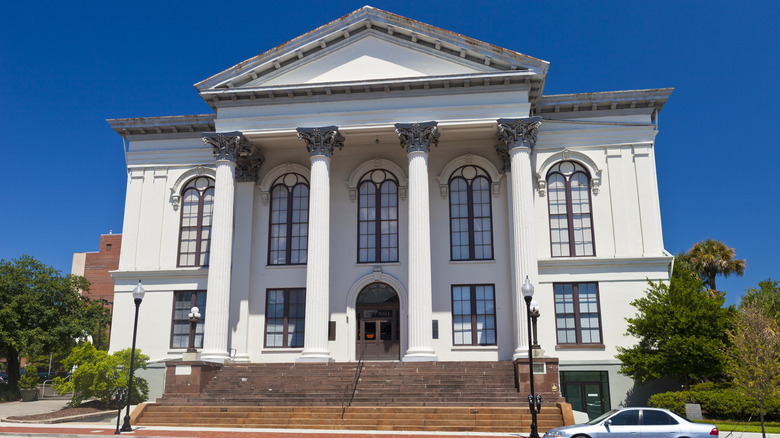
Like Philadelphia, Wilmington, North Carolina's history dates back before America's official founding. It started as an English colony in 1739 and grew into the state's biggest city after its port was added in 1840, giving it the largest collection of 19th-century architecture in North Carolina. Many of Wilmington's beloved historic attractions are in its Historic District along the Cape Fear River, among them Thalian Hall, the only remaining theater designed by renowned American architect John Montague Trimble.
When it first opened in 1858, Thalian Hall was more than a performance space. The building contained the town's library and government offices in addition to a 1,000-seat opera house. It became a popular stop for touring performers through the late 19th and early 20th centuries. Like other theaters on this list, it went through some rough patches — there was talk of demolishing the building in the 1930s, and a fire in the auditorium in 1973 required it to close for a couple of seasons. Each time, though, the hall was renovated and reopened. The last major renovation was in 1985, which expanded the theater into its current form.
Today, the Thalian Hall complex contains three theaters: the Historic Main Stage, the Red Box on its second floor, and the auditorium-style Ruth and Bucky Stein Theatre. Between them, the three venues host about 500 events every year, which include film screenings as well as stage productions. Three local theater companies perform stage shows with runs of 2 to 10 days, and on busy weekends there are often performances happening on all three stages at once. The Main Attraction Series brings in touring musicians, comedians, magicians, and other acts for one-day performances, while the Thalian Hall Cinema series shows both first-run and repertory films, including documentaries, independent films, and foreign films.
Croswell Opera House
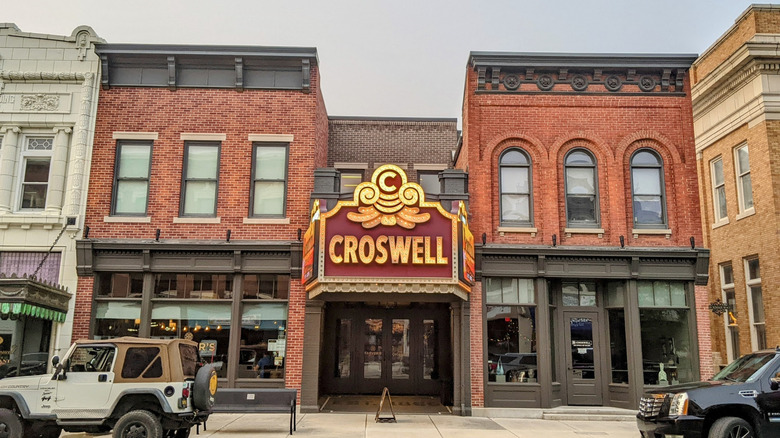
Not all of America's historic theaters are in large urban hubs. If you're looking for the oldest theater in Michigan, for instance, you won't find it in Detroit or Grand Rapids but in Adrian, a small city with college-town charm about an hour's drive south of Ann Arbor. Performing arts have had a strong presence in Adrian since the town's founding in 1825. The local Adrian City Band started in 1838, putting it among the nation's oldest community bands. The Croswell Opera House came a bit later, opening its doors in 1866, but that still makes it one of the oldest continuously operating theaters in America.
The Croswell Opera House started as a simple space, just a square auditorium with wooden benches for seating in its early years. Location drove its early popularity more than appearance. Adrian was a quick train ride from both Detroit and Chicago, making it an easy addition to the itinerary for traveling theater productions. It got a more elegant makeover when it was converted into a movie theater in 1921, and kept those decorative touches when it reverted back to a live theater venue in 1967.
What shows you can see at Croswell Opera House depends on when you visit. During Broadway season (spring through December), it produces between six and eight musicals, usually during the second and third weeks of each month. Winter is the theater's Special Events Season, which typically features at least one play as well as concerts. Along with the original theater space, the Croswell today includes an on-site bar, Farver's, as well as a smaller studio theater and an art gallery whose rotating exhibits showcase work from area artists.
Methodology
To identify the oldest theaters in the United States, the League of Historic American Theatres' database was consulted. The theaters with the earliest founding dates were identified, and each location was then researched to verify that it remains open and continues to host performances. Only venues that have operated as a theater since their founding were included, omitting spots like the Newtown Theatre in Newtown, Pennsylvania, which is in a building that dates to 1831 but did not become a theater until 1906. The Delphi Opera House in Delphi, Indiana, also narrowly missed inclusion for a similar reason: while the building opened in 1864, the performance space wasn't added until 1881.
When it comes to the physical theater spaces, locations that have been renovated or rebuilt over the years were included, provided they have continuously occupied the same site. This is why Washington, D.C.'s National Theatre is included, as it still stands on the foundation of the original building, while the Brooklyn Academy of Music – founded in 1861 — was excluded after relocating from Brooklyn Heights to Fort Greene following a fire in 1903.