
The 10 Biggest Things That Surprise Tourists Visiting The Midwest
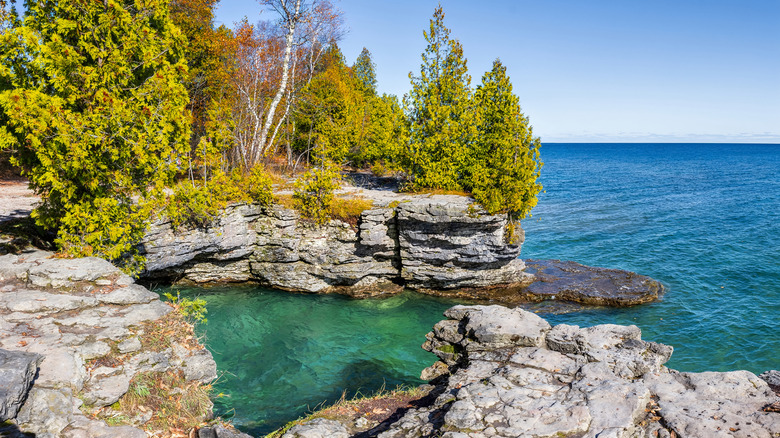
Encompassing the Great Plains, thousands of lakes, the two longest rivers in the U.S., immense forests, and so much more, the Midwest has a distinctive character all its own. Even within the 12 states officially recognized by the U.S. Census Bureau as part of the Midwest, it has plenty of regional variations. Many areas are deeply rural, while others are much more densely populated, such as Chicago or Detroit. There's also a rich spectrum of communities in between, from farm towns to commercial hubs. Depending on what part of the Midwest you visit, you may experience what feels like a completely different type of place.
Did you know that there's more than one kind of cheese curd that Wisconsinites love? Have you ever been to the quirky roadside attraction of Carhenge in Nebraska? How about any of the spectacularly underrated national parks and monuments across the Midwest? We've tapped into a number of different cultural elements prevalent in the region that may surprise first-time visitors, including food, art, weather, and even just how people get around. I myself have spent the better part of my life in the Upper Midwest — I grew up in rural Wisconsin and still consider it home. I've also traveled extensively through all of the region's states and find new things to appreciate about them all the time.
In addition to my own experiences and observations, I've consulted blogs and other articles, Reddit discussions, and historical resources to arrive at some of the most unexpected things you'll encounter in the Midwest. Whether you're planning a visit or just curious about what this region might be like, discover below some of the things that may most surprise you.
You get the 'farmer wave' while driving
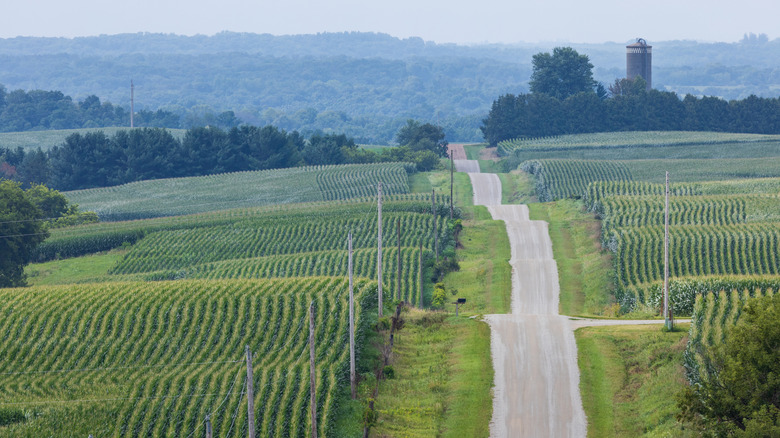
There are a lot of ways to wave in greeting, from a big, open-handed sway of the arm to a diminutive, quick flick of the wrist. In rural Midwestern areas specifically, you'll encounter what's commonly known as the "farmer wave." While not limited to this region, it's widespread enough here that you'll likely observe it if you're driving through the countryside. It's also a specific bit of etiquette to be prepared for before visiting the Midwest. The farmer wave is never a big "hey!" type of gesture, or rarely even a showing of the whole hand — unless the wave is more a message of thanks for being allowed to change a lane, for example, or to sneak into a line of traffic.
The farmer wave typically consists of simply one or two fingers lifted from the steering wheel in acknowledgement — a familiar courtesy in an area where people are likely to see a lot of the same people often. No one will be offended if you don't signal back, and you shouldn't be offended if no one returns it when you try. But if someone makes the effort, consider doing the same. Personally, I love the sense of camaraderie from locals, even if I'm driving around somewhere that's feels pretty far from home.
It can get very cold — and also very hot
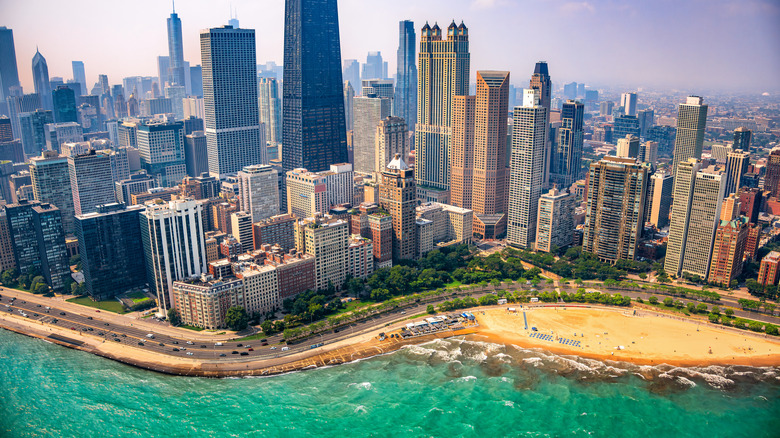
Weather can be changeable and extreme in the Midwest, and it's often a topic of conversation for good reason. Illinois has had the most tornadoes so far in 2026, and heavy rainfall events are increasing. Agriculture has long been a mainstay of the economy and people's way of life in the region, so talking about rain or the first frost is not just small talk — sometimes, it's serious shop talk. Variability is the name of the game. "You can't spell 'fall' without 'all,' and you need it all," says Midwestern comedian Charlie Berens in a sketch about preparing for autumn weather.
The average high temperature across the Midwest is 85 degrees Fahrenheit, which is often accompanied by humidity, while the average low is a frigid 15 degrees. It's not unheard of for summer temperatures to soar into the 90s or even beyond 100 degrees. And in the winter, an occasional phenomenon known as the polar vortex will send freezing arctic air into especially the northern swath of the region and sink temperatures well below zero. Add the wind chill into the equation, and it might just make your face hurt to even think about stepping outside! Midwestern natives are accustomed to the contrasts, and communities and neighbors are well prepared with equipment to keep roads and sidewalks clear.
Cheese curds can be fresh or fried

Cheese curds are formed in the earliest stage of cheesemaking, and they're usually produced as part of the cheddar-making process. They're essentially little blobs of curdled milk with a texture that's light, a little chewy, and at their freshest, squeaky. In my family, we don't bother buying a bag if we know we won't finish it that day; the squeak and freshness goes away after a day or so (or if they're left in the fridge). They're usually served at room temperature, and grocery stores (especially in "America's Dairyland" of Wisconsin) will often have a table out near the dairy department with the day's freshly-bagged delivery. Sometimes they're seasoned with herbs, but honestly, they're excellent plain. Fair warning: They can be addictive.
Then there are deep-fried cheese curds, which are what you'll find on countless tavern and restaurant menus around the region. My personal favorite are curds that are beer battered or fried in a kind of light, tempura-like coating. You can also find them breaded, as they are at chains like Culver's. Pro tip: Don't skimp on the dipping sauce. Fried cheese curds are amazing when dipped in a red pepper aioli or a trusty ranch dressing, which European tourists love buying when they visit America.
Fishing isn't just a summertime activity
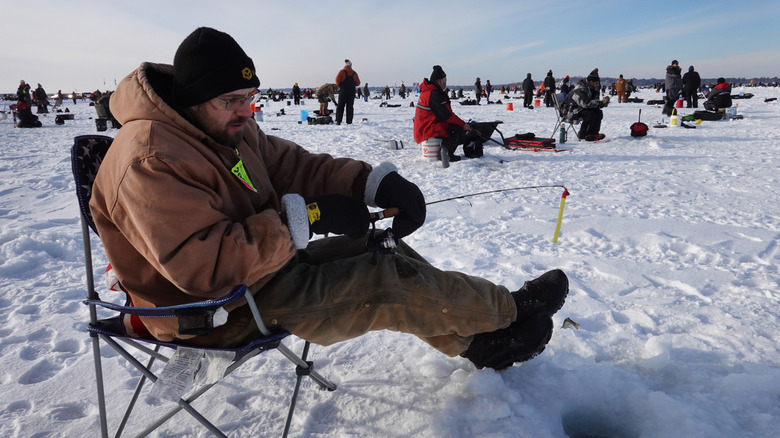
Fishing is a time-honored pastime in the Midwest thanks to the broad region's thousands upon thousands of lakes. Minnesota, Michigan, and Wisconsin are especially known for their watery oases thanks to the Great Lakes and numerous other bodies of water dotting the northern part of region, such as in the picturesque Northwoods of Wisconsin or Minnesota's Arrowhead. But you'll find epic fishing all over the Midwest, from Iowa's own "Great Lakes" with swimming, fishing, and camping to numerous public access waters in other states that are generally managed by their respective departments of natural resources or fish and wildlife. Of course, summer is the prime time to head out on the open water. However, when the temperatures drop and the waters ice over, that doesn't mean the fun comes to an end.
Ice fishing is immanently popular in the Midwest and creates its own sense of camaraderie. It's more limited to the northern part of the region because the ice forms more robustly and lasts longer than in the southern areas. In Indiana, for example, ice fishing is a favorite on Lake Wawasee, Tippecanoe Lake, and Lake Maxinkuckee, among others, where anglers can find northern pike, perch, walleye, and crappie. The same goes for many lakes across the Midwest's more northerly latitudes. In North Dakota, darkhouse spearfishing is a unique tradition, in addition to other truly unique winter fishing events such as sturgeon spearing on Lake Winnebago, Wisconsin's lake paradise for world-class fishing. You can also attend the North Metro Ice Show or the Brainerd Jaycees Ice Fishing Extravaganza in Minnesota every year.
Shorts also aren't limited to the summertime
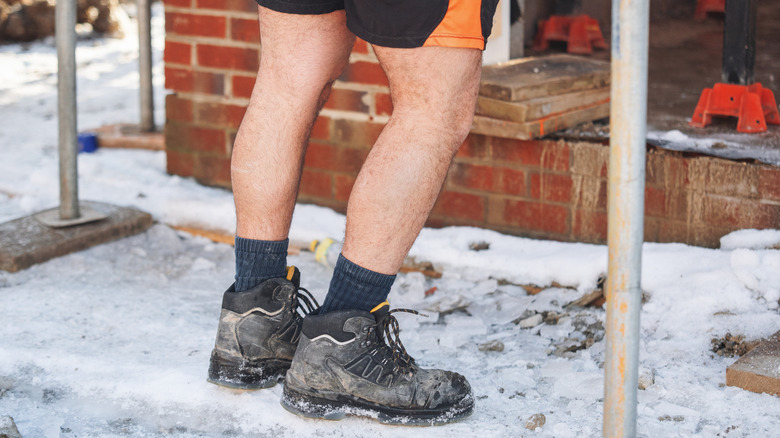
Believe it or not, it's pretty common to see Midwesterners wearing shorts throughout the winter, regardless of the temperature. I happen to have an uncle that literally does not own a single pair of pants, but he lives in Wisconsin where temperatures in the winter are no joke. "Pretty common occurrence here [in the Midwest]," said one Redditor. "My friend is one of these, every time anyone asks, he just says he hates the feeling of long pants lol."
One contributing factor to this arguably impractical convention may lie in the fact that Midwesterners don't spend a lot of time walking around outside in the winter; they move from the house, to work, to the car, and back again — unlike in, say, New York City, where there's much more outdoor walking involved in your day to day life. "In the Midwest a warm car or house is basically always close by, so a proper winter coat (or pants I guess lmao) is often just a burden," said another Redditor. As an aside, if you've ever been to a game at Lambeau Field, you know that below-freezing temperatures don't stop the die-hards from going shirtless for hours on end, too. Midwesterners are a tough bunch (and also take football fandom very seriously).
People drive just about everywhere
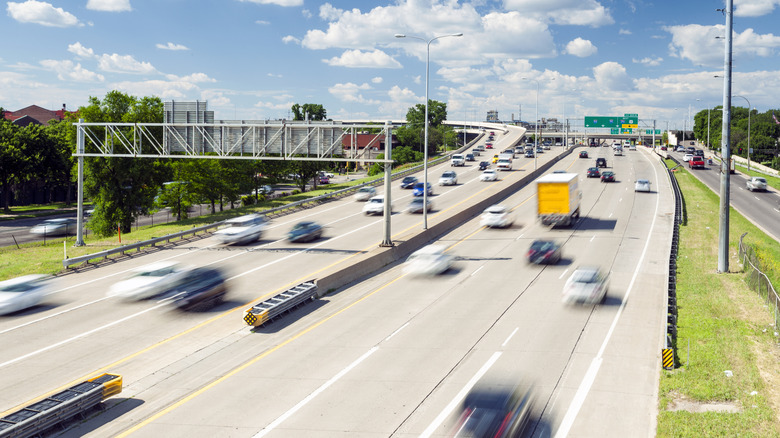
Unless they're based right in the center of a city like Chicago, St. Louis, or Minneapolis — where locals can take advantage of readily available public transportation — Midwesterners most likely travel by car. In fact, even in those aforementioned cities, most people still drive. We're used to driving fairly long distances to get where we need to go, especially in rural or micro-urban areas. "I mean it is common from where I live, rural MN, to drive and hour to 2 to get to the Twin Cities if you want to take the family to the Zoo, or a major league ball game," shared one local Redditor. "Parents where I am drive an hour or two each way just to see their high schooler play ball against another school."
Urban areas typically have bus systems, but they may be more or less efficient depending on the geography. Where I live, for example, it would take an hour on the bus to get to a place that takes 20 minutes to drive to. Commuter trains or trams are limited to major urban centers like Chicago and Minneapolis, but they're great when they're available. Across many parts of the region, rural areas are quite spread out, and there may be dozens of miles between towns. Midwesterners also just tend to really like driving. "Folks in the midwest are not intimidated by vast open spaces," said another Redditor in response to a humorous ad for South Dakota tourism that touted it's "just an 11-hour drive from Milwaukee!"
Horse-drawn buggies are not uncommon in the country
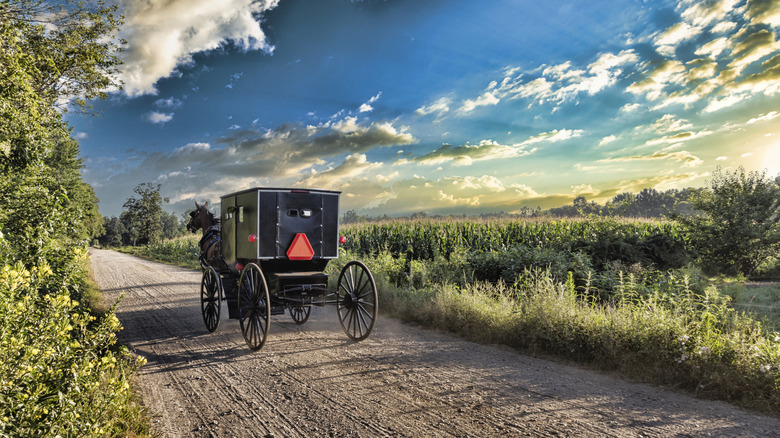
As you're driving down the highway in the Midwest, you may encounter an unexpected vehicle sharing the road: a horse-drawn buggy. These black carriages, which have bright orange triangles on them to make them more easily visible to passing cars, belong to Amish families who use them as their primary mode of long-distance transportation. Although they are often associated with Pennsylvania, the highest concentrations of Amish communities in the Midwest are found throughout Ohio, Indiana, Wisconsin, Michigan, and Missouri (as well as smaller concentrations in other states), according to Amish America. If you pass a buggy on a busier thoroughfare, give it plenty of space or pass slowly if you're on a narrower road.
Especially if you're traveling in the vicinity of large Amish populations, such as around Arthur, Illinois, which is full of farms and small-town charm, it's not uncommon to pass by large farms with huge barns and lots of horses. You can often spot an Amish property by the lack of electrical service to the house, which is typically white, large, and boxy. Everything, including their dress, looks a little old-fashioned because they intentionally limit modern technology and value humility and simplicity as a matter of faith. I always enjoy spotting families out and about or kids playing in their yard during a Sunday gathering, as their way of life harkens back to an earlier time.
There is so much incredible Indigenous heritage to explore
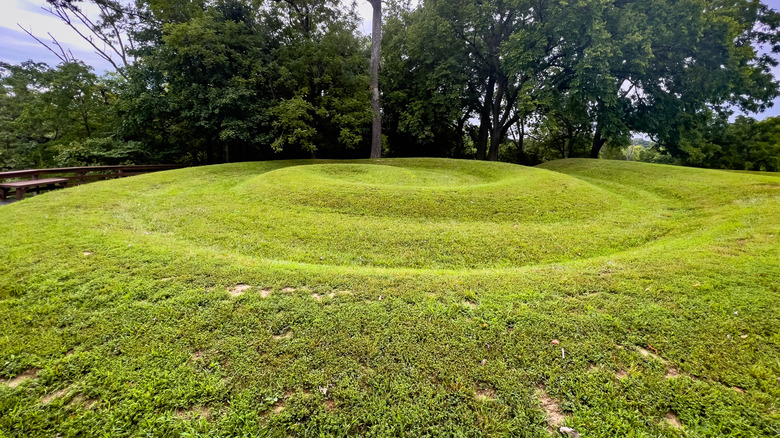
It may seem like a lot of the ancient Native American historic sites are located in the Southwest, where desert conditions have preserved stone dwellings and petroglyphs on the level of Mesa Verde, an archaeological wonder in Colorado. In the more temperate north, organic materials like wood and textiles have disappeared over time, leaving less of a trace. But the Midwest is home to a really unique series of Native American sites and monuments. There's the Great Serpent Mound near Peebles, Ohio, which is the largest of its kind. In Illinois, just east of St. Louis, Cahokia Mounds State Historic Site is a UNESCO World Heritage Site featuring America's "largest prehistoric earthen mound." And on the banks of the Mississippi River in Iowa, you'll find Effigy Mounds National Monument, which features more than 200 of the namesake earthworks constructed by people who lived in the area many centuries ago.
Numerous tribes continue to call the region home, and there are plenty of ways to learn about and experience facets of their diverse cultures. Attend a pow wow, explore how the past meets the present at Grand Portage National Monument, visit South Dakota's Crazy Horse Memorial and The Indian Museum of North America, or explore smaller tribal cultural centers such as the Ojibwe Museum and Cultural Center in Lac du Flambeau, Wisconsin. And if you're in Minneapolis, book a table at Indígena by Owamni, a culinary experience celebrating Indigenous flavors by Oglala Lakota chef Sean Sherman.
Supper clubs have their own way of doing things
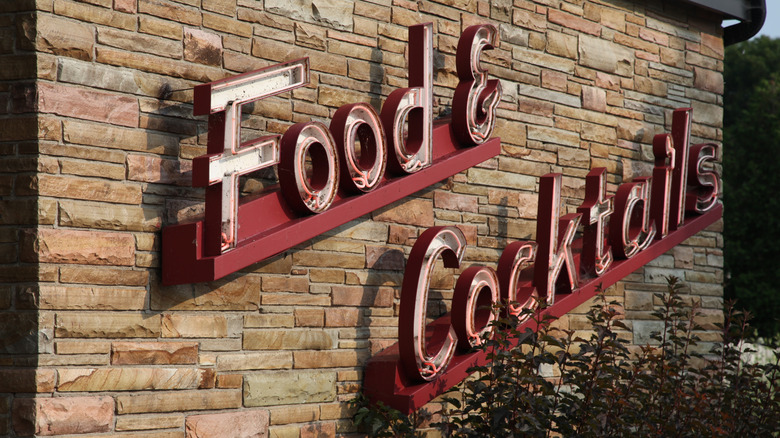
Defining what a supper club is can be difficult. I have friends from other parts of the U.S. who still don't really grasp the idea. What makes it different than a typical restaurant? On the surface, of course, that's what it is: a place to dine that also has a bar. But these Midwestern destinations, which are especially popular in Wisconsin, are defined as much by their aesthetic and menu options as they are by the etiquette and, shall we say, run of show. These are the places to savor broasted chicken, prime steak, and fish on Fridays. Things vary somewhat from business to business, including some elements that may be surprising to first-time supper clubbers.
Firstly, 4 p.m. is not too early to show up for dinner. Midwesterners tend to eat early, and while 4 p.m. does seem like a strange time to eat, it's the first hint of supper club culture. Since supper clubs often get very busy, people turn up when the doors open. You'll likely put your name in at the host stand for a table, but that won't be ready for a little while. The idea is that you head to the bar with menus in hand instead, where you can sip a beer or a Wisconsin brandy old fashioned (just remember to tell the bartender if you want it sweet or sour). Typically, it's also at the bar where a server will take your food order, and you'll be alerted when your table is ready. Once you head there, your food will be brought out. The best supper clubs also have a salad bar to enjoy while you wait a little longer in the dining room.
Midwestern cities are architectural treasure chests
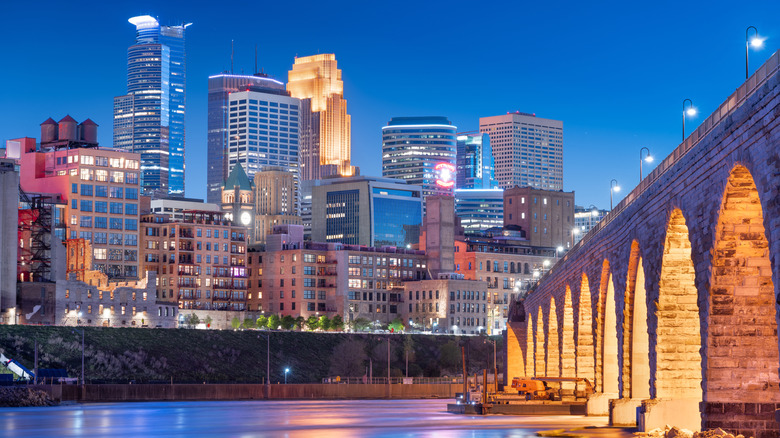
Frank Lloyd Wright, one of the world's most acclaimed architects, left a substantial mark in the Midwest. To start with, his northern home and studio, called Taliesin, is located in southern Wisconsin, and his designs for gas stations, churches, homes, public buildings, corporations, and more can be found all over the region. And Wright is just the tip of the architectural iceberg. Chicago is renowned for its wide variety of styles, all of which perfectly demonstrate the city's role as a Midwestern industrial and financial center — especially after the Great Chicago Fire of 1871 decimated more than 2,000 acres of the city. When Chicago was rebuilt, it was solid and splendid. The city's stunning reputation continued with the building of Art Deco masterpieces, modernist treasures, and many must-see art and architecture spots by the likes of Ludwig Mies van der Rohe and others.
Chicago's certainly not alone, although it's one of the best places in the region to take an architecture tour thanks to its river boats. Mason City, Iowa, is one of the best prairie cities for a goldmine of architecture, and Milwaukee is home to masterful designs by renowned architects Eero Saarinen and Santiago Calatrava — right next door to one another at the Milwaukee Art Museum. Minneapolis is also a trove of Art Deco spaces, vintage neon like the iconic Gold Medal Flour sign, and the world's largest enclosed skywalk system that connects over 150 buildings. No matter which city you head to, you're bound to experience a combination of history-meets-modernity, from main street charm to progressive style.