
The 5 American States To Visit With The Fewest Snakes
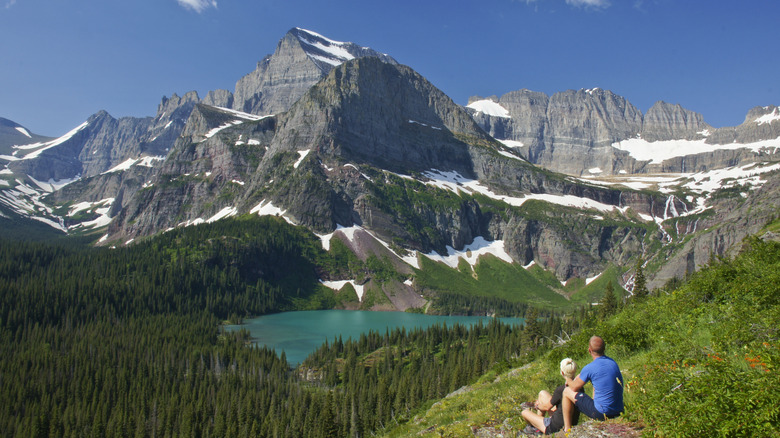
Imagine you're on vacation, hiking in the mountains of a beautiful state park when your footing slips on a rock. The rock tilts to uncover a snake, surprising you both. Encountering wildlife in nature is often welcome, but since some people are afraid of snakes — and some snakes can bite — coming face to face with one can be scary. It might put your mind at ease knowing that most snakes pose no threat to humans and snakes kill only five people per year in America. Still, if you don't want to be one of those five and wish to hike without fear of encountering any slithering serpents, there are five U.S. states where you have the best chance of not seeing any.
We did the research for you, scouring reliable sources including World Population Review, A-Z Animals, and at least one official source from each state to discover the five states to visit with the fewest snakes. You can relax completely when traveling to the top two on our list, they don't have any snakes at all. The third state has nine species of snakes, none of them venomous (venomous not poisonous, as the latter refers to a creature causing harm if it's touched or ingested). The last two are neighboring states, tied with 10 species each, one of them venomous.
There are plenty of places in the world you can visit where there are no snakes at all, such as islands like Ireland and cold destinations like Antarctica and the Arctic. America, though, generally has quite a lot of them, particularly in warm states like Florida, Arizona, and Texas. In fact, Texas is the state with the most snake species: Those with a fear of snakes should stay away from the Lone Star State, which has 68 species, including 10 species of rattlesnakes.
Alaska
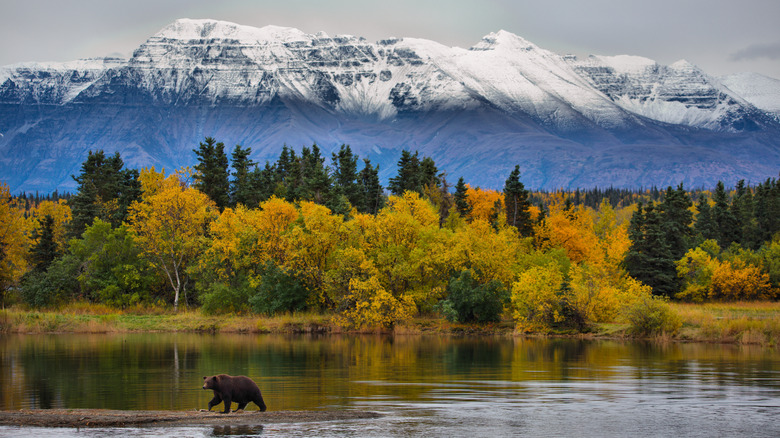
Alaska's vast wilderness is a dream destination for nature lovers to go camping, fishing, and exploring its pristine backcountry on foot. You might get close to deadly wildlife on the scenic Rovers Run hike, but there is no chance of encountering a snake because Alaska is one of only two U.S. states that don't have any. Although moose, wolverines, and a variety of bears pose danger to humans in Alaska, snakes are not on the list of animals to fear here.
Why doesn't The Last Frontier have snakes? It's just too cold. Reptiles need heat from the sun to survive and with temperatures in Alaska dropping to an average low of well below zero for months at a time, it's a climate where reptiles cannot live. You won't find other reptiles like turtles or lizards here either. Not only does Alaska not have snakes now but wildlife records indicate it has never had them. So, rest assured, you can get out and explore Alaska without fear of encountering any snakes.
Hawaii
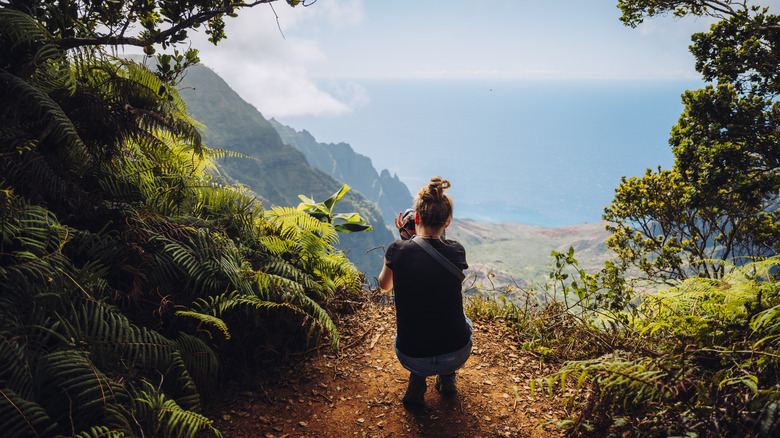
Hawaii is the other U.S. state without any snakes. So when you're taking in jaw-dropping views of jagged peaks and blue ocean, or hiking a secluded Oahu trail that leads to a 100-foot waterfall, you don't have to worry about stepping on a snake.
It's not cold in Hawaii like it is in Alaska, so you might wonder why there aren't any snakes. The reason is that there are no native snake species, and as a group of islands, snakes in Hawaii would have to be introduced by humans. But travelers who fear snakes can be assured that Hawaii has no plans to introduce them into its ecosystem. Just the opposite: The state actively tries to prevent snake populations. Officials do this by inspecting cargo and not prosecuting residents who have snakes as pets if they turn them in, as it's not legal to have a pet snake in Hawaii. However, the chance of a snake encounter in Hawaii isn't zero as it is in Alaska. A small number of likely former pet snakes are reported every year on the islands. Wildlife officials immediately collect them, but there's a miniscule chance of coming across an escaped pet snake on a secluded Maui hike for adventurers and birdwatchers.
There is one species of snake in Hawaii that's not concerning to wildlife officials as it isn't harmful to humans and it helps the environment by eating non-native insects. Most people wouldn't even know that the Brahminy brown snake is a snake at all because it looks like a worm. So, all in all, Hawaii is a very safe place for travelers who want to avoid snakes.
Maine
Lighthouses and lobster, rocky coastline and wide, open spaces are all part of Maine's appeal as a vacation destination. When enjoying Maine's natural beauty on a hike like the Morse Mountain and Seawall Beach trail, there's just a small chance of encountering a snake. And even if you do see one, don't panic, the state has none that are venomous.
Jumping from zero snakes in Alaska and Hawaii to nine species in Maine, the Pine Tree State has a small number because of its cool climate. In fact, Maine is one of just two states in the lower 48 with no native venomous snakes. However, snakes are good at hiding on land and are even found in water, so watch out when swimming, as some of Maine's most beautiful lakes and rivers have snakes.
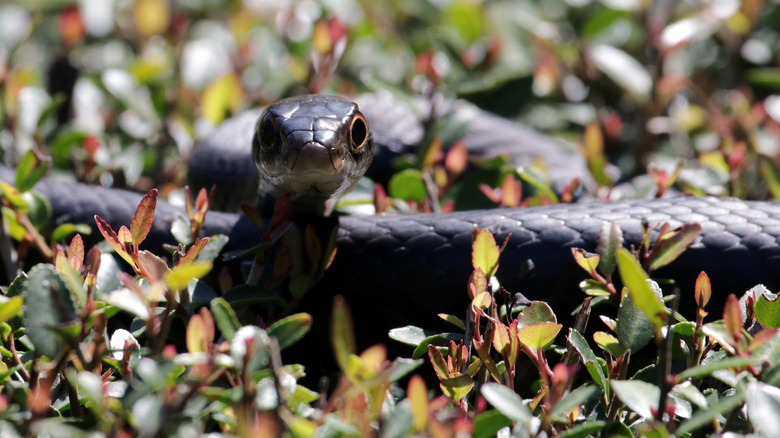
If you're hiking on Maine's hidden gem Buckle Island and come across a black snake that's five feet long and you're afraid of snakes, it might be hard to stay calm, but you should. Although it's Maine's largest snake, the Black Racer (pictured) is harmless. Most Maine snakes though are smaller, as a more compact size helps them handle the cold weather better, hibernating underground in burrows. Other snakes you might find as you explore Maine's picturesque countryside are Eastern milk snakes, ribbon snakes, and the common garter snake.
Montana
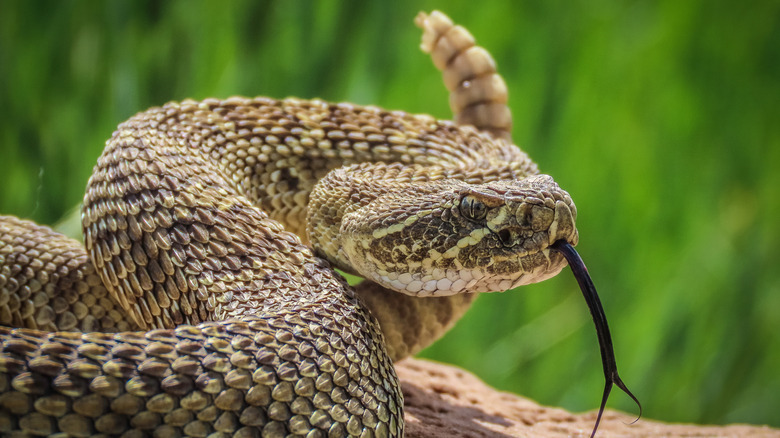
Whether you're attempting the strenuous Highline Trail at Glacier National Park or exploring the crowd-free Pryor Mountains on foot, Montana is a beautiful state with the well-deserved nickname of Big Sky Country. It's also a state where you don't have to worry much about encountering snakes. There's a tie for the fourth and fifth positions on this list of the states with the fewest snakes: Montana and North Dakota each have 10 species.
Unlike Maine, Montana does have one venomous snake visitors should know about, the prairie rattlesnake (pictured). Outdoor adventurers should look out for this one in its preferred habitat of open fields, at elevations under 6,400 feet. The Montana Department of Agriculture says you'll know it's a prairie rattlesnake by its triangle-shaped head, length between 2 and 3.75 feet, and dark markings that become rings at the tail. Hopefully you won't hear its rattle, but that's another way to tell it's a rattlesnake.
Montana's harmless snakes include several species of garter snakes as well as the rubber boa, gopher snake, and two harmless species often confused for dangerous ones because of their rattles. The Western milk snake can rattle its tail when threatened. It also has coloring similar to coral snakes, which are venomous but don't live in Montana. The agriculture department offers this guideline when attempting to differentiate coral snakes from other snakes: "Red on yellow, kill a fellow, red on black, venom lack." The Plains hog-nosed snake is another nonvenomous species that can rattle its tail. But the Western milk snake and the Plains hog-nosed snake cannot harm humans. So go ahead and enjoy camping, hiking, and fishing at Montana's serene Whitefish Lake far from any big city, you've only got one snake to look out for here.
North Dakota
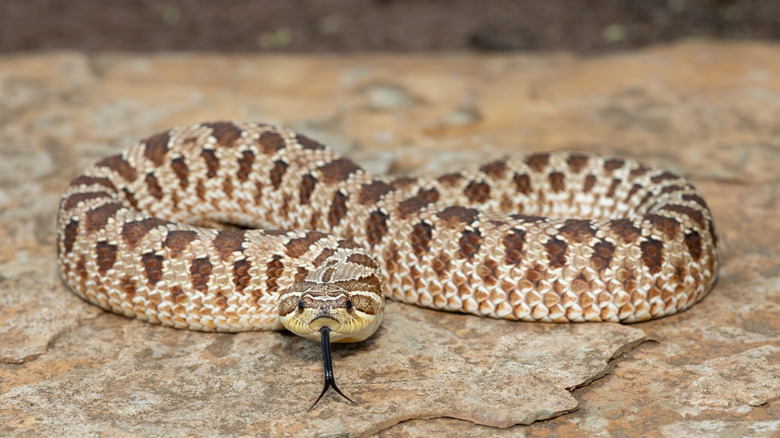
Montana's neighbor to the east, North Dakota, also lures tourists with wide open spaces to explore. Visitors can hike one of America's most underrated national park trails or take in the panoramic river valley views in North Dakota's oldest state park. In both places, nature lovers have little to fear when it comes to encountering a snake.
Like Montana, North Dakota also has 10 snake species, also with the prairie rattlesnake (pictured) being the only one that's venomous. The Amphibians and Reptiles of North Dakota website, which is created and maintained by organizations including the North Dakota Department of Game and Fish and North Dakota State University, tracks species and educates the public. The website states that the largest population of rattlesnakes in North Dakota is in the southwestern part of the state. Snake experts caution hikers to be on the lookout for them in habitats like grassy areas and rock ridges when they hunt during the day in spring and fall. Hikers don't need to be as vigilant in winter because snakes hibernate.
You might think that since rattlesnakes hunt at night in summer that hikers on trails during the day wouldn't encounter them. However, the vast majority of rattlesnake bites do happen in summer because both hikers and snakes can get a surprise when hikers disturb them when they're sheltering from the sun under rocks. As mentioned above in the Montana entry, Plains hognose snakes can be confused for rattlesnakes. In North Dakota, if you find a brown or tan snake in a sandy area by a river and it has an upturned nose, it's a Plains hognose snake (pictured) and it doesn't pose any danger.
Methodology
To find the five American states with the fewest snakes, we started with the state rankings of number of snake species from World Population Review and compared them with the list from A-Z Animals. Then, we verified the numbers of snake species with an official source for each of the states that made those two lists of the top 10 states with the fewest snake species. We found inaccurate information about three of the states on the A to Z Animals list. Rhode Island, Vermont, and New Hampshire are high on their list but the Rhode Island Fish and Wildlife Department says the state has 12 species of snakes and both the Vermont Fish and Wildlife Department and the New Hampshire Fish and Game Department says these states each have 11 species so these three states didn't make our list.
State-specific resources consulted include the Montana Department of Fish, Wildife and Parks, Amphibians and Reptiles of North Dakota, Alaska Department of Fish and Game, Alaska-specific information from A-Z Animals, Big Island Invasive Species Committee, and Maine snake information from Green Nature. In addition, for background, we consulted reliable sources such as Popular Science, AAC Wildlife Removal and World Atlas.