
The Surprising Countries Named Best Places To Relocate To In 2026

Planning a vacation is one thing, but upping sticks and moving somewhere permanently is quite another. Motivations for such a radical change vary: work, romance, family, or the financial reality of living in a country plagued by a cost-of-living crisis. Such things have driven some of the greatest migrations in human history, but in those cases where the decision to move stems from a simple desire for change, those times when neither your job, partner, nor family are principal motivations, pointing you towards a specific set of coordinates, the salient question is always the same. Where?
Thankfully, there is no need to throw a dart at a map of the world and hope for the best. Yes, you may already have some intrinsic bias — a preloaded ability to speak the local language is an undeniable blessing — but cold, hard facts about visa access, cost of living, and quality of life in any given locale can be equally compelling. Which is where Rumavi's Global Relocation Index comes into play.
Although Rumavi, as a company, is mostly focused on helping those moving to or investing in Southeast Asia, its annual relocation index is a global affair. The list is based on four key pillars: financial and tax, liveability and health, safety and stability, and setting and opportunity. We've not messed with the formula at all here, but we have thrown in our expertise in all things travel to flesh out the narrative surrounding each of the top countries. And hey, these are just suggestions. Any relocation decision is personal, requires consideration of a variety of factors, and should be made based on your specific set of circumstances. But could you do worse than the countries listed below in reverse order? That data suggests that yes, you could.
Malta

Malta's position just south of Sicily and less than a couple of hundred nautical miles from the African coast has often made it something of a strategic pawn. Known for an extraordinarily long history of foreign invasions and occupations, during World War II it was also one of the most intensely bombed places on the planet, according to the BBC. The scars of that terrible war remain to this very day, but the tiny republic of over half a million is a place at ease with a cultural heritage that spans millennia, not centuries. And for all its sites of archaeological significance, its Roman ruins, its hallmarks of British neoclassicism, and 16th-century piazzas, Malta remains a deeply modern society and an absolute Mecca of digital nomadism.
English is one of Malta's two official languages; communication issues are rare. Applying for a Nomad Residence Permit is a relatively straightforward affair for non-EU citizens (provided they meet the program's income, employment, and other eligibility requirements), and Malta's popularity among international residents has grown in recent years. Crime is low (as reported by Free Malta), and the cost of living is, according to Numbeo, around 22% lower than in the U.S. As an island, however, Malta relies heavily on imports, and certain items, groceries included, can be more expensive.
Still, you get to stay on what is arguably one of the most beautiful islands in the Mediterranean. Surrounded by impossibly blue water, it is a place of hidden coves, incredible markets, nightlife-friendly lagoons, and vibrant festivals. The people are friendly, the weather is fantastic, and much of southern Europe and North Africa is only a short trip away.
Czechia
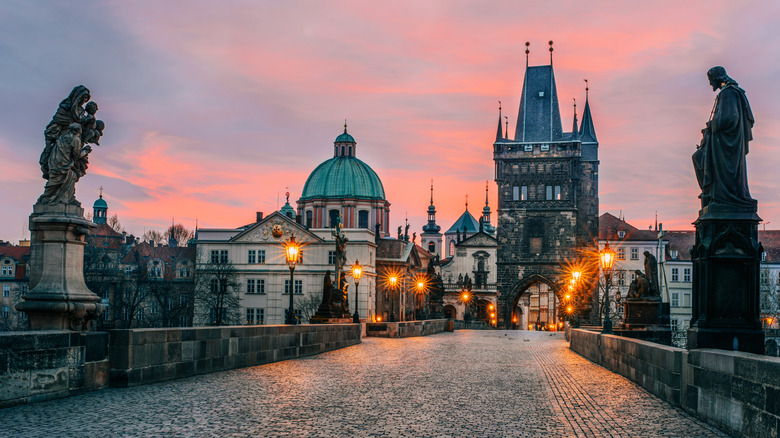
Czechia's ninth-place position in the Global Relocation Index reflects a number of converging advantages it has over neighboring countries. It has well-regulated banking infrastructure, strong property rights, and low unemployment rates, according to Statista. Regarding cost of living, the small nation of just under 10.5 million people is roughly 25% cheaper than you'd find in the U.S. (according to My Life Elsewhere), once rent is taken into account, although you'll probably take a hit in terms of strict local purchasing power.
Such numbers make for an inviting relocation spot. The country's location at the nexus of Poland, Germany, Austria, and Slovakia makes it an ideal base for a broader exploration of the European continent. Secondly, its low crime rate (according to Statbase) makes it one of Europe's safest countries. A thriving technology sector and automotive industry make the country attractive to foreign nationals relocating, and, while a language barrier is present, English is widely spoken. U.S. nationals are also entitled to free access to the country's labor market, meaning they do not need a separate work permit, although they must still attain a residency permit.
With world-class transportation links and a well-developed health care system, digital nomads are also well served here, thanks to streamlined visa applications for applicants from specific countries and excellent IT infrastructure. A natural bias towards the capital is, of course, present, but outside Prague you can find hidden towns with colorful streets and scenic squares equally capable of making a convincing case for life beyond the capital.
St Kitts and Nevis
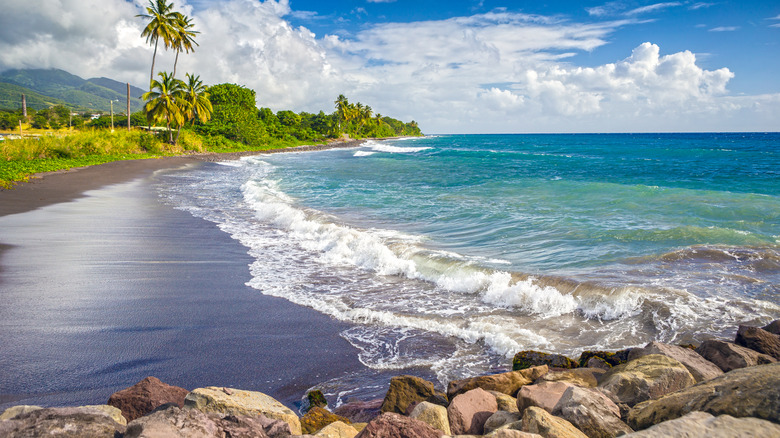
Half a world away and surrounded by some of the most pristine waters you'll find anywhere on the planet lies St Kitts and Nevis, a Caribbean island destination much beloved by boomers and remote workers alike. As a former British colony, it has the advantage of having English as its official language, and, thanks to its Citizenship by Investment program, obtaining citizenship isn't really an issue.
At least it's not an issue for those who have at least US$250,000 to contribute to the islands' continued prosperity. For those without such wealth, the immigration options are considerably more limited, but nothing so serious as to put would-be residents off. Anxiety over unreliable Internet speeds is unwarranted (they are actually relatively stable), and crime rates are low by regional standards. Still, data on the cost of living here is mixed: It's more expensive than many of its neighbors, but finding rental accommodation below the U.S. average is possible, and the level of peace and security is probably worth it regardless.
Tax rates, on the other hand, are highly favorable, with no personal income tax, although you'll need to seek expert advice regarding your specific circumstances. With that in mind, the island paradises, replete with scenic railways, lush botanical gardens, and calm ocean views, are yours to explore. Island-hopping tours to nearby destinations like Anguilla or Antigua and Barbuda make regional travel straightforward, offering plenty of opportunities to see more of the Caribbean.
Hong Kong

Clocking in at No. 7 on the 2026 Global Relocation Index, Hong Kong is a special administrative region of China, but one where British-era cultural and institutional norms persevere, albeit in somewhat muted forms. English is an official language (although Cantonese dominates), English common-law traditions endure, and yes, everyone drives on the left.
As for what Hong Kong offers those looking to relocate, its highly competitive, tax-friendly environment is front and center, with the total absence of Goods and Services Tax or VAT. Various visa options, including their Top Talent Pass Scheme (TTPS) and Quality Migrant Admission Scheme (QMAS), offer potential routes to relocation but come with caveats. The cost of living in Hong Kong is significantly higher than in the United States, especially for rent, which is almost double the American national average for those wanting to live close to the center of action, according to Numbeo.
Still, at least eating out is cheaper, something of a boon considering Hong Kong is one of the best destinations for Michelin-recommended street food in the world. Nor is the food the only thing worth celebrating. Around 40% of Hong Kong is protected parkland (according to Cathay Pacific), which provides a fantastic contrast to the urban sprawl of the city itself. Multimedia light shows across the harbor are common, public transport links are superb, and its café culture rivals that of Paris. It also serves as an excellent jumping-off point for a wider exploration of Asia and acts as a regional base for those looking to do business in mainland China.
Lithuania
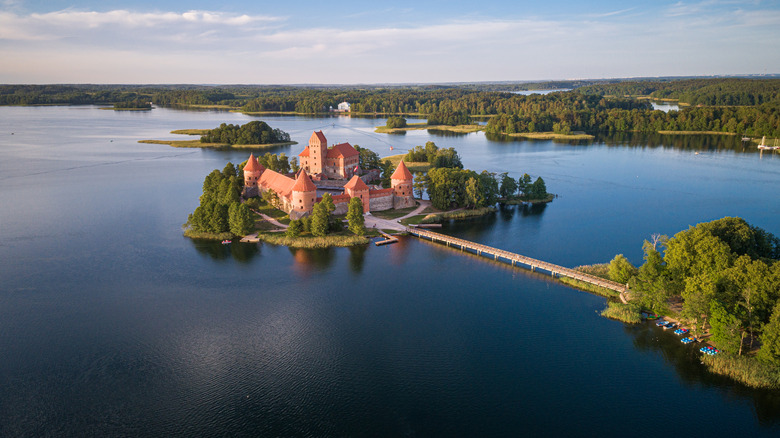
Veering back to Europe, we find Lithuania at No. 6 in Rumavi's Global Relocation Index, with particular attention given to property rights for non-citizens and family-friendly factors. Throw in the fact that its capital, Vilnius, is one of Europe's most affordable cities, and its desirability snaps into a sudden and undeniably sharp focus.
The cost-of-living savings are no joke: Things are, on average, around 50% cheaper across the Baltic state when compared to the U.S., according to LivingCost. At the same time, qualifying small businesses can benefit from a reduced corporate tax rate of just 5%. And that double whammy of low tax and cheap living makes Lithuania an increasingly attractive base for international residents.
With so much extra money in the pockets of the recently arrived, opportunities for exploration abound. The food is good, the people are friendly, and although a language barrier definitely exists, Lithuania ranks No. 11 among the 26 EU members (according to MoveMap EU) in terms of English proficiency. And with amber-strewn beaches to explore, fantastic architecture, and an overall forward-thinking vibe to immerse yourself in, the reliable public transport network and highly walkable cities of Lithuania pretty much seal the deal.
Taiwan

An underrated paradise filled with hot springs, national parks, and breathtaking coastal views, it is a poorly kept secret that Taiwan is Asia's happiest country. The number of tourists heading Taiwan's way is on the increase (as reported by Taiwan News), and proposed incentives — by way of cash pay-outs to repeat visitors — look set to improve things still further. With excellent food to sample, a vibrant night market culture, and a living tapestry of ancient temples to explore, Taiwan is a compelling choice of destination.
It also ranks No. 5 on the Global Relocation Index. Rumavi highlights its suitability across a number of metrics, and impressive scores in schooling, healthcare, and quality of life bring Taiwan all the way to the No. 2 position for family living. Crime is also low here: Numbeo ranked Taiwan as the fourth safest country in the world in 2026.
But you'll also find excellent (and steadily improving) digital infrastructure, a potentially favorable tax environment for short-stay digital nomads, and visa-exempt entry for U.S. nationals. Language barriers, however, definitely exist here, and applying for permanent residency typically requires at least five years of continuous residence. But even with those caveats in mind, it's difficult to ignore Taiwan's potential, especially when using it as a short-term base of operations.
Portugal

Portugal's No. 4 position on the Global Relocation Index stems from its popularity as a haven for digital nomadism, non-citizen property rights, and its overall attractiveness as a place to live. As a simple vacation choice, Portugal has long held a reputation as a coastal paradise that hosts some of Europe's most breathtaking beaches, limestone clifftops, seafood, and world-class wine. And if that wasn't enough, it's also one of the least expensive places to visit in Western Europe, according to the Post Office.
For those looking to do more than visit, the good news is that the savings are evident across the board. Once rent is factored in, Portugal is around 32% cheaper than the U.S., with other key expenditures (according to Numbeo), such as childcare, broadband, and groceries, offering even steeper discounts. Average salaries are, of course, also much lower, but for those looking to relocate to work from home, temporary visas can be applied for, with permanent residency generally possible after five years, once the country grabs you by the proverbial lapels and refuses to let go.
Which it very well might. The capital city, Lisbon, is widely regarded as the happiest holiday destination in the world, and cities such as Porto and Coimbra offer dramatic river views and academic sensibilities, respectively. And even those who are not looking to relocate for work are well served by the country's D7 Passive Income Visa program. Through it, applicants gain access to excellent healthcare options, a path to citizenship, and the chance to live in one of the most peaceful countries in the world while stretching out a retirement budget in a number of exciting and accessible ways.
Malaysia

In 2026, Malaysia experienced an upswing in tourism, with more visitors choosing to vacation in the sprawling nation of over 34 million people (according to the country's Department of Statistics). Some decided to visit the island of Borneo in search of some of the world's most elusive creatures, while others sought its near-unmatched relationship with great food, craved the bustling shops and markets of its capital, Kuala Lumpur, or else desired to walk high among the trees of the Taman Negara Tropical Rainforest.
And as for a place to relocate, Rumavi certainly rates it highly. Malaysia places first in terms of attractiveness for both digital nomads and retirees. Language barriers are minimal, and the country is blessed with a wealth of places to work from if doing so from home is not possible. Regarding cost of living, you can expect to pay around half of the average U.S. expenditures, with rental prices as much as 76% lower than the American equivalent and basic utility bills cost little over $54 a month, according to Numbeo.
Meanwhile, professional visas can be obtained for a three- to-12-month period with the option to renew, while Malaysia's digital tax incentives are available to qualifying companies and investments to sweeten the deal. Such breaks, however, might not apply to individual circumstances, so it's a good idea to check with some professionals before you start loading things into cardboard boxes. There's even the MDEC expat service center that offers expert advice for both those thinking of moving and those who have already relocated. And seniors haven't been left behind either: Malaysia's My Second Home Program offers several categories that cater to the needs of retirees, including residential ownership rights and access to world-class healthcare services.
Singapore

Singapore's inclusion in the index at the No. 2 spot is hardly surprising, given all that the city-state has going for it. As one of the safest places in Asia for women traveling solo, the small nation of just over 6 million people has famously low crime rates. And while relocating to a nation with one of the lowest homicide rates in the world is certainly a comforting thought, it is not the principal draw. When it comes to a tax-friendly environment for those looking to relocate, Singapore is tough to beat.
As anyone who has visited Singapore will tell you, the country stands out in multiple ways. It is home to one of the most senior-friendly airports in the world, is a culinary paradise, and is a place of richly diverse cultural heritage. Its city-in-a-garden design appeals to lovers of both urban sprawl and green spaces, and its compact nature makes it a highly connected society both in terms of transport links and internet availability.
As for those tax breaks, employment, investor, or professional visa holders will be subject to a progressive tax environment that favors non-residential status. It is, however, a more expensive place to live than most of the United States, with rental prices that are almost twice the U.S. average, according to Numbeo. Still, Singapore remains cheaper than cost-of-living hotspots such as New York City and even beyond that, its stable currency and excellent banking sector are undeniable wins. Such truths, when combined with its political solidity and world-leading healthcare system, make it a near-perfect choice for workers, families, and retirees alike.
Estonia
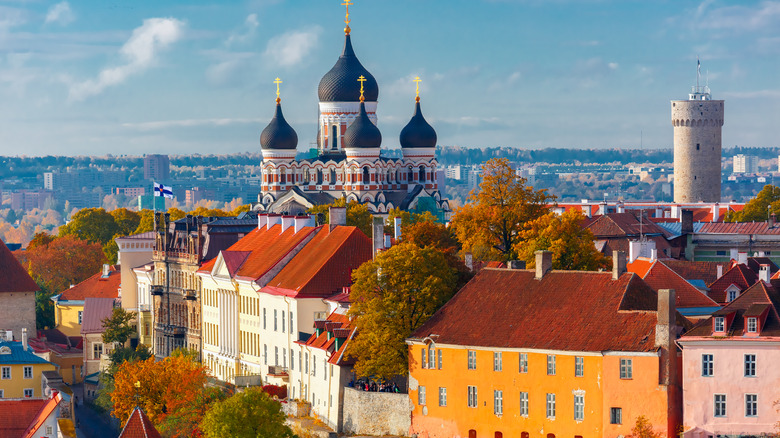
A pivot back to Europe is perhaps unexpected, but with Lithuania riding high in the charts, it is at least somewhat understandable that one of its closest neighbors also shines brightly. Rumavi's decision to put Estonia at the top of the Global Relocation Index stems from a deep-rooted belief in the data. Estonia remains a family-friendly option with a tight, government-led focus on entrepreneurship and a strong commitment to digital nomadism, tax-friendliness, and property rights for non-residents.
For those not in the know, Estonia is a Baltic state bordered by both Russia and Latvia, with Finland sitting across a short stretch of sea to its north (you can see Helsinki from the wildly underrated Estonian capital of Tallinn, if you are standing atop a tall enough building on a clear day). The UNESCO World Heritage Old Town is a medieval masterpiece of design with few rivals; its coastal location offers excellent views and inward-facing well-manicured gardens, and transport links are first-class.
All of which act as a backdrop for the most compelling reason to relocate. For digital nomads, the ability to demonstrate a stable income is the first priority, alongside other requirements. Once that is established, the visa permits stays of up to 12 months and also grants visa-free travel across the entire Schengen area. Internet speeds are fast, and the cost of living is comparatively low, with rents hovering around two-thirds of what you'd pay in the United States (according to Numbeo). Income tax is set at a flat rate of 22%, while annual health insurance premiums are relatively affordable.