
These 9 Cities Are Considered The Worst For Air Pollution In The US
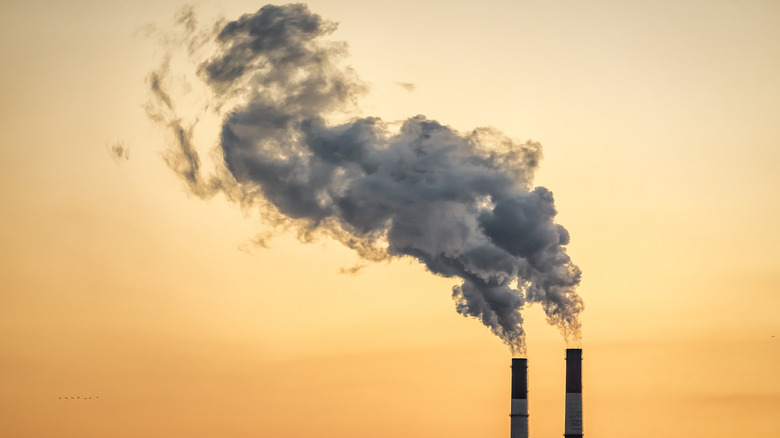
Travel is usually all about the destination, but each stop along the way is more than capable of throwing a curveball. There are cities in the world where it's way too cold for a winter visit and others that are simply too hot in summer. There are destinations where you should never drink the water. And then there are locations where the very air you breathe is potentially hazardous. In the U.S., the Air Quality Index (AQI) recognizes six levels: good, moderate, unhealthy for sensitive groups, unhealthy, very unhealthy, and hazardous. Checking the current AQI can tell you the current conditions in a city, but which have consistently poor air quality?
We've rounded up the U.S. cities with some of the worst air pollution. While there are several ways to determine this, and varying methods may rank cities differently, we turned to the American Lung Association's (ALA) 2026 State of the Air for our list. The ALA has three lists, ranking cities by ozone, short-term particle pollution, and long-term particle pollution. High ozone concentrations occur when carbon compounds released by natural and human sources, along with nitrogen oxides (mostly from car exhaust). Particle pollution consists of particulate matter that measures 2.5 microns or less, often referred to as PM2.5. These particles are small enough to enter the bloodstream through the lungs. The long-term variety is present year-round. Short-term pollutants are temporary and might be caused by specific events such as wildfires or inclement weather.
While some cities may rank high in one category and lower in another, we've taken all three ALA lists into consideration, ranking cities by overall severity and frequency of pollution. Yes, other methods measure contaminants in the air, but these three metrics, taken together, provide an accurate picture of air quality, especially as it relates to health.
San Diego, California
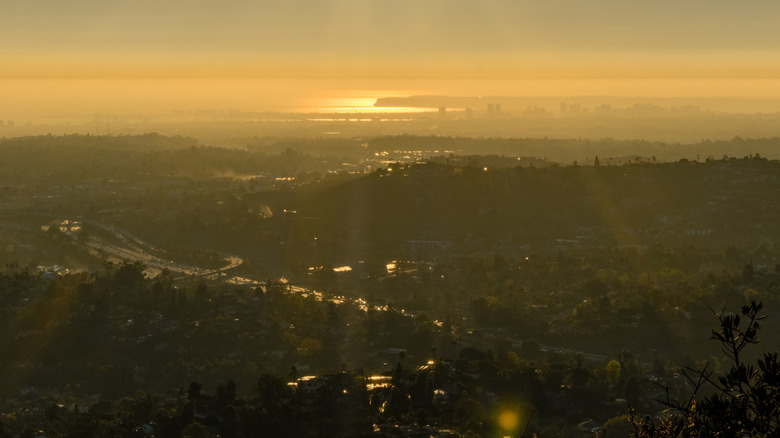
San Diego is a city that has much to offer. It is the home of the first permanent European settlement on the U.S. West Coast, and while there are unwritten rules you need to know about before you head over there, the city's combination of beachfront excitement and beyond-city-bound farms has helped America's Finest City carve out a niche. It's a place of fine dining, proud naval traditions, and strict rules on mesmerism. Oh, and it's also got some issues when it comes to air quality. Welcome to California, right?
Sure, finding oneself on a list of worst offenders is never a good look, but things could definitely be worse. California's poor air quality stems from four main issues: wildfires, heatwaves, traffic, and the production of electricity. Together, they join forces to create some truly horrendous air quality, albeit with seasonal fluctuations. Perspective is, however, an important thing to take into account. Kuching in Malaysia manages to reach a PM2.5 level that hovers around 16 times the WHO-recommended levels. San Diego's levels are nowhere near that bad, yet they still managed to get a D rating from the American Lung Association in 2026, and a top five spot in their State of the Air year-round particle pollution overview.
It all amounts to something of a miserable experience on those days when the smog rolls in and you can begin to taste the pollution on your very lips. Checking daily air quality reports can help you plan activities without exposing yourself to too many nasties. But group efforts also help: driving less, using public transport, and remembering to turn off the lights have a knock-on effect. In the smallest of possible ways, sure, but it helps nonetheless.
Fresno, California
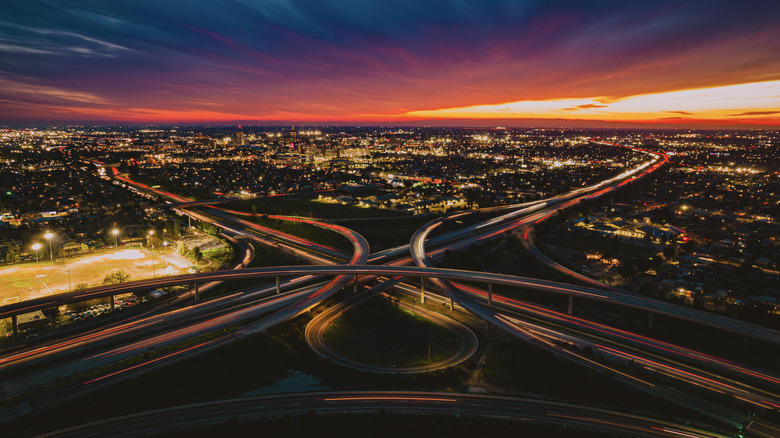
Fresno is an underrated Central Valley city filled with quirky attractions that sits on the doorstep of Yosemite National Park. The city is the second of four such places in California and an early indication that California air is not restricted to any one place. Regardless, Fresno is, after all, one of the hottest cities in the whole of the United States and is as burdened as any other place with the fallout from summer wildfires.
Traffic-wise, things aren't too bad, which is just one reason why Fresno's air quality isn't as bad as L.A.'s. Still, not as bad and great are the ends of two very different sticks. Fresno ranked fifth worst for ozone and sixth and fifth for both short-and long-term PM2.5 in the 2026 State of the Air report. Its presence on lists of the worst polluted cities in America is disappointing, of course, and the medical advice suggests that vulnerable people should avoid prolonged exposure to high levels of PM2.5. Planning your trip with that in mind is always the smart play. Summer and air quality are not the best of friends; all that heat mixes with petrochemicals to create smog, and aids in the accumulation of ozone found at ground level.
Shoulder season it is, then, unless, of course, Fresno is a mere jumping-off point for some National Park fun. Yosemite is home to bucket list trails filled with waterfalls, forests, and mountain views. The park is less polluted than its neighboring city, obviously, but wildfire activity creates fluctuations in that reality in unpredictable ways. Timing is, as always, critical, and paying attention to active alerts here or elsewhere is always good practice.
Eugene, Oregon
At the southern end of the Willamette Valley, less than 20 minutes' drive away from a glittering artificial lake famed for its camping, fishing, and boating, sits the unassuming town of Eugene. Home to the University of Oregon, its surrounding lands are filled with well-known hiking trails, hot springs, and waterfalls. Within the city limits, you'll find beautiful rose gardens, thriving craft markets, and a busy arts and theatre scene. It sounds idyllic. Which makes you wonder why the air quality is so bad.
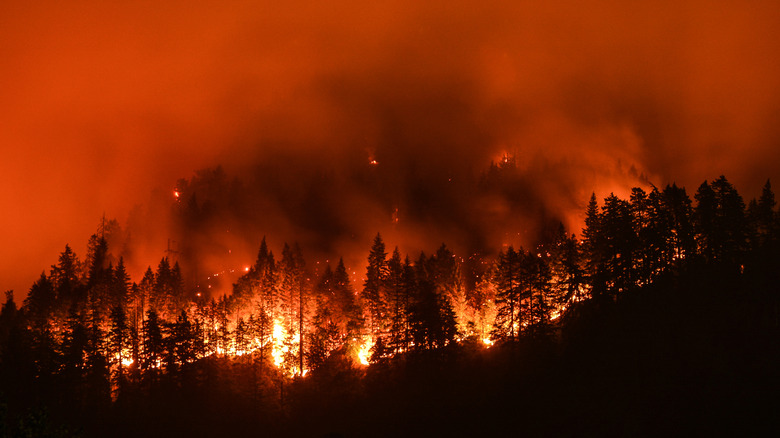
Eugene is a relatively small town of around 175,000 people; traffic conditions are known to be dangerous – although that stain on its reputation is improving as of late — but not especially congested. And yet, in the 2026 State of the Air report, the town found itself ranked second in terms of short-term PM2.5 and third in terms of its long-term associate. What gives? Well, tellingly, Eugene did not even make the top 25 worst places in the country when it came to ozone; the place is not known for its smog. No, it's not traffic pollution that is ruining the air in Eugene. It's wildfires.
In 2024, close to 2 million acres fell victim to uncontrollable burns across Oregon. In 2026, with the season not yet over, wildfires consumed 2.6 million acres, breaking all previous records and stretching the resources used to combat them to their very limit. Wildfire maps are continuously updated, and evacuation orders in towns across the state often occur with little warning. Fires on Eugene's very doorstep are not unheard of either, but the smoke has caused havoc with the air quality regardless of proximity. Indeed, anyone planning a trip to areas afflicted with wildfire should keep an eye on the National Weather Service and watch out for any red-flag do-not-travel warnings.
Phoenix, Arizona
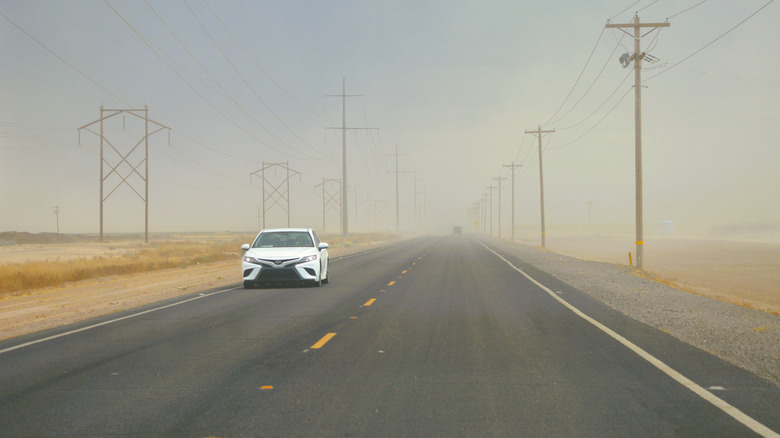
Phoenix is one of those cities that needs little by way of an introduction. It's home to some 1.6 million people, making it the largest city in Arizona, and it also happens to be the state capital. People visit the region to explore surroundings filled with a rich history, easily accessible nature trails, and sun-dappled stopovers renowned for their fishing. They flock to the city proper to experience all that its vibrant foodie scene has to offer, to relive the history of the American West, and immerse themselves in vibrant cultural traditions now centered around the Mesa Arts Center. It's an easy place to recommend in many ways, but the breathability of its air just so happens to not be one of them.
The hard data makes for grim reading: in the 2026 State of the Air list, Phoenix placed fourth in terms of ozone levels but didn't receive so much as a demarcation in terms of PM2.5. Put simply, Phoenix has a smog problem. Low-to-the-ground ozone forms when the nitrogen oxides found within vehicular, factory, or domestic fuel emissions are exposed to direct sunlight. Heat exacerbates things by speeding up the chemical reaction, making summer smog particularly pernicious. Prolonged exposure to ozone has been linked to asthma, chronic pulmonary disease, and a variety of other ailments.
Phoenix's problem with such pollution is long-standing. The city's placement in a valley surrounded by mountains creates a bowl shape that tends to trap poor-quality air. In 2024, the city was threatened with federal action after the air quality level failed to meet national standards, but a change in administration led to a relaxation of the rules after accusations that most of the pollutants actually come from south of the border.
Brownsville, Texas
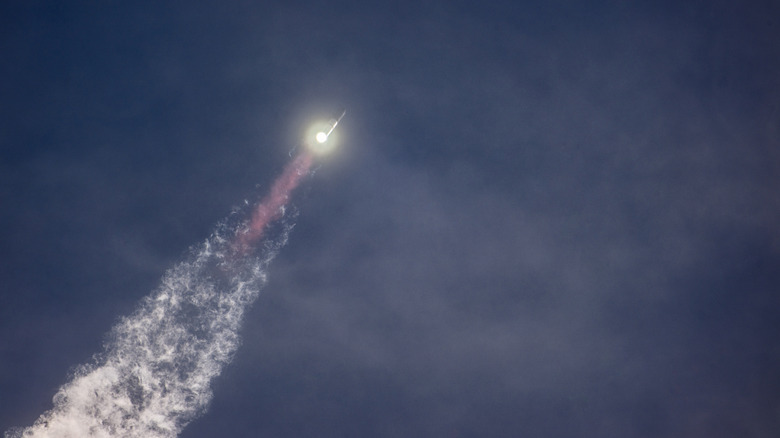
The southernmost city in the great state of Texas is a culturally rich border town known for its bird-filled Resaca de la Palma State Park, sites of historic importance, and, more recently, as a testing ground for SpaceX launches. Indeed, as is the case with much of Texas' Gulf Coast, Brownsville is something of a tropical paradise blessed with beautiful beaches and southern charm. Of course, its presence on a list such as this can mean only one thing: its air is not so great.
Once again, the American Lung Association's 2026 State of the Air index paints a bleak picture. As with Eugene, there are no serious issues with smog, but when it comes to both short-and long-term Pm2.5, Brownsville ranked fourth and second, respectively. As you'd expect, there seem to be a number of things at play here.
One possible reason for the poor air quality is due to agricultural burning and cooking activities. A 2023 article published in the journal Air suggested that as much as 60% of the measured PM2.5 came from those very sources, although power plants and vehicle emissions were also held up as contributing factors. Much of the burning, however, takes place in Mexico and has been known to haze skies as far north as San Antonio. The issue is, as you would expect, weather-dependent, something highlighted in February 2026, when strong winds carried a haze across the entire Rio Grande Valley, creating potentially dangerous conditions. Indeed, at one point, air quality warnings were set to the AQI level of unhealthy for all.
Visalia, California
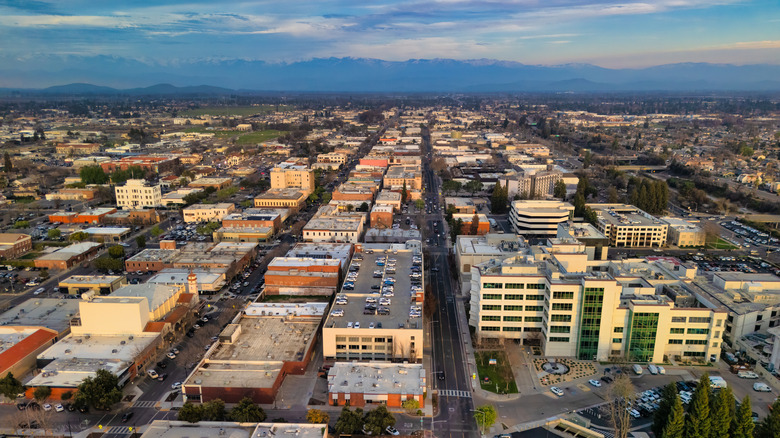
California has an issue with its air quality, although Visalia's proximity to Fresno certainly helps explain why it too has issues, especially when it comes to smog. Sadly, problems with the low-lying gas are much worse in Visalia to the extent that its poor showings on PM2.5 readings are overshadowed by its second-place ranking in the 2026 State of the Air's worst-for-ozone list.
Still, fair is fair; before delving into why the city is so smoggy its important to note that the town has as much to offer as it ever did. It's been around since the mid-1800s, making it one of the oldest settlements in the San Joaquin Valley. The city is filled with artsy charm and acts as a gateway to Sequoia National Park, but even beyond such protected lands, outdoor adventures abound. Within the city limits, there is a mix of boutique and brand shopping to explore, well-heeled and casual dining opportunities are prolific, and it also sports a festival season that is filled with stargazing, county fairs, and music.
All of which makes the air quality issue all the more pressing. The usual suspects are to blame, of course. Wildfires from up north, unusually hot weather, and emissions from south of the border combined to make something close to a perfect storm. Fungal storms – in which particles of toxic spores get carried along in dust storms and inhaled — are also thought to be a growing concern. Checking in with the local air quality and visibility forecast can help you avoid days when things are particularly grim, but those who travel out from the city and into the region's picturesque wilderness are likely to find relief from the smog at least, even if the PM2.5 levels sometimes remain high.
Fairbanks, Alaska
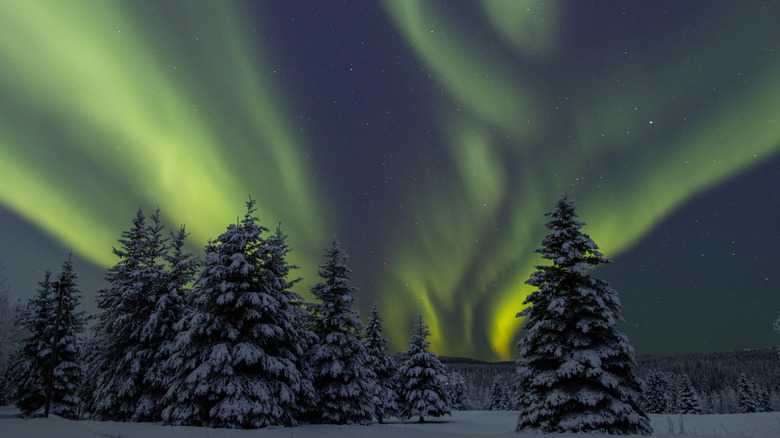
When one's mind turns to Alaska, the thought of poor air quality doesn't even enter the building. Notions of miles of frozen tundra, of pristine wilderness filled with some of the deepest lakes in America, and crisp notes of mountain air dominate. And yet, the town of Fairbanks somehow managed to find its way onto the American Lung Association's State of the Air list.
The question is, how did one of the best places on earth to see the Northern Lights turn out to have such terrible air? Well, the devil is in the details as usual. Fairbanks is, on the face of it, a rather unassuming place. It lies some 350 miles north of Anchorage, and with a population of just under 32,000, there's certainly less traffic to contend with than some other cities on this list, which might help explain why Fairbanks doesn't have a major issue with smog. In addition to that, in terms of long-term PM2.5 emissions, it only makes the top 10 (worst) offenders. Its short-term particle rate, however, is a standout affair: In 2026, it clocked in at number one.
The problem has been going on for some time. As far back as 2018, the American Lung Association was warning about just how unhealthy the air had become. The wildfires play a huge role here. With so much empty space and so many untouched forests, Alaska is uniquely prone to summer surges. Indeed, the wildfire risk in Alaska is higher than in 78%of all states. This, coupled with the long-seated propensity of locals to make full use of wood-burning stoves, created yet another recipe for disaster. And yes, it's difficult to judge families turning to a freely available source of fuel in a town where temperatures drop to 10 degrees Fahrenheit, but wood burns dirty, and the air quality pays the price.
Los Angeles, California
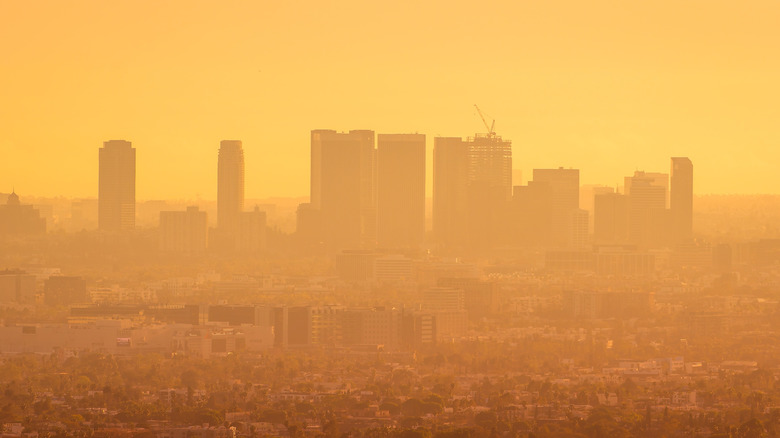
Few are the accusations of hyperbolic statements when it comes to the issues the City of Angels has with pollution. For all its laudable qualities, L.A. is as famous for its smog as London once was. And it's a complicated place; if you include the entire metropolitan area, almost 13 million people call the place home. They drive — this is America's most traffic-congested city after all — it's hot, and, as is the case with Phoenix, the city is situated in a pollution-trapping basin. Between the mountains and the sea, something had to give, and as L.A. residents will tell you, that something is the very air they breathe.
The American Lung Association's 2026 State of the Air rundown refused to prevaricate: L.A. has the worst levels of ozone in the country. It fared slightly better when it came to short-and long-term PM2.5, but only marginally so, coming up seventh in both cases. And of course, some parts of the city are worse affected than others; Pacoima, a vibrant, historically diverse and definitely cool neighborhood, is having to deal with localized asthma rates that are hovering close to the 10 percent mark.
As to what can be done about the state of the air in America's smoggiest city, there are at least some reasons to be optimistic. While climate change is exacerbating the problem — especially when it comes to the increased prevalence of wildfires – technological innovation may yet save the day. Recent moves by the hospitality industry to embrace EV charger installations hint at a change of mood among the L.A. faithful. Zero-emission vehicle sales are surging across the state, and while such modes of transport merely move pollution from the source of use to the source of production, at ground level, it spells hope for a smog-free future.
Bakersfield, California
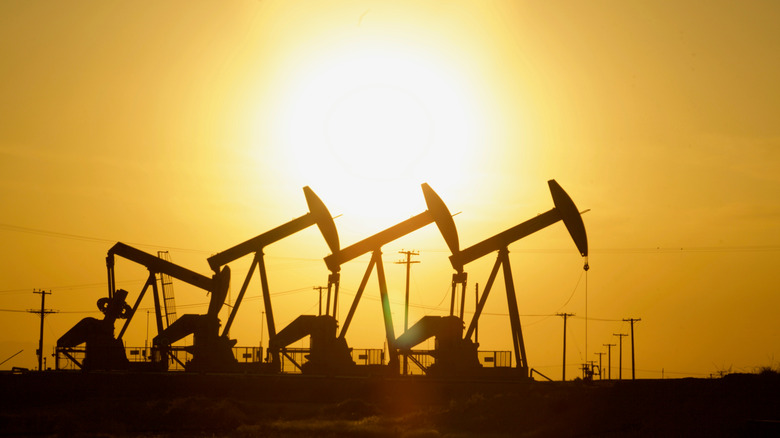
Roughly halfway between the city of Los Angeles and Fresno sits Bakersfield, a city known for its upscale neighborhoods that offer walkable shopping and gourmet eats. It is a jumping-off point for many out-of-town adventures, with no fewer than nine state and national Parks located within a day's ride. When it comes to air quality, however, the situation is less encouraging. While L.A has the worst smog around, Bakersfield still manages to hit the third spot for ozone, third in terms of short-term PM2.5, and is the absolute worst when it comes to long-term PM2.5. At least it did for 2026, as set out in the American Lung Association's State of the Air guide.
Such a trifecta might actually make Bakersfield the most polluted city in America. It's certainly been called that before. Once again, the main culprits are hiding in plain sight. The city of less than half a million people is surrounded by agricultural land, mining operations, and oil refineries, at least one of which has since been retooled to make renewable energy. Throw in a series of devastating wildfires and the Californian propensity to use cars as a primary mode of transport, and the picture painted is a bleak one.
Yet not hopeless. The order to stay indoors in 2025, as air quality reached hazardous levels, seems to have been a wake-up call for the people of Bakersfield. In recent years, residents have been calling on the government to plant more trees and clean up the air in a beautiful and welcoming town that deserves so much better.