
5 Of America's Oldest Scenic Byways You Can Still Drive On
Planes may take you to where you want to go quickly, but nothing beats the beauty of a slow and scenic road trip down a long highway. From the Historic National Road Scenic Byway, America's first highway with dozens of secret stops and historic sites in Maryland, to the Pacific Northwest's Historic Columbia River Highway, the US's oldest scenic route, America is brimming with beautiful byways to travel.
While there are many journeys to choose from, perhaps the most stunning and storied routes are the roads most-traveled, as the oldest byways hold the most memories. If you're looking to make some road trip memories of your own, these scenic byways are among the oldest in the US. Whether you're dreaming of an epic cross-country adventure or a bite-sized journey in your home state, we've curated a list of the top 5 oldest scenic byways in America that you can still drive on today.
The National Road
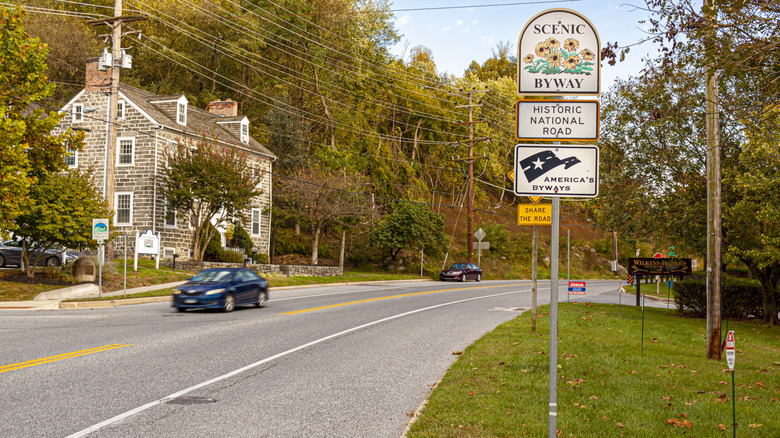
Also known as "America's First Highway," the Historic National Road Scenic Byway is so old that it dates back to when Thomas Jefferson was in office. Built between 1811 and 1834, Jefferson authorized the construction of the road back in 1806. Originally called the Cumberland Road, the highway spanned 620 miles, connecting Cumberland, Maryland, to St. Louis, Missouri, and serving as the main route for settlers moving westward across the US. With the introduction of railroad travel in the 1870s, followed by the dawn of automobiles in the 1920s, the road became less traveled and was integrated as part of US-40 by 1926.
Though most of the original route no longer exists, you can still drive a 170-mile portion of the road today. Stretching across Maryland, from Baltimore to Cumberland, the National Road can be completed in 4-6 hours. It depends on which stops you choose to make along the way, and there are plenty. Starting in Baltimore, historic Charles Street is one of the best places in the country to explore urban culture, offering 12 miles packed with historical landmarks and culinary delights. If you're a literary lover, you'll definitely want to visit the Edgar Allen Poe House & Museum before hopping back on the highway.
Located about an hour west of Baltimore, Fredrick is a hip and historic city with award-winning food, art, and fun. Further along the route, Boonsboro is home to The National Road Museum, where you can learn more about "the road that built the nation." After a historical deep-dive, take your time driving the remaining 75 miles of The National Road to Cumberland. There, you can visit the National Road Monument at Riverside Park, which marks the original starting point of the route.
Historic Columbia River Highway

They don't call the Pacific Northwest a wonderland for nothing. Lush with emerald forests, snow-capped mountains, crystal clear lakes, and majestic waterfalls, some of the country's most enchanting outdoor wonders thrive in the northwestern corner of the US. If you're looking for the best route to explore the scenic beauty of The Beaver State, driving the Historic Columbia River Highway makes for the perfect PNW adventure.
Built between 1913 and 1922, the 74-mile stretch of highway is the oldest in the US, and is still drivable today. Traveling from west to east, the route begins just outside of Troutdale – Oregon's gateway to the Columbia River Gorge, whose quaint downtown boasts shops, brews, and eateries – and ends in the state's best-kept secret sun-drenched town, The Dalles. You can drive the whole thing in about an hour, but if you're taking your time to enjoy the sights and scenery along the way, it can take from 3 to 5 hours. With so much beauty to behold, it's definitely not a route to rush through.
The route hugs the sparkling Columbia River the whole way, so you'll get an eyeful of riverside views. However, perhaps the most enchanting sights along the highway are the waterfalls. In total, there are 77 waterfalls along the Historic Columbia River Highway, including Oregon's tallest waterfall, Multnomah Falls, an ethereal beauty that towers 620 feet high. In addition to its scenic highlights, the highway is dotted with charm-filled towns to explore, such as Hood River, the picturesque 'windsurfing capital of the world'. Whether you're planning a day trip from Portland or a leisurely weekend road trip filled with waterfall chasing, nature hikes, and small town stays, the Historic Columbia River Highway makes for a timelessly beautiful journey in the Pacific Northwest.
Great River Road
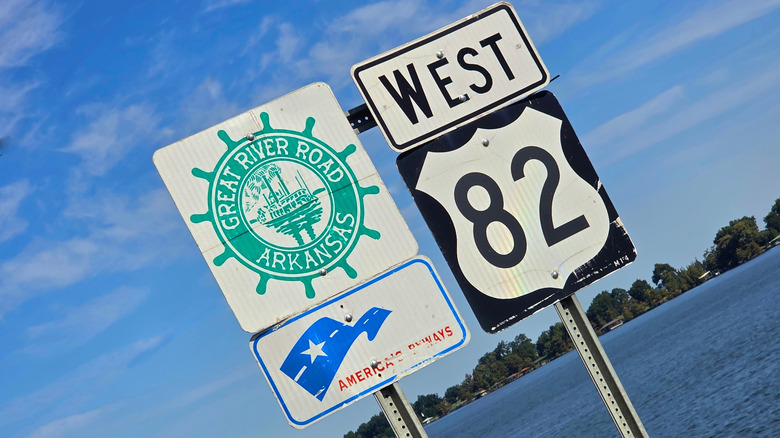
Dating back to 1938, the Great River Road is one of America's most underrated scenic routes, crossing 10 states. The 3,000-mile route traces the mighty Mississippi from the northern end of Minnesota to the Gulf of Mexico, brimming with sleepy riverside towns, historic landmarks, and scenic marvels along the way. If you were to tackle the entire route in one uninterrupted drive, it would take about 36 hours to complete. However, 10-14 days is a more realistic time frame to enjoy the journey without rushing through.
Named a National Scenic Byway, eight of its states -– Arkansas, Iowa, Illinois, Kentucky, Louisiana, Minnesota, Tennessee, and Wisconsin -– are designated All-American Roads. The special designation is awarded to roads with extraordinary features, including those with rich history and stunning natural beauty. Along the Great River Road, you'll find a treasure trove of notable sites, such as the longest Main Street USA in Maiden Rock, Wisconsin, Mark Twain's childhood home in Hannibal, Missouri, and the Judy Garland Museum in the legendary singer's hometown, Grand Rapids, Minnesota.
Dotted with dozens of rural riverside towns (like Galena, an underrated Illinois town with cozy inns, local wineries, and historic charm), the Great River Road also passes through some of the most iconic cities in the US, like St. Louis, Memphis, and New Orleans, and betrays a wonderland of natural beauty along the way. From the gorgeous Lake Itasca State Park situated at the headwaters of the Mississippi, all the way down to the beautiful bayous and scenic swamplands of Louisiana, the route features some of America's most stunning sights. If you're longing for an epic cross-country road trip along the Mississippi, follow the Great River Road.
Illinois Route 66 Scenic Byway
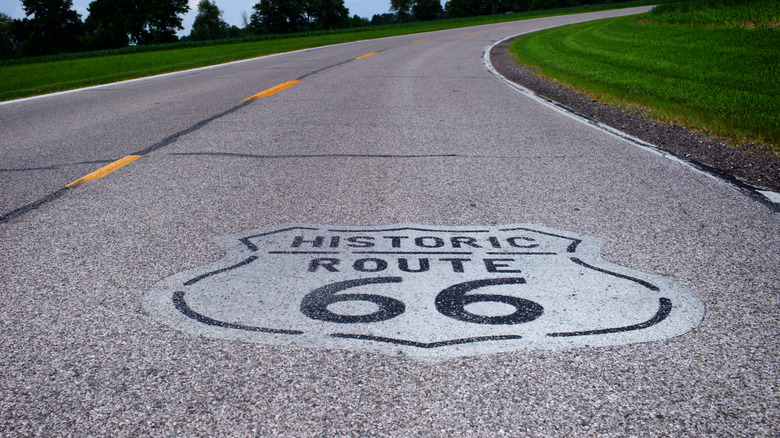
Stretching from Chicago to California, delivering loads of neon nostalgia and kitschy Americana, Route 66 is arguably America's most iconic highway. Born in 1926, the hundred-year-old route comprises over 2,400 miles, crossing through a total of eight states. Though the route was decommissioned in 1985, about 85% of it is still drivable today, and the portion spanning Illinois was designated a National Scenic Byway in 2005. Beginning in Chicago, the byway spans over 400 miles across The Land of Lincoln, featuring sweeping rural landscapes, charm-filled towns, and roadside attractions along the way.
Embarking on the journey feels like taking a drive back in time. In fact, in Auburn, you can drive on one of the oldest-preserved portions of Route 66, a 1.4-mile segment of brick dating back to 1931. Even on the newer-paved portions of the historic highway, you'll find a treasure trove of frozen-in-time gems dotting your path: vintage filling stations, historic diners, and retro motels like the Carlinvilla Motel in Carlinville, an Illinois city tucked between Springfield and St. Louis.
Among the many highlights of Route 66 in Illinois are the World's Largest Catsup Bottle in Collinsville, the Route 66 Hall of Fame & Museum in Pontiac – where you can also see 24 vintage-style murals painted along Main Street – and the birthplace of the original hot dog on a stick, Cozy Dog Drive-In in Springfield. Before crossing the Missouri state line into St. Louis, get out to stretch your legs at the Old Chain of Rocks Bridge. Dating back to 1927, the mile-long bridge arches across the mighty Mississippi and is closed to cars, but open to pedestrians. Bridging the gap between the past and the present, there are many places to get your kicks on Route 66.
Blue Ridge Parkway

Revered as "America's favorite drive," the Blue Ridge Parkway is a 469-mile drive traversing the breathtaking Blue Ridge Mountains of North Carolina and Virginia. The iconic route was imagined in 1933 after President Franklin Delano Roosevelt visited Skyline Drive in Virginia, sparking the idea to extend the road further to the Great Smoky Mountains National Park. Construction began in 1935, and nearly a century later, over 15 million people per year drive the Blue Ridge Parkway. It's even considered one of the best routes for a relaxed retirement road trip on the East Coast.
Starting at Shenandoah National Park in Virginia, the scenic route snakes its way down to the Great Smoky Mountains Park in North Carolina, comprising an array of rural mountain towns, artsy cities, and scenic stops along the way. On the Virginian side of the parkway, you'll encounter attractions like Mabry Mill, a restored historic mill town that gives a glimpse into rural life in Appalachia during the early 20th century, and the Blue Ridge Music Center, whose outdoor concert venue flourishes against a backdrop of picturesque mountain scenery.
On the North Carolinian side, Asheville is an artsy city full of fun and home to the magnificent Biltmore Estate. Meanwhile, Blowing Rock, which sits about 2 hours northeast, boasts Flat Top Manor, a breathtaking historic home that was ahead of its time. Connecting two of the most stunning National Parks, with an abundant stretch of scenic and historic attractions nestled in between, the Blue Ridge Parkway is a must-drive byway with nearly 500 miles of beauty to offer.